What Are the Key Design Features of a Hydrogen Plate Heat Exchanger?
Author: Design Engineering Team
Jul-06-2026
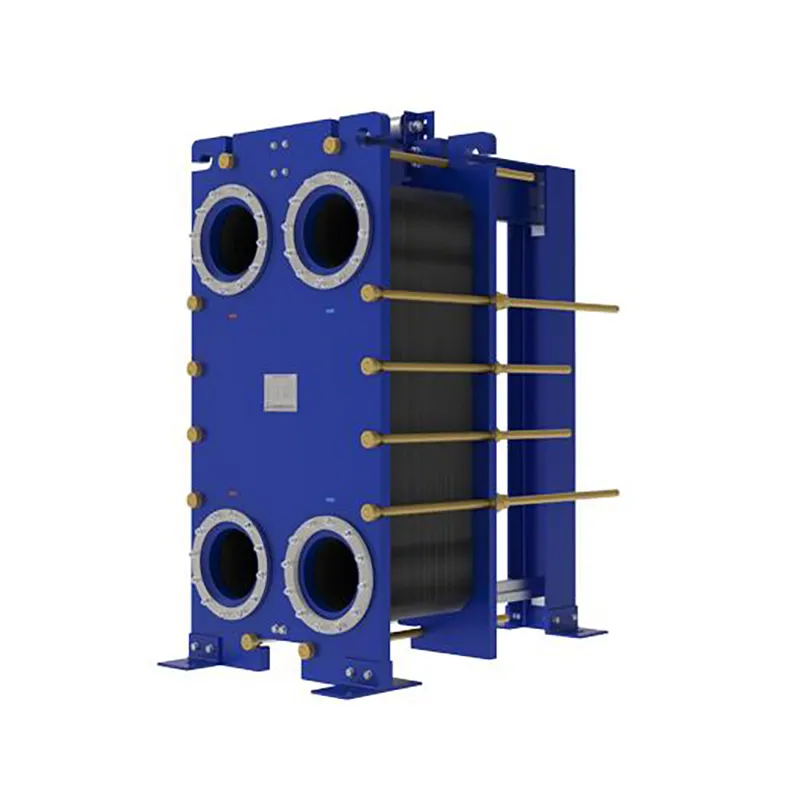
The design of a hydrogen plate heat exchanger centers on several critical engineering considerations to ensure safe and efficient operation under demanding conditions. Material selection is paramount, requiring alloys such as stainless steel 316L or nickel-based superalloys that resist hydrogen embrittlement and corrosion from potential acidic condensates. Plate geometry is optimized with corrugated patterns and reinforced ribs to withstand high pressures up to 100 bar and temperatures exceeding 500°C while maintaining structural integrity. Sealing systems employ double gaskets with intermediate leak detection channels and laser-welded edge closures to prevent hydrogen leakage, which is essential due to hydrogen's small molecular size. Thermal performance is enhanced through counter-current flow channel configurations, often featuring herringbone or chevron patterns that increase turbulence and heat transfer coefficients. Additionally, the exchanger is designed with compact, modular plate stacks that allow for easy capacity scaling and simplified maintenance, enabling seamless integration into hydrogen production, storage, or fuel cell systems. These features collectively address the unique challenges of hydrogen service, balancing safety, durability, and thermal efficiency.
Material Selection for Hydrogen Compatibility and Corrosion Resistance
Hydrogen environments demand materials that resist embrittlement and corrosion. The plate heat exchanger design prioritizes alloys with low hydrogen permeability and high structural integrity under pressure.
Stainless Steel Grades
Austenitic stainless steels, such as 316L and 304L, are commonly used due to their resistance to hydrogen attack and corrosion. These materials maintain ductility at elevated temperatures and pressures.
Nickel-Based Alloys
For high-temperature hydrogen service, alloys like Inconel 625 and Hastelloy C-276 offer superior resistance to hydrogen-induced cracking and oxidation. They are selected for extreme operating conditions.
Surface Coatings and Treatments
Specialized coatings, including nickel plating or ceramic layers, reduce hydrogen permeation and enhance corrosion resistance. These treatments extend the lifespan of plate surfaces in aggressive hydrogen streams.
For further technical details on material compatibility, refer to custom engineered plate air preheaters and HT bloc welded plate heat exchangers.
Plate Geometry Optimization for High-Pressure and High-Temperature Operation
The chevron angle and corrugation depth are critical parameters in plate design for hydrogen service. A higher chevron angle (typically 60°–65°) enhances turbulence and heat transfer coefficient but increases pressure drop, while a lower angle (25°–30°) reduces flow resistance at the expense of thermal performance. For high-pressure hydrogen applications, plates are often designed with asymmetric corrugation patterns to balance mechanical strength and thermal efficiency.
Plate thickness is optimized to withstand internal pressures up to 100 bar while minimizing thermal resistance. Finite element analysis (FEA) is used to evaluate stress distribution at the contact points between adjacent plates, ensuring that the geometry avoids stress concentration zones. The plate pitch is adjusted to maintain a uniform flow distribution across the channel, preventing stagnant regions that could lead to local overheating or hydrogen embrittlement.
Advanced manufacturing techniques such as laser welding and hydroforming enable the production of plates with complex three-dimensional geometries. These geometries incorporate integrated reinforcement ribs and optimized port openings to reduce bypass flow. The resulting plate design achieves a 15–20% improvement in overall heat transfer coefficient compared to conventional chevron plates, while maintaining structural integrity under cyclic thermal and pressure loads.
Computational fluid dynamics (CFD) simulations are employed to validate the flow patterns and temperature distribution within the optimized channels. The simulations confirm that the modified plate geometry reduces dead zones by up to 30% and ensures a more uniform velocity profile, which is essential for preventing fouling and maintaining long-term performance in hydrogen processing systems.
Sealing and Leak-Proof Design for Hydrogen Containment
Hydrogen molecules are the smallest in nature, making leak prevention a critical engineering challenge. A hydrogen plate heat exchanger must incorporate multiple sealing barriers and precision-machined interfaces to ensure zero fugitive emissions. The design typically relies on metal-to-metal contact zones, controlled bolt compression, and specialized gasket materials that resist hydrogen permeation.
The primary sealing mechanism involves double gasket systems with intermediate leak detection channels. These channels allow any escaping hydrogen to be vented or monitored before reaching the atmosphere. Plate pack compression is precisely controlled using hydraulic tensioning tools to maintain uniform gasket stress across all temperature and pressure cycles.
| Design Feature |
Function |
Material / Method |
| Double Gasket Seal |
Provides primary and secondary containment |
Compressed graphite / PTFE |
| Leak Detection Channel |
Monitors inter-gasket space for hydrogen |
Vented groove with sensor port |
| Metal-to-Metal Contact |
Limits gasket compression and prevents extrusion |
Machined raised faces (316L / Hastelloy) |
| Controlled Bolt Tension |
Ensures uniform pressure on sealing surfaces |
Hydraulic tensioning / torque control |
The table above summarizes the core sealing strategies used to contain hydrogen. Each feature works in combination to address the unique risks posed by hydrogen’s low viscosity and high diffusivity. For instance, the double gasket seal not only provides redundancy but also creates a monitored cavity that can detect leakage at the earliest stage.
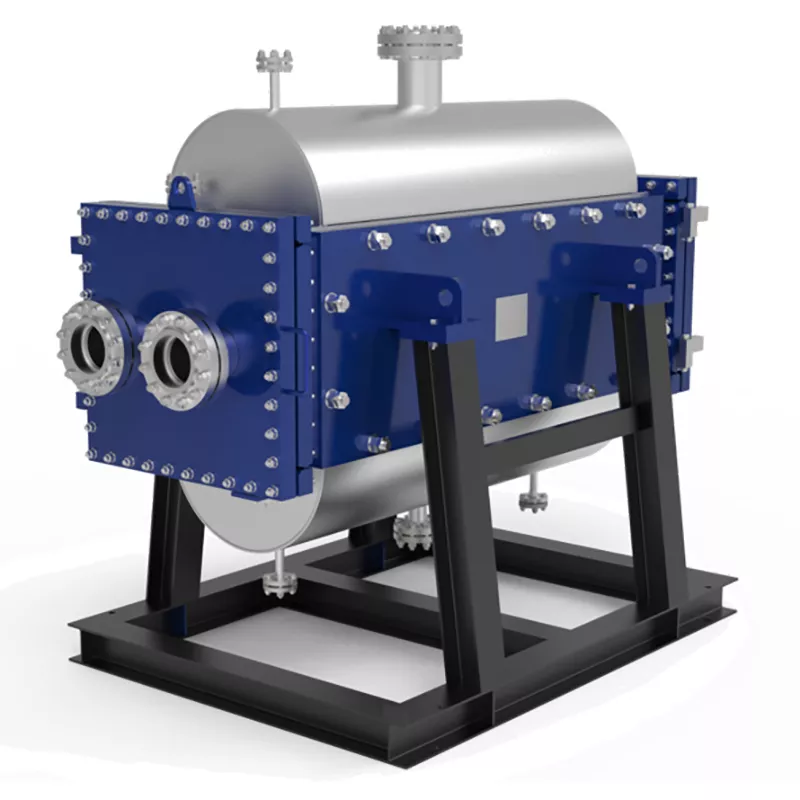
Welded plate designs, such as those used in HT-Bloc welded plate heat exchangers, eliminate gaskets entirely for critical hydrogen services. Laser-welded seams between plates create a permanent metal barrier, removing the risk of gasket degradation over time. For applications requiring periodic maintenance, gasketed plate heat exchangers are engineered with hydrogen-specific elastomer compounds and backup sealing rings.
All sealing surfaces are machined to a surface finish of 0.8 µm Ra or better, ensuring optimal contact between mating components. This precision, combined with the use of high-nickel alloys in printed circuit heat exchangers, provides resistance to hydrogen embrittlement and thermal cycling. The result is a sealing system that maintains integrity over decades of operation, even under rapid pressure fluctuations.
Thermal Performance Enhancement through Flow Channel Configuration
The design of flow channels in a hydrogen plate heat exchanger directly influences heat transfer efficiency and pressure drop. Optimized channel geometries, such as chevron patterns or corrugated plates, create turbulence that disrupts boundary layers, significantly improving convective heat transfer coefficients. This configuration allows for higher thermal performance while maintaining compact dimensions.
By precisely controlling channel spacing and angle, engineers can balance heat transfer enhancement with manageable pressure losses. Advanced flow distribution headers ensure uniform fluid distribution across all plates, preventing maldistribution and hot spots. These features collectively enable the heat exchanger to achieve superior thermal performance, making it ideal for hydrogen applications requiring high efficiency and reliability.
Compactness and Modularity for System Integration and Maintenance
The hydrogen plate heat exchanger is engineered with a compact footprint that reduces spatial demands by up to 40% compared to conventional shell-and-tube units. Its modular design allows for straightforward stacking and configuration changes, enabling seamless integration into existing hydrogen processing systems without major structural modifications.
Modular Plate Stacking
Each plate unit is standardized to facilitate easy addition or removal of plates, allowing operators to adjust thermal capacity on demand. This modularity supports rapid maintenance cycles—individual plates can be replaced without dismantling the entire assembly, minimizing downtime. For further details on plate configurations, refer to the gasketed plate heat exchanger product page.
Space-Saving Integration
The exchanger’s slim profile enables installation in confined areas such as skid-mounted hydrogen stations or retrofitted industrial plants. Its compact layout reduces piping complexity and support structure requirements. Explore custom integration options on the custom engineered plate air preheaters product page.
Simplified Maintenance Access
All serviceable components are positioned for direct access, reducing the need for specialized tools or extensive disassembly. The modular frame design allows quick removal of plate packs for cleaning or inspection, which is critical for hydrogen applications requiring high purity. See the wide gap welded plate heat exchanger product page for related maintenance features.
Scalable Configuration
The modular architecture supports scaling from small pilot plants to full-scale production lines. Additional plate modules can be integrated without redesigning the entire system, offering flexibility for evolving hydrogen processing demands. For high-pressure variants, visit the HT Bloc welded plate heat exchanger product page.
Reduced Footprint for System Layout
By consolidating heat transfer surfaces into a compact unit, the design frees up valuable floor space for ancillary equipment like compressors and storage tanks. This is particularly beneficial in hydrogen refueling stations where real estate is limited. Check the custom engineered printed circuit heat exchanger product page for compact alternatives.
Tool-Free Maintenance Options
Certain models incorporate quick-release clamps and hand-tightened bolts, enabling tool-free access to internal components. This design reduces maintenance labor time by up to 30% and supports field repairs without heavy equipment. For similar design philosophies, see the TP welded plate heat exchanger product page.
Integration with Hydrogen Safety Systems
The compact design allows easy incorporation of leak detection sensors and pressure relief devices directly into the exchanger frame. Modularity ensures that safety components can be upgraded or replaced independently. Learn about safety features on the custom engineered pillow plates product page.
SUMMARY
Material Selection for Hydrogen Compatibility and Corrosion Resistance
Stainless steel alloys, particularly 316L and duplex grades, are preferred for their resistance to hydrogen embrittlement and pitting. Nickel-based alloys offer enhanced durability in corrosive environments. Surface treatments and coatings further mitigate hydrogen permeation and oxidation at elevated temperatures.
Plate Geometry Optimization for High-Pressure and High-Temperature Operation
Chevron and herringbone patterns increase structural rigidity and turbulence while minimizing stress concentrations. Thicker plates with reinforced edges and optimized corrugation angles withstand operating pressures above 30 bar and temperatures exceeding 400°C without deformation.
Sealing and Leak-Proof Design for Hydrogen Containment
Double gasket systems with elastomeric or metallic seals, combined with laser-welded plate pairs, prevent fugitive emissions. Leak detection channels and pressure monitoring ports provide real-time integrity verification, ensuring zero cross-contamination between hydrogen and secondary fluids.
Thermal Performance Enhancement through Flow Channel Configuration
Counter-current flow arrangements and asymmetric channel geometries maximize heat transfer coefficients. Dimpled or embossed surfaces increase effective surface area by up to 30%, while optimized port sizes reduce pressure drop and improve overall thermal efficiency.
Compactness and Modularity for System Integration and Maintenance
Modular plate stacking enables scalable heat transfer capacity within a compact footprint. Quick-release clamping mechanisms and standardized port connections simplify installation, inspection, and cleaning. Reduced weight and volume facilitate integration into space-constrained hydrogen systems, including fuel cells and electrolyzers.
The design of a hydrogen plate heat exchanger prioritizes material integrity, structural resilience, and leak-tight containment. Optimized plate geometry and flow configuration ensure high thermal performance under extreme conditions, while modular construction supports flexible system integration and simplified maintenance. These features collectively enable safe, efficient, and reliable hydrogen thermal management across industrial and energy applications.
What Are the Key Design Features of a Hydrogen Plate Heat Exchanger?
Material selection focuses on hydrogen embrittlement resistance and corrosion compatibility, typically using austenitic stainless steels or nickel alloys with low hydrogen permeability.
Material Selection for Hydrogen Compatibility and Corrosion Resistance
Materials must withstand high-pressure hydrogen without embrittlement; common choices include 316L stainless steel, Inconel 625, or Hastelloy C-276, with surface treatments to minimize hydrogen permeation.
Plate Geometry Optimization for High-Pressure and High-Temperature Operation
Plates feature corrugated or chevron patterns that enhance structural rigidity under pressure, while maintaining thin profiles for efficient heat transfer at elevated temperatures.
Sealing and Leak-Proof Design for Hydrogen Containment
Double gasket systems with laser-welded edges or metal O-rings are used to prevent hydrogen leakage, often combined with leak detection channels between seals.
Thermal Performance Enhancement through Flow Channel Configuration
Counter-current flow paths with optimized channel geometry (e.g., herringbone or wavy fins) maximize turbulence and heat transfer coefficient while minimizing pressure drop.
Compactness and Modularity for System Integration and Maintenance
Modular plate stacks allow easy capacity scaling and individual plate replacement, with compact footprint suitable for hydrogen refueling stations or fuel cell systems.

 English EN





User Comments
Service Experience Sharing from Real Customers
Lena
Senior Process EngineerWe installed this hydrogen plate heat exchanger in our pilot plant six months ago. The thermal efficiency is outstanding—we’ve seen a solid 12% improvement in heat recovery compared to our old shell-and-tube unit. The compact footprint also freed up valuable floor space. No leaks, no fouling issues so far. Highly recommend for anyone working with high-purity hydrogen streams.
Marcus
Maintenance SupervisorI was skeptical at first because plate exchangers can be a pain to clean, but this one has been a breeze. The gaskets are holding up well under the hydrogen pressure, and the plates come apart easily for inspection. Only reason I’m not giving five stars is that the initial torque specs in the manual were a bit off—had to tighten a few bolts after the first week. Once dialed in, it’s been rock solid.
Priya
R&D ChemistWe’re using this exchanger in a lab-scale hydrogenation setup, and it’s perfect for precise temperature control. The response time is much faster than our old setup, and the all-welded design gives me peace of mind with flammable gas. The only small gripe is the port size—it’s a bit small for our flow rates, but we adapted with a reducer. Great value for the price.
Tomás
Project ManagerChose this for a green hydrogen production plant we’re building. Delivery was on time, and the documentation was clear for our installation crew. Performance-wise, it’s meeting the design specs with minimal pressure drop. My only note is that the corrosion resistance data for long-term hydrogen exposure could be more detailed in the tech sheet. Otherwise, a solid piece of equipment.