Offshore Welded Plate Heat Exchanger for Demanding Marine Environments
Offshore platforms put heat exchangers through conditions that land-based plants rarely see: constant vibration, salt-laden air, tight space limits, and fluids that tend to foul or clog. This article looks at how welded plate heat exchangers are built to handle these marine realities, and what to check when specifying one for offshore duty.
Offshore oil and gas platforms, FPSOs, and marine vessels operate in some of the harshest conditions on earth. Heat exchangers on these facilities must cope with corrosive seawater, space constraints, constant motion, and process fluids that can be thick, abrasive, or full of solids. Standard gasketed plate units often struggle here — gaskets degrade faster under chemical exposure and thermal cycling, and narrow channels clog when slurries or viscous media pass through.
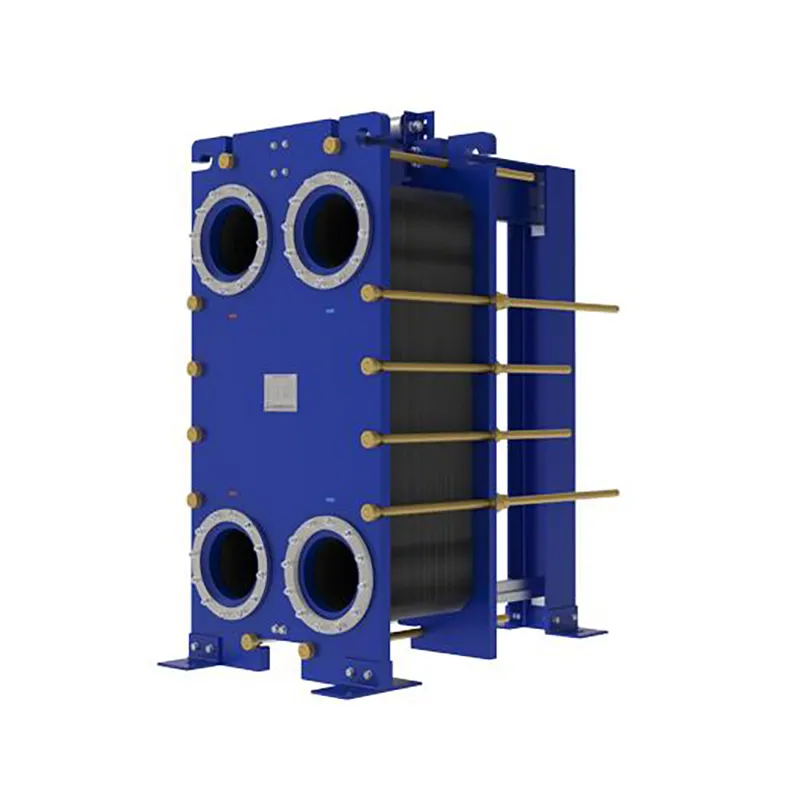
Welded plate heat exchangers address these problems at the design level. Instead of relying on elastomer gaskets between plates, the plates are laser-welded into a sealed pack. This removes the most common leak path and allows the unit to handle higher temperatures and more aggressive media. For offshore use, that translates into fewer unplanned shutdowns and lower maintenance demand — both critical when you are hundreds of miles from the nearest supply base.
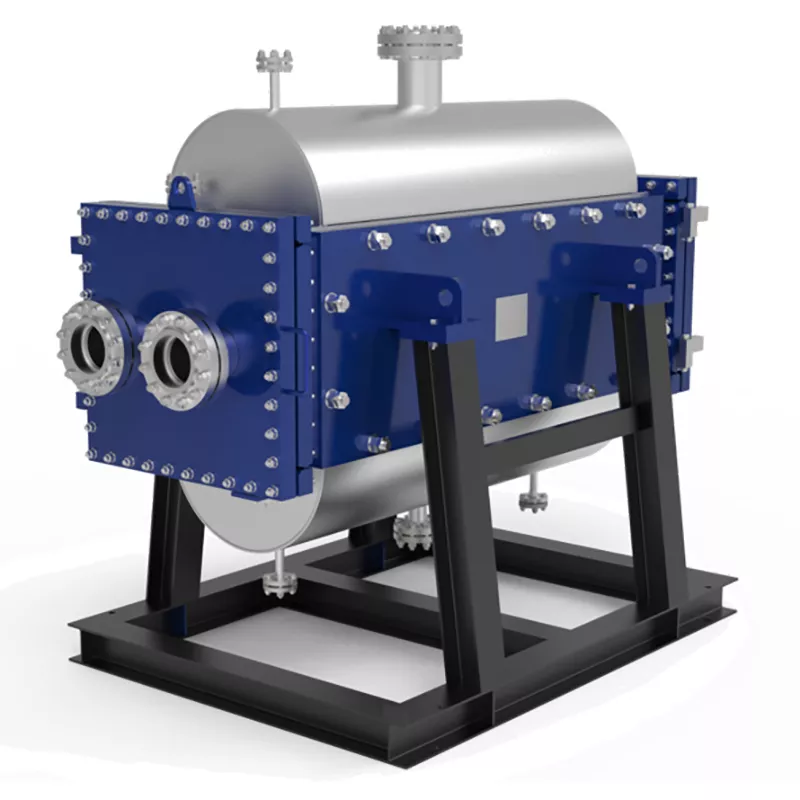
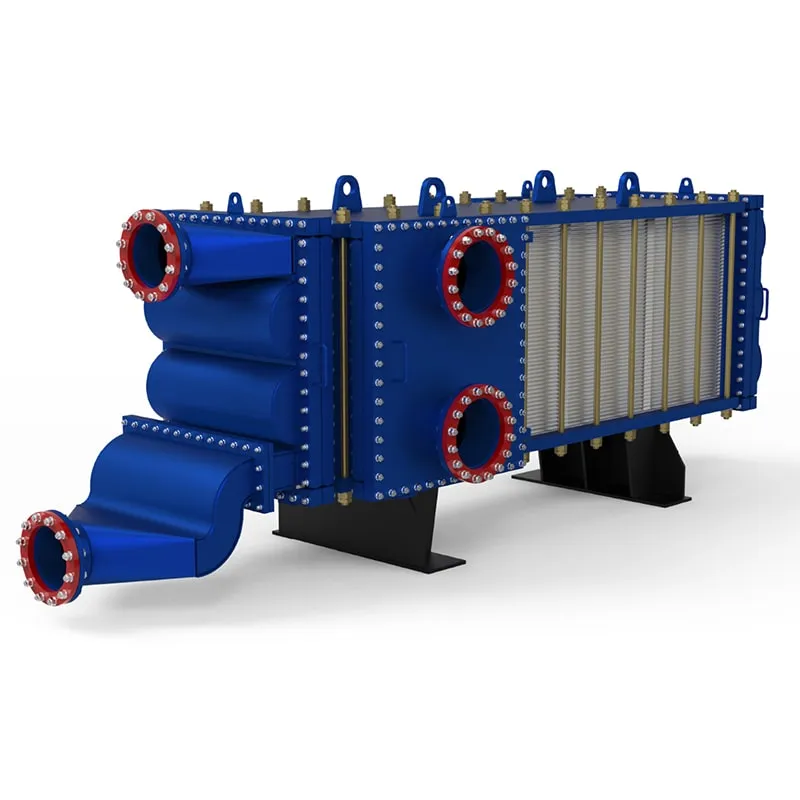
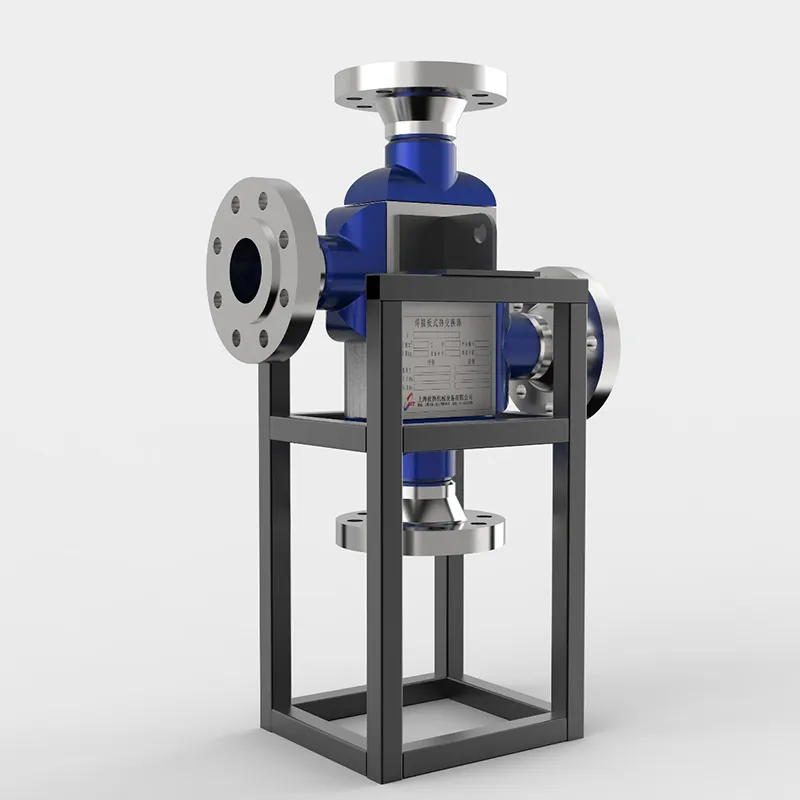
The TP welded plate heat exchanger uses a shell-and-plate hybrid construction. The plate pack is welded into a cylindrical shell, which gives it pressure containment similar to a shell-and-tube unit but with the thermal efficiency of a plate design. This format is particularly suited to offshore duties involving particle-laden slurries, high-viscosity syrups, or fiber-rich pulp — fluids that would quickly block a conventional narrow-gap plate exchanger. The channel geometry can be tailored to the specific fluid, and wear-resistant metallurgy options help extend service life when erosion is a concern.
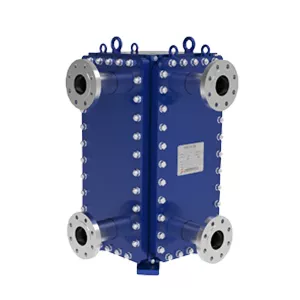
For offshore operators dealing with high-viscosity media or extreme temperature differentials, the HT-Bloc welded plate heat exchanger offers a compact alternative. Its block-style welded construction eliminates gaskets entirely and is configured to fit into tight skid spaces — a common constraint on offshore modules where every square meter is accounted for. The unit can be custom-configured for specific pressure and temperature ratings, which matters when you are working within the safety case of an existing platform.
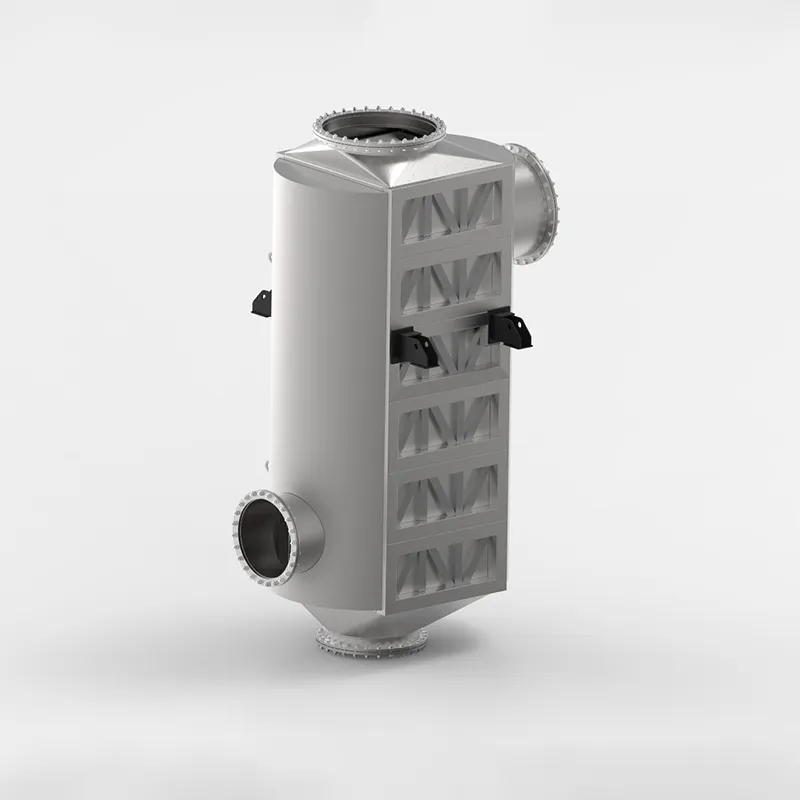
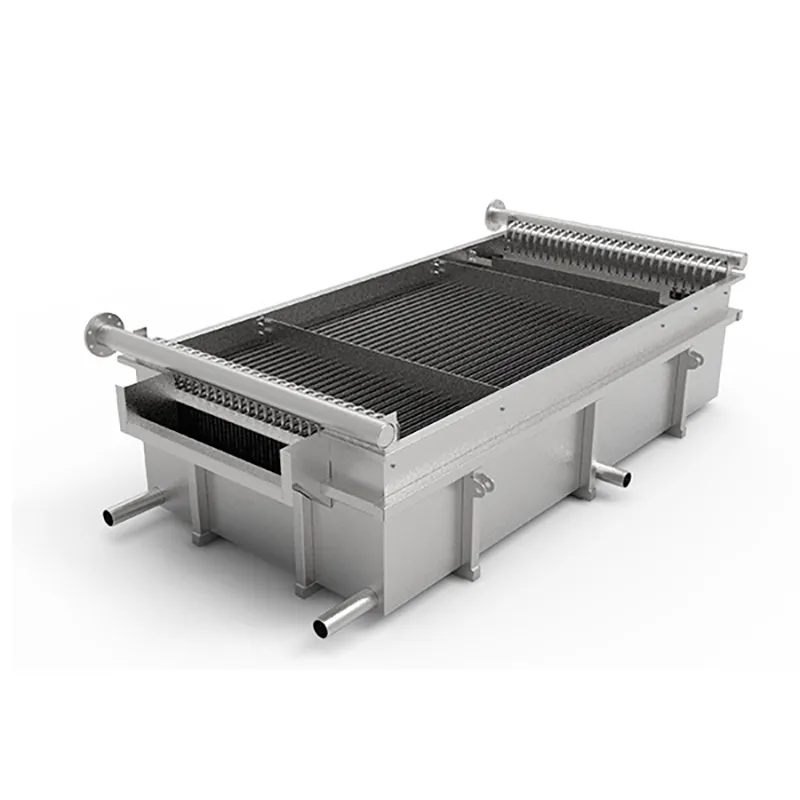
When the process stream contains dense fibers, coarse crystals, or solid suspensions, a wide gap welded plate heat exchanger is often the right choice. The wider channels are calculated based on the fluid's rheology and particle size, which prevents the dead zones and stagnation that lead to clogging. On offshore facilities, this means the exchanger can maintain throughput without frequent cleaning cycles — a significant advantage when access for maintenance is limited by weather windows or platform logistics.
Material selection is another critical factor. Offshore environments expose equipment to chloride-rich atmospheres and seawater cooling. Welded plate units can be supplied in alloys such as 316L stainless steel, duplex, or titanium, depending on the specific fluid and external exposure. The absence of gaskets also means the units tolerate thermal cycling better, which is common on platforms where process loads fluctuate.
Integrated CIP (Cleaning-in-Place) systems are available for welded plate exchangers, allowing operators to clean the unit without opening it. On an offshore platform, this reduces downtime and limits the need for manual intervention in confined spaces. The cleaning cycle can be automated and tied into the platform's control system, which helps maintain consistent thermal performance over longer campaigns.
If you are specifying a heat exchanger for offshore duty, start with the fluid properties: viscosity, solids content, particle size, and temperature range. Then consider the available space, the utilities available for cleaning, and the maintenance access. A welded plate design will not suit every offshore application, but for fouling, clogging, or high-temperature duties, it often outperforms conventional alternatives in both reliability and footprint.

 English EN





User Comments
Service Experience Sharing from Real Customers
Mike T.
Maintenance SupervisorWe swapped out our old shell-and-tube unit for one of these offshore welded plate heat exchangers about 8 months ago on our FPSO. Honestly, the difference in fouling resistance is night and day. We used to pull the old one apart every 6 weeks. Now we're pushing 6 months and the dP is still within spec. Welds look solid, no weeping at the plate edges. If you're on a salt-heavy duty, this is the way to go.
Sarah K.
Process EngineerProcured two of these for a produced water cooling skid. Thermal performance matched the vendor's data sheet pretty closely during commissioning, which is rare. Only reason I'm holding back one star is the lifting lugs were a bit awkward to rig in our tight module space. But once it was bolted down, it's been running smooth. The welded plate design definitely gives peace of mind when you're dealing with high chloride levels.
Dave R.
Reliability EngineerBeen in offshore reliability for 15 years and I've seen plenty of gasketed plate exchangers fail prematurely due to thermal cycling. These welded units are a different beast. We've had one in continuous service on a gas compression train for over a year now, zero unplanned downtime. The NDT reports were clean, and the vendor actually understood offshore spec requirements without us having to hand-hold them. Would spec again.
Tom H.
Operations ManagerNot gonna lie, the lead time was longer than we hoped, but given the custom weld map and the third-party inspection requirements, it made sense. Once it arrived, installation was straightforward. We're using it on a seawater cooling loop and so far no pitting or stress cracking issues. The real test will be the next turnaround, but early signs are good. Customer support was responsive whenever we had questions about the documentation.