Unmatched Corrosion Resistance of the Titanium Seawater Heat Exchanger in Marine Environments
Seawater cooling is a demanding application where standard heat exchangers fail quickly due to chloride-induced corrosion. This article explains why titanium seawater heat exchangers offer unmatched corrosion resistance in marine environments, covering working principles, performance parameters, and practical selection advice for process engineers and procurement managers.
When you operate a marine cooling system, the last thing you want is a heat exchanger that corrodes within months. Seawater contains high levels of chlorides, which aggressively attack common metals like stainless steel. A titanium seawater heat exchanger solves this problem by leveraging titanium’s natural oxide layer, which remains stable even in saltwater at elevated temperatures. For overseas process engineers and purchasing managers, this means lower maintenance costs, longer equipment life, and reliable operation in offshore, shipboard, and coastal power plants.
How Does a Titanium Seawater Heat Exchanger Work?
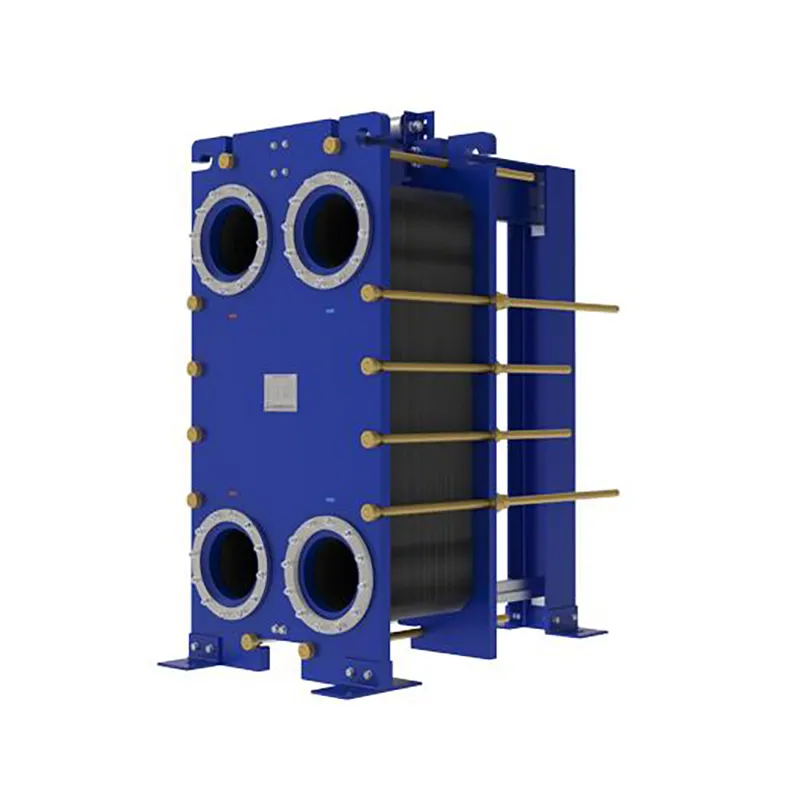
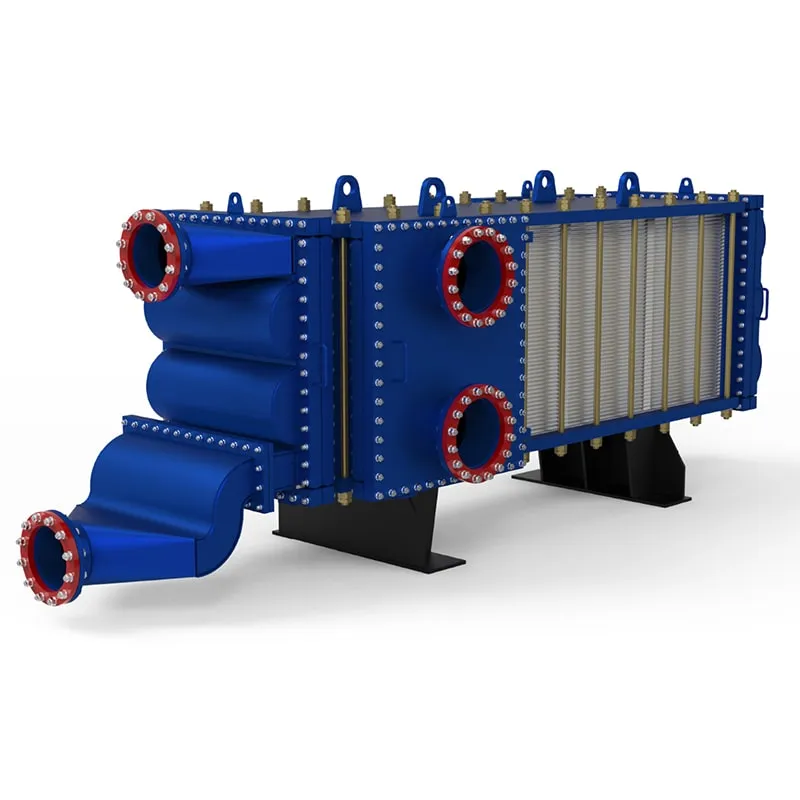
A titanium seawater heat exchanger operates on the same basic principle as any plate heat exchanger, but with titanium plates that directly contact seawater. In a typical setup, warm freshwater or process fluid flows on one side of the titanium plates, while cold seawater flows on the other side. The corrugated plate pattern creates turbulence, which enhances heat transfer efficiency. Because titanium is nearly inert in seawater, there is no galvanic corrosion or pitting, even when the seawater velocity is high or contains sand and debris.
For example, in a ship’s engine cooling system, the titanium heat exchanger takes in seawater at around 10–25°C and cools the engine jacket water from 80°C down to 50°C. The titanium plates remain unaffected by the chloride content, which can exceed 20,000 ppm. This is a clear advantage over 316L stainless steel, which would suffer from stress corrosion cracking within a year in the same conditions.
What Makes Titanium the Best Material for Seawater Heat Exchangers?
Titanium’s corrosion resistance comes from a thin, stable oxide film (TiO₂) that forms instantly on its surface. This film is self-healing if scratched, and it does not break down in the presence of chlorides. Here are the key reasons why titanium outperforms other materials in marine environments:
- No pitting or crevice corrosion: Even in stagnant seawater, titanium remains unaffected.
- Resistance to erosion-corrosion: Seawater velocities up to 10 m/s do not damage the surface.
- High temperature tolerance: Titanium retains its corrosion resistance up to 300°C in seawater.
- Low fouling tendency: The smooth surface reduces marine growth and scaling.
Compared to copper-nickel alloys, titanium offers a longer service life and eliminates the need for chemical dosing. It is also fully compatible with chlorination and other biocides used in seawater treatment.
Typical Parameters for Titanium Seawater Heat Exchangers
The table below lists commonly accepted design ranges for titanium plate heat exchangers in seawater applications. These values are industry-generic and serve as a reference for initial selection.
| Parameter |
Typical Range |
| Seawater temperature (inlet) |
5 – 30 °C |
| Process fluid temperature (inlet) |
40 – 120 °C |
| Design pressure |
6 – 16 bar |
| Maximum pressure drop |
0.5 – 1.5 bar |
| Plate material |
Grade 1 or Grade 2 titanium |
| Gasket material |
EPDM, NBR, or Viton |
| Heat transfer coefficient |
3,000 – 7,000 W/m²·K |
These parameters help you estimate the size and configuration needed for your specific duty. Always provide your actual flow rates and temperatures to get a precise thermal design.
Applications and Recommended Solutions for Marine Environments
Titanium seawater heat exchangers are used in a wide range of marine and coastal applications. Common scenarios include:
- Ships and offshore vessels: Engine cooling, hydraulic oil cooling, and freshwater generators.
- Coastal power plants: Condenser cooling and auxiliary system heat rejection.
- Desalination plants: Brine heater and heat recovery sections.
- Oil and gas platforms: Process cooling and HVAC systems.
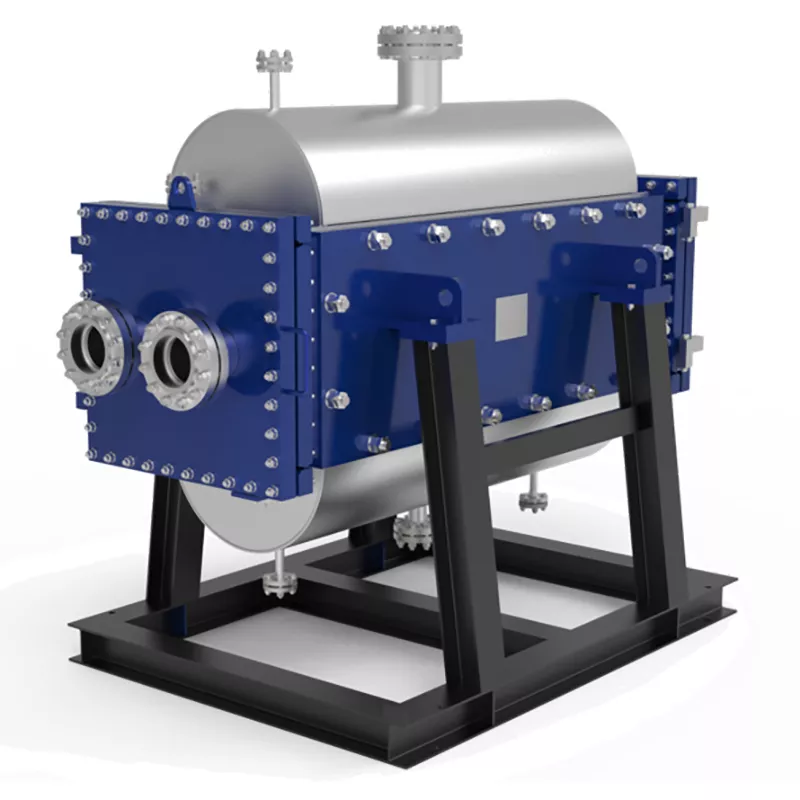
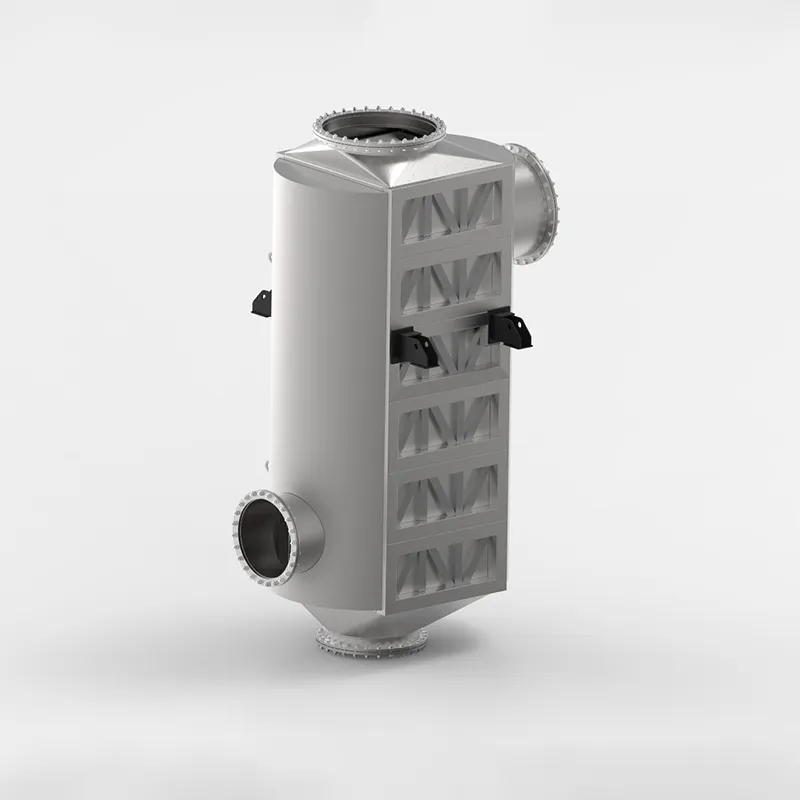
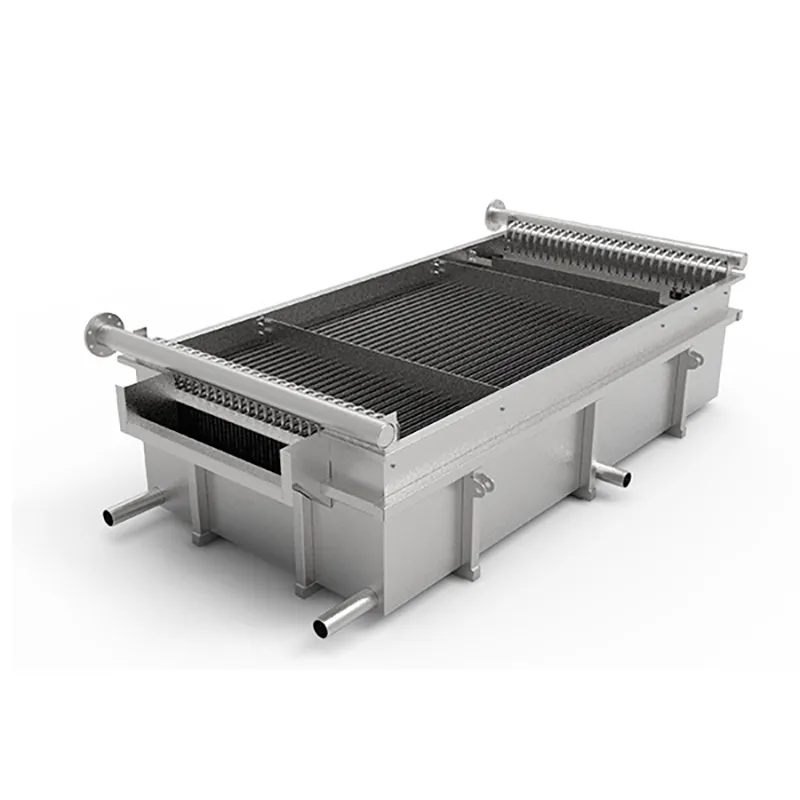
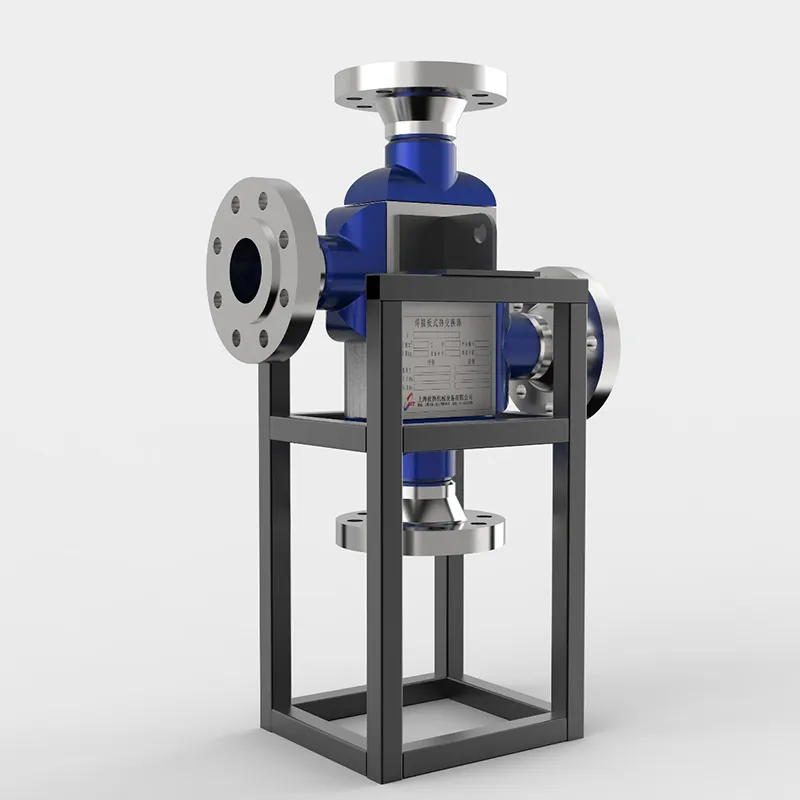
For each application, the recommended solution depends on the seawater quality and space constraints. Gasketed plate heat exchangers are suitable for clean seawater with regular maintenance access. If you need a compact, fully welded design, consider our HT-Bloc welded plate heat exchanger, which eliminates gasket leakage risks. For fluids with suspended solids, a wide gap welded plate heat exchanger offers larger flow channels to prevent clogging.
Why Choose SHPHE for Your Titanium Seawater Heat Exchanger?
SHPHE is a Shanghai-based plate heat exchanger manufacturer founded in 2005, exporting to over 20 countries. We hold ISO9001 and ASME U certifications, ensuring our products meet international quality standards. Our product lines include HT-Bloc and TP welded plate heat exchangers, wide gap welded plate heat exchangers, gasketed plate heat exchangers, PCHE, plate air preheaters, and pillow plates. All our titanium units are designed with Grade 1 or Grade 2 titanium plates, compatible with seawater service.
We offer free thermal design and selection service. Simply provide your process conditions, and our engineers will recommend the optimal model. Whether you need a direct replacement for an existing unit or a custom solution, we can deliver. Our titanium seawater heat exchangers are also compatible with Alfa Laval and GEA frame sizes, making retrofitting straightforward.
Frequently Asked Questions About Titanium Seawater Heat Exchangers
Can titanium seawater heat exchangers be used with brackish water?
Yes, titanium performs excellently in brackish water with chloride levels from 5,000 to 15,000 ppm. The same corrosion resistance applies, and no additional protection is needed.
How long does a titanium heat exchanger last in seawater?
With proper maintenance, titanium plates can last 20 years or more in seawater service. Gaskets may need replacement every 5–8 years depending on temperature and chemical exposure.
Is titanium heat exchanger more expensive than stainless steel?
The initial cost of a titanium heat exchanger is higher, but the total cost of ownership is lower due to reduced downtime, fewer replacements, and no chemical treatment costs.
Can I retrofit a titanium heat exchanger into an existing frame?
Yes, we offer titanium plate packs that fit standard frames from Alfa Laval, GEA, and other brands. Provide your frame model and plate dimensions, and we will match them.
What gasket material is recommended for seawater?
EPDM is the most common choice for seawater applications due to its good resistance to chlorides and moderate temperatures. For higher temperatures, Viton is recommended.
Do you provide thermal design support for titanium heat exchangers?
Absolutely. We offer free thermal design and selection service. Send us your flow rates, inlet and outlet temperatures, operating pressure, and media details, and we will provide a tailored proposal.
Request a Quote for Your Titanium Seawater Heat Exchanger
To get a precise recommendation for your marine cooling application, please provide the following details: flow rate (m³/h or GPM), inlet and outlet temperatures for both fluids, operating pressure, and media composition (e.g., seawater salinity, presence of sand or debris). Our engineering team will perform a free thermal calculation and select the most cost-effective titanium seawater heat exchanger for your needs. Contact us today to start your project.

 English EN





User Comments
Service Experience Sharing from Real Customers
Mike Torres
Marine Systems EngineerWe installed this titanium seawater heat exchanger on a 40-foot research vessel six months ago. The corrosion resistance is unreal—after pulling it for a routine check, there wasn't a single pit or spot of rust. Handles the constant saltwater flow like a champ. Definitely worth the upfront cost for anyone running offshore gear.
Lena Hart
Maintenance SupervisorBought this to replace a failing copper-nickel unit at a coastal desalination plant. Installation was straightforward, and the titanium build feels solid. We've seen a drop in downtime for cleaning—biofouling buildup is way less aggressive than before. Only gave it 4 stars because the initial price tag made my boss flinch, but the long-term savings are already showing.
Jake O'Connell
Chief EngineerRunning a small fleet of charter fishing boats in the Gulf, I've had my share of heat exchanger headaches. This titanium model is a game-changer. After a full season in warm, aggressive seawater, it still looks brand new. No leaks, no scaling issues. My guys are happy, and I'm not replacing parts every few months. Highly recommend for any salty operation.
Priya Chen
Process TechnicianWe swapped one into an older cooling loop at our chemical plant that uses seawater as a coolant. The thermal transfer is efficient, and the unit held up against some nasty chlorides that would have eaten a stainless steel exchanger alive. Took a bit of fiddling to match the flange alignment with our existing pipes, but once it was in, it ran smooth. Solid piece of kit.