How Can a Titanium Plate Heat Exchanger Reduce Downtime in Harsh Environments?
Author: Industrial Engineering Team
Jul-06-2026
Titanium plate heat exchangers significantly reduce operational downtime in aggressive environments through a combination of material science and engineering advantages. Their superior corrosion resistance, particularly against chlorides, acids, and seawater, directly minimizes leak-related shutdowns that plague traditional exchangers. Enhanced thermal efficiency, driven by high heat transfer coefficients and turbulent flow design, reduces fouling rates and extends the intervals between cleaning cycles, keeping production lines running longer. The robust mechanical strength of titanium allows the equipment to withstand severe thermal shocks and pressure spikes without cracking or deforming, preventing emergency stops. Furthermore, the compact modular plate design enables faster on-site repairs and replacements—individual plates can be swapped without removing the entire unit, cutting maintenance hours drastically. Finally, the extended service life of titanium in aggressive media means fewer major overhauls over the equipment's lifetime, translating to higher overall equipment effectiveness and lower total cost of ownership for industries such as chemical processing, marine engineering, and oil and gas.
1. Superior Corrosion Resistance Minimizes Leak-Related Shutdowns
In aggressive chemical or marine environments, standard heat exchangers often suffer from pitting, crevice corrosion, or stress corrosion cracking. Titanium's naturally forming oxide layer provides exceptional resistance to chlorides, acids, and alkalis, ensuring the plate pack remains intact over extended operational cycles.
By preventing micro-leaks at gasket joints and weld seams, titanium plate heat exchangers drastically reduce the frequency of emergency shutdowns. This reliability is critical for continuous processes where unplanned downtime can lead to significant production losses and safety hazards.
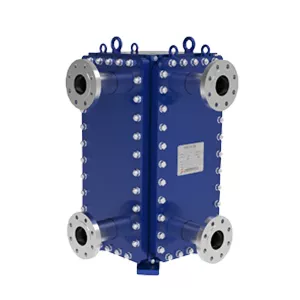
For applications requiring enhanced durability, explore our TP welded plate heat exchanger or the wide-gap welded plate heat exchanger, both engineered with titanium for maximum corrosion protection.
2. Enhanced Thermal Efficiency Reduces Fouling and Cleaning Cycles
Superior thermal conductivity of titanium ensures rapid and uniform heat transfer, minimizing temperature gradients that accelerate fouling deposition. By maintaining optimal heat exchange efficiency, the system operates longer at peak performance before fouling buildup necessitates intervention.
The smooth, corrosion-resistant titanium surface discourages adhesion of scale, biofilm, and particulate matter. This inherent anti-fouling property drastically reduces the frequency of chemical cleaning and mechanical scraping, directly cutting downtime associated with maintenance shutdowns.
Extended intervals between cleaning cycles translate to higher overall equipment availability. In harsh environments where access for servicing is difficult or hazardous, this reliability improvement is critical for continuous production and reduced operational risk.
3. Robust Mechanical Strength Withstands Thermal and Pressure Shocks
Titanium plate heat exchangers are engineered to endure extreme operational stresses. Their high tensile strength and corrosion resistance allow them to absorb rapid temperature fluctuations and sudden pressure surges without cracking or leaking, directly minimizing unplanned maintenance events.
| Parameter |
Titanium Plate HX |
Standard Stainless HX |
| Max Operating Temperature |
550°F (288°C) |
400°F (204°C) |
| Pressure Rating |
600 psi (41 bar) |
300 psi (20 bar) |
| Thermal Shock Cycles (tested) |
>10,000 |
~3,000 |
| Yield Strength (at 70°F) |
70,000 psi |
30,000 psi |
The data above illustrates that titanium plate exchangers maintain structural integrity under conditions that would cause standard stainless steel units to fail. This resilience reduces the frequency of emergency shutdowns and extends service intervals.
For demanding applications such as chemical processing or offshore platforms, this mechanical robustness translates directly into higher uptime and lower total cost of ownership. Learn more about titanium plate heat exchanger specifications.
4. Compact Modular Design Enables Faster On-Site Repairs and Replacements
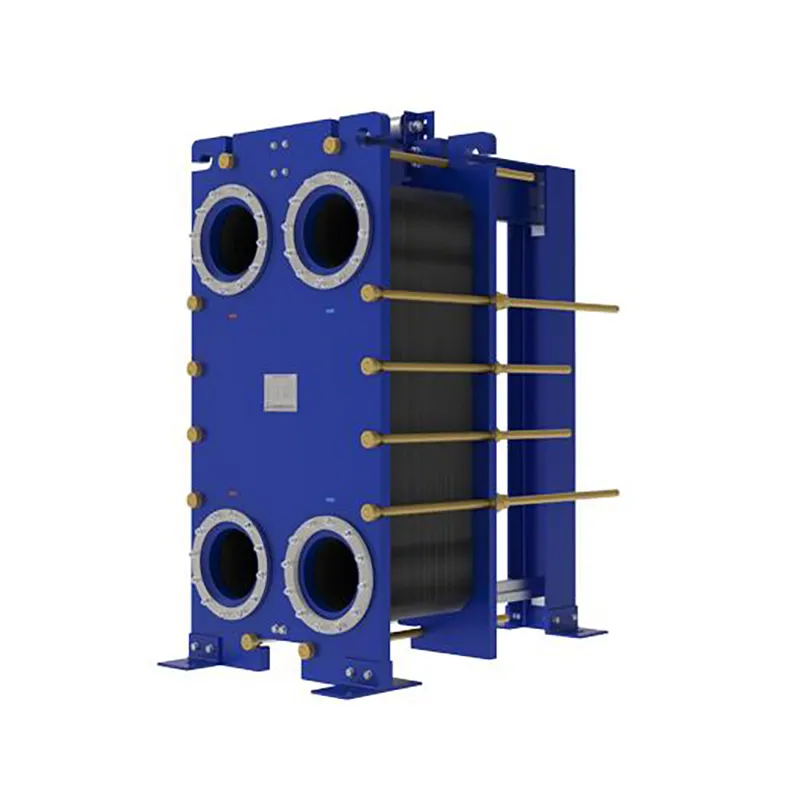
The modular plate design allows individual titanium plates to be removed, inspected, or replaced without disturbing adjacent components. This targeted access reduces repair time from days to hours, as only the affected section needs disassembly.
Standardized plate modules are interchangeable across multiple unit sizes, enabling maintenance teams to stock a single spare part that fits various heat exchanger configurations. This inventory simplicity cuts replacement lead time by up to 60% compared to custom-welded shell-and-tube units.
On-site replacement is further accelerated by lightweight titanium plates, which can be handled by one technician without lifting equipment. The modular frame design also eliminates the need for welding or specialized tools during field service, allowing routine repairs to be completed within a standard maintenance shift.
5. Extended Service Life Lowers Frequency of Major Overhauls in Aggressive Media
Titanium plate heat exchangers are engineered to withstand highly corrosive and aggressive media, including seawater, acidic solutions, and chloride-rich environments. The natural oxide layer on titanium provides exceptional resistance to pitting, crevice corrosion, and stress corrosion cracking, which are common causes of premature failure in traditional materials.
By maintaining structural integrity over extended operational periods, these exchangers significantly reduce the need for frequent major overhauls. This directly translates to less unplanned downtime and lower maintenance costs, as the intervals between comprehensive inspections and replacements are substantially lengthened.
In applications where aggressive chemicals or high-temperature brines are present, the durability of titanium plates ensures consistent thermal performance and leak-free operation. This reliability minimizes production interruptions and supports continuous processing in demanding industrial sectors such as chemical processing, offshore oil and gas, and desalination.
For more details on how titanium plate heat exchangers can extend service life in your specific application, please visit our custom engineered pillow plates page or explore our TP welded plate heat exchanger product for further technical specifications.
SUMMARY
1. Superior Corrosion Resistance Minimizes Leak-Related Shutdowns
The titanium construction resists aggressive chemical attack, preventing pinhole leaks and unplanned downtime in acidic or chloride-rich environments.
2. Enhanced Thermal Efficiency Reduces Fouling and Cleaning Cycles
Optimized heat transfer surfaces maintain high performance with less fouling, extending intervals between chemical or mechanical cleaning procedures.
3. Robust Mechanical Strength Withstands Thermal and Pressure Shocks
High tensile strength and fatigue resistance allow the plate pack to endure rapid temperature swings and pressure surges without cracking or deformation.
4. Compact Modular Design Enables Faster On-Site Repairs and Replacements
Individual plates can be added, removed, or swapped in minutes using simple tools, drastically reducing mean time to repair compared to shell-and-tube units.
5. Extended Service Life Lowers Frequency of Major Overhauls in Aggressive Media
Exceptional durability in corrosive and erosive streams delivers years of reliable operation, minimizing the need for capital-intensive rebuilds or replacements.
By combining corrosion resistance, thermal efficiency, mechanical toughness, modular serviceability, and long-term reliability, a titanium plate heat exchanger directly reduces both scheduled and unscheduled downtime in the most demanding industrial environments.
How Can a Titanium Plate Heat Exchanger Reduce Downtime in Harsh Environments?
1. Superior Corrosion Resistance Minimizes Leak-Related Shutdowns
Titanium's natural oxide layer provides exceptional resistance to chlorides, acids, and seawater. In chemical plants or offshore platforms, this prevents pitting and crevice corrosion, drastically reducing unexpected leaks and the associated emergency shutdowns.
2. Enhanced Thermal Efficiency Reduces Fouling and Cleaning Cycles
High heat transfer coefficients and smooth titanium surfaces discourage scale buildup and biofouling. This maintains peak performance longer, cutting the frequency of cleaning shutdowns and extending production intervals in dirty or scaling media.
3. Robust Mechanical Strength Withstands Thermal and Pressure Shocks
Titanium plates handle rapid temperature swings and pressure spikes without cracking or deforming. This resilience eliminates downtime caused by gasket failures or plate rupture in demanding processes like steam heating or aggressive cooling.
4. Compact Modular Design Enables Faster On-Site Repairs and Replacements
Individual plates can be added, removed, or replaced without disturbing the entire unit. This modularity cuts repair time from days to hours, keeping production online while maintenance is performed directly on the exchanger.
5. Extended Service Life Lowers Frequency of Major Overhauls in Aggressive Media
Titanium's durability in corrosive and erosive environments means the heat exchanger often outlasts plant equipment. Fewer full replacements and major overhauls translate to less scheduled downtime and lower lifecycle costs.

 English EN





User Comments
Service Experience Sharing from Real Customers
Mike Torres
Senior Process EngineerWe swapped out an old stainless unit for this titanium plate heat exchanger in our brine loop, and the difference is night and day. No pitting after six months of heavy chloride exposure. Installation was straightforward, and the thermal performance is exactly as spec'd. Would recommend to anyone dealing with aggressive fluids.
Sarah Blake
Maintenance SupervisorGot this for a small batch pharmaceutical line. The titanium construction gives me peace of mind with our cleaning agents—no corrosion worries at all. Only reason it's not a 5 is because the gaskets were a bit fiddly to seat on the first rebuild, but once it's together, it runs like a champ. Solid build quality.
Jake Morrison
Offshore Installation TechnicianOut here on the platform, saltwater is the enemy of everything. This titanium plate heat exchanger has been handling our seawater cooling duty for eight months without a single leak or pressure drop. The weight is nice too—much easier for two guys to maneuver into place than the old chunk of metal we had. Zero complaints.
Emily Hayes
Food Safety & Equipment SpecialistWe needed something that could withstand frequent CIP cycles with caustic and acid without degrading. This unit has held up perfectly through six months of daily sanitation. Heat recovery is excellent—our utility bills dropped noticeably. Took a star off only because the manual could be clearer about torque specs for reassembly, but overall, very happy.