Optimizing Thermal Performance with Supercritical CO2 Heat Exchanger Technology
Supercritical CO2 (sCO2) heat exchangers are reshaping how process industries handle high-temperature, high-pressure thermal duties. Unlike conventional shell-and-tube units, sCO2 technology delivers superior heat transfer coefficients, compact footprints, and improved cycle efficiency. For engineers and procurement managers evaluating next-generation heat exchange solutions, understanding the working principles, performance parameters, and application fit is essential. This article provides a practical overview of supercritical CO2 heat exchanger technology, its key features, and how SHPHE’s welded plate heat exchangers serve as a reliable alternative to legacy designs.
What Makes Supercritical CO2 Heat Exchangers Different?
Supercritical CO2 operates above its critical point (31.1°C, 73.8 bar), where it behaves as a dense fluid with gas-like viscosity and liquid-like density. This unique state allows sCO2 heat exchangers to achieve heat transfer coefficients 3–5 times higher than typical gas-to-liquid exchangers. The result is a significantly smaller heat transfer area for the same duty, reducing both capital cost and installation footprint.
In practical terms, a supercritical CO2 heat exchanger can handle temperatures up to 700°C and pressures exceeding 300 bar, depending on the design and materials. These capabilities make sCO2 technology particularly attractive for waste heat recovery, concentrated solar power, and advanced nuclear cycles. However, the high operating pressure demands robust construction—typically fully welded plate designs or printed circuit heat exchangers (PCHE).
How Does a Supercritical CO2 Heat Exchanger Work in Practice?
In a typical sCO2 Brayton cycle, the working fluid is compressed, heated, expanded through a turbine, and then cooled before returning to the compressor. The heat exchanger plays two critical roles: the recuperator (high-temperature side) recovers heat from the turbine exhaust, and the cooler (low-temperature side) rejects waste heat to the environment or a secondary loop.
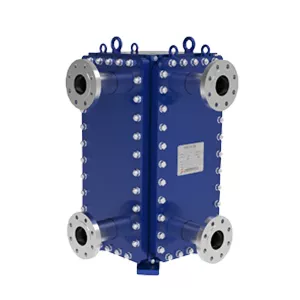
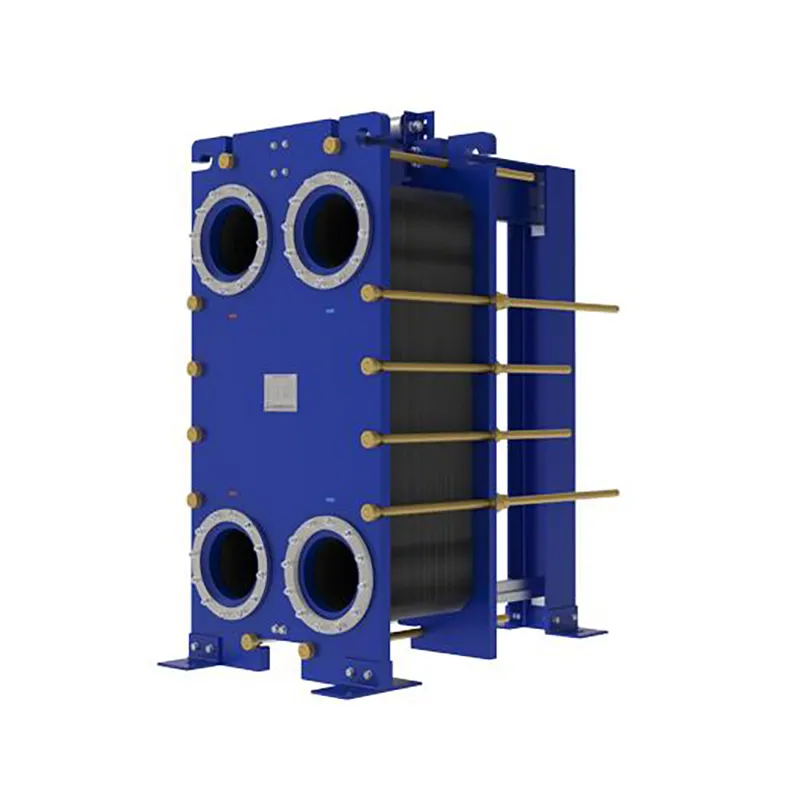
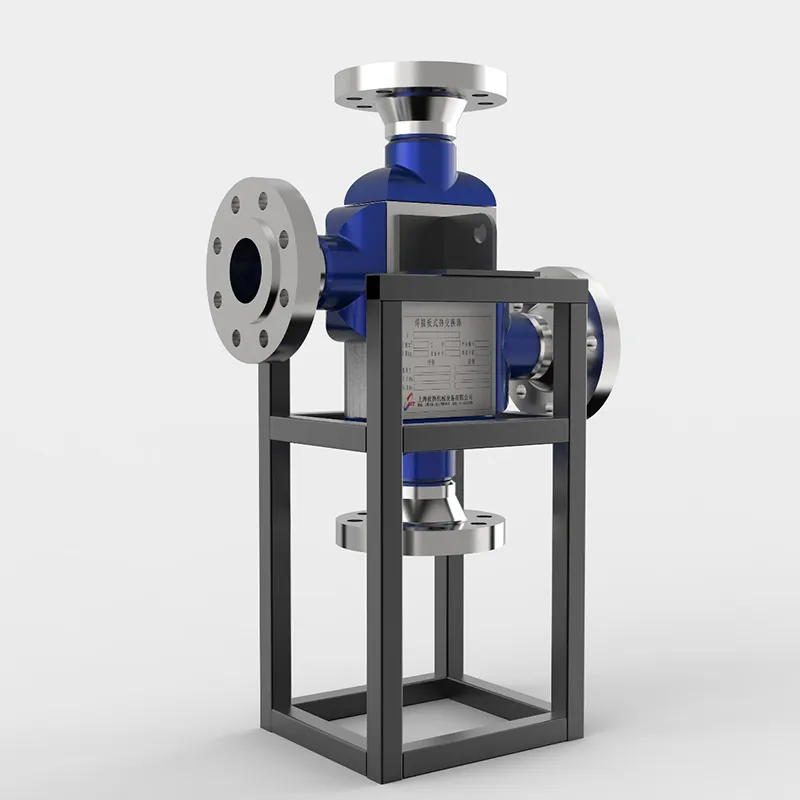
For process engineers, the key challenge is managing the sharp property changes near the pseudo-critical point. SHPHE’s TP Welded Plate Heat Exchangers are designed with optimized channel geometries that minimize thermal stress and maintain stable performance across a wide operating window. The fully welded construction eliminates gaskets, making the unit suitable for high-pressure sCO2 service without leakage risks.
Key Features and Typical Parameter Ranges
When evaluating a supercritical CO2 heat exchanger, consider these commonly accepted performance ranges:
- Operating pressure: 80–300 bar (design pressure depends on code requirements)
- Temperature range: -40°C to 700°C (material-limited; stainless steel or nickel alloys common)
- Heat transfer coefficient: 1,000–5,000 W/m²·K (depending on flow regime and geometry)
- Pressure drop: Typically 0.5–3 bar per side (optimized for cycle efficiency)
- Compactness: Up to 80% smaller footprint compared to shell-and-tube for equivalent duty
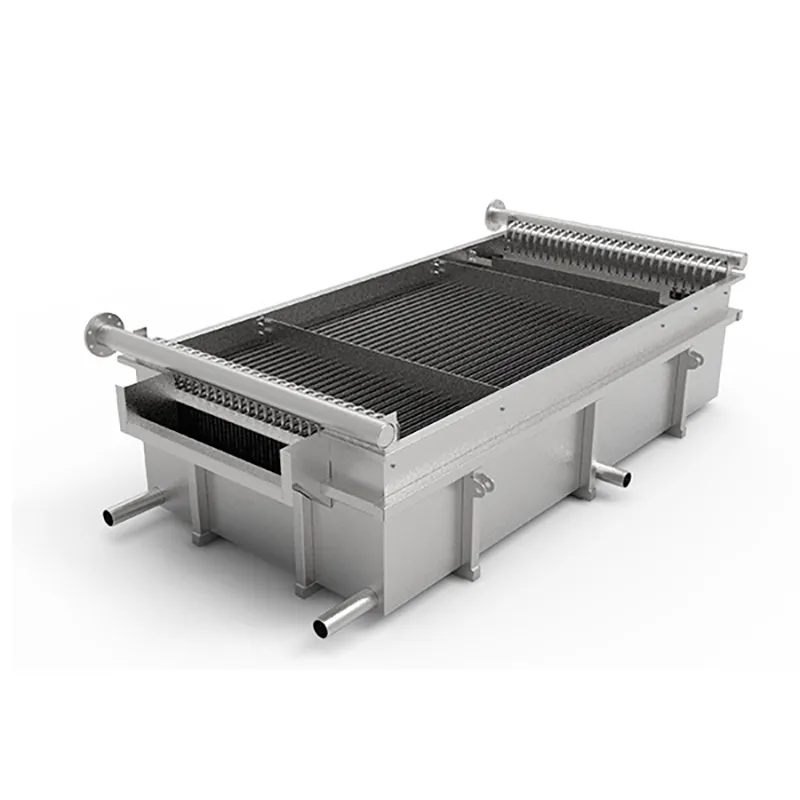
SHPHE offers free thermal design and selection services to help match these parameters to your specific process conditions. For applications requiring extreme pressure or temperature, our Printed Circuit Heat Exchanger (PCHE) line provides diffusion-bonded channels capable of handling up to 600 bar with minimal fouling.
Applications and Recommended Solutions for sCO2 Systems
Supercritical CO2 heat exchangers are deployed across several growing sectors:
- Waste heat recovery: sCO2 cycles capture exhaust heat from gas turbines or industrial furnaces, boosting overall plant efficiency by 5–10%.
- Concentrated solar power (CSP): High-temperature sCO2 receivers and recuperators replace molten salt systems, reducing thermal storage costs.
- Nuclear power: Small modular reactors (SMRs) use sCO2 as a secondary coolant for compact, high-efficiency power conversion.
- Geothermal: Supercritical CO2 is used as a working fluid in enhanced geothermal systems (EGS) for improved heat extraction.
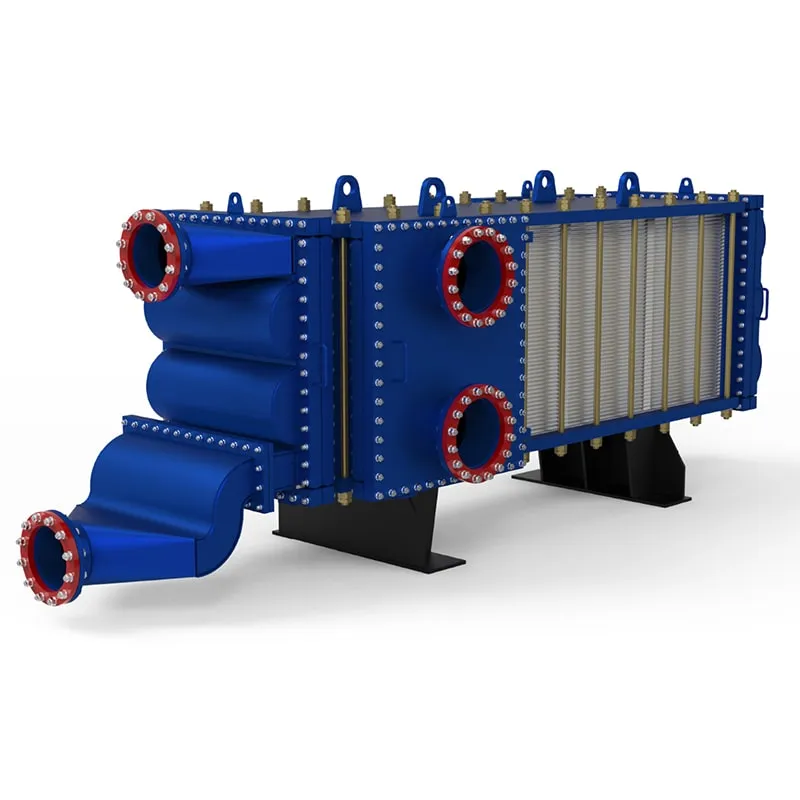
For each application, SHPHE recommends a tailored approach. Our HT-Bloc Welded Plate Heat Exchangers are an excellent choice for recuperator duties up to 600°C, while the Wide Gap Welded Plate Heat Exchangers handle fluids with particulates or high fouling potential in the cooling loop. All designs are compatible with ASME U and ISO9001 certification standards.
Why SHPHE for Your Supercritical CO2 Heat Exchanger Needs?
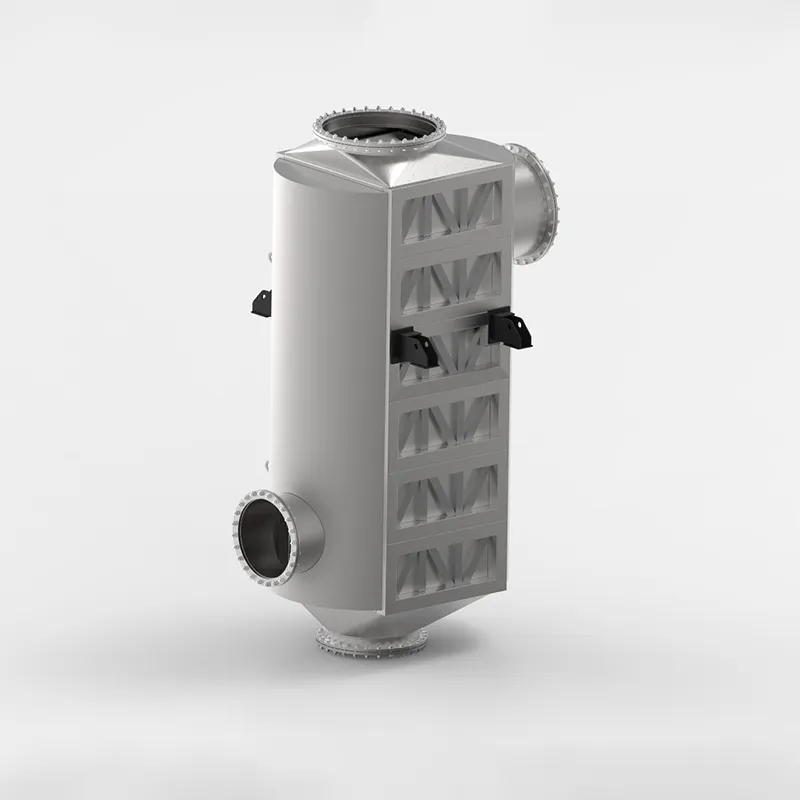
SHPHE, founded in 2005 and based in Shanghai, has been manufacturing plate heat exchangers for over 18 years. We export to more than 20 countries and hold ISO9001 and ASME U certifications. Our product lines—including HT-Bloc/TP Welded Plate Heat Exchangers, Wide Gap Welded Plate Heat Exchangers, Gasketed Plate Heat Exchangers, PCHE, Plate Air Preheaters, and Pillow Plates—cover the full spectrum of sCO2 thermal management needs.
Unlike generic suppliers, we provide free thermal design and selection services. Our engineers work directly with your process data to optimize channel geometry, material selection, and pressure drop targets. Whether you need a drop-in replacement for an existing unit or a custom-engineered solution, SHPHE delivers a supercritical CO2 heat exchanger that meets your exact specifications without unnecessary cost.
Our welded plate designs are a robust alternative to Alfa Laval Compabloc or GEA units, offering similar performance with faster lead times and competitive pricing. For high-pressure sCO2 service, our fully welded construction eliminates gasket failure risks and extends maintenance intervals.
Frequently Asked Questions About Supercritical CO2 Heat Exchangers
Q1: What is the maximum pressure a supercritical CO2 heat exchanger can handle?
The maximum design pressure depends on the construction type. For welded plate heat exchangers, common design pressures range from 80 to 300 bar. PCHE units can go up to 600 bar. Always verify with the manufacturer based on your specific code requirements (ASME, PED, etc.).
Q2: Can I use a standard gasketed plate heat exchanger for sCO2 service?
No. Gasketed units are not recommended for high-pressure sCO2 applications due to leakage risks and temperature limits. Fully welded or diffusion-bonded designs are required to safely contain supercritical CO2 at elevated pressures and temperatures.
Q3: How does the thermal performance of sCO2 compare to conventional heat transfer fluids?
Supercritical CO2 offers heat transfer coefficients 3–5 times higher than typical gas-to-liquid exchangers. This translates to a 50–80% reduction in heat transfer area for the same duty, making sCO2 systems more compact and cost-effective in high-temperature applications.
Q4: What materials are used in supercritical CO2 heat exchangers?
Stainless steel (304L, 316L) is common for moderate temperatures. For higher temperatures (above 500°C), nickel alloys like Inconel 625 or Hastelloy are used. Material selection depends on corrosion resistance, creep strength, and cost constraints.
Q5: How do I size a supercritical CO2 heat exchanger for my process?
Sizing requires accurate inlet/outlet temperatures, flow rates, and pressure drops for both sides. SHPHE offers free thermal design services. Provide your process conditions, and our engineers will recommend the optimal configuration, including channel count, plate geometry, and material grade.
Q6: Is SHPHE’s supercritical CO2 heat exchanger compatible with existing Alfa Laval or GEA systems?
Yes. SHPHE designs its welded plate heat exchangers as a direct alternative to Compabloc and GEA units. Our units match standard nozzle orientations and footprint dimensions, allowing easy retrofit without major piping modifications.
Request a Quote for Your Supercritical CO2 Heat Exchanger
To get a precise recommendation for your supercritical CO2 heat exchanger project, please provide the following details:
- Flow rate (kg/s or lb/hr) for both hot and cold sides
- Inlet and outlet temperatures (°C or °F)
- Operating pressure (bar or psi)
- Media composition (CO2 purity, presence of contaminants)
- Allowable pressure drop
- Preferred material (stainless steel, nickel alloy, etc.)
Contact SHPHE today with your process data. Our engineering team will respond with a free thermal design, selection report, and competitive pricing for your supercritical CO2 heat exchanger. We look forward to helping you optimize your thermal performance.

 English EN





User Comments
Service Experience Sharing from Real Customers
Miles Chen
Process EngineerWe swapped out an older shell-and-tube setup for this supercritical CO2 unit six months ago. The thermal efficiency jump was immediate—our cooling loop now hits steady state in half the time. Installation was straightforward, and the compact footprint freed up floor space we desperately needed. No leaks, no fuss. Solid buy.
Tara O'Neill
Senior R&D ScientistI've been testing this heat exchanger in a lab-scale Brayton cycle rig for a few weeks. The pressure drop is impressively low for a sCO2 design, and the transient response during load changes is clean. My only minor gripe is that the mounting bracket could be sturdier for high-vibration setups, but the core performance is top-notch.
Raj Patel
Maintenance SupervisorIn a geothermal binary plant, reliability is everything. This supercritical CO2 exchanger has been running 24/7 for eight months with zero fouling issues. The cleaning ports are well placed, and the material holds up against the brine side without pitting. My crew actually likes working on it—that's rare.
Elena Vasquez
Graduate Research AssistantWe used this for a concentrated solar thermal project. The heat transfer rates matched the datasheet specs, which was great. But the documentation was a bit sparse on the exact material grade for the high-temp side, and customer support took three days to get back to me. Works fine once it's set up, but getting there was a hassle.