
SHPHE has completed a batch of custom plate air preheaters for a domestic lithium iron phosphate project. Installed downstream of an incineration process, the equipment recovers heat from hot exhaust gas while addressing the dust, temperature variation and corrosion conditions associated with battery-material production.
The hot side of the delivered equipment handles high-temperature incinerator exhaust. Recovering part of this heat can support process-air or other thermal requirements while lowering the temperature presented to downstream equipment such as wet scrubbers. The useful recovery depends on the receiving stream and the operating hours during which a heat demand is available.
This duty should be distinguished from liquid-slurry cooling elsewhere in an LFP plant. A gas-to-gas air preheater must accommodate gas volume, dust transport and duct pressure losses. A slurry exchanger is selected using different fluid and solids characteristics.
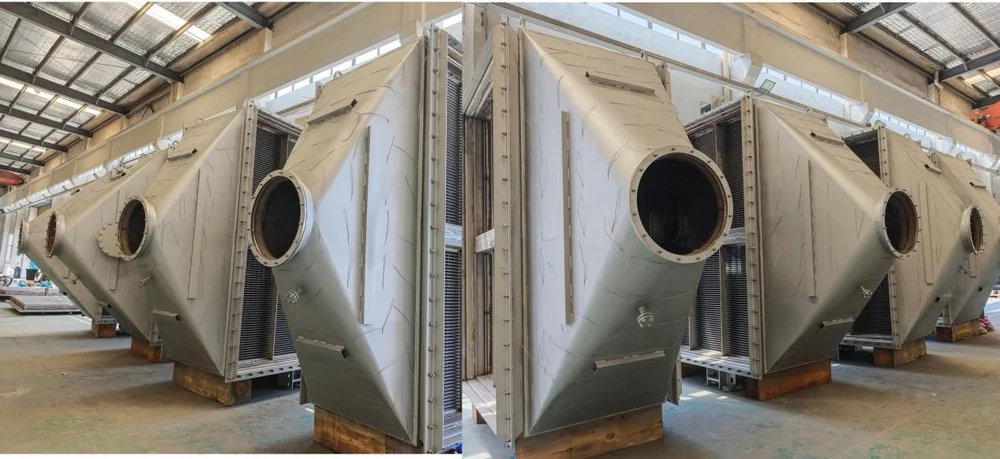
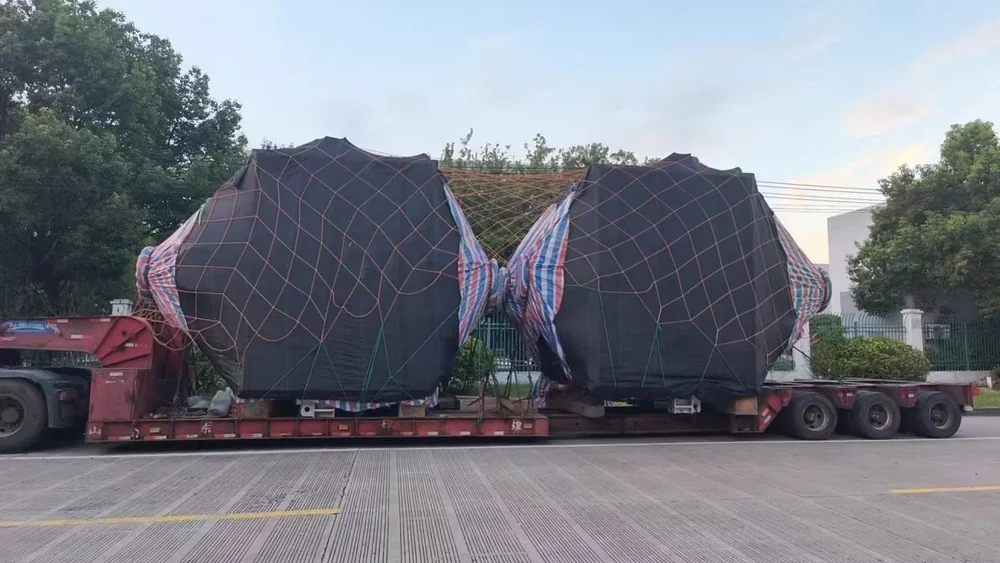
The plate air preheater transfers energy through metal plates that separate hot exhaust from the receiving gas stream. SHPHE offers plate and channel configurations selected for the process, with modular arrangements to suit transport and installation constraints.
For a batch delivery, matching the units to a common design basis is important. The datasheet should specify whether exhaust flow is quoted at actual or normalized conditions, the expected gas composition and the inlet-temperature range. Mixing those bases can distort equipment sizing and fan calculations.
| Challenge | Design question |
|---|---|
| Dust deposition | Can particles pass through the selected channel, and can deposits be removed at the planned outage? |
| Condensation and corrosion | What are the gas dew-point conditions and the minimum local plate-wall temperatures? |
| Thermal cycling | How will the module accommodate expansion during start-up, shutdown and load changes? |
| Fan capacity | Does the complete duct and exchanger pressure loss remain within the available margin? |
SHPHE's air-film and cold-end design options are considered against the actual gas composition and operating envelope. They support corrosion management; they do not replace a dew-point assessment or make every exhaust stream non-corrosive.
A heat-recovery proposal should compare recovered heat with additional fan power, cleaning demand and plant availability. This gives a more useful basis for a battery-material project than a universal percentage fuel-saving claim. Seasonal operation and partial-load conditions should be included when they materially change the balance.
Provide gas composition, flow basis, temperature range, dust loading and particle characteristics, the required cold-stream outlet condition and allowable pressure drop. Include the incinerator and scrubber interfaces, access restrictions and the intended cleaning method.



 English EN