What Is an Industrial Heat Recovery System and Why Does It Matter?
An industrial heat recovery system is a setup that captures thermal energy from process streams that would otherwise be vented or drained. In a typical manufacturing plant, 20–50% of input energy leaves as waste heat. By recovering this energy, you reduce fuel consumption, lower greenhouse gas emissions, and improve overall plant efficiency. Plate heat exchangers are the core component in most modern recovery loops because they offer high heat transfer coefficients in a compact footprint.
For overseas process engineers and purchasing managers, the key is selecting a heat exchanger that handles your specific media—whether it's corrosive chemicals, viscous fluids, or particle-laden gases. SHPHE, founded in Shanghai in 2005, provides free thermal design and selection services to match your process conditions. Their product range includes welded plate, gasketed plate, and printed circuit heat exchangers (PCHE), all ISO9001 and ASME U certified.
How Does a Plate Heat Exchanger Work in a Heat Recovery Loop?
The working principle is straightforward: two fluid streams flow through alternating channels in a plate pack, transferring heat without mixing. In a recovery application, the hot stream (e.g., exhaust gas at 300°C or process liquid at 120°C) passes on one side, while a cold stream (e.g., incoming water or combustion air) absorbs the heat on the other side.
Key process scenarios include:
- Preheating boiler feedwater with steam condensate
- Recovering heat from dryer exhaust to warm incoming air
- Using hot reactor effluent to preheat raw materials
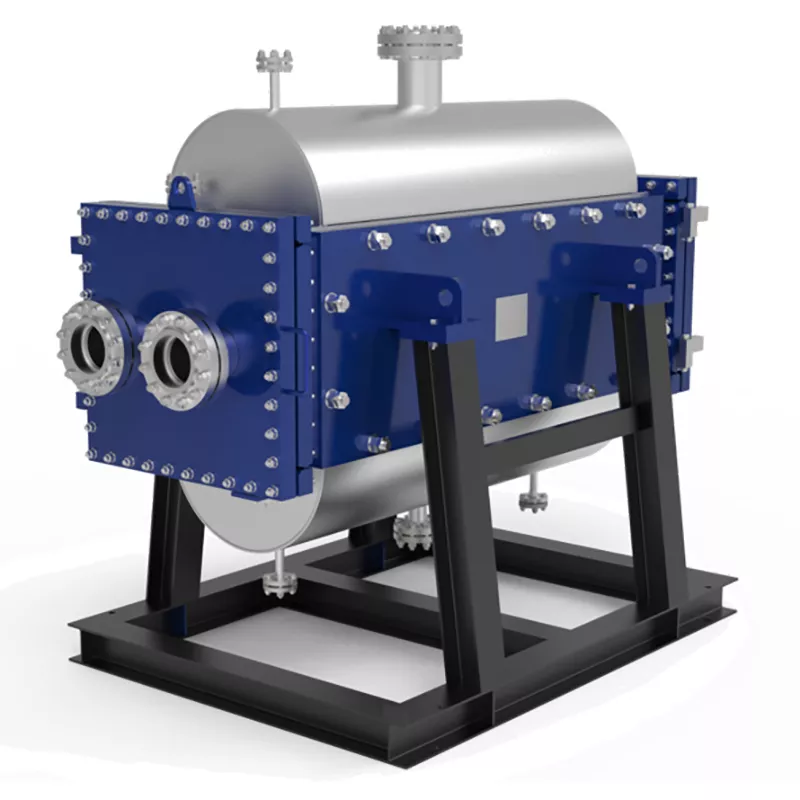
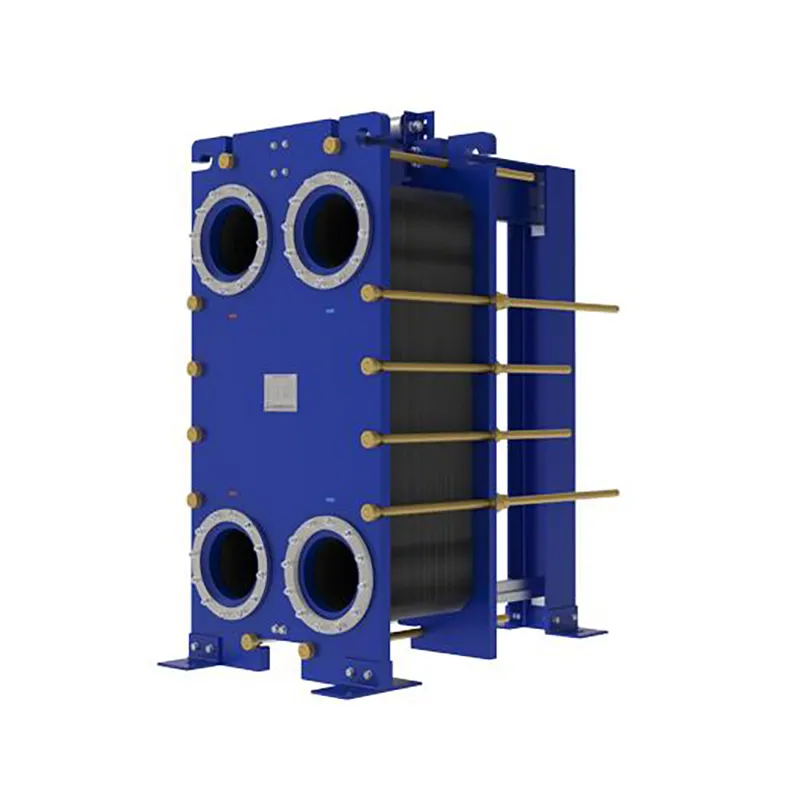
For high-temperature or high-pressure duties, welded plate heat exchangers like the HT-Bloc or TP series from SHPHE are preferred because they eliminate gasket failure risks. Gasketed plate units are a cost-effective alternative for clean, low-pressure fluids.
What Are the Typical Parameter Ranges for Heat Recovery Systems?
Commonly accepted ranges for industrial heat recovery systems are:
| Parameter |
Typical Range |
| Hot side temperature |
80°C – 500°C |
| Cold side temperature |
10°C – 150°C |
| Operating pressure |
Up to 30 bar (gasketed), up to 100 bar (welded) |
| Flow rate per stream |
1 – 500 m³/h |
| Heat recovery efficiency |
60% – 95% |
These ranges are industry-generic. Your specific values depend on media properties, allowable pressure drop, and fouling tendencies. SHPHE engineers can run thermal simulations to optimize plate patterns and materials.
Which Applications Benefit Most from Heat Recovery?
Heat recovery is widely applied across manufacturing sectors. Top applications include:
- Chemical processing – Recover heat from exothermic reactions to preheat feed streams
- Food and beverage – Capture heat from pasteurization or evaporation processes
- Petrochemical refineries – Preheat crude oil with hot product streams
- Pharmaceutical manufacturing – Recover heat from distillation columns
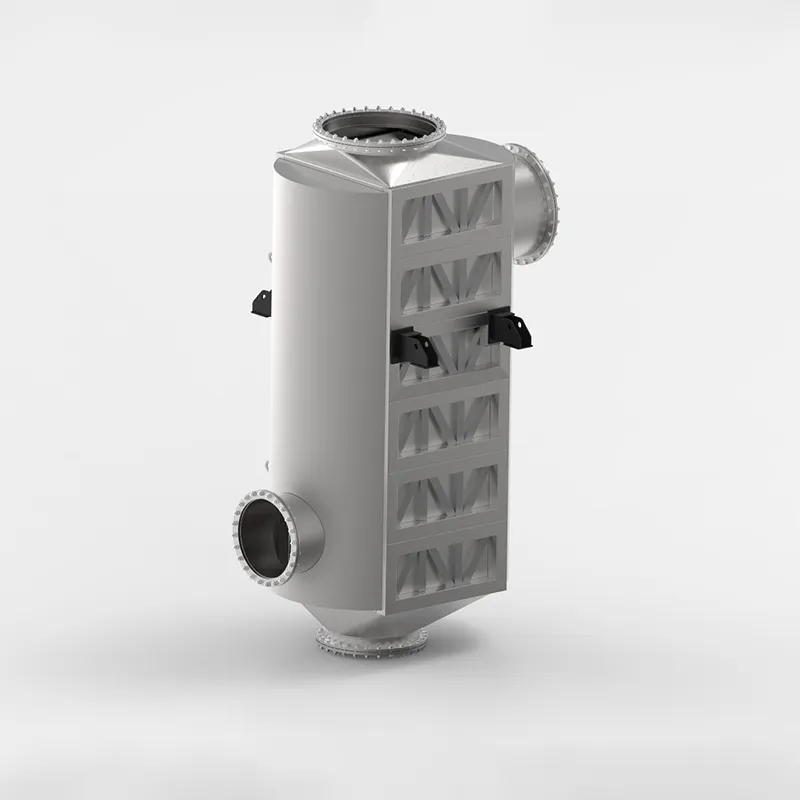
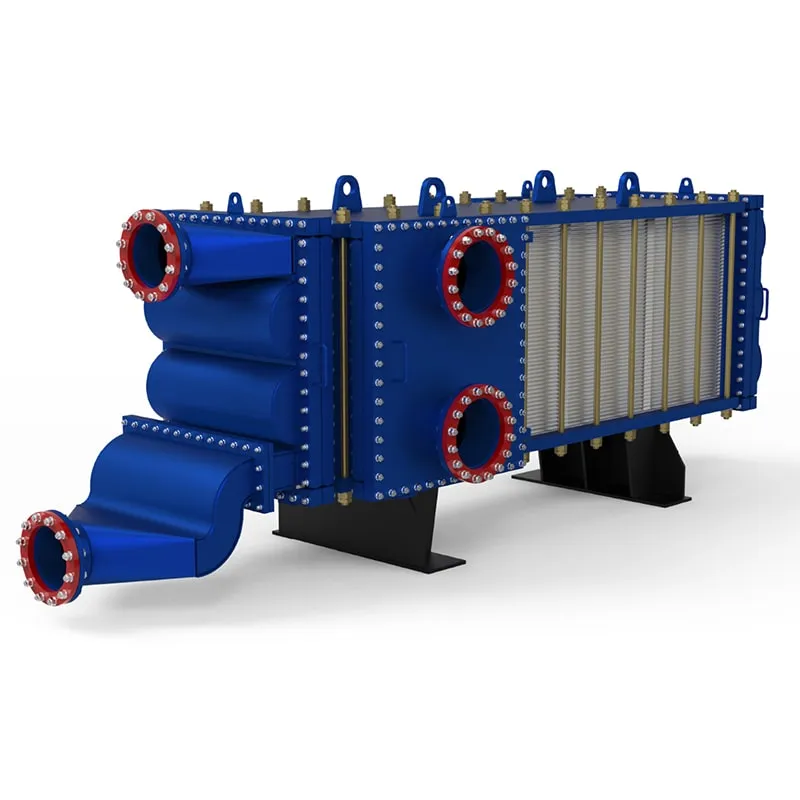
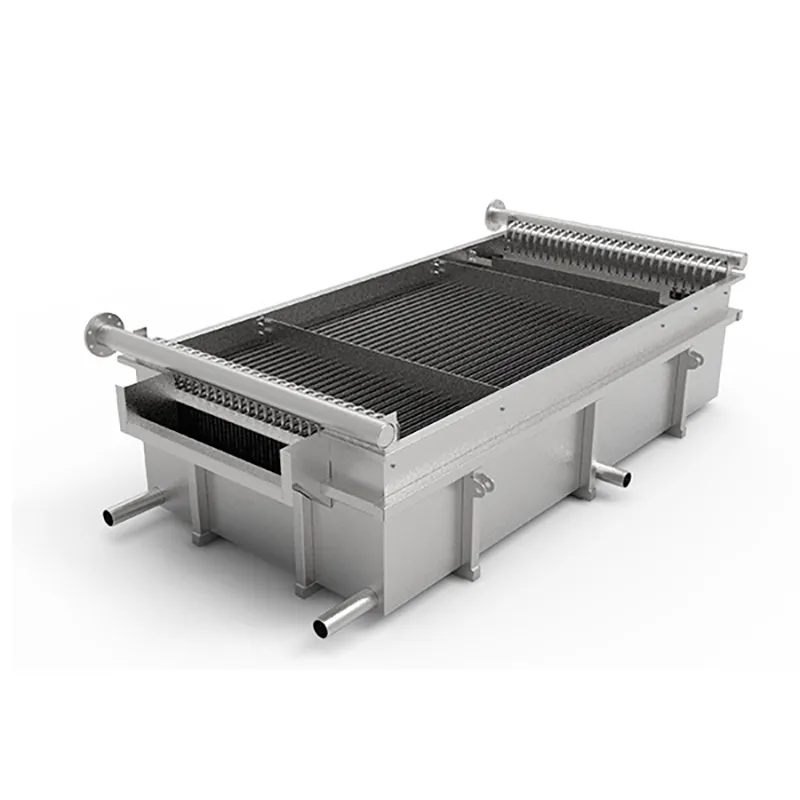
For each application, the recommended solution varies. For dirty or viscous fluids, a wide gap welded plate heat exchanger handles particles up to 5 mm without clogging. For clean, high-pressure duties, the HT-Bloc welded plate heat exchanger offers robust performance up to 100 bar. If you need a compact solution for gas-to-gas recovery, plate air preheaters from SHPHE are a proven choice.
Why Choose SHPHE for Your Heat Recovery System?
SHPHE has been manufacturing plate heat exchangers since 2005, exporting to over 20 countries. Their product lines include HT-Bloc welded plate, TP welded plate, wide gap welded plate, gasketed plate heat exchangers, PCHE, plate air preheaters, and pillow plates. All units are ISO9001 and ASME U certified, ensuring quality and compliance with international standards.
What sets SHPHE apart is the free thermal design and selection service. You provide your process parameters—flow rate, temperature, pressure, and media details—and their engineers recommend the optimal heat exchanger model and sizing. This saves you weeks of engineering time and ensures the system integrates smoothly into your existing plant layout.
Additionally, SHPHE units are compatible with major brands like Alfa Laval, Compabloc, and GEA, making them a reliable alternative for retrofit projects. Whether you need a replacement bundle or a complete recovery skid, SHPHE delivers cost-effective solutions.
Frequently Asked Questions About Industrial Heat Recovery Systems
Q: What is the typical payback period for an industrial heat recovery system?
A: Payback periods range from 12 to 36 months, depending on energy prices, system size, and operating hours. For a plant running 8,000 hours per year, a 20% fuel saving often pays back the investment in under two years.
Q: Can I retrofit a heat recovery system into an existing plant?
A: Yes. Most plate heat exchangers are modular and can be installed with minimal piping changes. SHPHE offers compact designs that fit into tight spaces, and their engineering team can help with integration studies.
Q: What materials are used for corrosive fluids?
A: Common materials include 316L stainless steel, titanium, Hastelloy, and duplex alloys. SHPHE selects the appropriate material based on your fluid composition and temperature.
Q: How do I size a heat recovery heat exchanger?
A: Sizing requires flow rates, inlet/outlet temperatures, allowable pressure drop, and fluid properties. SHPHE provides free thermal design—simply submit your process data, and they will calculate the required heat transfer area and plate count.
Q: What maintenance is needed for welded plate heat exchangers?
A: Welded units require minimal maintenance. Periodic cleaning of the process side (e.g., chemical wash or backflushing) is recommended every 6–12 months, depending on fouling rate. Gasketed units need gasket replacement every 3–5 years.
Q: Can I use a heat recovery system for both liquid and gas streams?
A: Yes. Plate air preheaters handle gas-to-gas recovery, while welded plate exchangers handle liquid-to-liquid or liquid-to-gas duties. SHPHE offers specialized designs for each media combination.
Request a Quote for Your Industrial Heat Recovery System
Ready to optimize energy use in your plant? Contact SHPHE with your process details: flow rate (m³/h or kg/h), hot and cold side temperatures (°C), operating pressure (bar), and media type (e.g., steam, water, oil, gas). Their engineering team will provide a free thermal design and quotation within 48 hours. An industrial heat recovery system from SHPHE helps you cut energy costs, meet sustainability goals, and improve process reliability.

 English EN





User Comments
Service Experience Sharing from Real Customers
Elena
Maintenance SupervisorWe installed this system six months ago at our dairy processing plant. The heat recovery unit slashed our natural gas bill by nearly 30%, and the installation team was surprisingly knowledgeable about food-grade requirements. Only minor hiccup was the initial calibration, but their tech support walked us through it in an afternoon.
Marcus
Process EngineerFor a mid-sized chemical plant like ours, this heat recovery system is a solid workhorse. We're capturing waste heat from our distillation columns and using it to preheat feed water. The ROI looks better than I projected—about 14 months. I'd give it five stars if the dashboard software were a bit more intuitive for non-engineers.
Priya
Energy ManagerFinally a system that doesn't require a PhD to maintain. We retrofitted it onto two old furnaces in our automotive parts foundry, and the temperature recovery is consistently above spec. The modular design meant we could phase the installation without shutting down production. Our carbon footprint report is looking much greener this quarter.
Tomás
Facility Operations LeadIt works, but the upfront cost was steep for our small brewery. On the plus side, the heat exchanger handles our wort boiling vapors without fouling up as fast as I feared. I've had to replace one gasket set already, though. If you've got the budget and a decent maintenance crew, it'll pay off—just don't expect a plug-and-play miracle.