Optimizing Thermal Performance in District Heating Substation Heat Exchanger Units
District heating substations rely on heat exchanger units to transfer thermal energy efficiently from primary networks to secondary building loops. This article explores how optimizing thermal performance in these units reduces operational costs, extends equipment life, and ensures reliable heat supply. We cover working principles, key design parameters, application scenarios, and practical solutions for engineers and procurement managers.
What Makes a Heat Exchanger Unit Critical in District Heating?
In a district heating substation, the heat exchanger unit is the core component that separates the primary hot water or steam network from the secondary building system. Its thermal performance directly determines how much heat is delivered to end users and at what cost. Poorly performing units lead to higher return temperatures, increased pumping energy, and uneven heat distribution. For process engineers and purchasing managers, selecting a unit that balances heat transfer efficiency with pressure drop is a daily challenge.
How Does a District Heating Substation Heat Exchanger Work?
The working principle is straightforward: primary hot water flows through one set of channels while secondary water flows through adjacent channels, separated by thin metal plates. Heat transfers through the plates without mixing the fluids. In a typical substation, the primary supply temperature ranges from 80°C to 120°C, and the secondary return temperature is designed to be below 40°C to maximize network efficiency. Plate heat exchangers are preferred because they offer high thermal effectiveness (up to 95%) in a compact footprint.
Key Parameters for Optimizing Thermal Performance
To achieve optimal performance, engineers must evaluate several parameters during the design and selection phase:
- Plate material and thickness: Stainless steel 304/316 is common; thickness typically 0.4–0.6 mm for good heat transfer and corrosion resistance.
- Chevron angle pattern: High-angle patterns (60°) provide higher heat transfer but also higher pressure drop; low-angle patterns (30°) reduce pressure drop but lower thermal performance.
- Flow arrangement: Counter-current flow yields the highest log mean temperature difference (LMTD).
- Pressure drop limits: Primary side typically 20–50 kPa; secondary side 30–60 kPa.
- Fouling factor: A design allowance of 0.00002–0.00005 m²·K/W is standard for clean water applications.
Common Applications in District Heating Systems
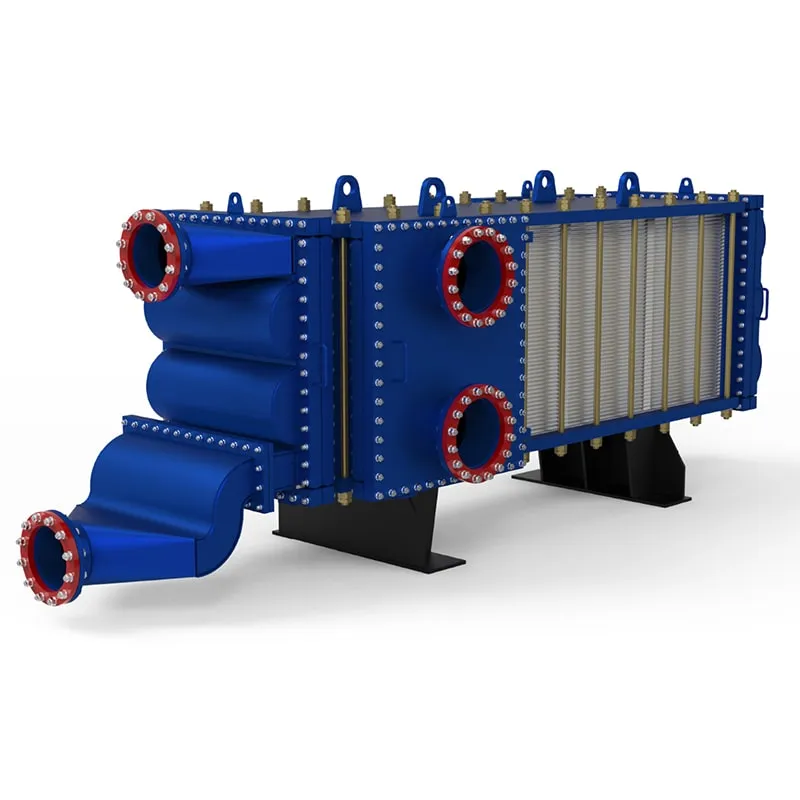
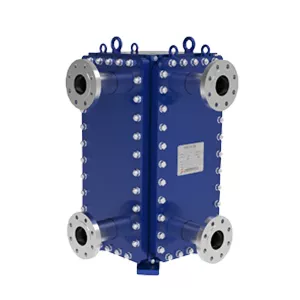
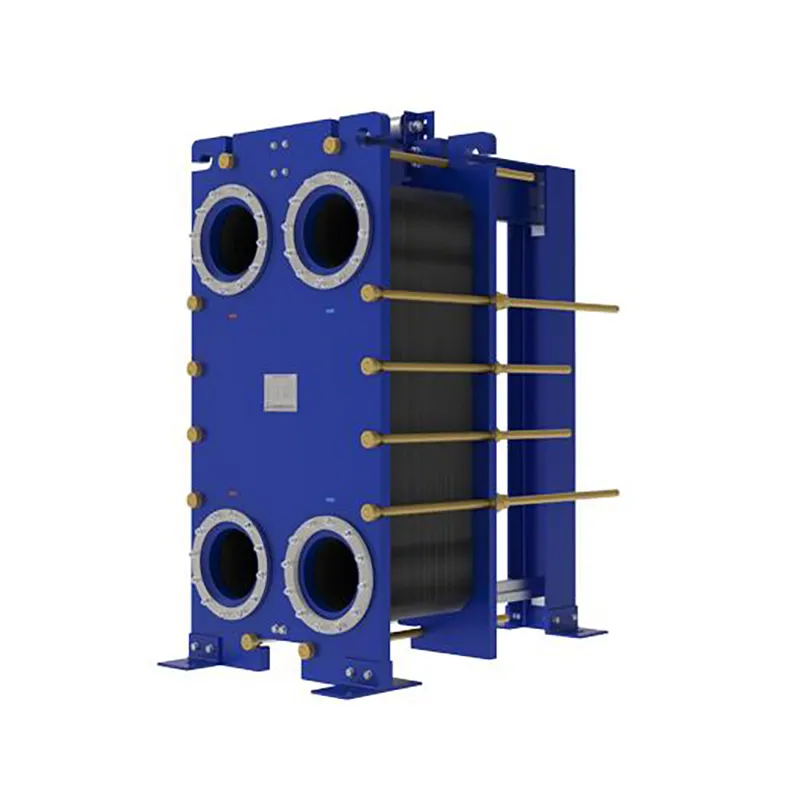
District heating substation heat exchanger units are used in residential complexes, commercial buildings, and industrial facilities. They handle capacities from 50 kW to 10 MW or more. In new installations, compact gasketed plate heat exchangers are often chosen for their ease of maintenance and expandability. For high-temperature or high-pressure applications, welded plate heat exchangers provide a leak-free solution.
Why Choose SHPHE for Your Heat Exchanger Needs?
SHPHE, a Shanghai-based manufacturer founded in 2005, specializes in plate heat exchanger technology and exports to over 20 countries. With ISO9001 and ASME U certifications, the company offers a full range of products including HT-Bloc and TP welded plate heat exchangers, wide gap welded plate heat exchangers, gasketed plate heat exchangers, PCHE, plate air preheaters, and pillow plates. Their free thermal design and selection service helps engineers find the right unit without upfront engineering costs. For district heating substations, SHPHE units are compatible with and serve as reliable alternatives to brands like Alfa Laval and GEA.
How to Select the Right Heat Exchanger Unit for Your Substation?
Selection starts with defining operating conditions: primary and secondary flow rates, inlet and outlet temperatures, allowable pressure drops, and fluid properties. For district heating, a typical design might involve a primary side of 110°C supply and 50°C return, with a secondary side of 70°C supply and 30°C return. Engineers should also consider future load growth. TP welded plate heat exchangers are ideal for high-temperature applications, while gasketed units offer flexibility for seasonal load changes.
Typical Parameter Ranges for District Heating Heat Exchangers
| Parameter |
Typical Range |
| Primary supply temperature |
80–120°C |
| Secondary supply temperature |
50–80°C |
| Design pressure |
1.0–2.5 MPa |
| Heat transfer coefficient (U) |
2000–5000 W/m²·K |
| Fouling factor |
0.00002–0.00005 m²·K/W |
Frequently Asked Questions
What is the typical lifespan of a district heating heat exchanger unit?
With proper water treatment and maintenance, a gasketed plate heat exchanger can last 15–20 years. Welded units may last 20–25 years. Regular inspection of gaskets and plates is recommended every 3–5 years.
How can I reduce fouling in my heat exchanger unit?
Fouling is minimized by maintaining proper water chemistry (pH 7–9, hardness below 2 mmol/L) and installing strainers upstream. Periodic cleaning with mild acid solutions can restore performance. SHPHE offers wide gap welded plate heat exchangers for fluids with suspended solids.
What is the difference between a gasketed and a welded plate heat exchanger for district heating?
Gasketed units allow plate removal for cleaning or capacity changes, making them suitable for variable loads. Welded units eliminate gasket leaks and handle higher temperatures and pressures, ideal for constant-load primary loops. Both are used in substations depending on the application.
Can I use a plate heat exchanger as a direct alternative to a shell-and-tube unit?
Yes, plate heat exchangers typically offer 3–5 times higher heat transfer coefficients than shell-and-tube units, resulting in a much smaller footprint. They are a direct alternative for most district heating applications, provided pressure and temperature limits are respected.
How do I size a heat exchanger for a new substation?
Sizing requires the heat load (kW), primary and secondary flow rates, and temperature differences. Use the formula Q = U × A × LMTD. SHPHE provides free thermal design and selection; simply submit your operating conditions for a customized recommendation.
What certifications should I look for in a heat exchanger manufacturer?
Look for ISO9001 quality management and ASME U stamp for pressure vessels. SHPHE holds both certifications, ensuring compliance with international standards. For European projects, PED certification is also available upon request.
Request a Quote for Your District Heating Project
To get an optimized heat exchanger unit for your district heating substation, please provide the following details: flow rate (primary and secondary), inlet and outlet temperatures, design pressure, allowable pressure drop, and media type (water, glycol mixture, etc.). SHPHE’s engineering team will perform a free thermal design and deliver a selection with performance curves and dimensional drawings. Contact us today to start your project.

 English EN





User Comments
Service Experience Sharing from Real Customers
Mike
Facility ManagerWe retrofitted an old apartment block with this substation heat exchanger last fall. The difference in heat distribution is night and day. No more cold spots in the end units. Installation was straightforward, and the pressure drop is exactly as specified. Highly recommend for anyone dealing with legacy systems.
Elena
Process EngineerI've specified a lot of plate heat exchangers over the years, and this one holds up well in a high-demand district loop. The gasket material seems robust, and the thermal efficiency is solid. Only gave 4 stars because the bolt torque specs in the manual were a bit tricky to follow for our maintenance crew. Once we figured it out, it's been running perfectly.
Tom
HVAC TechnicianI’ve been installing these units for a new hospital expansion, and honestly, it’s one of the easier substation heat exchangers to service. The access panels are well placed, and the drain valve actually works without clogging. The welds look clean, too. Boss is happy because we’re ahead of schedule.
Sophie
Energy ConsultantClients often ask for equipment that balances first cost with long-term reliability. This heat exchanger hits that sweet spot. I monitored the delta-T over a month at a campus site, and it consistently outperformed the old unit by about 8%. My only minor gripe is the insulation jacket could fit a bit tighter around the connections.