How a District Cooling Heat Exchanger Improves System Performance
District cooling systems rely on efficient heat transfer to maintain low operating costs and reliable supply. A district cooling heat exchanger plays a central role in isolating the primary loop from secondary buildings, reducing pumping energy, and protecting expensive chiller equipment. This article explains how selecting the right heat exchanger design can boost overall system performance, cut maintenance, and extend equipment life.
What Is a District Cooling Heat Exchanger and Why Does It Matter?
A district cooling heat exchanger transfers thermal energy between a central chilled water loop and secondary building loops without mixing the fluids. This isolation prevents contamination, reduces pressure drop across the system, and allows each building to operate at its own temperature setpoint. In large networks, the right heat exchanger can cut pumping costs by 15–25% compared to direct connection designs.
For process engineers and purchasing managers, the decision often comes down to reliability and total cost of ownership. A poorly matched unit leads to fouling, higher approach temperatures, and frequent shutdowns. By contrast, a properly sized district cooling heat exchanger maintains stable performance even under variable load conditions.
How Does a District Cooling Heat Exchanger Work in a Typical System?
In a standard district cooling setup, the primary loop carries chilled water from central chillers to a heat exchanger station. The secondary loop then distributes cooling to individual buildings. The heat exchanger acts as the interface, allowing a temperature difference of 1–3°C between loops. This small approach temperature is critical for efficiency.
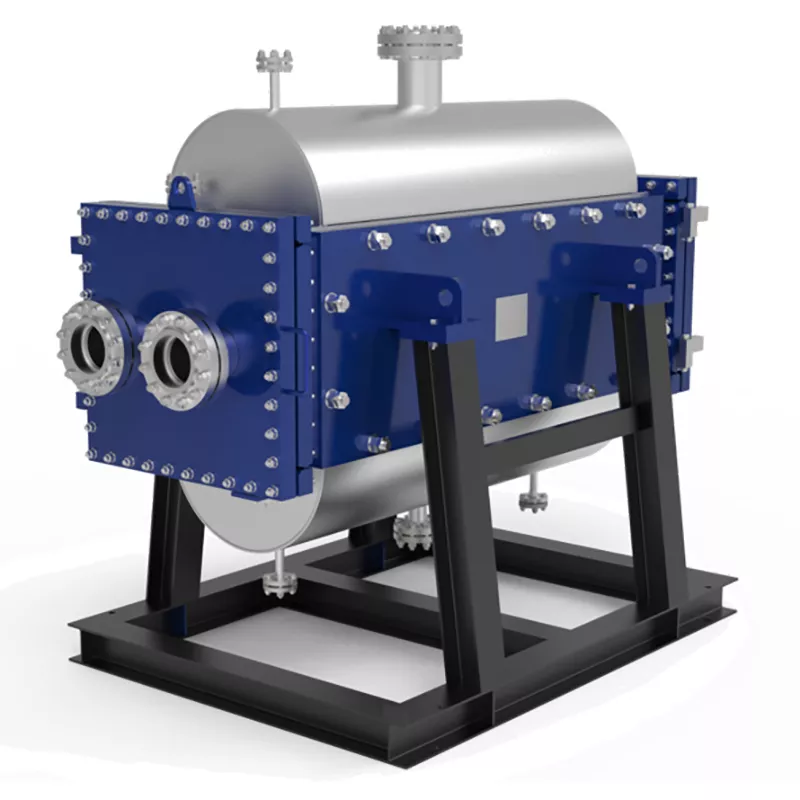
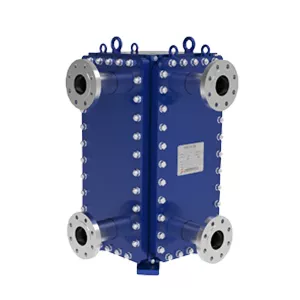
Key parameters that engineers evaluate include flow rate (typically 100–5000 m³/h per unit), operating pressure (up to 16 bar), and design temperature (2–15°C on the chilled side). Plate heat exchangers are the most common choice because they offer high thermal efficiency in a compact footprint. For larger networks, welded plate designs eliminate gasket maintenance risks.
Key Features That Drive Performance in District Cooling Applications
When evaluating a district cooling heat exchanger, focus on these features:
- High thermal efficiency – plate designs achieve heat transfer coefficients of 3000–7000 W/m²·K, reducing required surface area.
- Low pressure drop – optimized channel geometry keeps pressure loss below 0.5 bar per pass, saving pump energy.
- Compact footprint – a 10 MW unit can fit in less than 2 m² of floor space, ideal for retrofit projects.
- Corrosion resistance – 316L stainless steel or titanium plates handle aggressive water chemistry.
- Easy maintenance – gasketed models allow plate access for cleaning, while fully welded versions eliminate leak paths.
Typical parameter ranges for district cooling heat exchangers include design pressures from 10 to 25 bar, temperatures from -10°C to 120°C, and capacities from 0.5 MW to 50 MW per unit. Always verify compatibility with your specific loop conditions.
What Are the Best Applications for a District Cooling Heat Exchanger?
District cooling heat exchangers are used in campus networks, downtown cooling districts, airports, data centers, and large commercial complexes. Each application has unique demands. For example, data centers require high reliability and low approach temperatures to maintain server cooling. Airports need units that can handle seasonal load swings without performance drop.
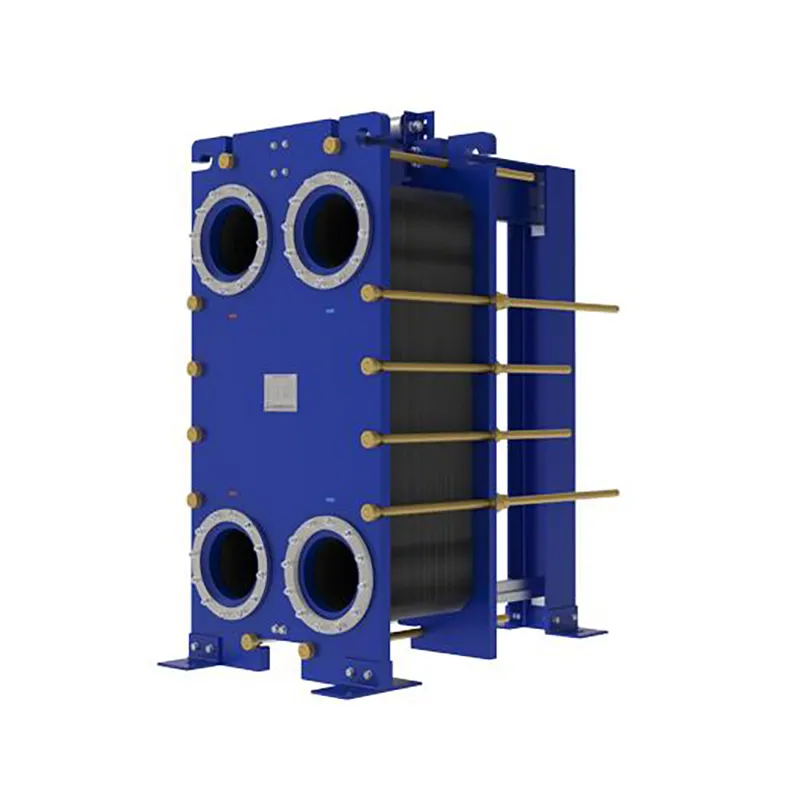
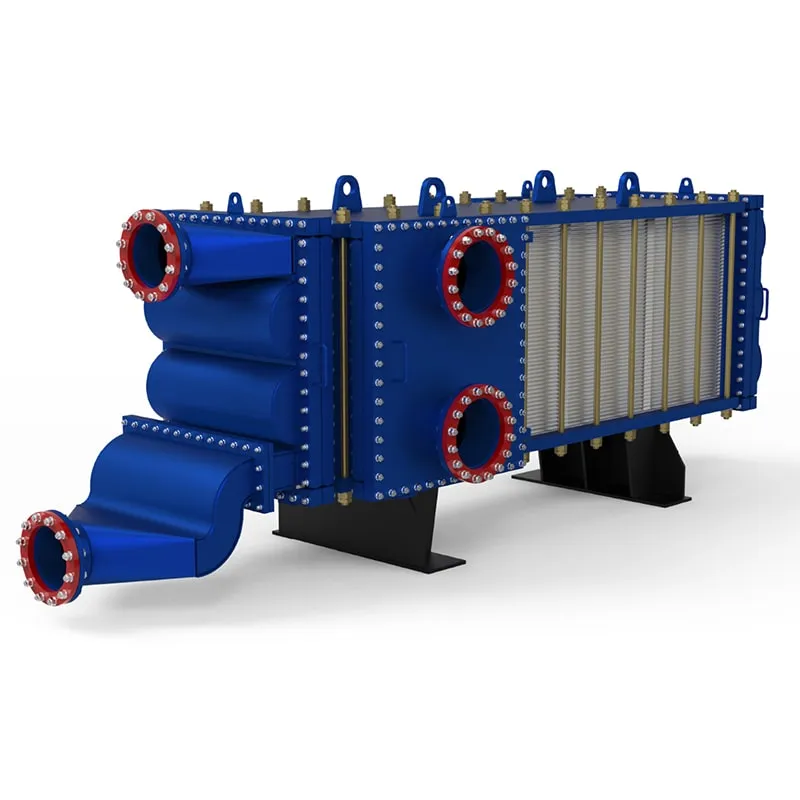
For systems with high fouling potential, such as those using open cooling towers, a wide gap welded plate heat exchanger is a recommended solution. It handles particles up to 3 mm without clogging. In clean closed loops, a gasketed plate heat exchanger offers the best cost-to-performance ratio. For extreme pressure or temperature requirements, a TP welded plate heat exchanger provides a fully sealed alternative to traditional designs.
Why SHPHE Is a Trusted Partner for District Cooling Heat Exchangers
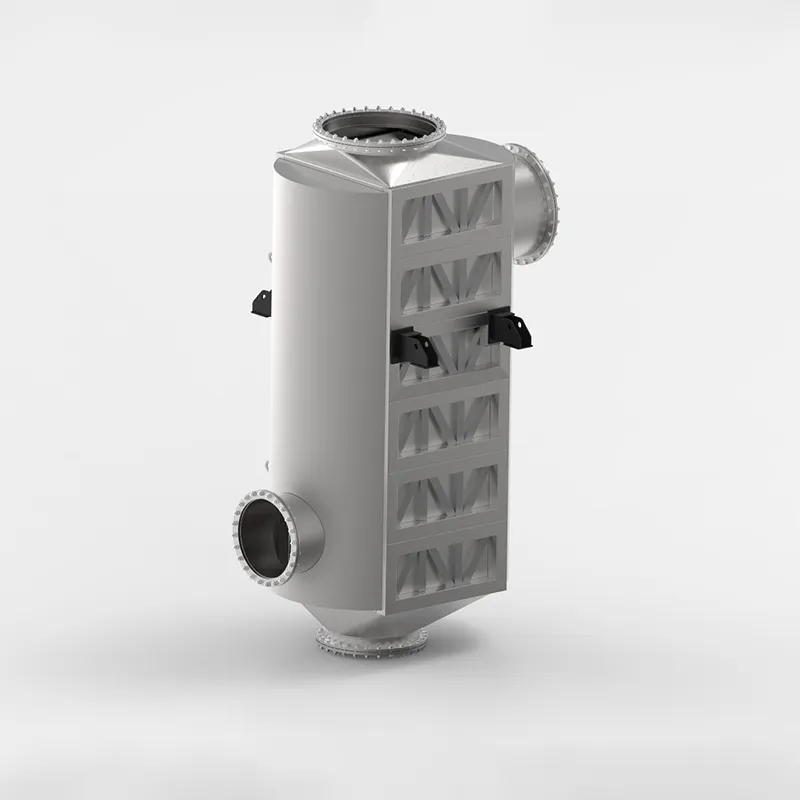
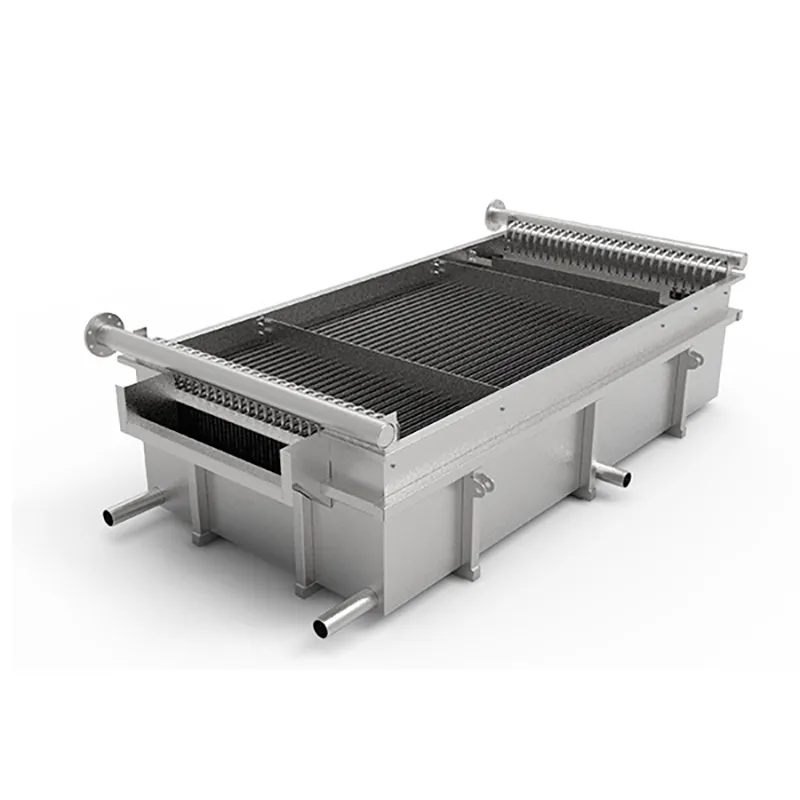
SHPHE, a Shanghai-based plate heat exchanger manufacturer founded in 2005, has supplied equipment to over 20 countries. Our product lines include the HT-Bloc welded plate heat exchanger, wide gap welded plate heat exchanger, gasketed plate heat exchanger, PCHE, plate air preheater, and pillow plates. All units are designed under ISO9001 and ASME U certified processes.
We offer free thermal design and selection service to ensure your district cooling heat exchanger matches your exact flow rate, temperature, pressure, and media requirements. Whether you need a replacement for an existing unit compatible with Alfa Laval or Compabloc designs, or a custom engineered solution, our team provides technical support from concept to commissioning.
Frequently Asked Questions About District Cooling Heat Exchangers
What is the typical approach temperature for a district cooling heat exchanger?
The typical approach temperature ranges from 1°C to 3°C. A lower approach improves chiller efficiency but requires more heat transfer surface area. Most designs target 2°C as a balance between capital cost and operating savings.
Can I use a gasketed plate heat exchanger for district cooling?
Yes, gasketed plate heat exchangers are widely used in district cooling for clean water loops. They offer easy maintenance and high thermal efficiency. For systems with aggressive water chemistry or high pressure, consider a welded alternative to avoid gasket failure.
How do I size a district cooling heat exchanger correctly?
Sizing requires accurate data on flow rate, inlet and outlet temperatures, allowable pressure drop, and fluid properties. Most manufacturers, including SHPHE, provide free thermal design services. Simply submit your parameters, and we will recommend the optimal model.
What materials are best for district cooling heat exchangers?
316L stainless steel is the standard choice for chilled water. For seawater or high-chloride applications, titanium or 254SMO stainless steel offers better corrosion resistance. Your water chemistry report will guide the final material selection.
How often should I clean a district cooling heat exchanger?
Cleaning frequency depends on water quality and operating conditions. In a well-maintained closed loop, cleaning every 2–3 years is typical. Open loops or systems with poor water treatment may require annual inspection and cleaning. Monitor pressure drop and approach temperature as indicators.
Can SHPHE provide a replacement for an existing district cooling heat exchanger?
Yes, SHPHE offers drop-in replacements compatible with major brands like Alfa Laval and GEA. We can match existing footprint, nozzle locations, and performance specifications. Contact us with your current unit details for a no-obligation assessment.
Request a Quote for Your District Cooling Heat Exchanger
To get started, please provide your project details including flow rate, temperature range, operating pressure, and media type. Our engineering team will prepare a thermal design and selection recommendation at no charge. A properly selected district cooling heat exchanger improves system performance, reduces energy consumption, and ensures long-term reliability.
Contact SHPHE today with your requirements, and we will respond with a tailored solution. We also offer custom-engineered options such as HT-Bloc welded plate heat exchangers and wide gap welded plate heat exchangers for demanding applications. For standard projects, our gasketed plate heat exchangers provide a cost-effective and efficient solution.

 English EN





User Comments
Service Experience Sharing from Real Customers
Marcus
Senior HVAC EngineerWe installed this district cooling heat exchanger in our new downtown office tower three months ago. The thermal efficiency is noticeably better than our previous system — our chiller plant load dropped by nearly 15%. Also, the compact footprint saved us valuable mechanical room space. Only tiny gripe: the initial pressure drop was a tad higher than spec, but after a quick bleed it settled perfectly. Solid piece of gear for large-scale projects.
Elena
Facilities ManagerI manage a university campus with three separate district loops, and we swapped out an aging shell-and-tube for this plate-type exchanger last quarter. Maintenance is way easier — the plates come apart without a crane, and I can inspect them in under an hour. The only reason I'm not giving 5 stars is that the gasket material seemed a bit stiff in our cold supply line at first; after a few thermal cycles it sealed fine. Overall, a reliable upgrade that my team actually likes working on.
Tomás
Lead Plant OperatorBeen running district cooling plants for 12 years, and this exchanger is a workhorse. We pushed it through a brutal summer peak — 95°F ambient, full load for 72 hours straight — and it never flinched. The titanium plates handle our treated water chemistry without any pitting or scaling. I appreciate the large drain ports too; flushing during seasonal shutdowns takes half the time. Would recommend to any operator who values uptime over flashy features.
Priya
Sustainability ConsultantI specified this heat exchanger for a mixed-use development aiming for LEED Platinum. The low approach temperature really helped our chiller sequence-of-operation strategy, cutting annual energy use by about 8% in modeling. On-site commissioning went smoothly — the factory support team was responsive when we had a question about the gasket torque values. I'd have liked clearer documentation on the maximum differential pressure for partial-load scenarios, but overall it performed as advertised. A solid choice for green building projects.