How a Free Cooling Plate Heat Exchanger Delivers Reliable Energy Efficiency in Industrial Cooling Systems
Industrial cooling systems often consume more energy than necessary, especially when chillers run year-round even in cool weather. A free cooling plate heat exchanger offers a practical way to cut electricity costs by using ambient air or water to handle the cooling load directly. This article explains how it works, what performance parameters to expect, and why SHPHE’s plate heat exchanger designs are a reliable choice for process engineers and plant managers looking to improve system efficiency without overspending on equipment.
What Is a Free Cooling Plate Heat Exchanger and Why Does It Matter?
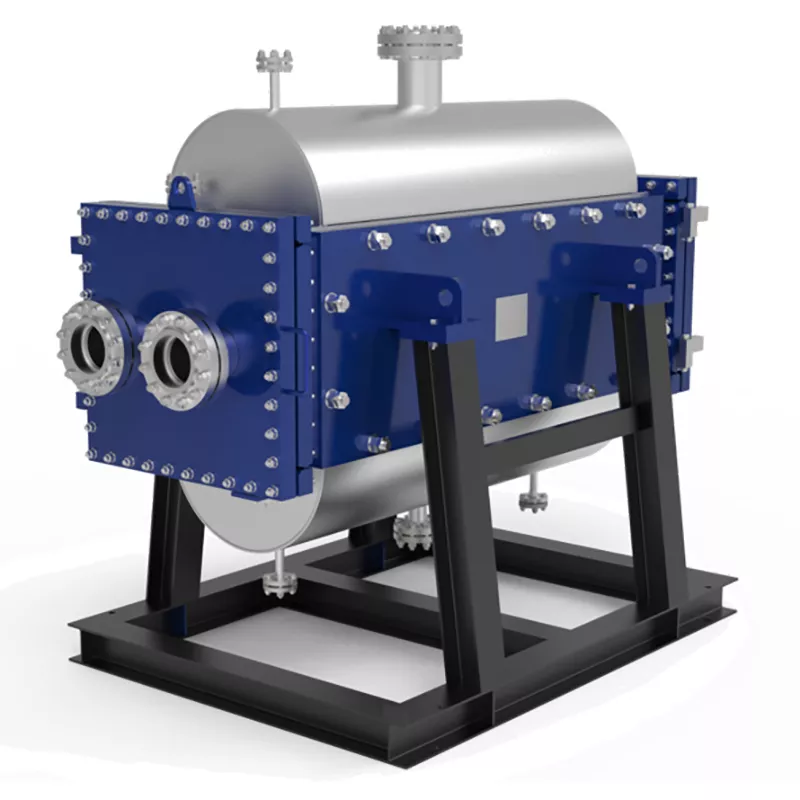
A free cooling plate heat exchanger is a device that transfers heat from a process fluid (like cooling water or glycol) to a cooler ambient source—such as outside air or a nearby water body—without running a chiller compressor. When the ambient temperature drops below the return fluid temperature, the heat exchanger takes over the cooling duty, allowing the chiller to shut down or operate at reduced load. This approach can cut annual cooling energy use by 30% to 50% in temperate climates, depending on the system design and local weather patterns.
For industrial facilities like data centers, chemical plants, or food processing lines, the savings add up quickly. A free cooling plate heat exchanger also reduces wear on compressors and extends equipment life. The key is selecting a heat exchanger that can handle the required thermal duty with minimal pressure drop and fouling risk.
How Does a Free Cooling Plate Heat Exchanger Work in a Typical System?
In a standard free cooling setup, the plate heat exchanger is installed between the chiller loop and the cooling tower or dry cooler loop. When the outside temperature is low enough, a control valve diverts the warm return fluid from the process directly to the heat exchanger. The cool ambient fluid (water or air) flows on the other side, absorbing heat and discharging it to the environment. The chilled fluid then goes back to the process without ever passing through the chiller.
This method works best with a plate heat exchanger that has high thermal efficiency and a compact footprint. Gasketed plate heat exchangers are a common choice because they offer easy maintenance and can be expanded if cooling demand grows. For higher pressure or temperature applications, welded plate heat exchangers like SHPHE’s HT-Bloc or TP series provide a leak-proof solution.
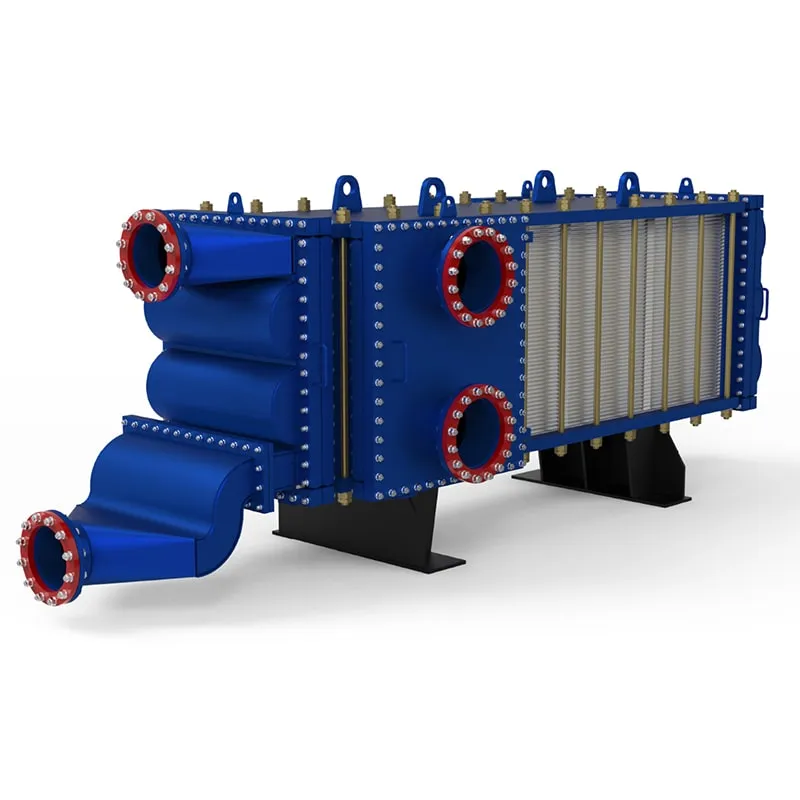
What Are the Key Features and Typical Parameter Ranges for These Heat Exchangers?
When evaluating a free cooling plate heat exchanger, focus on these parameters, which fall within commonly accepted industry ranges:
- Operating pressure: Up to 30 bar for gasketed models; welded designs can handle 40 bar or more.
- Temperature range: -20°C to 180°C for standard gasketed units; welded versions go up to 350°C.
- Flow capacity: From 1 m³/h to over 1000 m³/h, depending on plate size and number of plates.
- Heat transfer coefficient: Typically 3000–7000 W/m²·K for water-to-water applications.
- Plate material: Stainless steel 304/316L is standard; titanium or Hastelloy available for corrosive fluids.
- Gasket material: EPDM, NBR, or Viton, selected based on fluid compatibility and temperature.
These ranges cover most industrial free cooling needs. For a precise selection, SHPHE offers free thermal design and sizing based on your specific flow rates, temperatures, and media.
What Are the Best Applications and Recommended Solutions for Free Cooling?
Free cooling plate heat exchangers are widely used in:
- Data center cooling: Where year-round cooling is needed but ambient temperatures drop at night or in winter.
- Chemical processing: To cool reactor jackets or distillation columns without running chillers.
- Food and beverage: For pasteurization or fermentation cooling loops.
- HVAC systems: In large commercial buildings to reduce chiller load during mild weather.
For each application, the recommended solution depends on the fluid type and operating conditions. If the cooling medium is clean water, a gasketed plate heat exchanger is cost-effective and easy to service. For fluids with suspended solids or fibers, a wide gap welded plate heat exchanger prevents clogging. For high-temperature or high-pressure loops, the HT-Bloc welded plate heat exchanger offers robust performance without gasket failure risks.
Why Choose SHPHE for Your Free Cooling Plate Heat Exchanger?
SHPHE is a Shanghai-based plate heat exchanger manufacturer founded in 2005, with ISO9001 and ASME U certifications. We export to over 20 countries and serve industries ranging from petrochemical to food processing. Our product lines include gasketed, welded, and semi-welded designs, all engineered for reliable free cooling applications.
We offer free thermal design and selection service, so you get a heat exchanger sized exactly for your process. Whether you need a compact unit for a retrofit or a large system for a new plant, SHPHE provides compatible alternatives to brands like Alfa Laval, Compabloc, or GEA without compromising on quality or delivery time.
Our TP welded plate heat exchanger is particularly suited for free cooling loops where leakage cannot be tolerated, and the pillow plates offer an alternative for tank cooling or heating applications.
Frequently Asked Questions About Free Cooling Plate Heat Exchangers
Can I retrofit a free cooling plate heat exchanger into my existing chiller system?
Yes, retrofitting is straightforward. The heat exchanger is installed in parallel with the chiller, with a control valve to switch between free cooling and chiller modes. Most existing piping and pumps can be reused with minor modifications.
What is the typical payback period for a free cooling plate heat exchanger?
Payback depends on local climate and energy costs, but many industrial users see a return within 12 to 24 months. In regions with long cold seasons, savings can be even faster.
Do I need a special plate heat exchanger for glycol mixtures?
Standard stainless steel plates with EPDM gaskets work well with glycol-water mixtures up to 50% concentration. For higher concentrations or temperatures above 120°C, consider a welded design like the HT-Bloc.
How do I size a free cooling plate heat exchanger for my plant?
Sizing requires the process flow rate, inlet and outlet temperatures, and the ambient cooling medium temperature. SHPHE provides free thermal calculations—just send us your parameters, and we will recommend the right model.
Can a free cooling plate heat exchanger handle dirty or fouling fluids?
For fluids with particulates or scaling potential, a wide gap welded plate heat exchanger is recommended. The wider plate spacing reduces clogging and makes cleaning easier.
Is a free cooling plate heat exchanger compatible with existing control systems?
Yes, most installations integrate with PLC or BMS systems using temperature sensors and actuated valves. SHPHE can provide guidance on control logic and valve selection.
Request a Quote for Your Free Cooling Plate Heat Exchanger
To get a reliable free cooling plate heat exchanger that meets your energy efficiency goals, start by sharing your process details. Please provide the following information when contacting SHPHE:
- Flow rate (m³/h or GPM)
- Inlet and outlet temperatures on both sides
- Operating pressure
- Fluid media (e.g., water, glycol, process fluid)
Our engineering team will respond with a free thermal design and a competitive quote. With over 15 years of experience and a global track record, SHPHE is your partner for efficient, durable free cooling solutions.

 English EN





User Comments
Service Experience Sharing from Real Customers
Liam
HVAC Systems EngineerI was skeptical about swapping out our old chilled water setup for a free cooling plate heat exchanger, but this unit has been a game-changer. Our data center's PUE dropped noticeably within the first month. Installation was straightforward, and the maintenance access is actually decent—no swearing at bolts in tight corners. Highly recommend for anyone looking to cut energy waste without sacrificing cooling reliability.
Emma
Facility Maintenance LeadWe put this free cooling plate heat exchanger in our cold storage warehouse about six months ago. It handles the temperature swings like a champ, even during that weird warm spell last February. The only reason I'm not giving five stars is that the initial pressure drop calculation in the manual was a bit optimistic—we had to tweak our pump settings. But once dialed in, it's been solid. Saves us a good chunk on compressor runtime.
Noah
Process EngineerThis is the third free cooling plate heat exchanger I've specified for industrial process cooling loops, and it's by far the best value for the performance. The plates are robust, no leaks after a year of continuous glycol service, and the approach temperature is consistently tight. My operators actually like it because the clean-in-place ports are well placed. If you're tired of finicky brazed plate units, step up to this.
Olivia
Energy ManagerI needed a solution to reduce our HVAC load in a mixed-use office building without a major retrofit. This free cooling plate heat exchanger let us tie into an existing cooling tower loop and bypass the chiller for half the year. The energy savings are real—our kW per ton dropped like a stone. It's not totally silent (you'll hear some fluid noise at high flow), but it's tucked away in the mechanical room so no one cares. Worth every penny.