Why the Free Flow Plate Heat Exchanger Excels in Handling Challenging Fluids
Article Summary: The free flow plate heat exchanger is a specialized solution designed to manage fluids containing solids, fibers, or high-viscosity substances that would clog standard gasketed or welded units. This article explains how its unique plate geometry prevents fouling, covers typical performance parameters, and provides practical guidance for process engineers and purchasing managers evaluating equipment for pulp, food, or chemical applications. We also discuss SHPHE’s free thermal design service and how our wide gap welded plate heat exchangers serve as a reliable alternative to legacy brands.
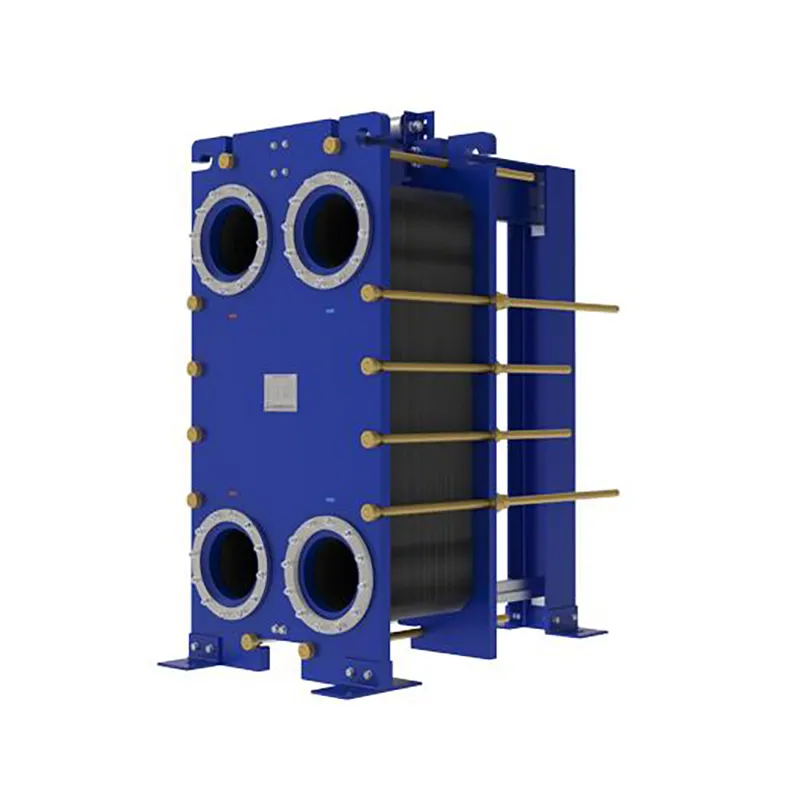
Process fluids with suspended solids, sticky residues, or high viscosity present a real challenge in thermal management. Standard plate heat exchangers often suffer from channel blockages, pressure drop spikes, and frequent cleaning downtime. The free flow plate heat exchanger addresses these pain points with a plate design that creates wide, unobstructed flow paths, allowing particles up to several millimeters in diameter to pass through without accumulation. This makes it a go-to choice for industries like food processing, pulp and paper, and wastewater treatment.
How Does a Free Flow Plate Heat Exchanger Work?
Unlike conventional gasketed plate heat exchangers with narrow chevron-pattern channels, the free flow design uses plates with large-diameter dimples or spot-welded contact points. These create a gap typically ranging from 5 mm to 15 mm between plates. The wide spacing allows fluids containing fibers, pulp, or coarse particles to flow with minimal shear and low risk of bridging.
The media enters the channel and moves in a single-direction flow without sharp turns. This reduces localized turbulence that can trap solids. The result is a stable heat transfer coefficient even when handling slurries with up to 5% solid content by weight. For extremely viscous fluids like molasses or polymer melts, the free flow geometry also lowers the pressure drop compared to standard plate packs.
What Are the Key Features and Typical Parameter Ranges?
Free flow plate heat exchangers are built with robust materials and flexible configurations. Below are the common specifications you can expect from a well-engineered unit:
- Plate gap: 5 mm to 15 mm, depending on particle size and viscosity.
- Operating pressure: Up to 25 bar (gasketed designs) or 40 bar (welded designs).
- Temperature range: -20°C to 200°C for gasketed units; up to 350°C for welded variants.
- Plate materials: Stainless steel 304/316L, titanium, or Hastelloy for corrosive media.
- Gasket materials: EPDM, NBR, or Viton, selected based on chemical compatibility.
- Connection sizes: DN50 to DN300, with flanged or threaded options.
- Flow rate per unit: From 10 m³/h to 500 m³/h, depending on channel count.
These parameters are industry-generic and serve as a baseline. Your specific process conditions—such as exact solid size, fiber length, and temperature—will determine the optimal gap and plate count. SHPHE offers a free thermal design and selection service to match your duty without guesswork.
Where Is the Free Flow Plate Heat Exchanger Most Effective?
The free flow design shines in applications where standard heat exchangers fail due to fouling. Common use cases include:
- Food and beverage: Heating or cooling fruit purees, tomato paste, sauces, and dairy products with pulp.
- Pulp and paper: Black liquor, green liquor, and stock heating where fibers are present.
- Chemical processing: Slurries, polymer solutions, and crystallization feeds.
- Wastewater treatment: Sludge heating and cooling with grit and organic solids.
- Pharmaceuticals: Fermentation broths and viscous intermediates.
For each of these, the wide gap prevents blockages and extends cleaning intervals. If your fluid contains particles larger than 3 mm, a free flow or wide gap welded plate heat exchanger is often the most cost-effective solution compared to scraped-surface or shell-and-tube units.
Why Choose SHPHE for Your Free Flow Plate Heat Exchanger?
SHPHE, founded in Shanghai in 2005, specializes in plate heat exchanger technology and exports to more than 20 countries. Our product line includes HT-Bloc welded plate heat exchangers, TP welded units, gasketed plate heat exchangers, PCHE, plate air preheaters, and pillow plates. We hold ISO9001 and ASME U certifications, ensuring quality and compliance for global projects.
Our free flow plate heat exchangers are designed as a direct alternative to brands like Alfa Laval and GEA, with interchangeable plate geometries and gasket profiles. We provide free thermal design and selection, so you receive a unit optimized for your specific fluid properties. Whether you need a gasketed version for easy maintenance or a fully welded variant for high-temperature or hazardous fluids, we can deliver.
For applications requiring extreme cleanliness or high pressure, our HT-Bloc welded plate heat exchanger offers a fully welded channel with no gaskets, while still maintaining a wide gap. This eliminates leakage risks and allows operation at up to 40 bar and 350°C.
Frequently Asked Questions
Q: Can a free flow plate heat exchanger handle fluids with long fibers?
Yes. The wide gap, typically 8–15 mm, allows fibers up to 10 mm in length to pass through without clogging. For longer fibers, a wide gap welded design is recommended.
Q: How does the free flow design compare to a standard gasketed plate heat exchanger in terms of heat transfer?
The heat transfer coefficient is lower than a chevron-pattern plate due to reduced turbulence. However, the overall performance is often better in fouling services because the unit stays cleaner longer, maintaining a stable U-value.
Q: What is the maximum solid size that a free flow plate heat exchanger can handle?
Most designs can pass particles up to 5–7 mm in diameter. For larger solids, a wide gap welded plate heat exchanger with a gap of 12–15 mm is available.
Q: Is the free flow plate heat exchanger compatible with existing Alfa Laval or Compabloc frames?
Yes. SHPHE offers plates and gaskets that are dimensionally compatible with many legacy frames. We can also supply a complete drop-in replacement unit.
Q: How often does a free flow heat exchanger need cleaning?
Cleaning frequency depends on the fluid and solid load. In typical food applications, CIP cycles every 8–24 hours are sufficient. The wide gap reduces cleaning time by up to 40% compared to standard plates.
Q: Can I get a free thermal design for my specific fluid?
Absolutely. SHPHE provides free thermal design and selection. You only need to provide flow rate, inlet/outlet temperatures, operating pressure, and media details. We will recommend the optimal plate gap, material, and configuration.
Request a Quote for Your Free Flow Plate Heat Exchanger
To get a precise recommendation for your challenging fluid, please prepare the following information: flow rate (m³/h or kg/s), hot and cold side inlet/outlet temperatures, operating pressure, and a description of the fluid (including solid type, size, concentration, and viscosity if known). With these details, SHPHE can deliver a free thermal design and a competitive quotation for a free flow plate heat exchanger tailored to your process.
Whether you need a gasketed unit for easy maintenance or a fully welded solution for high-pressure duty, our engineering team will help you select the right configuration. Contact us today to discuss your project and experience how the free flow plate heat exchanger can reduce downtime and improve thermal efficiency in your operation.

 English EN





User Comments
Service Experience Sharing from Real Customers
Mike
Maintenance SupervisorWe swapped out our old gasketed plate heat exchanger for this free flow model about six months ago. The difference is night and day—cleaning is a breeze, and we haven't had a single clogging issue even with our slightly viscous product. Solid build quality, too.
Emma
Chemical Process EngineerI was skeptical about the free flow design handling our slurry streams, but it's been performing surprisingly well. The pressure drop is a bit higher than I'd like, but the reduced fouling more than makes up for it. Great for when you need to minimize downtime between batches.
Chris
Plant Operations ManagerFinally a heat exchanger that doesn't require a full teardown just to inspect the plates. My team can do a visual check in under ten minutes. We've seen a noticeable improvement in heat recovery efficiency since installing this unit. Highly recommend for any dairy or beverage line.
Tom
Senior HVAC TechnicianIt works fine for our industrial cooling loop, but I expected the free flow design to handle debris better. We still had to add a strainer upstream. That said, the plates are easy to replace and the frame feels robust. Decent for the price, but not a miracle worker.