Understanding the Cross Flow Plate Heat Exchanger Design and Performance
This article provides a practical overview of cross flow plate heat exchanger design and performance. Written for process engineers and purchasing managers, it covers working principles, key parameters, application scenarios, and selection tips. We also explain how SHPHE delivers reliable cross flow plate heat exchanger solutions for demanding industrial duties.
When you need efficient heat transfer between two fluid streams that move perpendicular to each other, the cross flow plate heat exchanger design offers a compact and cost-effective solution. Unlike traditional shell-and-tube units, this configuration uses corrugated plates to create separate channels for hot and cold media. The cross flow arrangement is especially useful when one fluid contains solids or fibers, or when pressure drop must be minimized. In this article, we break down how these exchangers work, what performance ranges you can expect, and how to specify the right unit for your process.
What Is a Cross Flow Plate Heat Exchanger?
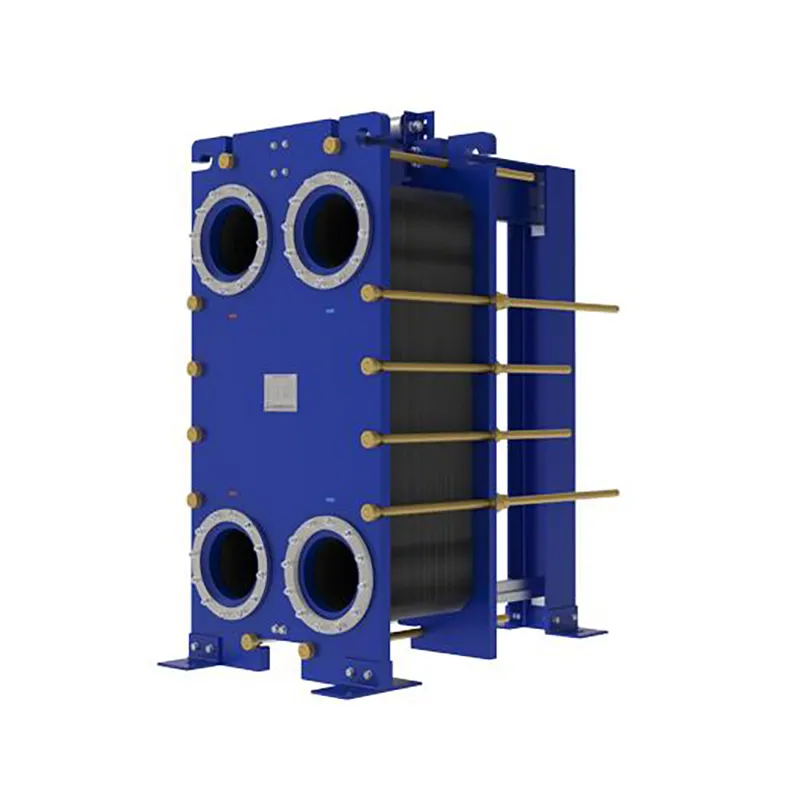
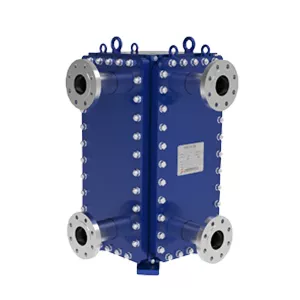
A cross flow plate heat exchanger is a type of compact heat exchanger where the hot and cold fluids flow in paths that cross each other at a 90-degree angle. The core consists of a stack of thin metal plates with specially designed corrugations. These plates create two separate flow passages: one for the hot fluid and one for the cold fluid. The cross flow pattern allows each fluid to enter and exit on different sides of the plate pack, making it easier to handle streams with particulate matter or high viscosity.
SHPHE, a Shanghai-based plate heat exchanger manufacturer founded in 2005, has extensive experience in designing cross flow units for industries such as chemical processing, food and beverage, and HVAC. Our cross flow plate heat exchanger design is available in both gasketed and welded versions, depending on your temperature and pressure requirements. We also offer free thermal design and selection service to help you find the optimal configuration.
How Does Cross Flow Plate Heat Exchanger Design Affect Performance?
The performance of a cross flow plate heat exchanger depends heavily on the plate geometry, flow arrangement, and material selection. In a cross flow configuration, the temperature difference between the two fluids varies along both the length and width of the plate. This means the overall heat transfer coefficient is typically lower than in a pure counterflow design, but the cross flow arrangement offers distinct advantages in certain applications.
Key factors that influence performance include:
- Plate corrugation pattern: Herringbone or chevron patterns create turbulence, improving heat transfer at the cost of higher pressure drop.
- Channel width: Wider gaps reduce fouling risk but lower the heat transfer coefficient.
- Number of passes: Single-pass cross flow is simple, while multi-pass arrangements can approach counterflow efficiency.
- Material thickness: Thinner plates improve thermal conductivity but reduce mechanical strength.
For most industrial applications, a well-designed cross flow plate heat exchanger can achieve heat transfer coefficients in the range of 1000 to 7000 W/m²·K, depending on the fluids and operating conditions. Pressure drop typically ranges from 0.5 to 3 bar per side. These values are commonly accepted in the industry and serve as a good starting point for preliminary sizing.
What Are the Typical Parameter Ranges for Cross Flow Plate Heat Exchangers?
When evaluating a cross flow plate heat exchanger design, you need to consider several key parameters. The table below summarizes typical ranges for commonly used configurations. These numbers are based on industry-standard practices and are not specific to any single manufacturer.
| Parameter |
Typical Range |
Notes |
| Operating temperature |
-20°C to 200°C (gasketed)
Up to 500°C (welded) |
Gasket material limits upper temperature |
| Operating pressure |
Up to 25 bar (gasketed)
Up to 100 bar (welded) |
Higher pressures require welded construction |
| Flow rate per unit |
1 to 500 m³/h |
Multiple units can be paralleled for higher flow |
| Heat transfer area |
1 to 500 m² per unit |
Custom sizes available on request |
| Viscosity range |
0.3 to 10,000 cP |
Wide gap designs handle higher viscosities |
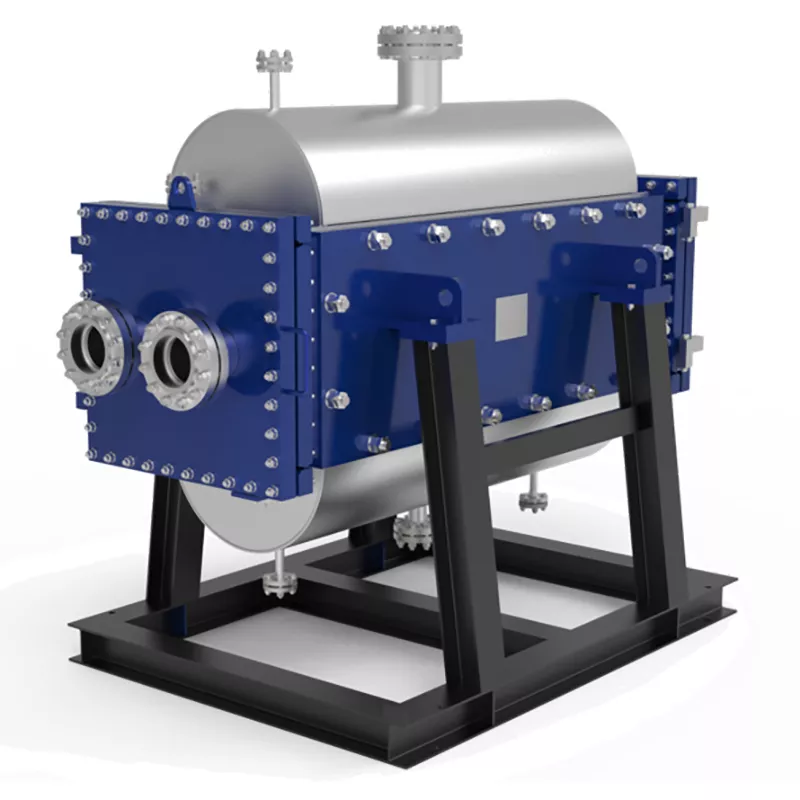
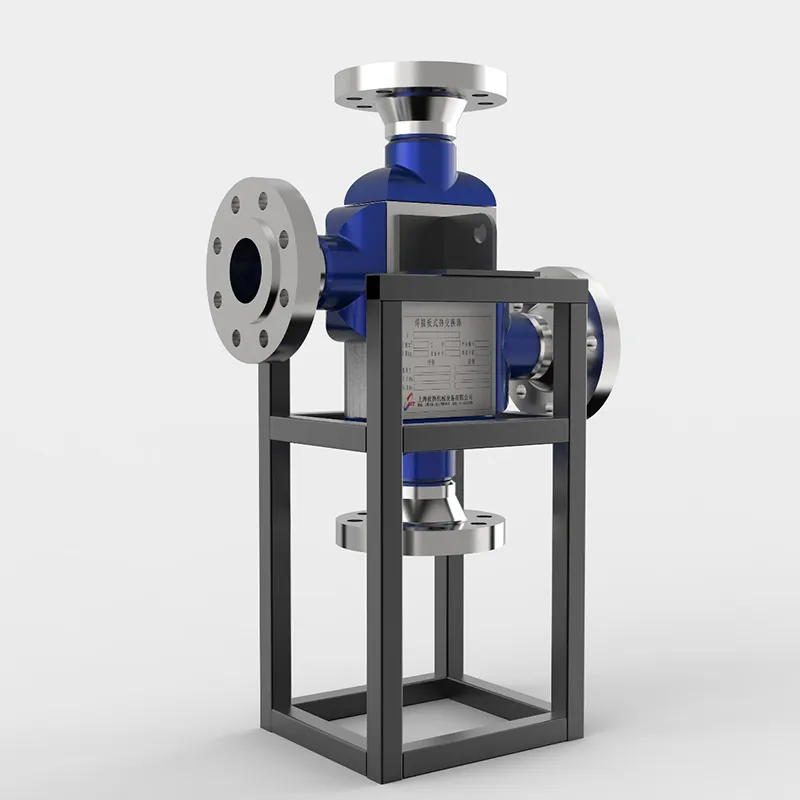
SHPHE offers cross flow plate heat exchangers in both gasketed and welded styles. Our gasketed units are compatible with standard industry interfaces, making them a direct alternative to legacy equipment from brands like Alfa Laval or GEA. For more demanding conditions, our HT-Bloc and TP welded plate heat exchangers provide a fully welded construction that eliminates gasket failure risks.
Applications Where Cross Flow Plate Heat Exchanger Design Excels
The cross flow plate heat exchanger design is particularly well suited for the following scenarios:
- Handling fluids with suspended solids or fibers: The cross flow arrangement allows one fluid to pass through wider channels, reducing the risk of clogging. This makes it ideal for wastewater treatment, pulp and paper, and food processing.
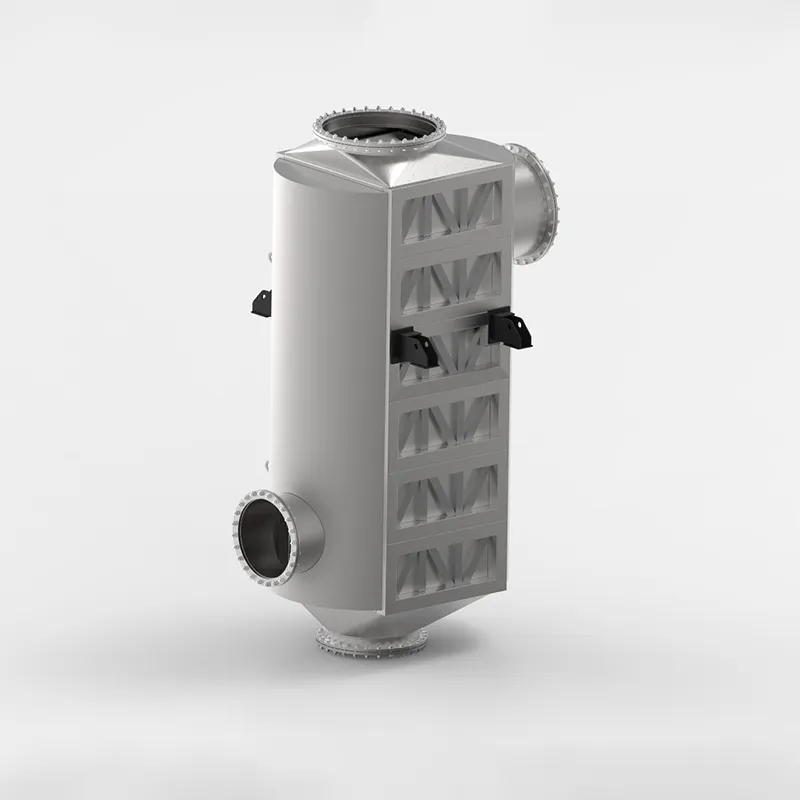
- Gas-to-liquid heat exchange: Cross flow is commonly used in air preheaters and economizers where one side is a gas stream. Our custom-engineered plate air preheaters are a good example of this application.
- High-temperature duties: Welded cross flow units can operate at temperatures up to 500°C, making them suitable for heat recovery from flue gases or process streams.
- Space-constrained installations: The compact footprint of a plate heat exchanger is a major advantage when floor space is limited.
For each application, the optimal cross flow plate heat exchanger design depends on the specific process conditions. SHPHE provides free thermal design and selection to ensure the unit meets your performance targets without oversizing.
Why Choose SHPHE for Your Cross Flow Plate Heat Exchanger?
SHPHE has been manufacturing plate heat exchangers in Shanghai since 2005. Our product range includes HT-Bloc welded plate heat exchangers, wide gap welded plate heat exchangers, gasketed plate heat exchangers, PCHE (printed circuit heat exchangers), plate air preheaters, and pillow plates. We export to more than 20 countries and hold ISO9001 and ASME U certifications.
What sets us apart is our commitment to providing a cross flow plate heat exchanger design that is tailored to your process. We do not offer a one-size-fits-all product. Instead, we work with you to select the right plate geometry, material, and connection type. Our engineering team can recommend the best configuration whether you need a gasketed unit for easy maintenance or a fully welded solution for high-pressure service.
If you are looking for an alternative to Compabloc or other fully welded block-type exchangers, our HT-Bloc welded plate heat exchanger offers comparable performance with a compact design. For applications requiring easy cleaning, our gasketed plate heat exchangers provide full access to the plate pack.
Frequently Asked Questions About Cross Flow Plate Heat Exchanger Design
Q: What is the main advantage of a cross flow plate heat exchanger over a counterflow design?
A: The main advantage is the ability to handle fluids with solids or fibers without clogging. The cross flow arrangement allows one fluid to pass through wider channels, and the inlet and outlet ports can be placed on different sides of the plate pack, simplifying piping.
Q: Can a cross flow plate heat exchanger achieve the same thermal efficiency as a counterflow unit?
A: In a single-pass configuration, the cross flow design has a lower log mean temperature difference (LMTD) than pure counterflow. However, multi-pass arrangements can approach counterflow efficiency. For most industrial applications, the difference is acceptable given the other benefits.
Q: What materials are commonly used for cross flow plates?
A: Stainless steel 304 and 316L are the most common choices. For corrosive environments, we also offer titanium, Hastelloy, and nickel alloys. The gasket material is selected based on the fluid temperature and chemical compatibility.
Q: How do I know if I need a gasketed or welded cross flow plate heat exchanger?
A: If your operating pressure is below 25 bar and temperature below 200°C, a gasketed unit is usually sufficient. For higher pressures or temperatures, or if the fluids are hazardous, a welded design is recommended. SHPHE offers both options and can help you decide.
Q: What maintenance is required for a cross flow plate heat exchanger?
A: Gasketed units require periodic inspection and replacement of gaskets, typically every 3 to 5 years depending on service conditions. Welded units require less maintenance but cannot be opened for cleaning. Regular monitoring of pressure drop and temperature approach helps detect fouling early.
Q: Can SHPHE provide a custom cross flow plate heat exchanger design for my specific process?
A: Yes. We offer free thermal design and selection service. Provide us with your flow rate, temperature, pressure, and media details, and our engineers will propose a cross flow plate heat exchanger design that meets your requirements.
Get a Custom Cross Flow Plate Heat Exchanger Design for Your Process
Selecting the right cross flow plate heat exchanger design is critical to achieving optimal thermal performance and long-term reliability. Whether you need a gasketed unit for easy maintenance or a welded solution for high-pressure service, SHPHE has the engineering expertise to deliver.
To get started, please provide the following information for your application:
- Flow rate for both hot and cold sides (in m³/h or kg/s)
- Inlet and outlet temperatures
- Operating pressure and allowable pressure drop
- Fluid composition, including any solids or fibers
- Material preferences or corrosion concerns
Our team will review your process conditions and provide a cross flow plate heat exchanger design that balances performance, cost, and reliability. Contact SHPHE today for a free thermal design and quotation. We look forward to helping you find the right solution for your heat transfer needs.

 English EN





User Comments
Service Experience Sharing from Real Customers
Liam
Maintenance EngineerWe switched to this cross flow plate heat exchanger six months ago for our HVAC system in a mid-sized office tower. The thermal efficiency is noticeably better than the old shell-and-tube unit we had—our cooling load dropped about 12% during peak summer. Installation was straightforward, and it’s been running without a single fouling issue. Solid build quality for the price.
Sophie
Process TechnicianI work on a dairy pasteurization line, and we needed a compact heat exchanger that could handle viscous milk products without clogging. This cross flow unit does the job well—pressure drop is manageable, and cleaning in place is actually effective. Only reason I’m not giving 5 stars is that the gasket material could be a bit more tolerant of our caustic wash cycles. But overall, it’s a workhorse.
Ethan
Project ManagerSpec’d this exchanger for a chemical plant retrofit where space was tight and we needed high heat recovery between two process streams. The cross flow design gave us the surface area we needed in a footprint half the size of alternatives. It’s been online for eight months with zero leaks and stable outlet temperatures. My team was impressed with the documentation and support from the supplier too.
Chloe
Facilities CoordinatorWe installed this in our hospital’s heat recovery loop. Performance wise it’s fine—does what it says on the spec sheet. But the manual could be clearer about torque specs for reassembly after cleaning. We had a small leak on the first reinstall because of that. Not a bad product, just be ready to figure out some details yourself.