How a Swimming Pool Heat Exchanger Enhances Pool Heating Performance
A swimming pool heat exchanger transfers heat from a primary source (boiler, solar, or heat pump) to pool water without mixing the fluids. For commercial and residential pools, this device ensures consistent water temperature, reduces energy waste, and extends the swimming season. Process engineers and facility managers rely on efficient heat exchange to lower operational costs while maintaining comfort. This article explains how a swimming pool heat exchanger works, its key performance parameters, and how to select the right unit for your application.
What Is a Swimming Pool Heat Exchanger and Why Does It Matter?
A swimming pool heat exchanger is a device that uses a secondary fluid (hot water, steam, or refrigerant) to warm pool water indirectly. Unlike direct-fired heaters, it isolates the heating medium from the pool water, preventing corrosion and scaling inside the boiler or heat pump. This separation extends equipment life and improves safety. For overseas buyers managing large facilities, a reliable heat exchanger means predictable heating performance and lower maintenance downtime.
SHPHE, a Shanghai-based plate heat exchanger manufacturer founded in 2005, offers a range of solutions compatible with existing pool systems. With ISO9001 and ASME U certifications, the company exports to 20+ countries, providing free thermal design and selection services. Whether you need a gasketed plate unit or a welded plate design, understanding the working principle helps you choose wisely.
How Does a Swimming Pool Heat Exchanger Work?
The heat exchanger operates on the principle of counterflow heat transfer. Hot fluid from a boiler or heat pump enters one side of the exchanger, while cooler pool water flows through the opposite channels. Thin metal plates or tubes maximize surface area, allowing heat to transfer rapidly without cross-contamination. The temperature difference drives the process: the larger the delta T, the higher the heat transfer rate.
In a typical pool setup, the primary loop might run at 160–180°F (71–82°C) from a gas boiler, while pool water circulates at 80–90°F (27–32°C). The exchanger maintains separation, so pool chemicals never reach the boiler. This design also allows for precise temperature control via a bypass valve or thermostat.
Key Features and Typical Parameter Ranges
When evaluating a swimming pool heat exchanger, focus on these parameters:
- Heat transfer capacity: Typically 50–500 kW for residential pools, and up to 2,000 kW for commercial installations.
- Operating pressure: Commonly 150–300 psi (10–20 bar) on the primary side; pool side usually runs at lower pressures.
- Temperature range: Up to 400°F (204°C) for steam applications; standard hot water units handle 250°F (121°C).
- Materials: Titanium or 316L stainless steel plates resist chlorine and saltwater corrosion. Copper-nickel tubes are also used in shell-and-tube designs.
- Flow rate: Pool water flow of 20–200 GPM (4.5–45 m³/h) depending on pool size.
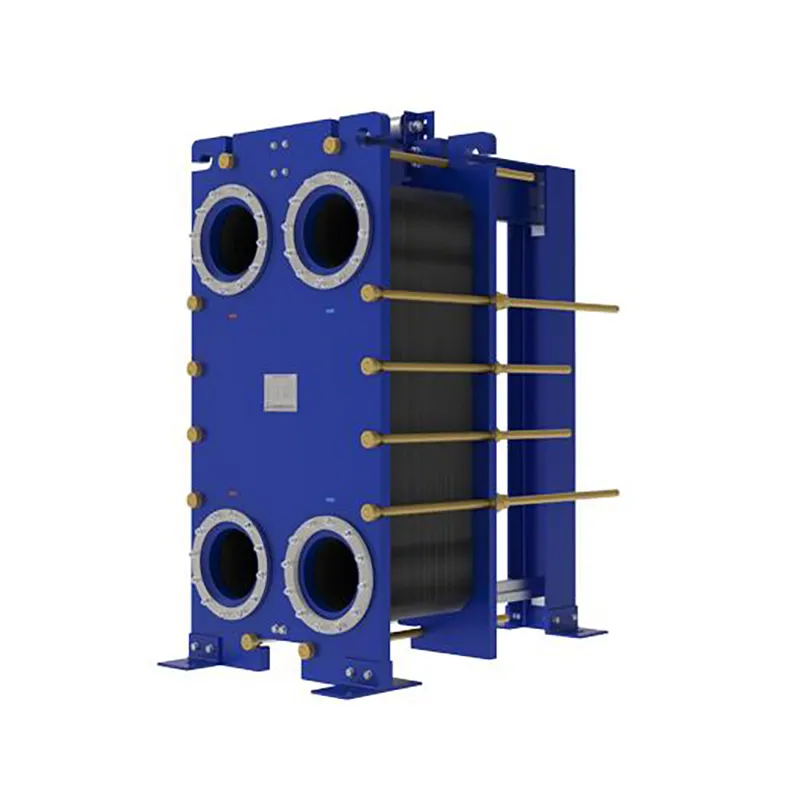
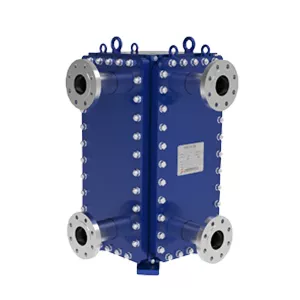
SHPHE provides free thermal design to match your exact flow, temperature, and pressure requirements. Their product lines include gasketed plate heat exchangers, HT-Bloc welded plate units, and wide gap welded plate exchangers, all suitable for pool heating.
What Applications Benefit Most from a Pool Heat Exchanger?
Swimming pool heat exchangers are used in hotels, sports centers, school pools, and private residences. They are ideal when the primary heat source is a central boiler system, solar thermal array, or heat pump. For example, a large hotel may use a gas boiler to supply hot water for both domestic use and pool heating. The heat exchanger isolates the pool loop, preventing chemical damage to the boiler.
Another common application is pairing with solar collectors. Solar-heated fluid (often glycol) passes through the exchanger to warm pool water without risking freeze damage. For saltwater pools, titanium plate exchangers resist corrosion far better than standard stainless steel.
If you are retrofitting an existing pool, consider a gasketed plate heat exchanger for easy maintenance, or a HT-Bloc welded plate heat exchanger for higher pressure and temperature applications. SHPHE also offers wide gap welded plate heat exchangers for dirty fluids.
Why Choose SHPHE for Your Pool Heating Needs?
SHPHE has over 18 years of experience in plate heat exchanger manufacturing. The company holds ISO9001 and ASME U certifications, ensuring product quality and safety. Their engineering team provides free thermal design and selection, so you get a unit optimized for your pool's flow rate, temperature, and pressure conditions.
SHPHE products are compatible with major brands like Alfa Laval and Compabloc, offering a cost-effective alternative without sacrificing performance. The product range includes gasketed plate heat exchangers, TP welded plate units, wide gap welded plate exchangers, PCHE, plate air preheaters, and pillow plates. For pool heating, titanium plate exchangers are a popular choice due to their corrosion resistance.
Exporting to 20+ countries, SHPHE understands the needs of overseas process engineers and purchasing managers. They offer competitive pricing and reliable lead times.
Frequently Asked Questions About Swimming Pool Heat Exchangers
Q: How do I size a swimming pool heat exchanger?
A: Sizing depends on pool volume, desired temperature rise, and heat loss. A general rule is 1 kW per 10 m² of pool surface area for indoor pools, and 1.5–2 kW for outdoor pools. SHPHE offers free thermal design to calculate exact capacity based on your flow rate and temperature data.
Q: Can I use a swimming pool heat exchanger with a heat pump?
A: Yes. The heat exchanger connects between the heat pump's condenser loop and the pool water loop. This protects the heat pump from pool chemicals and allows the system to run at optimal efficiency. Titanium plate exchangers are recommended for this setup.
Q: What material is best for a saltwater pool heat exchanger?
A: Titanium is the best choice for saltwater pools because it resists chloride corrosion. 316L stainless steel can also work in low-chlorine environments, but titanium offers longer service life. SHPHE provides titanium plate options for all their pool heat exchanger models.
Q: How often should I clean a pool heat exchanger?
A: Cleaning frequency depends on water quality and usage. For commercial pools, inspect every 3–6 months and clean if pressure drop increases by 15%. Gasketed plate units can be disassembled for manual cleaning. Welded plate units may require chemical cleaning.
Q: Is a swimming pool heat exchanger compatible with solar heating?
A: Yes. Solar collectors often use a glycol-water mixture to prevent freezing. The heat exchanger transfers heat from the glycol loop to pool water, keeping the solar system isolated and efficient. SHPHE's wide gap welded plate exchangers handle viscous fluids well.
Q: What is the typical lifespan of a pool heat exchanger?
A: With proper maintenance, a titanium plate heat exchanger can last 15–20 years. Stainless steel units may last 10–15 years in well-maintained pools. Factors like water chemistry, flow rate, and operating temperature affect longevity.
Get a Custom Quote for Your Pool Heating Project
To ensure optimal performance, provide your flow rate (GPM or m³/h), temperature requirements (inlet and desired outlet), operating pressure, and media details (pool water type, primary fluid). SHPHE's engineering team will perform a free thermal design and recommend the best swimming pool heat exchanger for your needs. Contact them today to discuss your project and receive a competitive quotation.
A well-chosen swimming pool heat exchanger improves heating efficiency, reduces energy bills, and extends equipment life. Whether you are upgrading an existing system or designing a new pool, investing in a quality heat exchanger pays off in the long run.

 English EN





User Comments
Service Experience Sharing from Real Customers
Mike
Maintenance SupervisorWe installed this heat exchanger at our community pool last spring, and it's been a workhorse. The temperature stays consistent even during those cold nights, and I've noticed a solid drop in our gas bill. Installation was straightforward for our crew. Highly recommend for anyone managing a large facility.
Sandra
Swim CoachI bought this for my backyard pool because I wanted to extend my training season into the fall. It does the job well—water warms up in a reasonable time. Only knock is that the pump needs to be pretty strong to get the best flow. But for the price, it's a solid upgrade. My morning laps are way more comfortable now.
Tom
Hotel EngineerWe've been through three different exchangers in five years at our resort, and this one is finally holding up. The titanium tubes handle our chlorinated water without any corrosion issues. It's been running 12 hours a day through peak season without a hiccup. Maintenance is minimal. A lifesaver for our guest satisfaction scores.
Linda
Homeowner & DIY EnthusiastIt works, but I had a bit of a struggle with the sizing. My pool is on the smaller side, and I think I got a model that's a little too powerful—causes the pump to cycle on and off too often. Once I added a flow regulator, it evened out. Decent build quality, but make sure you double-check your specs before buying.