How a Solvent Condenser Heat Exchanger Improves Thermal Efficiency in Solvent Recovery Systems
Solvent recovery systems rely on efficient condensation to reduce energy costs and meet environmental targets. A solvent condenser heat exchanger plays a central role in reclaiming valuable solvents while minimizing thermal losses. This article explains how these heat exchangers work, what performance parameters matter, and why selecting the right design—such as welded or gasketed plate heat exchangers—can significantly improve overall system efficiency. We also address common buyer questions and provide guidance for specifying your next unit.
What Is a Solvent Condenser Heat Exchanger and Why Does Efficiency Matter?
A solvent condenser heat exchanger is a thermal device designed to cool and condense vaporized solvents back into liquid form. In solvent recovery systems, this process is critical for reusing expensive chemicals, reducing waste, and complying with emission regulations. Thermal efficiency directly impacts operating costs: a poorly performing condenser wastes energy and extends cycle times. Engineers and plant managers often look for designs that offer high heat transfer coefficients, low pressure drops, and resistance to fouling—especially when handling solvents with sticky residues or temperature-sensitive properties.
How Does a Solvent Condenser Heat Exchanger Work in a Recovery Loop?
In a typical solvent recovery setup, vaporized solvent exits a distillation column or evaporator at temperatures between 60°C and 150°C. The vapor enters the condenser, where a cooling medium—usually water, chilled water, or glycol—flows on the opposite side of the heat transfer surface. As heat transfers from the vapor to the coolant, the solvent condenses at its dew point. The condensed liquid is then collected for reuse, while the warmed coolant is either recirculated through a cooling tower or used elsewhere in the plant. The efficiency of this step depends on the heat exchanger’s surface area, flow arrangement, and material compatibility.
Key Features and Typical Parameter Ranges for Solvent Condenser Heat Exchangers
When evaluating a solvent condenser heat exchanger, focus on these design and performance characteristics:
- Heat transfer coefficient: Typically ranges from 1,000 to 3,500 W/m²·K for plate designs, depending on fluid properties and flow rates.
- Operating temperature: Common range is -20°C to 200°C for gasketed units; welded designs can handle up to 350°C or higher.
- Pressure rating: Gasketed plate heat exchangers usually work up to 25 bar; welded variants (e.g., HT-Bloc or TP welded) can go to 40 bar or more.
- Fouling resistance: Wide gap or welded plate designs are preferred for solvents with particulates or polymerization risk.
- Material options: Stainless steel 304/316L is standard; titanium or Hastelloy may be specified for corrosive solvents.
These parameters help engineers match the heat exchanger to the specific solvent type, flow rate, and temperature profile. For example, a solvent condenser heat exchanger used in acetone recovery might require a different material and gap width than one used for toluene or ethanol.
Applications and Recommended Solutions for Solvent Condenser Heat Exchangers
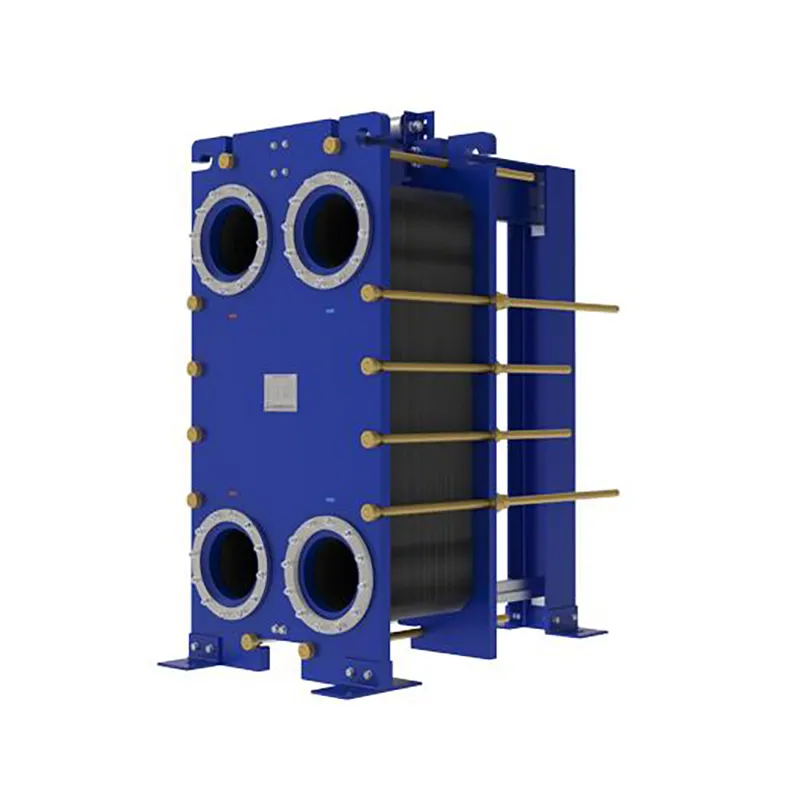
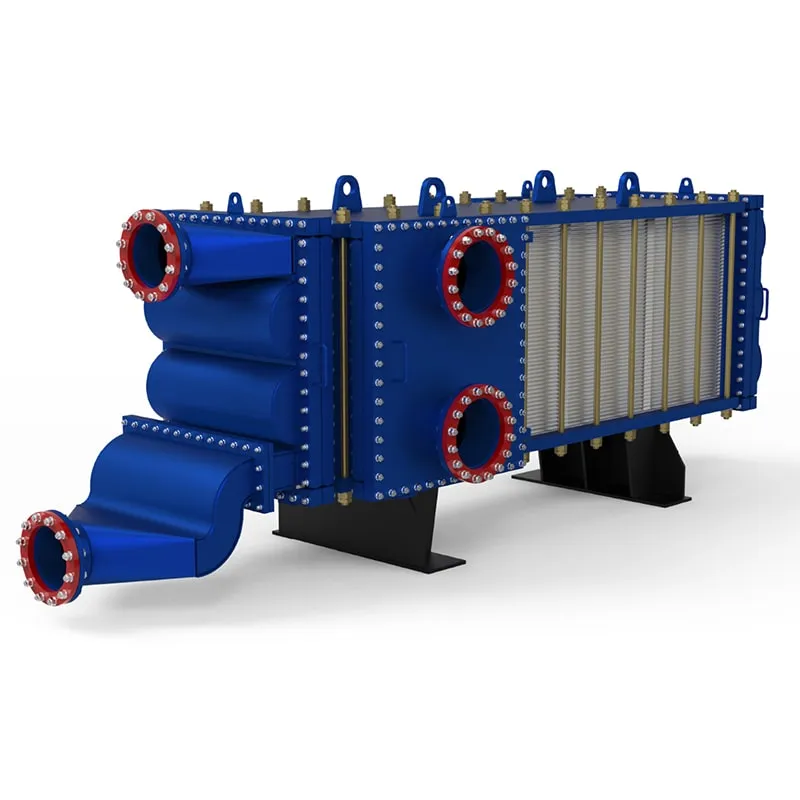
Solvent condenser heat exchangers are used across many industries, including pharmaceutical manufacturing, chemical processing, paint and coating production, and oil and gas. In each case, the goal is to recover high-purity solvent while keeping energy consumption low. For applications with clean solvents and moderate temperatures, a gasketed plate heat exchanger is often the most cost-effective choice. When dealing with aggressive chemicals or high temperatures, a welded plate heat exchanger—such as the HT-Bloc Welded Plate Heat Exchanger—provides better durability and leak protection. For streams containing solids or fibers, a Wide Gap Welded Plate Heat Exchanger is recommended to prevent clogging.
In some recovery systems, a combination of units is used: a pre-cooler to reduce vapor temperature, followed by a main condenser. The selection should always consider the cooling medium availability and the desired outlet temperature of the condensed solvent. For instance, if chilled water is limited, a larger surface area or a more efficient plate pattern may be needed to achieve the same condensation rate.
Why SHPHE for Your Solvent Condenser Heat Exchanger?
SHPHE (Shanghai-based, founded in 2005) is a plate heat exchanger manufacturer with ISO9001 and ASME U certifications, exporting to more than 20 countries. Our product lines include HT-Bloc and TP Welded Plate Heat Exchangers, Wide Gap Welded Plate Heat Exchangers, Gasketed Plate Heat Exchangers, PCHE, Plate Air Preheaters, and Pillow Plates. We offer free thermal design and selection service to help you find the right solvent condenser heat exchanger for your process. Our designs are compatible with major brands like Alfa Laval, Compabloc, or GEA, and we provide alternative solutions that often deliver similar or better performance at competitive pricing. Whether you need a compact unit for a pilot plant or a large-scale system for continuous production, we can support your project with engineering expertise and reliable manufacturing.
Frequently Asked Questions About Solvent Condenser Heat Exchangers
Q: What is the typical payback period for upgrading to a more efficient solvent condenser heat exchanger?
A: Payback usually ranges from 6 to 18 months, depending on solvent value, energy costs, and system size. Higher efficiency units reduce cooling water and steam consumption, which accelerates return on investment.
Q: Can a gasketed plate heat exchanger handle solvent condensation with high fouling tendency?
A: Not ideally. For fouling-prone solvents, a welded or wide gap design is better because it offers smoother surfaces and wider channels that resist deposit buildup and are easier to clean.
Q: How do I choose between a welded and a gasketed solvent condenser heat exchanger?
A: Welded units are preferred for high temperatures, high pressures, or aggressive chemicals. Gasketed units are more economical for moderate conditions and when frequent cleaning is needed. Your process parameters will guide the choice.
Q: What cooling media are commonly used in solvent condenser heat exchangers?
A: Cooling water is the most common, but chilled water or glycol is used when lower condensing temperatures are required. In some plants, process fluids or air coolers are also employed.
Q: Can a solvent condenser heat exchanger be retrofitted into an existing recovery system?
A: Yes, most plate heat exchangers are compact and can be retrofitted with minimal piping changes. We often help clients replace shell-and-tube units with plate designs to improve efficiency and save space.
Q: How does SHPHE ensure the thermal design matches my solvent recovery needs?
A: We provide free thermal design and selection based on your flow rate, temperature, pressure, and media details. Our engineers use validated software to model condensation curves and recommend the optimal configuration.
Request a Quote for Your Solvent Condenser Heat Exchanger
To get a precise recommendation for your solvent condenser heat exchanger, please provide the following details: flow rate of solvent vapor, inlet and outlet temperatures, operating pressure, cooling medium type and temperature, and any special media characteristics (e.g., viscosity, fouling potential, corrosiveness). With this information, our team can perform a free thermal design and deliver a solution that improves thermal efficiency in your solvent recovery system. Contact us today to start the selection process.

 English EN





User Comments
Service Experience Sharing from Real Customers
Liam
Process EngineerWe swapped out an old shell-and-tube for this solvent condenser heat exchanger last quarter. The temperature control is noticeably tighter, and we’ve cut our cooling water usage by almost 15%. No leaks, no fouling issues so far—exactly what we needed for our acetone recovery loop.
Maria
Lab ManagerI’m not usually one to leave reviews, but this unit made a real difference in our small-scale solvent distillation setup. It’s compact, easy to clean between runs, and the condensation efficiency is great for our ethyl acetate work. Only reason it’s not 5 stars is the initial mounting bracket could’ve been sturdier.
Raj
Maintenance SupervisorBeen running this exchanger 24/7 for six months in our toluene recovery system. The stainless steel construction holds up well against the solvent vapors, and the gaskets haven’t degraded like the previous brand. My team appreciates the easy access for inspection, too. Solid piece of kit.
Tom
Shift OperatorI work the night shift at a specialty chemical plant, and this condenser has been a workhorse. It handles the methanol vapor load without flooding, and the pressure drop is lower than what we had before. Only minor gripe: the drain port is a bit awkward to reach when you’re wearing gloves.