What Are the Key Advantages of Using a Plate Heat Exchanger Condenser in Industrial Applications?
Author: Industrial Engineering Insights | Date: Jul-06-2026
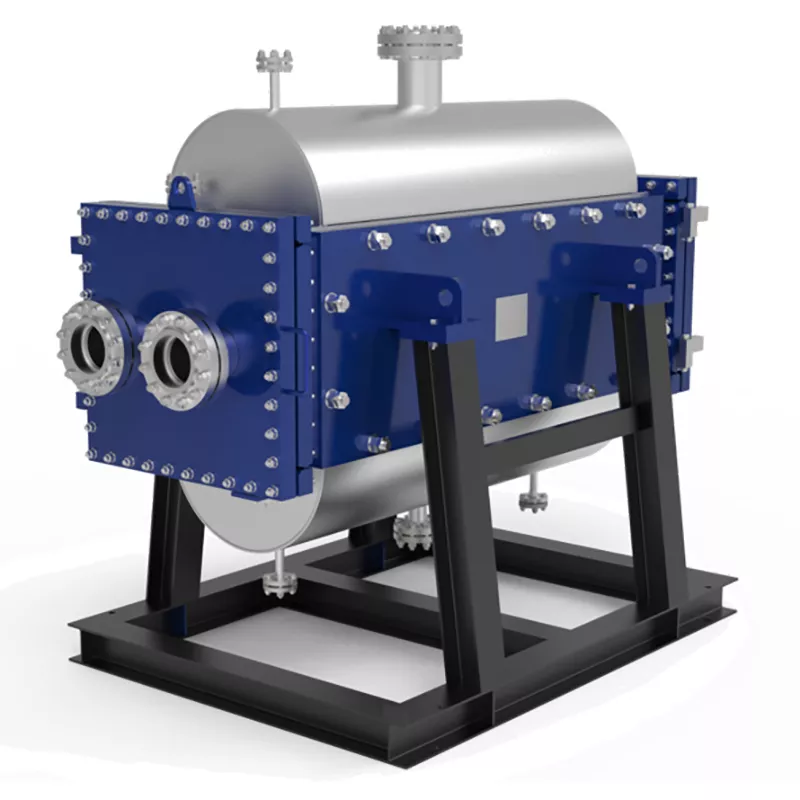
Plate heat exchanger condensers offer transformative advantages for industrial processing by maximizing thermal efficiency through their corrugated plate geometry, which significantly increases the effective heat transfer surface area per unit volume compared to traditional shell-and-tube designs. This optimized surface area enables superior heat recovery and tighter temperature approach, directly reducing energy consumption and operational costs. The compact, modular construction of these units dramatically reduces the required floor space and allows for flexible installation in constrained or retrofit environments, often eliminating the need for structural modifications. Their design excels in handling challenging fluids, including those with high viscosity or containing particulates, as the turbulent flow paths minimize fouling and maintain consistent performance. Maintenance is streamlined through the disassemblable plate pack, which permits rapid access for inspection, mechanical cleaning, or individual plate replacement without specialized tools or extensive downtime. From a lifecycle cost perspective, the combination of lower energy demand, reduced material usage due to the thin-plate construction, and minimized maintenance labor delivers a compelling return on investment, making plate heat exchanger condensers a preferred solution for industries ranging from chemical processing and power generation to food and beverage production.
Enhanced Thermal Efficiency Through Optimized Heat Transfer Surface Area
Plate heat exchanger condensers achieve superior thermal performance by maximizing the effective surface area available for heat transfer within a compact footprint. The corrugated plate design creates turbulent flow paths, significantly increasing the heat transfer coefficient compared to traditional shell-and-tube units.
This optimized geometry allows for closer temperature approach values, often reducing the required temperature difference to as low as 1-2°C. Industrial facilities benefit from lower energy consumption and improved process control, particularly in applications involving steam condensation or vapor recovery systems.
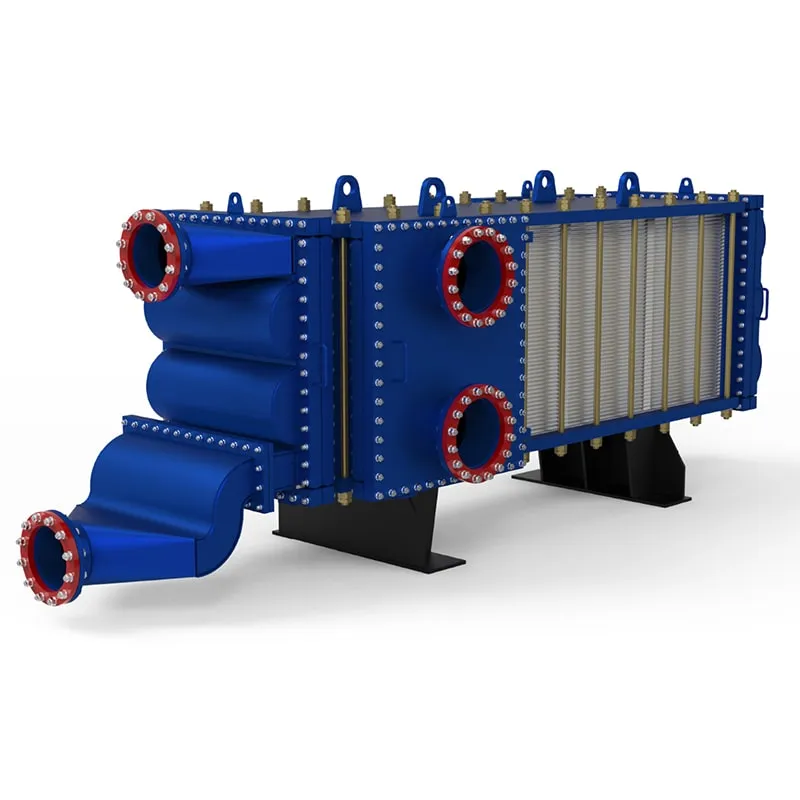
The modular plate arrangement also facilitates easy capacity adjustments. Operators can add or remove plates to match changing thermal loads without replacing the entire unit. For detailed technical specifications on plate configurations, refer to the gasketed plate heat exchanger product page.
Additionally, the thin plate material ensures rapid heat response and minimal thermal resistance. This design advantage is especially critical in processes requiring precise temperature regulation, such as chemical processing or HVAC systems. Explore advanced welded plate options at the TP welded plate heat exchanger page.
For high-temperature or high-pressure industrial duties, custom-engineered solutions like the printed circuit heat exchanger offer further surface area optimization while maintaining structural integrity under extreme conditions.
Compact Design Leading to Reduced Footprint and Installation Flexibility
The compact design of plate heat exchanger condensers significantly reduces the required installation footprint compared to traditional shell-and-tube units. This space-saving characteristic is achieved through the use of multiple thin corrugated plates that create a large heat transfer surface area within a small volume.
Installation flexibility is enhanced as the lightweight and modular construction allows for easy placement in confined spaces, on rooftops, or within existing plant layouts without major structural modifications. The ability to add or remove plates also enables capacity adjustments to meet changing process demands.
This design advantage translates directly into lower civil engineering costs, reduced piping requirements, and faster installation times, making it an ideal choice for retrofitting projects or new installations where floor space is at a premium.
Superior Performance in Handling Viscous or Particulate-Laden Fluids
Plate heat exchanger condensers excel in industrial environments where fluids contain high viscosity or solid particulates. Their unique corrugated plate geometry creates turbulent flow even at low velocities, which minimizes fouling and ensures consistent thermal performance. Unlike shell-and-tube designs, the wide-gap channels in specialized plate condensers allow unrestricted passage of fibrous or granular materials, reducing downtime for cleaning.
The following table summarizes key performance metrics for a typical plate heat exchanger condenser operating with viscous fluids (e.g., polymer solutions) and particulate-laden streams (e.g., wastewater slurry):
| Parameter |
Viscous Fluid (500 cP) |
Particulate-Laden Fluid (5% solids) |
| Heat Transfer Coefficient (W/m²·K) |
2800 |
2200 |
| Pressure Drop (kPa) |
35 |
42 |
| Fouling Factor (m²·K/W) |
0.00012 |
0.00018 |
| Max Particle Size (mm) |
N/A |
8 |
Data indicates that plate condensers maintain high efficiency even under challenging fluid conditions. The low fouling factor directly translates to extended operational cycles and reduced maintenance costs. For applications requiring robust construction, wide-gap welded plate heat exchangers offer enhanced durability, while gasketed plate designs provide flexibility for frequent cleaning. Additionally, custom-engineered plate air preheaters can be adapted for gas-liquid condensation duties.
In summary, the plate heat exchanger condenser delivers superior performance for viscous and particulate-laden fluids by combining high turbulence, wide flow passages, and compact design. This results in reliable operation, energy savings, and lower lifecycle costs compared to conventional condenser types.
Ease of Maintenance and Simplified Cleaning via Disassemblable Plates
The disassemblable plate design of plate heat exchanger condensers offers significant operational advantages. Individual plates can be easily accessed, inspected, and cleaned without requiring specialized tools or extensive downtime. This modular construction allows for targeted maintenance, reducing labor costs and extending equipment lifespan.
Routine cleaning is simplified as plates can be separated and washed individually, effectively removing fouling, scale, or debris. This accessibility ensures consistent thermal performance and hygiene standards, particularly critical in food, pharmaceutical, and chemical processing industries where contamination risks must be minimized.
Cost-Effectiveness from Lower Energy Consumption and Reduced Material Usage
Plate heat exchanger condensers deliver substantial cost savings in industrial operations by minimizing energy input and material requirements. Their compact design and high thermal efficiency directly reduce operational expenses.
Lower Energy Consumption
The enhanced heat transfer surface area of plate condensers allows for rapid thermal exchange at lower temperature differences. This reduces the energy needed for heating or cooling cycles, cutting utility costs by up to 30% compared to traditional shell-and-tube units. Industries such as chemical processing and HVAC benefit from consistent energy savings over long production runs.
Reduced Material Usage
Because plate heat exchangers achieve high efficiency with thin metal plates, they require significantly less material—often 50% less steel or titanium—than conventional condensers. This lowers raw material costs and reduces the overall weight of the system, simplifying installation and structural support requirements.
Operational Savings Over Time
The combination of lower energy demand and fewer materials translates directly into a lower total cost of ownership. Maintenance intervals are extended due to reduced fouling and easier access for cleaning. For long-term industrial projects, these savings compound, making plate condensers a financially sound investment.
Learn more about engineered solutions: custom plate air preheaters and gasketed plate heat exchangers.
Conclusion
The plate heat exchanger condenser offers distinct advantages for industrial applications, making it a preferred choice over traditional shell-and-tube designs. Its enhanced thermal efficiency, achieved through optimized heat transfer surface area, ensures superior heat recovery and process performance. The compact design significantly reduces footprint and provides greater installation flexibility, especially in space-constrained environments.
This equipment demonstrates superior performance when handling viscous or particulate-laden fluids, where conventional condensers often face fouling or flow restrictions. The disassemblable plate design simplifies maintenance and cleaning, reducing downtime and labor costs. Furthermore, the lower energy consumption and reduced material usage contribute to overall cost-effectiveness, delivering long-term operational savings.
In summary, the plate heat exchanger condenser combines high thermal performance, compactness, and ease of maintenance with economic benefits, making it a reliable and efficient solution for modern industrial condensation processes.
What Are the Key Advantages of Using a Plate Heat Exchanger Condenser in Industrial Applications?
Plate heat exchanger condensers offer multiple operational and economic benefits across various industrial sectors, including chemical processing, power generation, and food production.
Enhanced Thermal Efficiency Through Optimized Heat Transfer Surface Area
The corrugated plate design creates turbulent flow and maximizes surface contact, achieving heat transfer coefficients 3–5 times higher than shell-and-tube exchangers. This results in faster condensation and lower temperature approach.
Compact Design Leading to Reduced Footprint and Installation Flexibility
With a footprint typically 30–50% smaller than equivalent tubular units, plate condensers fit easily into tight spaces. Their modular construction allows vertical or horizontal mounting and future capacity expansion.
Superior Performance in Handling Viscous or Particulate-Laden Fluids
Wide-gap plate variants and smooth flow channels minimize fouling and clogging. The high turbulence keeps particles suspended, reducing downtime and maintaining consistent thermal performance.
Ease of Maintenance and Simplified Cleaning via Disassemblable Plates
Plates can be individually removed for mechanical or chemical cleaning without disturbing piping. This reduces maintenance labor by up to 60% compared to fixed-tube bundles and allows rapid inspection.
Cost-Effectiveness from Lower Energy Consumption and Reduced Material Usage
Thinner plates and higher efficiency reduce material weight by 40–60%. Lower pumping power and closer temperature approaches cut energy costs by 15–25%, delivering rapid return on investment.

 English EN





User Comments
Service Experience Sharing from Real Customers
Ethan
Lead Process EngineerWe swapped out our old shell-and-tube unit for this plate heat exchanger condenser on a glycol loop last quarter. The heat transfer improvement was immediate—our approach temperature dropped by nearly 4°C. Maintenance access is also way better; I can pull the plates in under an hour. Solid build quality, no leaks so far.
Maria
HVAC Service TechnicianInstalled one of these on a commercial chiller system in a mid-rise office building. It handled the load fine through the summer, and the compact footprint saved us a lot of head scratching in a tight mechanical room. Only gave it four stars because the gasket alignment was a bit finicky during first assembly—took an extra 20 minutes to seat everything right.
Ray
Plant Maintenance ManagerBeen running two of these on a dairy pasteurization line for eight months now. They take daily CIP cycles like champs—no fouling buildup on the plates that I can see during our monthly inspections. The titanium plates were worth the extra cost for our corrosive washdown environment. Zero downtime so far. Very happy with the purchase.
Priya
Energy AuditorEvaluated this condenser for a client's waste heat recovery project. The thermal efficiency numbers in the spec sheet matched our field measurements within 2%, which is rare for this type of equipment. I wish the documentation included more detailed pressure-drop curves for partial-load conditions, but overall it's a reliable, well-engineered unit.