 English EN


How Wide Channel Gaps Prevent Clogging: The Anti-Fouling Design Explained
Wide channel gaps in anti-clogging heat exchangers let solids pass, preventing clogging and fouling for reliable, low-maintenance industrial performance.
More
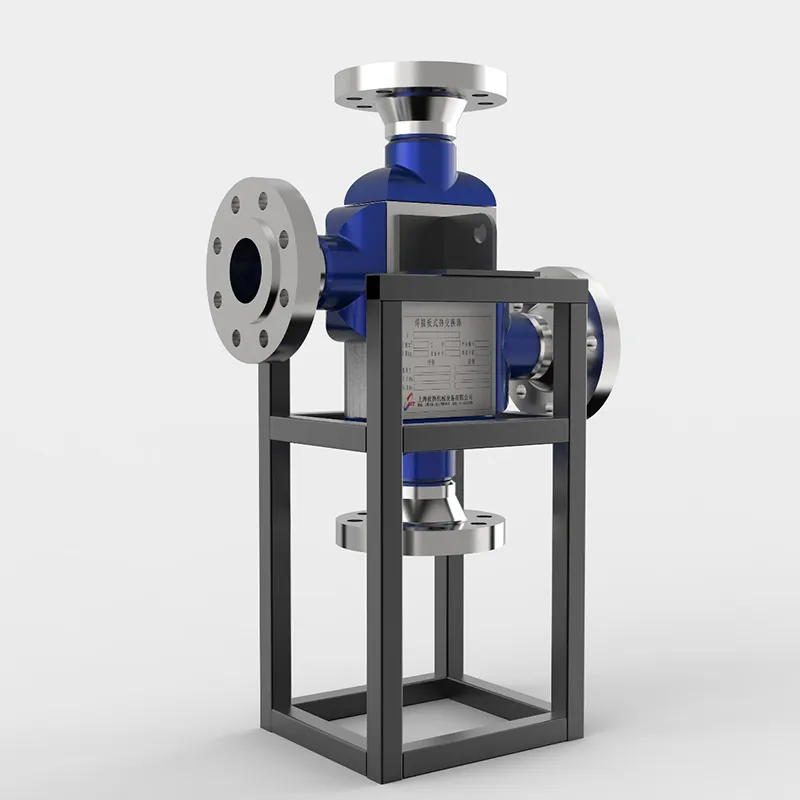
When you're responsible for keeping an industrial process running smoothly, every piece of equipment has to earn its keep. The plate type condenser has become a go-to solution across chemical processing, power generation, and HVAC applications, not because it's trendy, but because it solves real problems. Let's look at the specific operational benefits that make this technology stand out on the plant floor.
One of the first things you'll notice when comparing a plate type condenser to a traditional shell-and-tube unit is the size difference. The corrugated plate pattern creates intense turbulence even at low flow rates, which translates to heat transfer coefficients that are typically three to five times higher than conventional designs. For a facility where floor space is at a premium, this means you can often replace an older, larger condenser with a plate type unit that occupies a fraction of the footprint while handling the same thermal duty. This isn't just about saving square footage—it also reduces the amount of structural steel, piping, and insulation needed to support the unit.
Anyone who has wrestled with tube bundles during a shutdown knows how time-consuming cleaning can be. Plate type condensers turn that chore into a straightforward job. Because the plates are gasketed and clamped together, you can open the unit, slide out the plates, and access every heat transfer surface without special tools. For processes that deal with fouling fluids or periodic scale buildup, this accessibility is a game-changer. Many plants report that a two-person crew can complete a thorough inspection and cleaning in a single shift, compared to a full day or more for a comparable shell-and-tube exchanger. That reduced downtime directly impacts your bottom line.
Industrial processes are rarely static. Feedstock compositions change, production rates fluctuate, and seasonal ambient conditions affect cooling water temperatures. Plate type condensers handle these variations with ease. You can add or remove plates to adjust the heat transfer capacity, which is a practical way to tune the unit to your actual process needs. This modularity also means that if your process evolves over time, you're not stuck with a fixed-capacity condenser that's either oversized or undersized. The ability to modify the plate count in the field is a level of flexibility that's hard to match with other condenser designs.
The enhanced heat transfer coefficients of a plate type condenser don't just reduce the physical size of the unit—they also reduce the energy required to achieve your target condensation duty. In many installations, the approach temperature (the difference between the condensing vapor and the cooling medium) can be as low as 1 to 2 degrees Celsius. This tight approach allows you to use warmer cooling water or reduce the cooling water flow rate, which cuts pumping energy and, in some cases, allows heat recovery that would otherwise be lost. Over a year of continuous operation, these savings add up to a meaningful reduction in utility costs.
Modern plate type condensers are engineered with materials that stand up to corrosive media and high operating pressures. Gaskets are available in a range of elastomers, from EPDM to Viton, to match the chemical compatibility of your process stream. For applications where welded plate designs are preferred, options like the TP welded plate heat exchanger eliminate gasket concerns entirely. This robust construction means fewer leak points and longer service intervals, which is exactly what you want in a critical piece of condensation equipment.
Because a plate type condenser uses standardized plate and gasket designs, you don't need to stock a warehouse full of custom parts. A small inventory of spare plates and gaskets covers most maintenance scenarios. This is particularly valuable for facilities that operate multiple units—the same spare parts can serve several different condensers, simplifying your supply chain and reducing carrying costs. For operations that rely on gasketed plate heat exchangers across multiple duties, this standardization is a practical advantage that pays off during planned turnarounds and unexpected repairs alike.
Leak detection is straightforward with a plate type condenser. The atmospheric side of the gasketed design means that any internal leak typically weeps to the outside rather than mixing process fluids internally. This inherent safety feature helps prevent cross-contamination and makes it easier to spot problems before they escalate. Additionally, the reduced refrigerant or process fluid inventory required in a plate type condenser—compared to a shell-and-tube unit with a large shell volume—means less potential for emissions if a leak does occur. For facilities working with refrigerants or volatile organic compounds, this is a meaningful environmental benefit.
In actual industrial installations, plate type condensers consistently deliver overall heat transfer coefficients in the range of 3,000 to 7,000 W/m²·K for clean condensing services, depending on the vapor and coolant properties. This compares favorably to the 800 to 1,500 W/m²·K typically seen in shell-and-tube units. Pressure drop is generally higher on the vapor side, but the trade-off is almost always worth it when you factor in the reduced surface area and the ability to achieve a closer approach temperature. For processes where pressure drop is a critical constraint, wide-gap plate designs, such as the wide gap welded plate heat exchanger, offer a practical solution for handling viscous or particulate-laden streams.
If you're evaluating a plate type condenser for a new installation or considering a retrofit, the transition is generally straightforward. The compact design often simplifies piping layouts, and the reduced weight means less structural support is required. Most manufacturers provide detailed selection software that helps you match the plate geometry, material, and gasket type to your specific process conditions. Whether you're condensing steam, hydrocarbons, or chemical vapors, there's a plate configuration that fits the duty. For high-pressure or high-temperature applications, brazed or welded variants are available to extend the operating envelope beyond what gasketed units can handle.
The operational benefits of a plate type condenser are clear: they take up less space, are easier to maintain, adapt to changing process demands, and operate with impressive thermal efficiency. For plant managers and engineers looking to improve reliability and reduce operating costs, this technology deserves serious consideration. When you're ready to explore specific options, reviewing the custom engineered plate air preheaters or other plate heat exchanger configurations can give you a sense of the range of solutions available. The right condenser isn't just a piece of equipment—it's an investment in your facility's long-term performance.
We provide you with comprehensive foreign trade solutions to help enterprises achieve global development
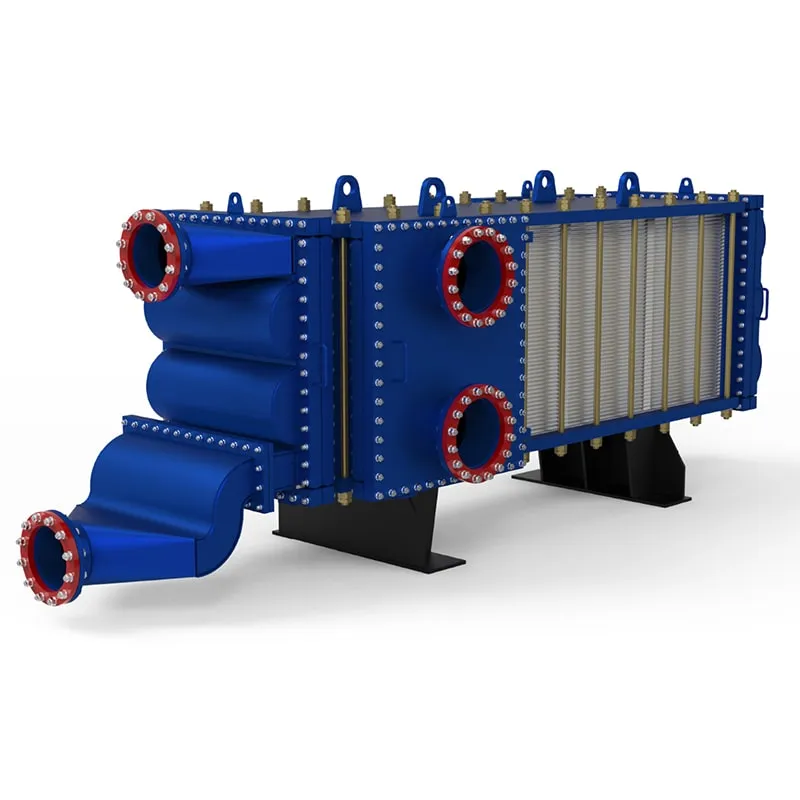
Custom-Engineered Anti-Clogging Solutions for High-Viscosity Slurries: Deployed specifically to conquer severe industrial fouling, SHPHE wide gap welded plate heat exchangers are tailor-built to handle complex media containing dense fibers, coarse crystals, or solid suspensions without clogging. Each non-obstructed channel is calculated and formed by laser-welded plate packs matching your fluid’s exact rheology and grain size, completely eliminating structural "dead zones" and media stagnation. Available in highly compact vertical and versatile horizontal configurations, our vertical engineering drastically reduces plant footprints while maintaining unhindered product throughput, minimal pressure drops, and flawless continuous operations across harsh process loops.
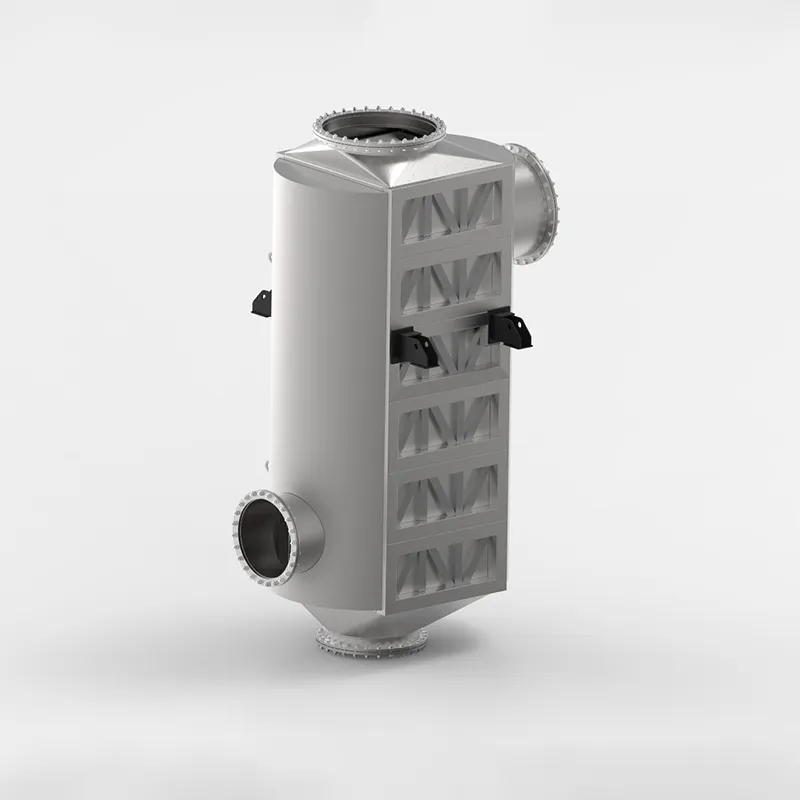
Industrial furnace and boiler exhaust gases carry vast amounts of unutilized thermal energy. The SHPHE custom Plate Air Preheater (PAPH) is target-engineered to intercept this high-temperature flue gas, recovering valuable waste heat and transferring it directly back to incoming combustion air or process gas streams. By substantially elevating the temperature of your flame feed, our custom systems optimize combustion thermodynamics, deliver massive fuel savings, and significantly reduce industrial carbon and emissions footprints. Built to withstand severe flue-gas environments, SHPHE PAPH systems serve as the premier choice for modern, energy-intensive plants prioritizing decarb compliance and maximum thermal efficiency.
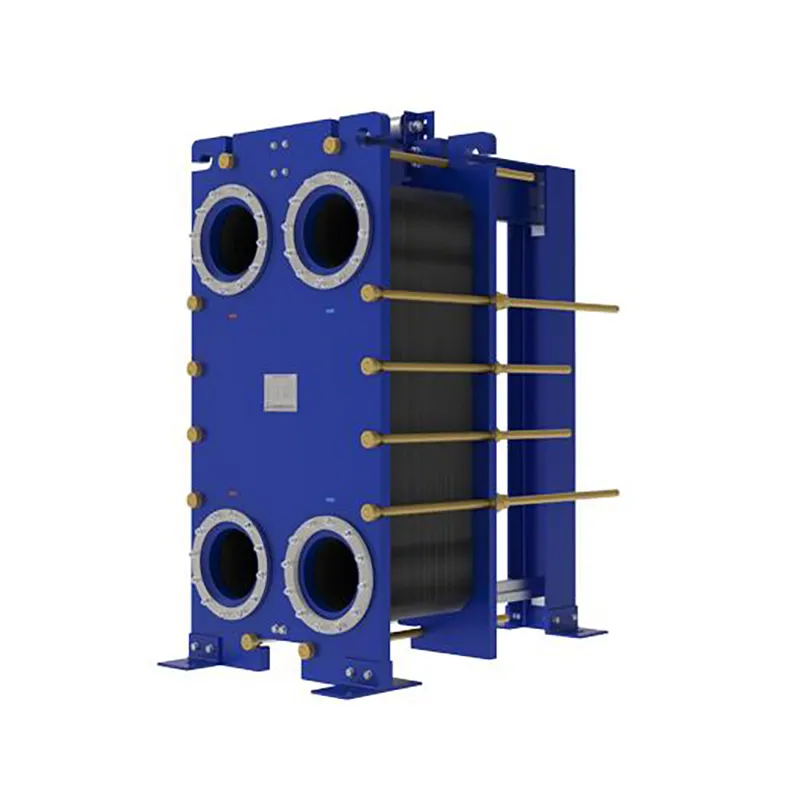
Since the invention of the plate heat exchanger (PHE) in 1923, thermal technology has evolved from standard food-grade processing to highly complex industrial operations. At SHPHE, we take this classic, versatile design and transform it into highly bespoke heat transfer solutions tailored to your unique process fluids and thermal loads. While traditional gasketed PHEs offer high efficiency and compact footprints, SHPHE optimizes plate corrugations, metallurgy, and sealing systems to handle your specific chemical, HVAC, or energy recovery parameters. Our custom-engineered gasketed plate heat exchangers provide outstanding scalability and ease of maintenance, serving as an indispensable asset for heavy industries—including oil and gas, metallurgy, and food processing—where uptime, energy recovery, and long-term sustainability are top priorities.
The SHPHE Printed Circuit Heat Exchanger (PCHE) represents a paradigm shift in microchannel thermal management, meticulously engineered for the world's most critical and demanding industrial boundaries. Developed to surpass the physical limitations of conventional shell-and-tube designs in ultra-high-pressure environments, our custom PCHEs integrate advanced photochemical etching and solid-state diffusion bonding to provide unmatched safety, thermal efficiency, and integrity under extreme stress. Initially deployed within high-consequence sectors such as aerospace and nuclear power generation, PCHE technology has completely revolutionized high-density thermal processing. Today, SHPHE brings this breakthrough engineering to mainstream energy transitions—including LNG liquefaction, supercritical CO² power cycles, hydrocarbon processing, and high-pressure hydrogen systems—enabling plants to maximize energy recovery, ensure zero-leakage security, and significantly shrink environmental footprints.
Select the most popular foreign trade service products to meet your diverse needs
Custom-Engineered Anti-Clogging Solutions for High-Viscosity Slurries: Deployed specifically to conquer severe industrial fouling, SHPHE wide gap welded plate heat exchangers are tailor-built to handle complex media containing dense fibers, coarse crystals, or solid suspensions without clogging. Each non-obstructed channel is calculated and formed by laser-welded plate packs matching your fluid’s exact rheology and grain size, completely eliminating structural "dead zones" and media stagnation. Available in highly compact vertical and versatile horizontal configurations, our vertical engineering drastically reduces plant footprints while maintaining unhindered product throughput, minimal pressure drops, and flawless continuous operations across harsh process loops.
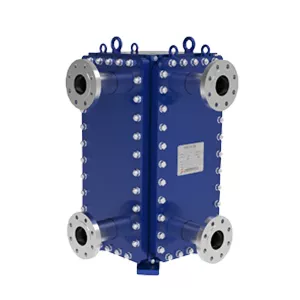
Custom-Engineered for Severe Process Demands. At SHPHE, we don't just supply equipment; we design tailored thermal solutions. Our HT-Bloc welded plate heat exchangers are custom-configured by our experienced engineers to overcome your specific industry challenges—whether handling high-viscosity media, extreme temperatures, or strict space constraints.
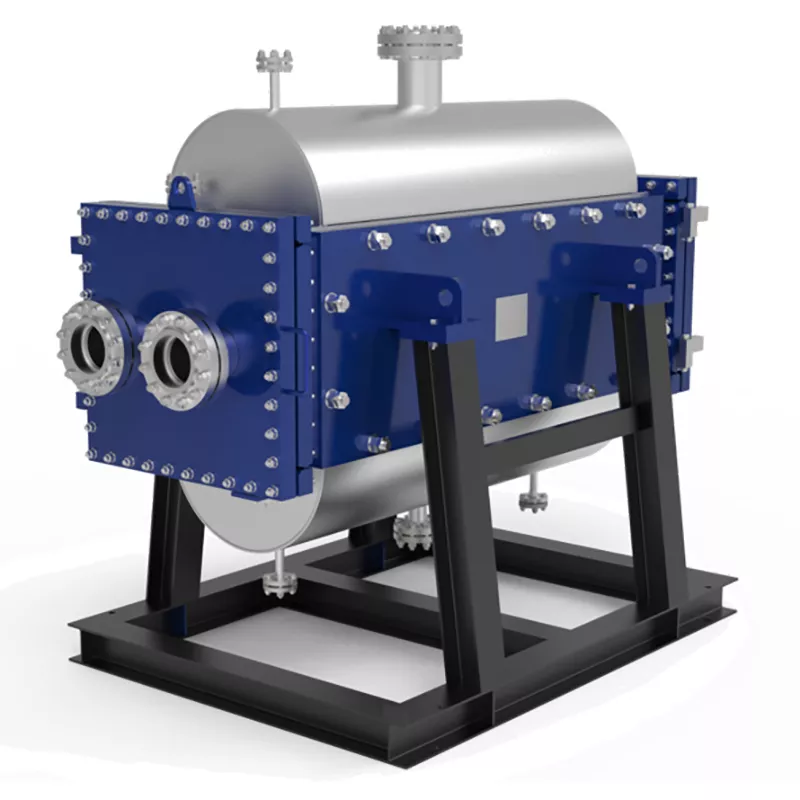
Industrial processes involving particle-laden slurries, high-viscosity syrups, or fiber-rich pulp demand more than standard equipment—they require target-engineered thermal management. At SHPHE, we configure the TP Welded Plate Heat Exchanger to directly conquer your plant's severe fouling, blockage, and erosion threats. Combining custom-tailored channel geometries, wear-resistant metallurgy, and integrated CIP (Cleaning-in-Place) systems, we deliver absolute production continuity where conventional heat exchangers fail.



User Comments
Service Experience Sharing from Real Customers
Liam
Maintenance SupervisorWe swapped out an old shell-and-tube for this plate type condenser in our HVAC retrofit, and the heat transfer improvement is night and day. Installation was straightforward, and the compact footprint freed up valuable floor space. The copper-brazed plates have held up well against our glycol loop. No leaks after six months of constant cycling.
Emma
Process EngineerUsing this condenser in a pilot-scale distillation setup for essential oils. The thin-plate design gives us precise temperature control, which is critical for preserving volatile compounds. Only reason I’m not giving 5 stars is the gasket material – we had to switch to a Viton variant for our solvent-laden vapors. But the base unit itself is robust and easy to clean between batches.
Noah
Facilities ManagerI manage a small food processing plant, and our old condenser was a constant headache with fouling. This plate type has been running for three months now with zero clogging issues. The flow distribution is even, and the pressure drop is actually lower than the spec sheet said. My guys love that the plates come apart quickly for inspection. Solid investment.
Sophia
Senior Refrigeration TechnicianBeen in the trade for 20 years, and I’ve installed a lot of condensers. This one’s a breeze to mount and pipe up. The stainless steel plates feel premium, and the brazing looks clean. On a supermarket rack system, it’s handling the load without vibration or noise. My only nitpick: the drain connection could be a hair larger for easier servicing. Still, I’d spec it again.