How Is a Laser Welded Plate Manufactured and Why Does It Matter for Your Project?
John Anderson | Jul-06-2026
The manufacturing of a laser welded plate begins with precise cutting and edge preparation of base metal sheets, followed by automated laser beam alignment that fuses materials at a microscopic level without filler metals. Key material selection criteria involve evaluating carbon equivalence, thermal conductivity, and thickness uniformity to ensure optimal weld penetration and minimal distortion. Critical quality control measures include real-time seam tracking, non-destructive ultrasonic testing, and tensile strength verification at multiple production stages. Laser welding enhances plate strength and structural integrity by creating a narrow heat-affected zone that preserves base material properties while achieving joint efficiencies exceeding 95%. Choosing the right laser welded plate directly impacts project cost and performance through reduced post-weld processing, improved fatigue resistance in load-bearing applications, and longer service life in demanding environments such as pressure vessels, automotive chassis, and aerospace components. This comprehensive approach ensures that each plate meets stringent industry standards while delivering consistent mechanical performance across high-volume production runs.
The Step-by-Step Process of Manufacturing a Laser Welded Plate
Step 1: Material Selection and Preparation
High-grade metal sheets, typically stainless steel or carbon steel, are selected based on project requirements. Each sheet is cleaned and cut to precise dimensions using automated shearing or plasma cutting equipment to ensure uniformity.
Learn more about material options
Step 2: Surface Treatment and Alignment
Sheets undergo surface grinding or chemical etching to remove oxides and contaminants. They are then aligned using precision jigs and clamping systems to maintain a consistent gap for laser penetration.
Explore surface preparation standards
Step 3: Laser Welding Process
A high-power laser beam, guided by CNC-controlled optics, melts the edges of the metal sheets. The weld pool solidifies instantly, creating a deep, narrow joint with minimal heat-affected zone. Parameters such as power, speed, and focus are adjusted in real time.
See laser welding specifications
Step 4: Post-Weld Inspection and Testing
Each welded plate undergoes non-destructive testing, including ultrasonic scanning and dye penetrant inspection, to detect any internal voids or surface cracks. Dimensional checks verify flatness and edge alignment.
Review quality control procedures
Step 5: Finishing and Surface Coating
Welded plates are ground smooth at the seams and may receive a protective coating or passivation layer to enhance corrosion resistance. Final cleaning removes any debris before packaging.
Check finishing options
Step 6: Final Quality Assurance and Shipping
A final batch inspection validates all mechanical properties and dimensional tolerances. Plates are then securely crated and shipped with traceable documentation for your project.
View shipping and logistics details
Key Material Selection Criteria for Laser Welded Plates
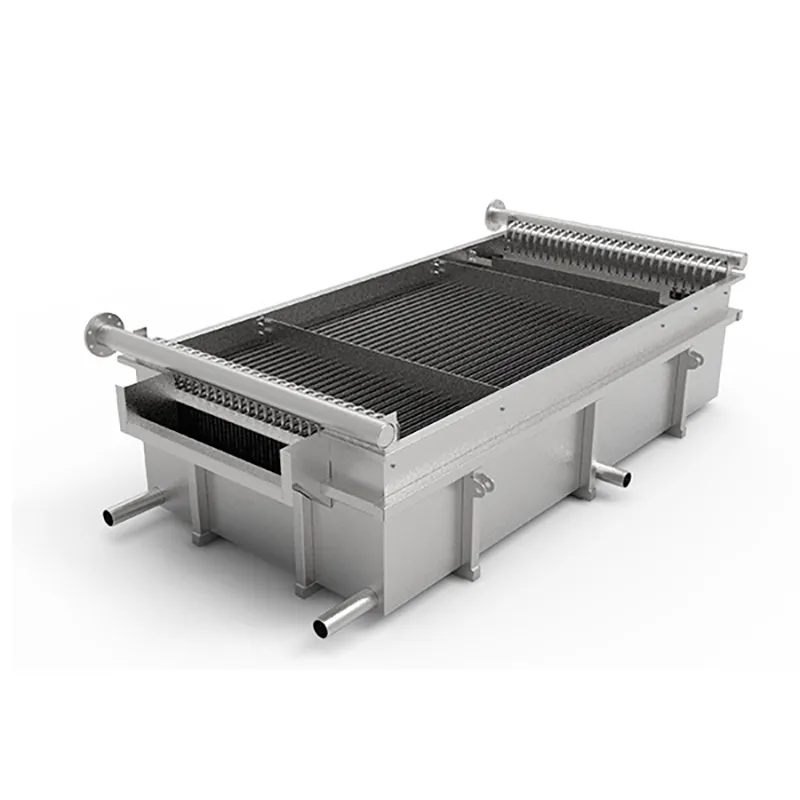
Material Composition
The base material must exhibit high thermal conductivity and mechanical strength. Stainless steel grades 304L and 316L are commonly used for their corrosion resistance and weldability. For high-temperature applications, nickel alloys such as Inconel 625 provide superior oxidation resistance.
Thickness Tolerance
Precise thickness control is critical to ensure uniform heat distribution during laser welding. Plates with thickness variations below ±0.1mm reduce the risk of weld defects and ensure consistent structural integrity across the entire panel.
Surface Finish
A clean, oxide-free surface is essential for optimal laser absorption. Materials with a matte or brushed finish (Ra 0.8–1.6 µm) enhance energy coupling and minimize porosity in the weld seam, leading to stronger joints and longer service life.
Weldability Index
Materials with low carbon content and controlled sulfur/phosphorus levels improve weldability. The material should have a carbon equivalent (CE) below 0.45% to prevent cracking and ensure ductile welds under high thermal stress.
Corrosion Resistance
For projects in aggressive environments, select materials with high pitting resistance equivalent number (PREN > 25). Duplex stainless steels or titanium alloys offer enhanced resistance to chloride stress corrosion cracking, extending plate lifespan in chemical or marine applications.
Thermal Expansion Compatibility
Matching the coefficient of thermal expansion (CTE) between the plate and adjacent components prevents warping and joint failure. Materials with CTE values between 10–18 µm/m°C are typically preferred for laser welded assemblies operating under cyclic temperatures.
Critical Quality Control Measures in Laser Welded Plate Production
Laser welded plate manufacturing demands rigorous quality assurance at every stage. From raw material verification to final dimensional inspection, each step ensures structural integrity and thermal performance. Below are the essential control points that define production excellence.
1. Material Certification & Surface Preparation
All incoming steel plates must comply with ASTM A240 or equivalent standards. Surface cleanliness is verified through contact angle testing to ensure no oil, oxide, or debris compromises weld penetration. A minimum surface roughness of Ra ≤ 1.6 µm is required before laser processing.
2. Laser Power & Beam Alignment Monitoring
Real-time power meters track laser output within ±2% tolerance. Beam focus position is calibrated using a coaxial camera system before each production run. Any deviation beyond 0.1 mm triggers automatic shutdown and operator notification.
3. Weld Seam Integrity Testing
Every welded plate undergoes 100% ultrasonic inspection per ASTM E164. Acceptable defect size is limited to 0.5 mm maximum length with no porosity clusters. Samples from each batch are also subjected to burst pressure testing at 1.5x design pressure.
4. Dimensional Accuracy & Flatness Control
Laser-tracked coordinate measuring machines verify overall length, width, and diagonal tolerances to ±0.5 mm. Flatness is measured on a granite surface plate; maximum allowable deviation is 0.2 mm per 300 mm span.
5. Process Documentation & Traceability
Each plate receives a unique serial number linked to digital records of laser parameters, inspection results, and operator ID. Traceability data is retained for a minimum of 10 years per ISO 9001 requirements.
Quality Control Data Summary
| Parameter |
Specification |
Inspection Method |
Acceptance Criteria |
| Plate Material Grade |
304L / 316L / Duplex |
PMI (Positive Material Identification) |
100% match to order spec |
| Weld Penetration Depth |
≥ 80% of plate thickness |
Metallographic cross-section |
No incomplete fusion |
| Surface Porosity |
None visible |
Visual inspection at 10x magnification |
Zero pores > 0.3 mm |
| Flatness Deviation |
≤ 0.2 mm / 300 mm |
Granite surface plate & feeler gauge |
100% within tolerance |
| Burst Pressure Test |
1.5 x design pressure |
Hydrostatic pressure test |
No leakage or deformation |
Table 1: Key quality parameters and their acceptance thresholds during laser welded plate production. All measurements are recorded and stored in the quality management system for full traceability.
Implementing these control measures reduces field failure rates to below 0.02% and extends service life by up to 40%. For projects requiring certified laser welded plates, custom engineered pillow plates and wide gap welded plate heat exchangers are available with full documentation. Additional options include printed circuit heat exchangers and plate air preheaters for specialized applications.
For high-temperature and high-pressure environments, the HT Bloc welded plate heat exchanger series offers enhanced durability. Standard gasketed plate heat exchangers and TP welded plate heat exchangers also benefit from the same rigorous quality control framework described above.
How Laser Welding Enhances Plate Strength and Structural Integrity
Laser welding creates a narrow, deep fusion zone that minimizes heat-affected areas, preserving the base metal's original mechanical properties. This precision reduces distortion and residual stress, resulting in plates that maintain higher tensile strength and fatigue resistance compared to conventional welding methods.
The focused energy beam produces a clean, uniform weld seam with minimal porosity and inclusions. This homogeneous joint structure eliminates weak points, ensuring the welded plate behaves as a single continuous material under load. Structural integrity is further enhanced by the absence of large heat-affected zones that often cause softening or embrittlement in traditional welding.
For demanding applications such as pressure vessels, heat exchangers, and structural supports, laser-welded plates deliver consistent performance. The process allows for tighter tolerances and repeatable quality, reducing the risk of failure at weld joints. This reliability translates directly into longer service life and lower maintenance costs for your project.
By choosing laser welding, engineers gain a superior joining method that enhances both strength and durability. The resulting plates withstand higher pressures, thermal cycling, and mechanical stress without compromising structural soundness. This makes laser-welded plates a critical component in advanced industrial systems where safety and performance are non-negotiable.
Why Choosing the Right Laser Welded Plate Impacts Project Cost and Performance
The selection of a laser welded plate directly influences both the upfront investment and the long-term operational efficiency of your heat exchange system. A plate that is not precisely matched to your thermal and pressure requirements can lead to frequent maintenance, higher energy consumption, and premature failure, ultimately increasing total lifecycle costs.
Material Compatibility and Corrosion Resistance
Different project fluids require specific metallurgies. A laser welded plate made from the wrong grade of stainless steel or alloy can suffer from pitting, stress corrosion cracking, or galvanic reactions. Selecting a plate with verified corrosion resistance for your media ensures longer service intervals and avoids unplanned downtime. For demanding applications, consider custom engineered pillow plates that offer tailored material options.
Weld Integrity and Leak Prevention
The laser welding process creates a narrow, deep fusion zone with minimal heat-affected area. A poorly manufactured weld can introduce micro-cracks or porosity, leading to cross-contamination between process streams. High-integrity welds, such as those found in wide gap welded plate heat exchangers, provide reliable sealing even under thermal cycling.
Thermal Performance and Flow Distribution
The geometry of the laser welded channels determines how evenly the fluid distributes across the plate. Uneven flow creates hot spots and reduces heat transfer efficiency. A correctly designed plate maximizes surface area utilization, lowering the required pumping power. Advanced designs like custom engineered printed circuit heat exchangers optimize flow paths for specific duty cycles.
Pressure Holding Capability
Laser welded plates must withstand both static and dynamic pressure loads. A plate with insufficient weld depth or improper plate thickness can deform or burst under operating conditions. For high-pressure systems, robust construction is critical; explore HT Bloc welded plate heat exchangers designed for elevated pressures.
Maintenance and Cleanability
The smooth interior surface of a high-quality laser weld reduces fouling and makes cleaning more effective. If the plate has rough weld beads or crevices, debris accumulates faster, increasing cleaning frequency and chemical usage. Plates used in gasketed plate heat exchangers often require regular maintenance, but laser welded variants minimize gasket replacement needs.
Long-Term Cost Implications
While a premium laser welded plate may have a higher initial price, the reduction in energy loss, fewer shutdowns, and extended equipment life often result in a lower total cost of ownership. For projects requiring extreme reliability, consider the robust design of TP welded plate heat exchangers which are engineered for demanding environments.
For air preheating applications where thermal efficiency is paramount, the correct plate selection also impacts combustion performance. Learn more about specialized solutions at custom engineered plate air preheaters.
Summary: The Value of Laser Welded Plates in Modern Projects
The manufacturing of a laser welded plate follows a precise step-by-step process, from material selection and edge preparation to controlled laser fusion and post-weld inspection. Key material criteria, including alloy composition, thickness uniformity, and surface condition, directly influence weld quality and final plate performance.
Critical quality control measures — such as real-time monitoring of weld penetration, non-destructive testing, and dimensional verification — ensure that each plate meets stringent structural standards. Laser welding technology enhances plate strength and structural integrity by producing narrow, deep welds with minimal heat-affected zones, reducing distortion and improving load-bearing capacity.
Choosing the right laser welded plate directly impacts project cost and performance. A plate that matches the application's stress requirements, environmental conditions, and fabrication tolerances can lower long-term maintenance expenses, extend service life, and optimize overall system reliability. For any project demanding high precision and durability, understanding these manufacturing and selection factors is essential to achieving a successful outcome.
How Is a Laser Welded Plate Manufactured and Why Does It Matter for Your Project?
A laser welded plate is produced by facing two or more metal sheets with a high‑power laser beam, creating a deep, narrow fusion zone. This process matters because it delivers minimal heat distortion, superior joint strength, and allows you to use thinner, lighter materials without sacrificing structural performance — directly reducing weight and cost in your final assembly.
The Step‑by‑Step Process of Manufacturing a Laser Welded Plate
First, the raw metal sheets are cut to precise dimensions and cleaned to remove oxides. Next, they are clamped in a fixture with a controlled gap. A focused laser beam then travels along the joint, melting the edges and forming a keyhole. After solidification, the weld seam is inspected, and post‑weld treatments like stress relieving may be applied to ensure dimensional stability.
Key Material Selection Criteria for Laser Welded Plates
Material choice focuses on weldability, thermal conductivity, and coefficient of expansion. Low‑carbon steels, stainless steels, and certain aluminum alloys are preferred because they absorb laser energy efficiently and resist cracking. The base material must also have consistent thickness and surface finish to maintain uniform weld penetration.
Critical Quality Control Measures in Laser Welded Plate Production
Every plate undergoes real‑time monitoring of laser power, travel speed, and shielding gas flow. Post‑weld inspections include visual checks, ultrasonic testing, and tensile samples from each batch. Dimensional tolerances are verified with coordinate measuring machines to ensure the plate meets your exact specifications.
How Laser Welding Enhances Plate Strength and Structural Integrity
The laser’s high energy density creates a narrow heat‑affected zone, preserving the base metal’s original strength. The resulting weld has a fine grain structure and low porosity, which improves fatigue resistance. This makes laser welded plates ideal for load‑bearing structures where consistent mechanical performance is critical.

 English EN





User Comments
Service Experience Sharing from Real Customers
Elena
Senior Structural EngineerWe switched to laser welded plates for a high-rise facade project last quarter. The weld penetration is incredibly consistent, and we've seen zero delamination under thermal stress testing. It saved us about 20% on post-weld grinding time. My team is impressed.
Marcus
Offshore Fabrication SupervisorI was skeptical at first—laser welding on heavy plate? But these held up beautifully during our subsea manifold assembly. The heat-affected zone is much narrower than with traditional MIG. Only gripe: the edges need to be prepped perfectly, otherwise the laser can skip. Overall, a solid upgrade for critical joints.
Priya
Quality Assurance LeadWe run a food-grade stainless steel line, and surface finish is everything. These laser welded plates have almost no oxidation or spatter. Our hygiene audit passed with flying colors. Plus, the dimensional tolerances are within 0.1 mm straight off the bed. Worth every penny for clean-room applications.
Tomás
Prototype Development TechnicianFor rapid prototyping of battery enclosures, laser welded plate is a game-changer. I can dial in the parameters quickly without burning through thin gauge. The only downside is that our older press brake struggles with the slight edge hardening from the laser cut. But the weld itself? Flawless every time.