When standard gasketed plate heat exchangers reach their limits—whether due to high temperatures, aggressive media, or pressure spikes—engineers often turn to a more robust alternative: the bloc type welded plate heat exchanger. Unlike its gasketed cousin, this design eliminates soft seals entirely, replacing them with laser-welded channels that can handle far more demanding operating conditions. Let's break down what makes this equipment tick and why it's become a go-to solution in heavy industry.
Core Construction: What Sets It Apart?
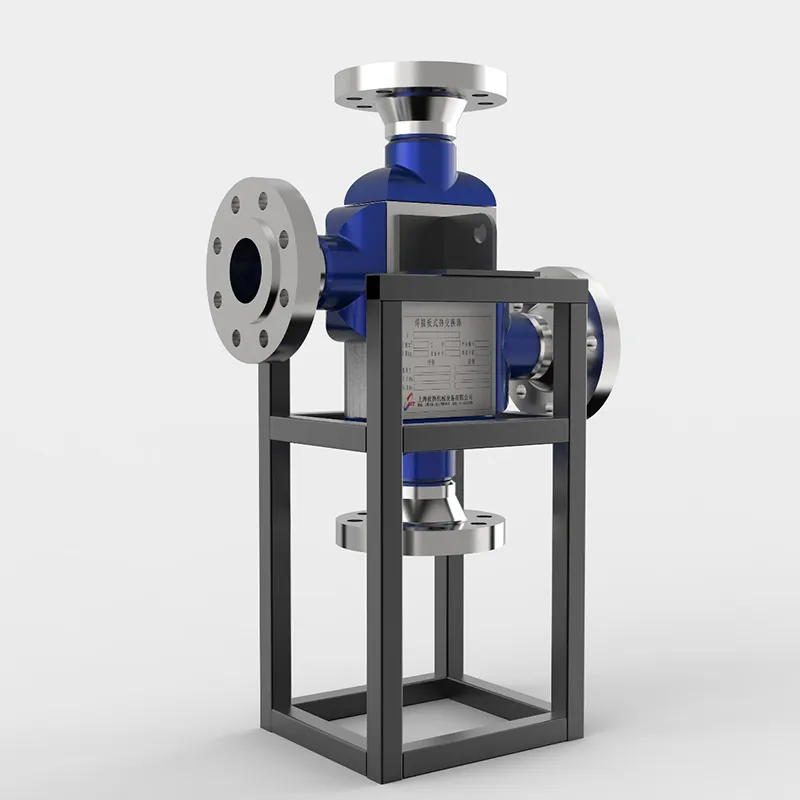
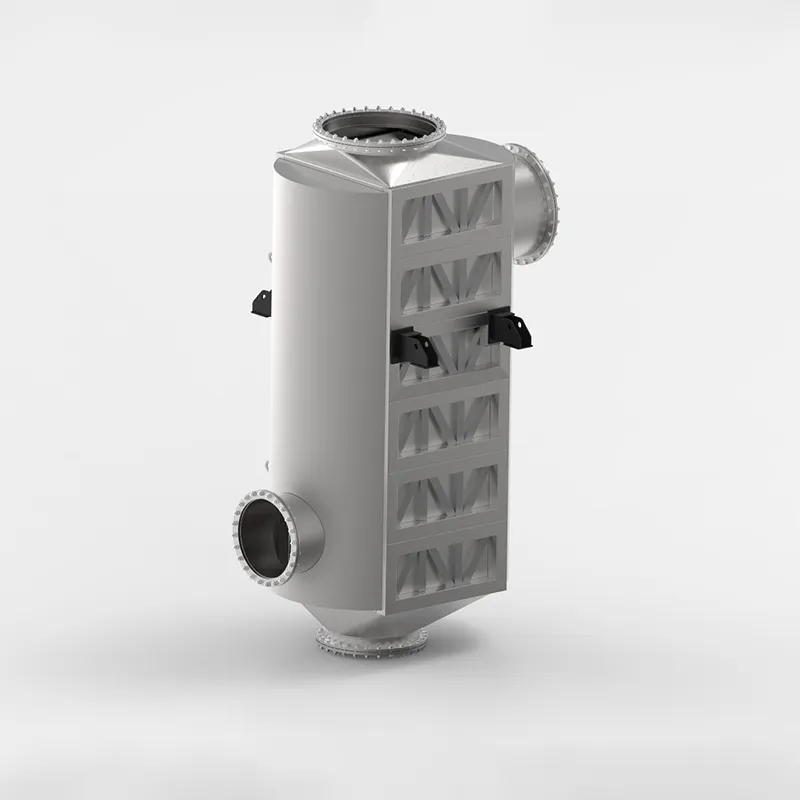
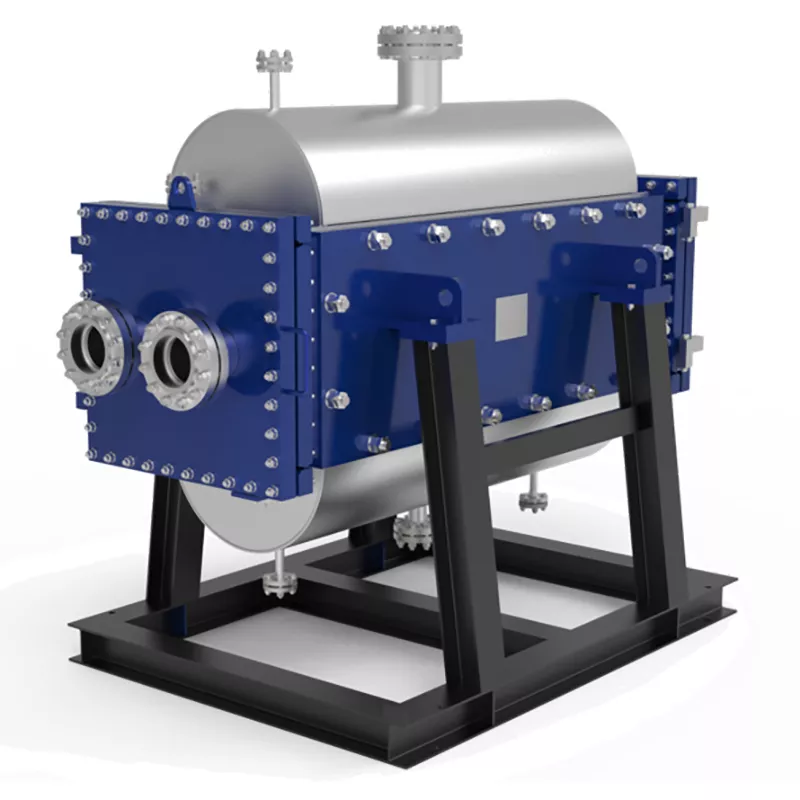
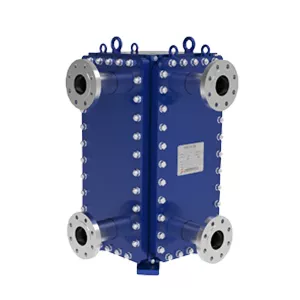
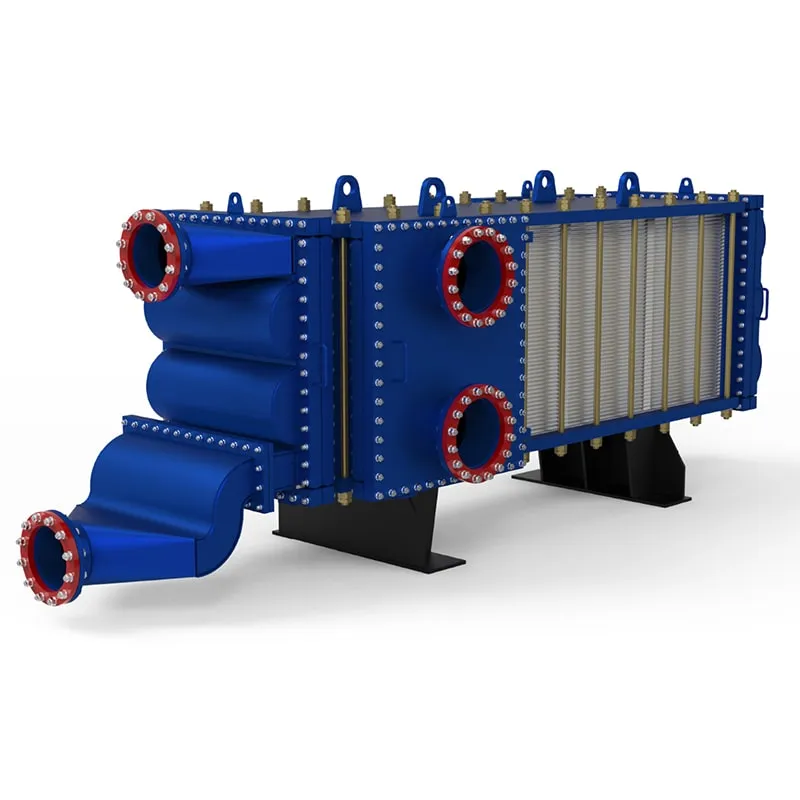
The bloc type welded plate heat exchanger is essentially a compact shell-and-tube alternative, but instead of round tubes, it uses corrugated metal plates. These plates are stacked together and then laser-welded at the contact points, forming two separate flow channels. The key difference from gasketed designs is that there are no gaskets or elastomeric seals in the main flow paths. The plates are welded together to create a fully sealed, metallic unit.
Typically, the exchanger is built as a "bloc" or block, meaning the plate pack is welded into a single, solid core. This core is then placed inside a frame or connected to headers. The welded channels can be configured in various flow arrangements—counter-current, co-current, or cross-flow—depending on the thermal duty and allowable pressure drop. The absence of gaskets also means the unit can operate at temperatures up to 400°C and pressures up to 40 bar, depending on the specific design and materials used.
How Does It Work?
The working principle is straightforward: two fluids at different temperatures flow through alternating channels. The hot fluid transfers its thermal energy through the thin metal plate to the cold fluid on the other side. The corrugated pattern on the plates creates turbulence in the fluid flow, which significantly enhances heat transfer coefficients compared to smooth surfaces. This turbulence also helps reduce fouling, as the swirling motion keeps particles suspended.
In a typical application, the primary fluid (e.g., hot process water or thermal oil) enters through one header and flows through the welded channels, while the secondary fluid (e.g., cooling water or cold process stream) flows counter-currently through the adjacent channels. The welded design ensures that there is no cross-contamination between the two fluids, even if one side is at a much higher pressure. The counter-current flow arrangement also allows for a closer temperature approach, often achieving temperature differences as low as 1-2°C, which is highly efficient for heat recovery systems.
Key Advantages Over Gasketed Plate Heat Exchangers
The primary benefit is the elimination of gasket failure. Gaskets are the weakest link in traditional plate heat exchangers—they degrade over time, can't handle certain chemicals, and limit operating pressure. The welded bloc design removes this vulnerability entirely. This results in:
- Higher reliability: No gaskets to replace or retorque, reducing maintenance downtime.
- Broader chemical compatibility: Since only metal contacts the fluid, you can use aggressive media like acids, caustics, or solvents without worrying about seal degradation.
- Extended service life: Welded joints are less prone to fatigue and leakage over time.
- Compact footprint: Despite being fully welded, the unit remains highly compact, offering a small installation area compared to shell-and-tube exchangers with similar duty.
Where Is It Commonly Used?
You'll find bloc type welded plate heat exchangers in industries where reliability is non-negotiable. In chemical processing, they handle corrosive fluids and high-temperature reactions. In HVAC and district cooling, they serve as efficient decouplers between building loops and primary chilled water systems. The oil and gas sector uses them for cooling and heating of hydrocarbons, where flammable media require a leak-proof design. Additionally, they are widely used in power generation for cooling generator bearings or as lube oil coolers, and in marine applications where saltwater corrosion is a concern.
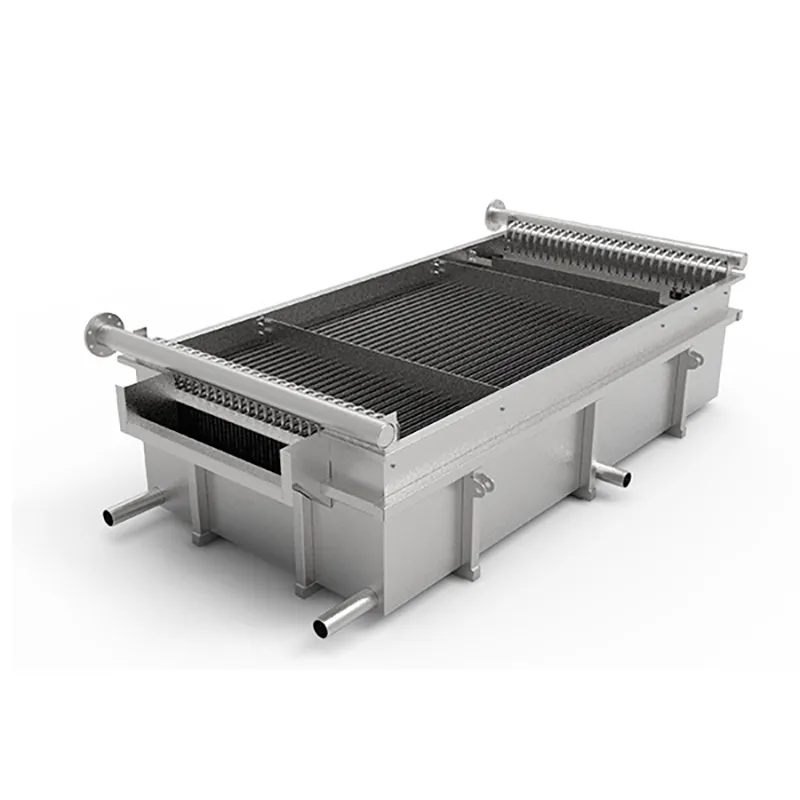
For specific applications like air preheating or handling fluids with large particles, you might also consider custom-engineered plate air preheaters or wide-gap welded plate heat exchangers, which offer specialized channel geometries for different fouling conditions. For extreme high-pressure applications, a printed circuit heat exchanger might be more suitable, though it comes at a higher cost.
Maintenance and Serviceability
One common misconception is that welded heat exchangers are "throwaway" units because the plate pack can't be opened for manual cleaning. While it's true that mechanical cleaning isn't possible, the design compensates in other ways. The high turbulence generated by the corrugated plates keeps fouling rates low. For applications where cleaning is still necessary, the units can be chemically cleaned in place (CIP) using appropriate cleaning solutions. Additionally, many manufacturers offer the option of a TP welded plate heat exchanger design, which allows for some degree of serviceability on the service side while maintaining a fully welded primary side.
When selecting a unit, it's crucial to work with a manufacturer who can perform a proper thermal design based on your actual process data. Factors like flow rates, inlet/outlet temperatures, allowable pressure drops, and fluid properties all influence the plate pattern, number of passes, and connection sizes. A well-designed unit will operate efficiently for decades with minimal intervention.
Final Thoughts
The bloc type welded plate heat exchanger represents a sweet spot between the flexibility of gasketed plate units and the ruggedness of shell-and-tube designs. It offers excellent heat transfer performance, a compact footprint, and the peace of mind that comes with a fully welded, leak-tight construction. If your process involves high temperatures, high pressures, or aggressive media, this technology is well worth considering. For less demanding duties, a traditional gasketed plate heat exchanger remains a cost-effective choice, but for critical applications, the welded bloc design is a proven workhorse.

 English EN





User Comments
Service Experience Sharing from Real Customers
Ethan
Maintenance SupervisorWe swapped out our old gasketed units for these bloc type welded plate exchangers six months ago. The leak issues we had with rubber gaskets are completely gone. Cleaning is a bit more involved since you can't just pop it open, but the reliability in our continuous process makes it totally worth it. No downtime since install.
Mia
Process EngineerSpec'd this for a high-temp oil cooling loop where standard plate heat exchangers kept failing at the seals. The welded block design handles the thermal cycling like a champ. Only reason I'm not giving 5 stars is the initial cost is higher, but the long-term maintenance savings are real. Solid piece of equipment.
Owen
Plant ManagerI was skeptical about switching from shell-and-tube to a welded plate design, but this thing is a beast. It took up half the floor space and the heat transfer efficiency is noticeably better. We run aggressive chemicals through it and haven't seen a single pinhole leak. My operators actually like working with it because the pressure drop is predictable.
Liam
Lead HVAC TechnicianInstalled a bloc type unit in a district heating substation that had chronic fouling issues. The welded channels handle the dirty water way better than gasketed plates ever did. It's heavier to mount, but once it's in, you can forget about it. Only wish the drain ports were a bit bigger for easier flushing during seasonal shutdowns.