 English EN


What Are The Different Types of Plate Heat Exchangers
Plate Heat Exchangers include gasketed, brazed, welded, semi-welded, shell and plate, and specialty types for varied industrial uses.
More
In many industrial processes, achieving uniform and efficient heat transfer is a persistent challenge. A pillow plate jacket offers a practical solution by creating a dimpled, welded channel structure that maximizes surface area and promotes turbulent flow. This article explains how pillow plate jackets work, their key performance parameters, and why they are increasingly chosen for heating and cooling duties in chemical, food, and pharmaceutical applications. We also compare them to conventional jackets and provide guidance on specifying the right design for your process.
A pillow plate jacket is a heat transfer surface made from two thin metal sheets that are spot-welded in a pattern and then inflated. The inflation creates a series of interconnected dimples or "pillows," forming channels for a heating or cooling medium to flow through. When this jacket is wrapped around a vessel or tank, the dimpled surface contacts the vessel wall directly, transferring heat efficiently between the process fluid inside and the service fluid inside the jacket.
The key to its efficiency lies in the geometry. The dimples induce turbulence in the service fluid even at low flow rates, which significantly improves the convective heat transfer coefficient compared to a plain, smooth jacket. At the same time, the thin metal sheets (typically 1.5–3.0 mm thick) minimize conductive resistance. This combination allows pillow plate jackets to achieve overall heat transfer coefficients in the range of 300–800 W/m²·K for water-to-water duties, depending on flow conditions and fluid properties.
Conventional half-pipe or dimple jackets rely on larger flow channels and often operate in a laminar or transitional flow regime. This results in lower heat transfer coefficients and requires higher flow rates to achieve the same duty. A pillow plate jacket, by contrast, forces the service fluid through narrow, tortuous paths that break up boundary layers. The result is a 30–50% improvement in heat transfer per unit area compared to a half-pipe jacket of similar dimensions.
Additional advantages include:
When selecting a pillow plate jacket, engineers should consider the following commonly accepted operating ranges:
| Parameter | Typical Range |
|---|---|
| Design pressure | Up to 10 bar (higher with reinforced designs) |
| Design temperature | -20°C to 200°C (depending on material) |
| Plate material | Stainless steel 304/316L, Hastelloy, titanium |
| Sheet thickness | 1.5–3.0 mm |
| Heat transfer coefficient (water/water) | 300–800 W/m²·K |
| Flow rate per jacket | 5–50 m³/h (depending on size) |
Pillow plate jackets are widely used in industries where precise temperature control and high thermal efficiency are required. Common applications include:
For process engineers seeking a reliable, high-performance alternative to traditional jackets, SHPHE offers custom engineered pillow plates that are designed to match specific vessel geometries and duty requirements. These plates can be integrated into new vessels or retrofitted onto existing tanks. For more demanding applications, such as high-pressure or high-temperature services, consider our TP welded plate heat exchangers, which offer similar efficiency in a compact, all-welded package.
SHPHE is a Shanghai-based plate heat exchanger manufacturer founded in 2005, with products exported to over 20 countries. We hold ISO9001 and ASME U certifications, ensuring that every pillow plate jacket meets rigorous quality and safety standards. Our engineering team provides free thermal design and selection services, helping you choose the right plate material, channel geometry, and connection sizes for your process.
Our product lines include HT-Bloc welded plate heat exchangers, wide gap welded plate heat exchangers, gasketed plate heat exchangers, PCHE, plate air preheaters, and pillow plates. Whether you need a standard design or a fully custom solution, SHPHE can deliver. Our pillow plate jackets are compatible with most vessel manufacturers and can be designed as an alternative to Alfa Laval or GEA half-pipe jackets, offering comparable or better thermal performance at a competitive cost.
Yes, a pillow plate jacket is fully bidirectional. It can handle steam, hot water, thermal oil, chilled water, or brine as the service fluid. The same jacket design works for both heating and cooling duties, as long as the operating pressure and temperature are within the specified limits.
The dimple pattern creates localized turbulence and increases the effective surface area by 15–25% compared to a flat plate. This turbulence disrupts the thermal boundary layer, improving the heat transfer coefficient. The pattern also distributes the service fluid uniformly, preventing stagnant zones that can cause uneven heating or cooling.
Stainless steel 304 and 316L are the most common choices for their corrosion resistance and weldability. For aggressive chemical environments, Hastelloy C276 or titanium can be specified. The material selection depends on the process fluid composition, temperature, and pH level.
Yes, minor leaks at weld joints can often be repaired by grinding and re-welding, provided the damage is localized. However, extensive corrosion or fatigue cracking may require replacing the entire jacket section. Regular inspection and proper material selection help minimize the risk of leaks.
Sizing requires knowing the required heat duty, process fluid properties, available service fluid temperature and flow rate, and vessel geometry. SHPHE offers free thermal design and selection services. Typically, we need the flow rate, inlet/outlet temperatures, operating pressure, and media details to calculate the required jacket area.
Yes, SHPHE manufactures pillow plate jackets in accordance with ASME Section VIII, Division 1 requirements. We can provide U-stamped documentation for vessels that require code compliance. The jacket design is also compatible with PED and other international pressure vessel codes.
To ensure the pillow plate jacket you receive is optimized for your specific process, please provide the following details when contacting SHPHE:
Our engineering team will use this information to perform a thermal design and provide a detailed quotation. With our ISO9001 and ASME U certifications, you can trust that your pillow plate jacket will deliver reliable, efficient heat transfer for years to come. Contact SHPHE today to discuss your project requirements.
We provide you with comprehensive foreign trade solutions to help enterprises achieve global development
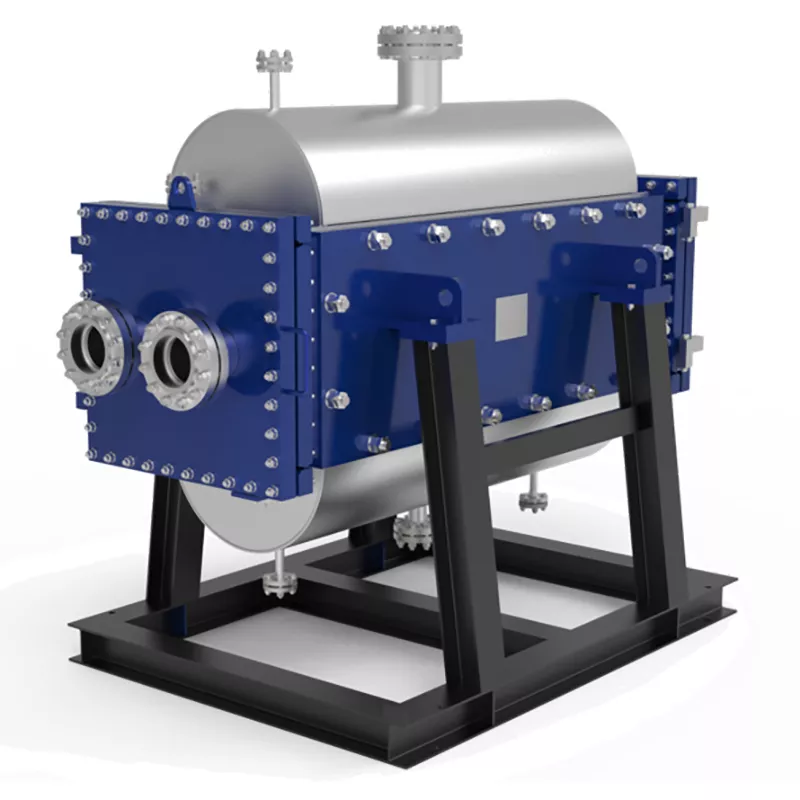
Industrial processes involving particle-laden slurries, high-viscosity syrups, or fiber-rich pulp demand more than standard equipment—they require target-engineered thermal management. At SHPHE, we configure the TP Welded Plate Heat Exchanger to directly conquer your plant's severe fouling, blockage, and erosion threats. Combining custom-tailored channel geometries, wear-resistant metallurgy, and integrated CIP (Cleaning-in-Place) systems, we deliver absolute production continuity where conventional heat exchangers fail.
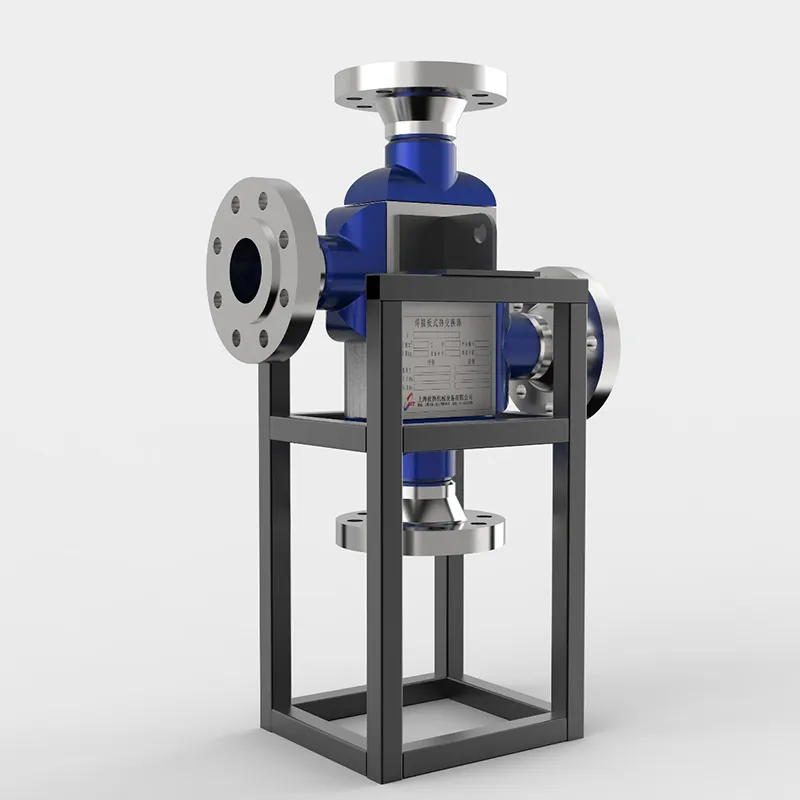
The SHPHE Printed Circuit Heat Exchanger (PCHE) represents a paradigm shift in microchannel thermal management, meticulously engineered for the world's most critical and demanding industrial boundaries. Developed to surpass the physical limitations of conventional shell-and-tube designs in ultra-high-pressure environments, our custom PCHEs integrate advanced photochemical etching and solid-state diffusion bonding to provide unmatched safety, thermal efficiency, and integrity under extreme stress. Initially deployed within high-consequence sectors such as aerospace and nuclear power generation, PCHE technology has completely revolutionized high-density thermal processing. Today, SHPHE brings this breakthrough engineering to mainstream energy transitions—including LNG liquefaction, supercritical CO² power cycles, hydrocarbon processing, and high-pressure hydrogen systems—enabling plants to maximize energy recovery, ensure zero-leakage security, and significantly shrink environmental footprints.
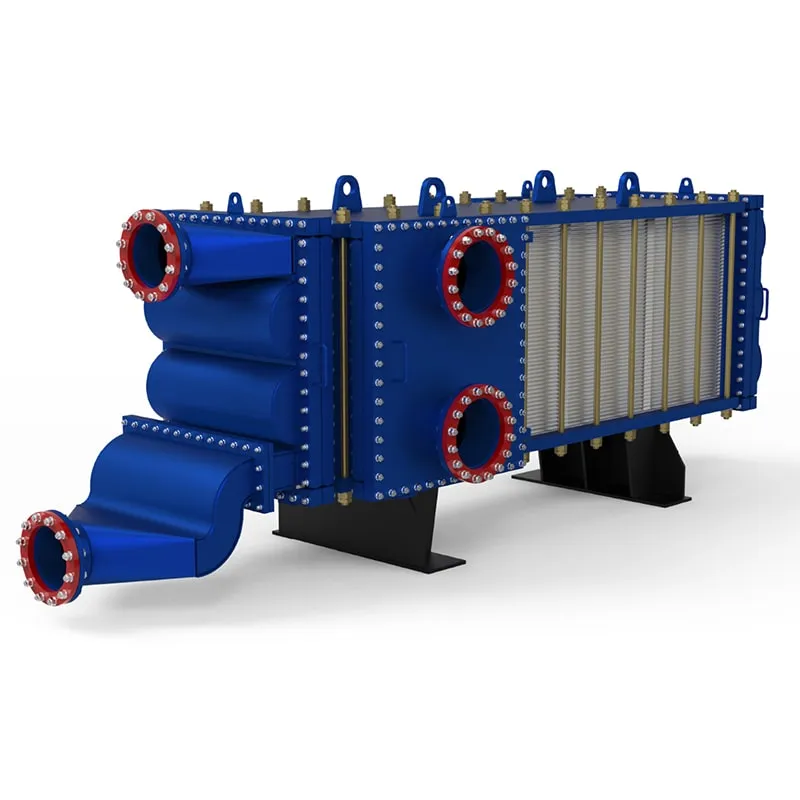
Custom-Engineered Anti-Clogging Solutions for High-Viscosity Slurries: Deployed specifically to conquer severe industrial fouling, SHPHE wide gap welded plate heat exchangers are tailor-built to handle complex media containing dense fibers, coarse crystals, or solid suspensions without clogging. Each non-obstructed channel is calculated and formed by laser-welded plate packs matching your fluid’s exact rheology and grain size, completely eliminating structural "dead zones" and media stagnation. Available in highly compact vertical and versatile horizontal configurations, our vertical engineering drastically reduces plant footprints while maintaining unhindered product throughput, minimal pressure drops, and flawless continuous operations across harsh process loops.
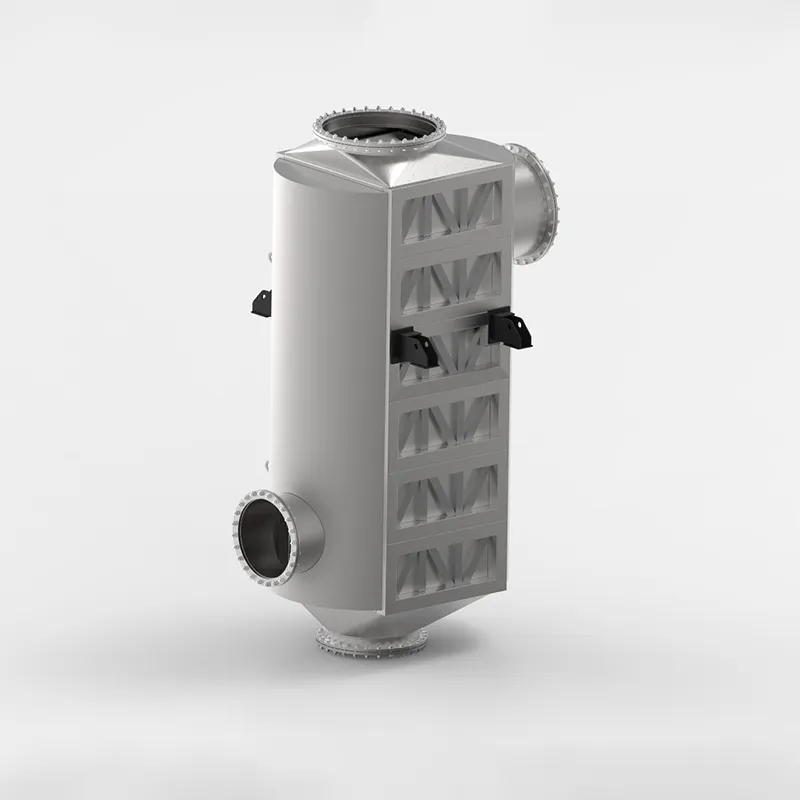
Industrial furnace and boiler exhaust gases carry vast amounts of unutilized thermal energy. The SHPHE custom Plate Air Preheater (PAPH) is target-engineered to intercept this high-temperature flue gas, recovering valuable waste heat and transferring it directly back to incoming combustion air or process gas streams. By substantially elevating the temperature of your flame feed, our custom systems optimize combustion thermodynamics, deliver massive fuel savings, and significantly reduce industrial carbon and emissions footprints. Built to withstand severe flue-gas environments, SHPHE PAPH systems serve as the premier choice for modern, energy-intensive plants prioritizing decarb compliance and maximum thermal efficiency.
Select the most popular foreign trade service products to meet your diverse needs
Custom-Engineered Anti-Clogging Solutions for High-Viscosity Slurries: Deployed specifically to conquer severe industrial fouling, SHPHE wide gap welded plate heat exchangers are tailor-built to handle complex media containing dense fibers, coarse crystals, or solid suspensions without clogging. Each non-obstructed channel is calculated and formed by laser-welded plate packs matching your fluid’s exact rheology and grain size, completely eliminating structural "dead zones" and media stagnation. Available in highly compact vertical and versatile horizontal configurations, our vertical engineering drastically reduces plant footprints while maintaining unhindered product throughput, minimal pressure drops, and flawless continuous operations across harsh process loops.
The SHPHE Printed Circuit Heat Exchanger (PCHE) represents a paradigm shift in microchannel thermal management, meticulously engineered for the world's most critical and demanding industrial boundaries. Developed to surpass the physical limitations of conventional shell-and-tube designs in ultra-high-pressure environments, our custom PCHEs integrate advanced photochemical etching and solid-state diffusion bonding to provide unmatched safety, thermal efficiency, and integrity under extreme stress. Initially deployed within high-consequence sectors such as aerospace and nuclear power generation, PCHE technology has completely revolutionized high-density thermal processing. Today, SHPHE brings this breakthrough engineering to mainstream energy transitions—including LNG liquefaction, supercritical CO² power cycles, hydrocarbon processing, and high-pressure hydrogen systems—enabling plants to maximize energy recovery, ensure zero-leakage security, and significantly shrink environmental footprints.
Industrial furnace and boiler exhaust gases carry vast amounts of unutilized thermal energy. The SHPHE custom Plate Air Preheater (PAPH) is target-engineered to intercept this high-temperature flue gas, recovering valuable waste heat and transferring it directly back to incoming combustion air or process gas streams. By substantially elevating the temperature of your flame feed, our custom systems optimize combustion thermodynamics, deliver massive fuel savings, and significantly reduce industrial carbon and emissions footprints. Built to withstand severe flue-gas environments, SHPHE PAPH systems serve as the premier choice for modern, energy-intensive plants prioritizing decarb compliance and maximum thermal efficiency.



User Comments
Service Experience Sharing from Real Customers
Miles
Senior Process EngineerI was skeptical about switching from a traditional dimple jacket to a pillow plate design for our batch reactor, but this thing is a game-changer. The heat transfer is noticeably more uniform—no more hot spots ruining our polymer viscosity. Installation was straightforward, and it took the abuse of our cleaning cycles without any weld failures. Definitely worth the premium.
Ella
Maintenance SupervisorWe put this pillow plate jacket on a 500-gallon tank last quarter. So far, so good. The surface is way easier to keep clean than the old half-pipe coil setup—less nooks for product to bake onto. My only gripe is that the bolt holes didn’t perfectly align with our existing support brackets, so we had to drill a couple new ones. But the performance is solid, and the welds look clean.
Oscar
R&D Lab TechnicianFor our pilot-scale extraction unit, this jacket is a lifesaver. We need precise temperature control, and the pillow plate design gives us that without the pressure drop issues we had with spiral coils. It heats up fast and responds quickly to setpoint changes. Plus, it doesn’t take up as much space around the vessel. Highly recommend for anyone doing sensitive work.
Zara
Plant ManagerWe retrofitted three old fermenters with these jackets to improve cooling capacity. The difference in cycle time was immediate—we shaved off about 20 minutes per batch. The only reason I’m not giving five stars is that the delivery took two weeks longer than quoted, which threw off our schedule. But the product itself is well-made and the customer service team was responsive once I flagged the delay.