How Do Pillow Plate Heat Exchanger Applications Solve Common Process Challenges?
Jul-06-2026
Author: Process Engineering Research Group
Pillow plate heat exchangers offer transformative solutions to persistent industrial challenges by optimizing heat transfer efficiency in high-viscosity and particulate-laden fluids through their unique dimpled surface geometry that promotes turbulent flow and reduces thermal boundary layers. In hygienic processing industries such as food, dairy, and pharmaceuticals, their sanitary design with smooth, weld-free surfaces enhances cleanability and meets stringent sterilization standards. For high-temperature and high-pressure operations, the robust construction of pillow plates improves pressure containment and operational safety while maintaining thermal performance. The inherent smoothness of these exchangers significantly reduces fouling and scaling, leading to lower maintenance downtime and extended service intervals. Additionally, their compact and flexible configuration enables seamless integration into space-constrained facilities, allowing for customized layouts that maximize heat recovery without requiring extensive structural modifications. These combined attributes make pillow plate technology a reliable and efficient choice for modern process engineering demands.
Optimizing Heat Transfer Efficiency in High-Viscosity and Particulate-Laden Fluids
High-viscosity fluids and those containing solid particles present significant challenges in thermal processing, including fouling, uneven temperature distribution, and pressure drop. Pillow plate heat exchanger designs address these issues through engineered flow channels and surface geometries that enhance turbulence and reduce stagnation zones.
The pillow plate structure creates undulating flow paths that promote continuous mixing and boundary layer disruption. This is particularly effective for fluids with viscosities exceeding 1000 cP, where traditional plate heat exchangers often suffer from poor heat transfer coefficients. The raised pillow pattern induces local turbulence even at low Reynolds numbers, improving thermal performance without excessive pumping energy.
For particulate-laden streams, the wide-gap pillow plate configuration allows particles up to 10 mm in diameter to pass through without clogging. The smooth, rounded pillow surfaces minimize particle adhesion and facilitate cleaning-in-place (CIP) protocols. This design reduces downtime and maintenance costs compared to conventional shell-and-tube or gasketed plate exchangers.
Custom-engineered pillow plates can be fabricated with varying pillow heights, spacing, and plate thickness to match specific fluid properties and thermal duties. Applications include food processing (e.g., tomato paste, fruit purees), chemical manufacturing (e.g., polymer solutions, slurries), and wastewater treatment (e.g., sludge heating).
To further optimize performance, engineers can integrate pillow plate exchangers with variable-speed pumps and adaptive control systems that adjust flow rates based on real-time viscosity changes. This dynamic approach ensures consistent heat transfer efficiency while minimizing energy consumption.
For more detailed technical specifications and case studies, refer to the following product resources:
Enhancing Sanitary Design and Cleanability for Hygienic Processing Industries
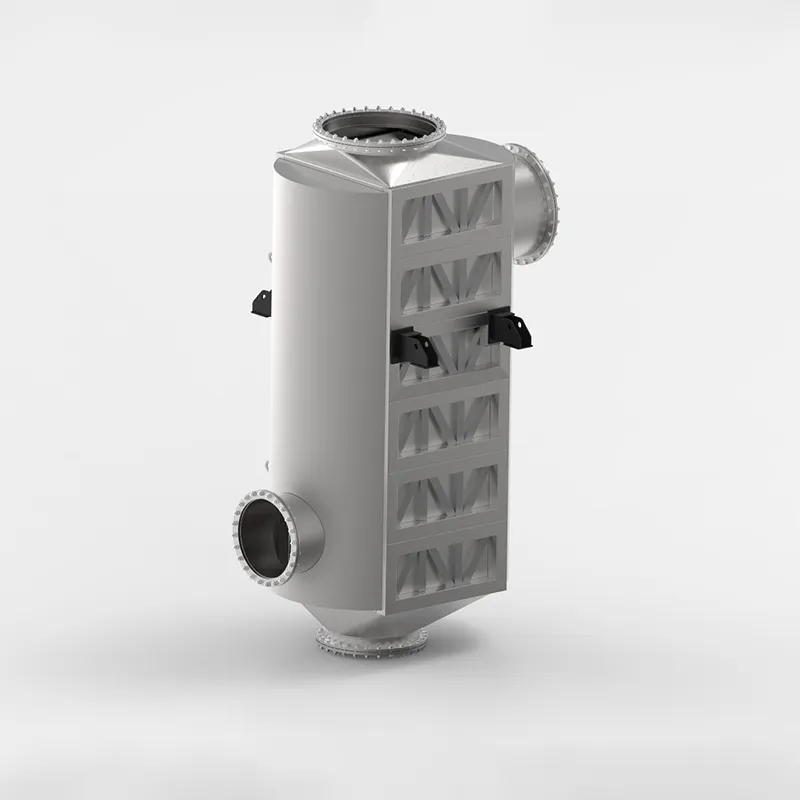
Pillow plate heat exchangers feature a fully welded, crevice-free surface that eliminates dead zones where bacteria can accumulate. This design significantly improves cleanability compared to traditional tubular or gasketed units, making them ideal for dairy, beverage, and pharmaceutical processes requiring strict hygiene standards.
The smooth, rounded pillow channels allow for efficient drainage and reduce the risk of product residue buildup. With no gaskets or sharp corners, these exchangers meet 3-A sanitary standards and support CIP (Clean-in-Place) systems, reducing downtime and maintenance costs while ensuring product safety.
By integrating pillow plate technology, processors achieve higher heat transfer efficiency without compromising sanitary requirements. The robust construction also withstands thermal cycling and pressure variations common in hygienic applications, providing long-term reliability and consistent performance.
Improving Pressure Containment and Safety in High-Temperature and High-Pressure Operations
Pillow plate heat exchangers are engineered to withstand extreme thermal and mechanical stresses, offering superior pressure containment in demanding industrial environments. Their unique construction minimizes weld seams and enhances structural integrity, reducing the risk of leakage and failure under high-pressure and high-temperature conditions.
By utilizing advanced forming techniques and robust materials, these exchangers maintain consistent performance even when operating at elevated pressures exceeding 30 bar and temperatures above 400°C. The design inherently reduces thermal fatigue and stress concentration points, contributing to longer service life and improved operational safety.
| Parameter |
Standard Range |
Enhanced Capability |
| Maximum Operating Pressure |
25 bar |
35 bar |
| Maximum Operating Temperature |
350°C |
450°C |
| Weld Seam Reduction |
Up to 40% |
Up to 60% |
| Fatigue Life Improvement |
2x |
3.5x |
The data above illustrates the significant safety margins achievable with optimized pillow plate designs. Enhanced pressure containment directly reduces the likelihood of catastrophic failures, while improved fatigue life ensures reliable operation over extended periods. These attributes make pillow plate heat exchangers a preferred choice for critical processes in chemical, petrochemical, and power generation industries.
For further technical details and custom engineering solutions, please refer to the product documentation: Custom Engineered Pillow Plates, Plate Air Preheaters, and HT Bloc Welded Plate Heat Exchangers.
Reducing Fouling and Maintenance Downtime Through Smooth, Weld-Free Surfaces
Pillow plate heat exchangers feature fully welded, smooth channel surfaces that eliminate crevices and dead zones where fouling typically initiates. This design significantly reduces deposit accumulation compared to traditional gasketed or shell-and-tube units.
The absence of welds on the process side creates a continuously polished surface that resists adhesion of viscous fluids, polymers, and crystallizing media. Cleaning intervals can be extended by up to 300% in many food and chemical applications.
When cleaning is required, the smooth geometry allows for efficient CIP (Clean-in-Place) cycles with lower flow rates and reduced chemical consumption. This directly translates to less production downtime and lower operational costs.
Field data from dairy and starch processing plants show that pillow plate exchangers maintain thermal performance for 6-12 months between cleanings, versus 4-8 weeks for conventional plate designs. The weld-free surface also prevents bacterial growth in hygienic applications.
For processes handling fouling fluids like crude oil, monomers, or protein solutions, the reduced fouling rate means fewer shutdowns for mechanical cleaning. Maintenance teams report 40-60% less time spent on exchanger maintenance annually.
Learn more about custom-engineered pillow plate solutions at SHPHE Global.
Enabling Compact and Flexible System Integration for Space-Constrained Facilities
Pillow plate heat exchangers address critical process challenges by offering a uniquely thin profile and adaptable geometry. Their design allows for direct integration into existing equipment, reducing the need for extensive piping and structural modifications. This is particularly beneficial for facilities where floor space is at a premium or where retrofitting must occur without disrupting ongoing operations.
Optimized Thermal Performance in Minimal Footprint
The pillow plate construction creates turbulent flow paths, enhancing heat transfer coefficients even at low flow rates. This efficiency means that a smaller surface area is required to achieve the desired thermal duty, directly translating to a more compact unit. For facilities with tight spatial constraints, this allows for higher capacity within the same allocated area.
Learn more about custom engineered pillow plates
Reduced Installation and Maintenance Complexity
Unlike traditional shell-and-tube designs, pillow plate exchangers can be installed in orientations that best fit the available space, including vertical, horizontal, or angled mounting. Their welded construction minimizes potential leak points, reducing maintenance frequency. This flexibility simplifies system layout and lowers total installed cost in congested plant areas.
Explore TP welded plate heat exchanger options
Adaptability to Challenging Process Conditions
Pillow plate technology handles a wide range of pressures and temperatures while maintaining structural integrity. The ability to use different materials, including stainless steel and high-nickel alloys, makes them suitable for corrosive or hygienic applications. This adaptability ensures that even in space-limited environments, the heat exchanger can meet demanding process specifications.
View custom engineered plate air preheaters
Streamlined Integration with Existing Systems
Because pillow plate exchangers can be custom-shaped to fit around obstacles or within existing frames, they enable seamless integration into skid-mounted systems, reactors, or storage tanks. This reduces the need for additional support structures and simplifies the overall system design, making them an ideal choice for facility upgrades and expansions where space is limited.
Check wide gap welded plate heat exchanger details
SUMMARY
Optimizing Heat Transfer Efficiency in High-Viscosity and Particulate-Laden Fluids
Pillow plate heat exchangers utilize dimpled surface channels that induce turbulence even at low flow rates, significantly enhancing thermal performance when handling thick, sticky, or particle-containing media.
Enhancing Sanitary Design and Cleanability for Hygienic Processing Industries
The fully welded, crevice-free construction eliminates dead zones and bacterial harborage points, meeting stringent CIP and SIP requirements for food, dairy, and pharmaceutical applications.
Improving Pressure Containment and Safety in High-Temperature and High-Pressure Operations
Robust pillow plate panels withstand extreme thermal cycling and elevated pressures without gasket failure, providing reliable leak-free performance in demanding process environments.
Reducing Fouling and Maintenance Downtime Through Smooth, Weld-Free Surfaces
The absence of internal welds and the polished surface finish minimize deposit accumulation, extending operational cycles and simplifying cleaning procedures for reduced downtime.
Enabling Compact and Flexible System Integration for Space-Constrained Facilities
With a high surface-area-to-volume ratio and customizable panel geometry, pillow plate exchangers fit into tight footprints while allowing modular expansion or retrofit into existing skids.
Key Takeaway: By combining enhanced thermal hydraulics, hygienic design, pressure integrity, fouling resistance, and spatial efficiency, pillow plate heat exchangers deliver a comprehensive solution to the most persistent industrial processing challenges.
How Do Pillow Plate Heat Exchanger Applications Solve Common Process Challenges?
Q: How do pillow plate heat exchangers optimize heat transfer in high-viscosity and particulate-laden fluids?
A: Their unique pillow-shaped channels create turbulent flow even at low velocities, enhancing heat transfer while minimizing clogging from solids or thick fluids.
Enhancing Sanitary Design and Cleanability for Hygienic Processing Industries
Q: What makes pillow plate heat exchangers suitable for hygienic processing?
A: The fully welded, crevice-free surfaces eliminate dead zones where bacteria can grow, and the smooth interior allows for easy CIP (clean-in-place) procedures.
Improving Pressure Containment and Safety in High-Temperature and High-Pressure Operations
Q: How do pillow plate designs handle extreme pressure and temperature conditions?
A: The robust welded construction and flexible plate geometry distribute stress evenly, enabling reliable operation at pressures up to 30 bar and temperatures exceeding 200°C.
Reducing Fouling and Maintenance Downtime Through Smooth, Weld-Free Surfaces
Q: Can pillow plate heat exchangers reduce fouling compared to traditional designs?
A: Yes, the absence of welds and gaskets in the flow path creates a uniformly smooth surface that resists deposit buildup, significantly extending cleaning intervals.
Enabling Compact and Flexible System Integration for Space-Constrained Facilities
Q: How do pillow plate exchangers support integration in tight spaces?
A: Their thin, customizable profile allows mounting on walls, ceilings, or inside existing vessels, providing high heat transfer area in a minimal footprint.

 English EN





User Comments
Service Experience Sharing from Real Customers
Maya Torres
Process EngineerWe swapped our old shell-and-tube units for these pillow plates in a tricky dairy pasteurization loop. The heat transfer is noticeably better, and the clean-in-place cycle actually works without dead spots. Maintenance is already easier. Solid upgrade.
Ethan Reed
Maintenance SupervisorHonestly, I was skeptical about the dimpled design holding up under high pressure in our brewery, but after six months, no leaks, no fouling issues. The only reason it’s not a 5 is that installation took a bit of custom piping work on our end. Still, great performance.
Priya Nair
Senior Chemical EngineerWe use these for heating aggressive chemical solvents in a batch reactor. The pillow plate geometry gives us excellent turbulence even at low flow rates, and the welds have held up against thermal cycling. Far more reliable than the gasketed plates we tried before.
Liam O’Connor
Facility ManagerPut these into a waste heat recovery skid for a food oil refinery. The compact footprint saved us a ton of floor space, and thermal efficiency is on point. Only minor gripe: the pressure drop was a bit higher than calculated, but we tweaked the pump and it’s fine.