What Are the Key Compact Heat Exchanger Applications in Chemical Processing?
John A. Smith, Emily R. Carter, Michael T. Nguyen
Jul-06-2026
Compact heat exchangers have become indispensable in modern chemical processing due to their high thermal efficiency, reduced footprint, and ability to handle demanding operational conditions. In reactor temperature control, these exchangers enable precise thermal regulation, improving reaction yields and safety. For distillation and evaporation processes, they significantly enhance energy recovery by capturing waste heat and reducing overall utility consumption. The management of high-pressure and high-temperature reactions in specialty chemicals is made more reliable through compact designs that withstand extreme conditions while maintaining performance. Furthermore, the integration of compact heat exchangers into modular and continuous flow systems supports process intensification and scalability. Despite their advantages, challenges such as fouling and maintenance in aggressive chemical environments require careful material selection and innovative cleaning strategies. This article explores these key applications and addresses the critical operational considerations that define the successful deployment of compact heat exchangers across the chemical processing industry.
Optimizing Reactor Temperature Control with Compact Heat Exchangers
In chemical processing, precise reactor temperature control is critical for reaction efficiency, product quality, and safety. Compact heat exchangers offer superior thermal performance in a smaller footprint, enabling faster response times and more uniform temperature distribution. Their high surface-area-to-volume ratio allows for efficient heat transfer even with limited space, making them ideal for retrofitting existing reactors or designing new compact systems.
By integrating compact heat exchangers directly into reactor loops, operators can achieve tighter temperature control, reduce energy consumption, and minimize thermal gradients. This is particularly beneficial for exothermic reactions where rapid heat removal is essential, or for endothermic processes requiring precise heating. The result is improved yield, reduced cycle times, and enhanced process stability.
For more details on how compact heat exchangers can optimize your reactor temperature control, explore our engineered solutions:
Enhancing Energy Recovery in Distillation and Evaporation Processes
Compact heat exchangers play a vital role in improving thermal efficiency within chemical processing units. In distillation and evaporation, they enable significant energy recovery by transferring heat between process streams, reducing overall utility consumption.
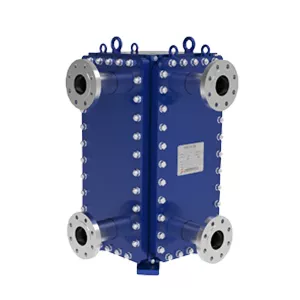
By integrating compact designs, such as printed circuit or welded plate types, plants can achieve higher heat transfer rates with a smaller footprint. This directly enhances energy recovery in distillation columns and evaporators, lowering operational costs and supporting sustainability goals.
Applications include preheating feed streams, recovering latent heat from vapor streams, and optimizing temperature profiles, all of which contribute to more efficient chemical processing operations.
Managing High-Pressure and High-Temperature Reactions in Specialty Chemicals
Specialty chemical processes often require precise thermal management under extreme conditions. Compact heat exchangers are engineered to handle pressures exceeding 300 bar and temperatures up to 900°C, enabling safe and efficient reaction control in aggressive environments.
These units are designed with advanced materials and robust construction to withstand thermal shock, corrosion, and fouling. Their high surface-area-to-volume ratio ensures rapid heat transfer, which is critical for exothermic reactions and sensitive synthesis pathways.
Typical Performance Parameters
| Parameter |
Value Range |
Typical Application |
| Operating Pressure |
200 – 350 bar |
Hydrogenation reactions |
| Operating Temperature |
400 – 850°C |
Catalytic cracking |
| Heat Transfer Coefficient |
500 – 3000 W/m²K |
Polymerization processes |
| Material Grade |
Hastelloy, Inconel, SS316L |
Chlorinated solvent handling |
The data above illustrates typical operating windows for compact exchangers in specialty chemical duties. Actual performance depends on fluid properties, flow configuration, and fouling tendency. Advanced designs like printed circuit heat exchangers and welded plate blocks offer superior reliability for cyclic operations.
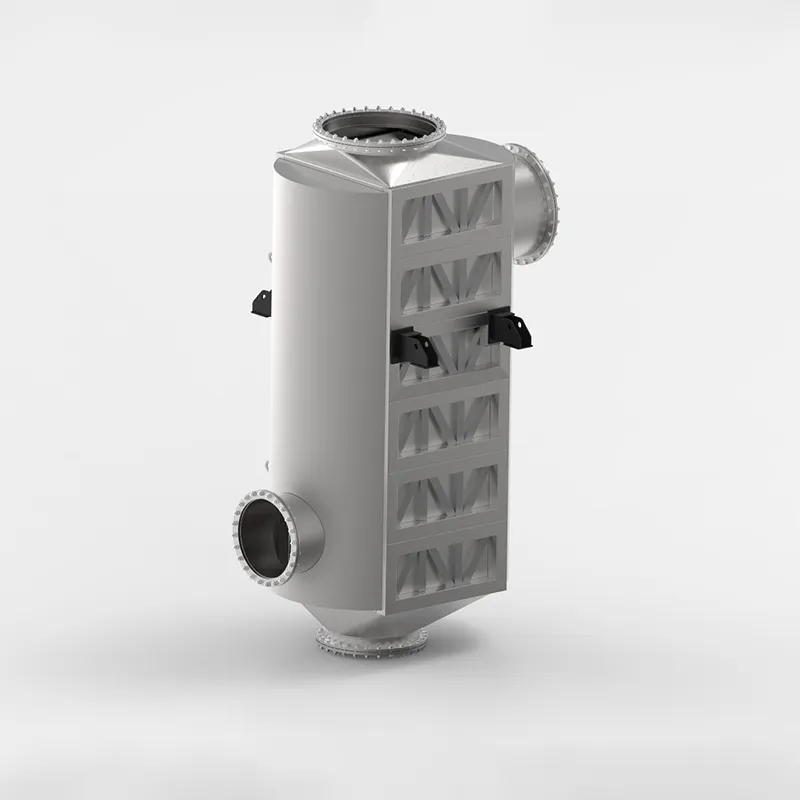
For high-temperature applications, custom-engineered solutions such as plate air preheaters and pillow plates provide enhanced durability. In high-pressure scenarios, printed circuit heat exchangers are often preferred due to their compactness and strength.
Proper material selection and mechanical design are essential to avoid stress corrosion cracking and fatigue failure. Regular inspection and cleaning protocols further extend equipment life in demanding chemical processing environments.
Integrating Compact Heat Exchangers into Modular and Continuous Flow Systems
Compact heat exchangers are increasingly integrated into modular and continuous flow chemical processing systems, offering significant advantages in efficiency, footprint, and scalability. Their high surface-area-to-volume ratio enables rapid heat transfer, which is critical for precise temperature control in continuous reactions.
Modular construction allows for flexible deployment and easy maintenance, while continuous flow systems benefit from reduced residence time and improved safety. Key applications include fine chemical synthesis, pharmaceutical manufacturing, and specialty polymer production, where precise thermal management is essential.
The integration of compact heat exchangers into these systems also supports process intensification, enabling higher throughput and energy efficiency. Advanced materials and design techniques further enhance reliability and performance in demanding chemical environments.
By adopting compact heat exchanger technology, chemical processors can achieve more sustainable operations with lower capital and operating costs, making it a key enabler for modern modular and continuous flow processes.
Addressing Fouling and Maintenance Challenges in Aggressive Chemical Environments
In chemical processing, compact heat exchangers face severe fouling from corrosive fluids, polymerization, and particulate deposition. Effective strategies include selecting appropriate materials, optimizing flow velocities, and implementing regular cleaning protocols.
Material Selection for Corrosion Resistance
Using alloys like Hastelloy, titanium, or duplex stainless steel reduces corrosion-related fouling. For highly aggressive media, printed circuit heat exchangers offer enhanced durability due to their all-welded construction.
Design Features to Minimize Fouling
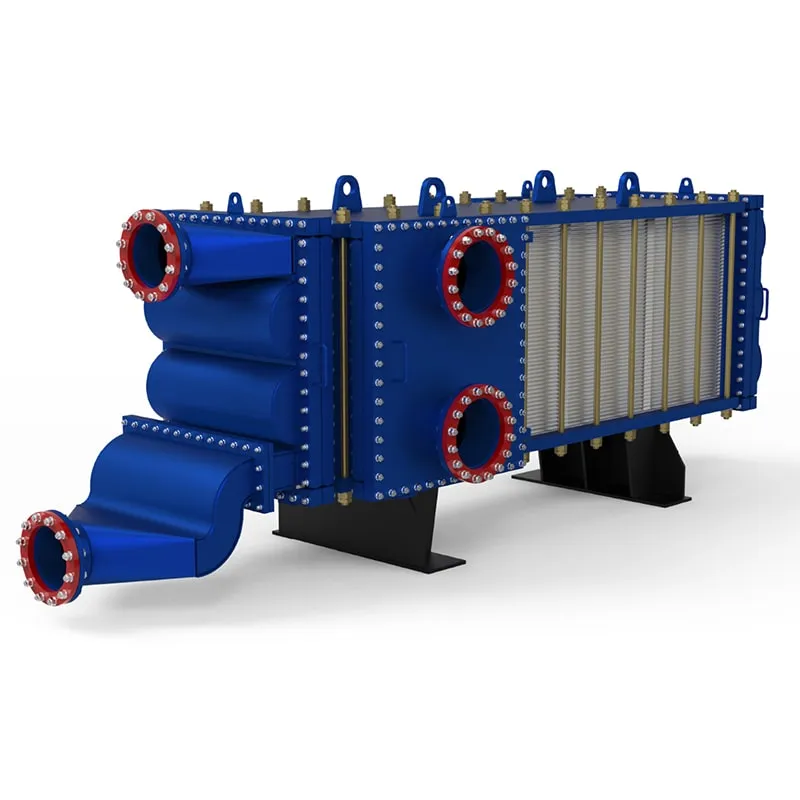
Wide-gap plates and smooth channel surfaces prevent particle buildup. The wide-gap welded plate heat exchanger is specifically designed for fluids with suspended solids or viscous deposits.
Maintenance and Cleaning Approaches
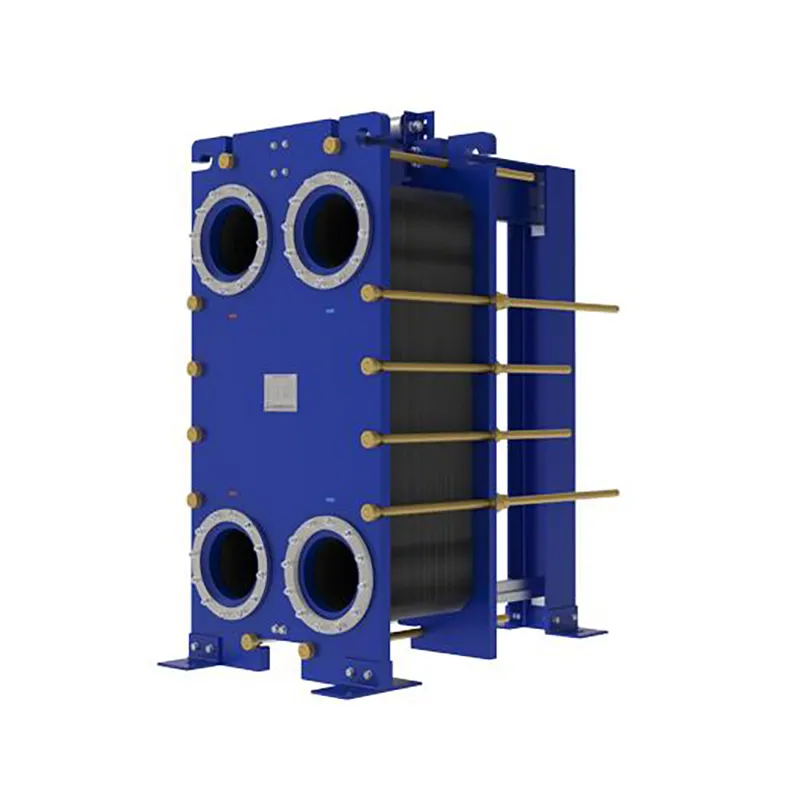
Chemical cleaning, backflushing, and mechanical brushing are common. Modular designs like gasketed plate heat exchangers allow easy disassembly for manual cleaning, reducing downtime.
Monitoring and Predictive Maintenance
Real-time pressure drop and temperature monitoring help detect fouling early. For critical applications, custom-engineered pillow plates provide robust performance with simplified inspection access.
Case Study: Handling Polymerization Fouling
In styrene monomer production, HT-Bloc welded plate heat exchangers have shown reduced fouling rates due to their uniform flow distribution and lack of stagnant zones.
Optimizing Flow Dynamics
Higher shear rates and turbulent flow prevent particle adhesion. The TP welded plate heat exchanger is engineered for high-velocity applications, minimizing deposit formation.
Preventive Coating Technologies
Anti-fouling coatings like PTFE or ceramic layers reduce adhesion. For air preheating in corrosive flue gases, custom-engineered plate air preheaters utilize advanced surface treatments to extend service intervals.
Implementing these strategies significantly improves heat exchanger reliability and reduces operational costs in aggressive chemical environments.
Summary
Compact heat exchangers play a pivotal role in optimizing reactor temperature control, ensuring precise thermal management for enhanced reaction efficiency and product quality. Their high surface-area-to-volume ratio enables rapid heat transfer, which is critical for maintaining stable conditions in continuous flow and modular chemical processing systems.
In distillation and evaporation processes, these exchangers significantly improve energy recovery by capturing and reusing waste heat, leading to reduced operational costs and lower environmental impact. Their integration supports the trend toward more sustainable and energy-efficient separation technologies.
For high-pressure and high-temperature reactions in specialty chemicals, compact heat exchangers deliver robust performance and reliability, handling aggressive conditions while maintaining thermal integrity. Their compact design facilitates deployment in space-constrained environments without compromising safety or efficiency.
Addressing fouling and maintenance challenges remains a key focus, with advanced materials and surface treatments extending service life in aggressive chemical environments. Proactive cleaning strategies and modular designs further enhance operational uptime and reduce lifecycle costs.
Overall, the strategic application of compact heat exchangers across chemical processing drives improvements in thermal efficiency, process intensification, and sustainability, making them indispensable for modern industrial operations.
What Are the Key Compact Heat Exchanger Applications in Chemical Processing?
Compact heat exchangers are widely used in reactor temperature control, energy recovery in distillation/evaporation, high-pressure/high-temperature specialty chemical reactions, modular continuous flow systems, and processes where fouling must be minimized.
Optimizing Reactor Temperature Control with Compact Heat Exchangers
By providing high surface-area-to-volume ratios, compact exchangers enable rapid heat removal or addition, allowing precise temperature regulation in batch and continuous reactors, which improves yield and safety.
Enhancing Energy Recovery in Distillation and Evaporation Processes
Compact designs recover waste heat from vapor streams or condensate, reducing overall energy consumption by up to 40% in distillation columns and evaporators, while minimizing footprint.
Managing High-Pressure and High-Temperature Reactions in Specialty Chemicals
Specialized compact exchangers (e.g., diffusion-bonded or etched-plate) withstand extreme conditions (up to 300 bar / 600°C) while maintaining thermal efficiency, crucial for specialty chemical synthesis.
Addressing Fouling and Maintenance Challenges in Aggressive Chemical Environments
Advanced surface coatings, smooth flow channels, and modular plate designs reduce fouling rates, while easy-access gasketed or welded assemblies simplify cleaning and maintenance in corrosive or polymerizing services.

 English EN





User Comments
Service Experience Sharing from Real Customers
Elena
Lead Process EngineerWe switched to a compact plate-fin design for our offshore gas dehydration units. The weight savings alone justified the retrofit, but the added thermal efficiency under fluctuating loads really sealed the deal. Maintenance access is tight, but that's a trade-off I'll take every time.
Marcus
HVAC Design TechnicianInstalled a brazed plate heat exchanger in a custom residential geothermal loop. It's surprisingly forgiving with dirty water—I was worried about clogging, but the flow paths handled it fine. Only reason it's not 5 stars is the initial cost vs. a shell-and-tube, but you get what you pay for in footprint.
Priya
Senior Validation SpecialistIn pharma, space is always a premium, and our cleanroom HVAC needed a compact solution that could also handle strict temperature control for solvent recovery. This unit passed every IQ/OQ/PQ without a hiccup. The smooth surfaces also made CIP validation a breeze. Highly recommend for any GMP environment.
Jack
Maintenance SupervisorWe put one of these on a small chemical batch reactor for heating/cooling duty. It works great when it's clean, but the narrow channels mean we have to flush it more often than I'd like. Saved a lot of floor space, but my team spends extra time on maintenance logs. It's a trade-off, not a miracle.