How a Pillow Plate Ice Bank Enhances Thermal Storage Efficiency
For process engineers and purchasing managers working with cooling systems or thermal energy storage, the challenge often lies in balancing peak load demands without oversizing equipment. A pillow plate ice bank offers a compact, high-efficiency solution by using embossed heat transfer surfaces to freeze and store ice during off-peak hours, then release cooling capacity when needed. This article explains how this technology works, its key performance parameters, and why it is becoming a preferred choice for industrial thermal storage applications.
Thermal energy storage (TES) systems are widely used to shift cooling loads from peak to off-peak periods, reducing energy costs and equipment strain. Among the various TES designs, the pillow plate ice bank stands out for its superior heat transfer efficiency and robust construction. Unlike traditional coil-based ice banks, pillow plates use a series of welded, dimpled panels that create turbulent flow paths, enhancing ice formation and melting rates. This design allows for more compact storage tanks and faster response times, making it ideal for industries such as food processing, chemical manufacturing, and HVAC.
What Is a Pillow Plate Ice Bank and How Does It Work?
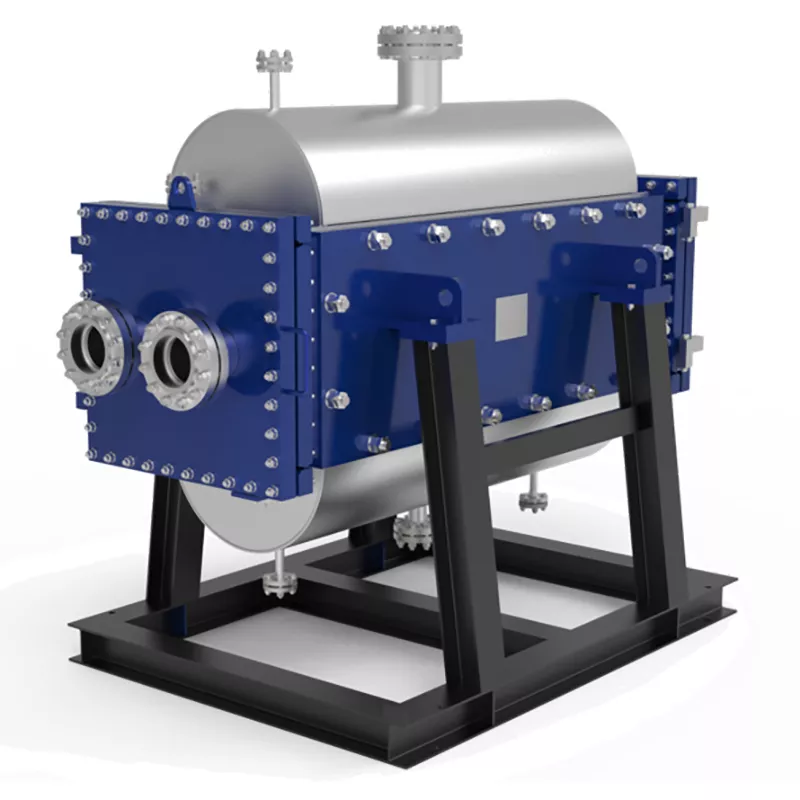
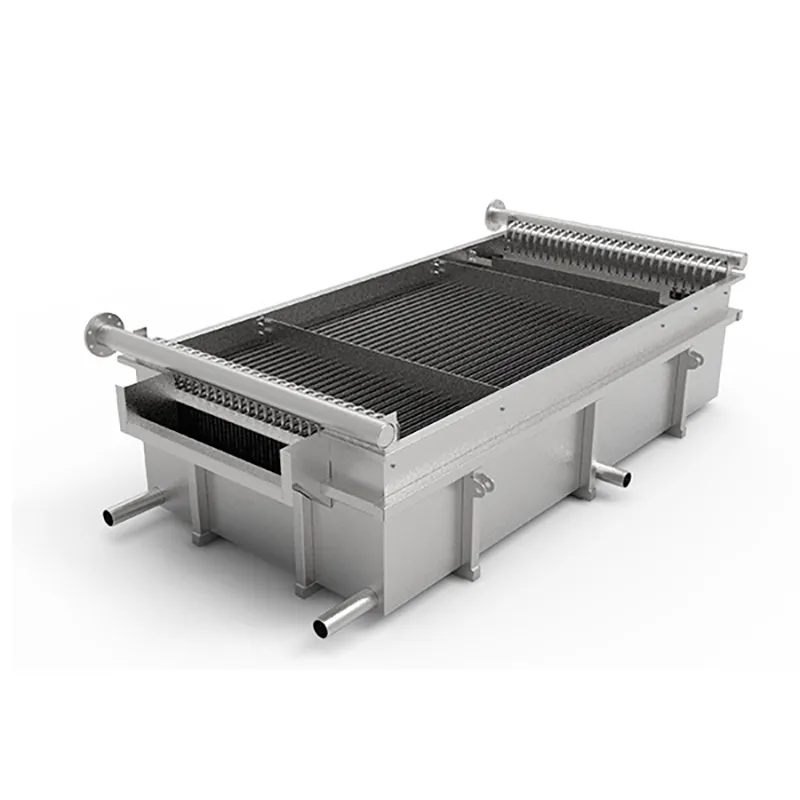
A pillow plate ice bank consists of multiple stainless steel pillow plates submerged in a water or glycol tank. Each pillow plate is formed by welding two metal sheets together with a pattern of spot welds, then inflating them to create internal flow channels. A refrigerant or chilled coolant circulates through these channels, extracting heat from the surrounding water. As the water temperature drops below freezing, ice builds up on the outer surface of the plates. During discharge, warm process fluid flows through the same channels, melting the ice and absorbing the stored cooling energy.
The key advantage of this design is the enhanced heat transfer coefficient. The dimpled surface creates turbulence even at low flow rates, which accelerates both ice formation and melting. Typical ice thickness ranges from 25 mm to 50 mm, and the system can achieve ice build-up rates of 10–15 kg per square meter per hour, depending on coolant temperature and flow conditions.
Why Choose a Pillow Plate Ice Bank Over Traditional Coil Systems?
Traditional ice banks use coiled tubes or serpentine pipes, which often suffer from uneven ice distribution and slower thermal response. In contrast, a pillow plate ice bank offers several distinct benefits:
- Higher heat transfer efficiency: The embossed surface increases the effective area by 20–30% compared to smooth tubes, and the turbulence reduces fouling.
- Compact footprint: Pillow plates can be arranged in dense bundles, allowing more ice storage capacity per unit volume.
- Faster freeze and melt cycles: Typical cycle times are reduced by 15–25% compared to conventional designs.
- Durability: All-welded construction eliminates gaskets and reduces leak risks, especially in high-pressure applications.
For engineers seeking a reliable alternative to Alfa Laval or GEA ice bank systems, pillow plate designs are fully compatible with existing refrigeration circuits and can be retrofitted into most tanks.
What Are the Typical Performance Parameters of a Pillow Plate Ice Bank?
When evaluating a pillow plate ice bank for your process, the following parameters are commonly used to size and select the right configuration:
| Parameter |
Typical Range |
Notes |
| Ice thickness |
25–50 mm |
Thicker ice increases storage but slows cycle time |
| Coolant temperature |
-10°C to -5°C |
Lower temperature speeds ice formation |
| Heat transfer coefficient |
300–600 W/m²·K |
Depends on flow rate and plate geometry |
| Operating pressure |
Up to 16 bar |
Higher pressures require thicker plates |
| Material |
SS304 or SS316L |
SS316L recommended for corrosive fluids |
These values are industry-accepted baselines. Actual performance will vary based on your specific process conditions, including fluid properties, ambient temperature, and tank insulation.
What Are the Main Applications for Pillow Plate Ice Banks?
Pillow plate ice banks are used across a wide range of industries where intermittent cooling demand or time-of-use energy pricing makes thermal storage attractive. Common applications include:
- Food and beverage processing: For batch cooling of products like dairy, beer, and juices, where peak loads occur during filling and packaging.
- Chemical and pharmaceutical plants: To provide emergency cooling capacity or to smooth out exothermic reaction heat loads.
- HVAC systems: In large commercial buildings or district cooling networks, ice banks reduce chiller size and energy costs.
- Data centers: As a backup cooling source during peak hours or power outages.
For each application, the pillow plate ice bank can be custom-engineered to match the required storage capacity, typically ranging from 50 kWh to several MWh of cooling energy. If you are working with a custom engineered pillow plates supplier, they can help you determine the optimal plate arrangement and tank size.
Why SHPHE Is a Trusted Partner for Pillow Plate Ice Bank Solutions
SHPHE, based in Shanghai and founded in 2005, has been manufacturing high-quality plate heat exchangers for nearly two decades. Our product portfolio includes gasketed plate heat exchangers, welded plate designs, and specialized pillow plates for thermal storage. We hold ISO9001 and ASME U certifications, ensuring every unit meets international quality standards. Our engineering team provides free thermal design and selection services, helping you choose the right pillow plate ice bank configuration based on your flow rate, temperature, pressure, and media details.
We export to over 20 countries and have a proven track record in industries ranging from food processing to petrochemicals. Whether you need a standard pillow plate ice bank or a fully custom solution, our engineers work closely with you to optimize performance and cost. For applications requiring high-temperature or high-pressure capabilities, we also offer HT-Bloc welded plate heat exchangers and other specialized products.
Frequently Asked Questions About Pillow Plate Ice Banks
Q1: How long does it take to fully charge a pillow plate ice bank?
A typical full charge cycle takes 6 to 10 hours, depending on the coolant temperature, flow rate, and ice thickness target. With a coolant temperature of -8°C and a flow rate of 2–3 m/s, most systems reach 90% ice capacity within 8 hours.
Q2: Can a pillow plate ice bank be used with glycol or brine solutions?
Yes, pillow plates are compatible with ethylene glycol, propylene glycol, and calcium chloride brines. The material selection (SS304 or SS316L) should be based on the corrosiveness of the fluid. Always consult the manufacturer for specific compatibility.
Q3: What maintenance is required for a pillow plate ice bank?
Routine maintenance includes checking for ice buildup uniformity, inspecting welds for signs of fatigue, and cleaning the tank water to prevent biological growth. Most systems require only annual inspection if operated within design parameters.
Q4: How does a pillow plate ice bank compare to a phase change material (PCM) system?
PCM systems offer higher energy density per volume but are typically more expensive and have slower response times. Pillow plate ice banks are more cost-effective for large-scale storage and provide faster discharge rates, making them suitable for high-demand applications.
Q5: Can I retrofit a pillow plate ice bank into an existing storage tank?
Yes, pillow plate bundles can be designed to fit most rectangular or cylindrical tanks. The installation typically requires modifying the tank lid or sidewall for inlet and outlet connections. A site survey is recommended to ensure proper fit and flow distribution.
Q6: What is the typical lifespan of a pillow plate ice bank?
With proper maintenance, stainless steel pillow plates can last 15 to 20 years. The all-welded construction eliminates gasket degradation, and the plates are resistant to thermal fatigue if operated within recommended temperature limits.
Request a Quote for Your Pillow Plate Ice Bank
To get started on your thermal storage project, please provide the following details to our engineering team: flow rate (m³/h or GPM), inlet and outlet temperatures (°C or °F), operating pressure (bar or psi), and media type (water, glycol, brine, etc.). With this information, we can perform a free thermal design and recommend the optimal pillow plate ice bank configuration for your process. Contact us today to discuss your requirements and receive a customized proposal.
The pillow plate ice bank remains a reliable and efficient choice for thermal energy storage, offering process engineers a proven way to reduce energy costs and improve system reliability. By leveraging advanced heat transfer surfaces and robust construction, this technology continues to deliver measurable benefits across industries worldwide.

 English EN





User Comments
Service Experience Sharing from Real Customers
Mike
Lead Process EngineerWe installed these pillow plate ice banks in our dairy cooling loop last quarter. The thermal transfer is significantly better than the old shell-and-tube units we had. The welds look clean and the plates haven't shown any stress cracks despite the constant cycling. Saved us about 12% on peak demand charges.
Sarah
Facilities ManagerBought these for a retrofit of an old cold storage warehouse. Installation was straightforward once we figured out the bracket spacing. Only reason I'm not giving 5 stars is that the gasket kit for the header connections was a bit tricky to seat perfectly. But once it's running, it holds temperature rock steady. Great value for the price.
Tom
Maintenance TechnicianBeen working with ice bank systems for 15 years, and these pillow plates are the easiest to clean I've ever seen. No dead spots where sludge builds up. We had a minor leak on one of the inlet welds after six months, but the manufacturer sent a replacement plate no questions asked. Solid build quality.
Emma
HVAC Design EngineerSpec'd these for a new pharmaceutical cold room project. The pressure drop across the plates is lower than I calculated, which means our pump selection was slightly oversized, but that's a nice problem to have. The uniform ice buildup pattern is exactly what we needed for consistent discharge temperatures. Will use again.