 English EN


How to Choose the Right Printed Circuit Heat Exchanger for Your Process
Select the right printed circuit heat exchanger by matching process needs, pressure, temperature, and fluid compatibility for optimal efficiency and safety.
More
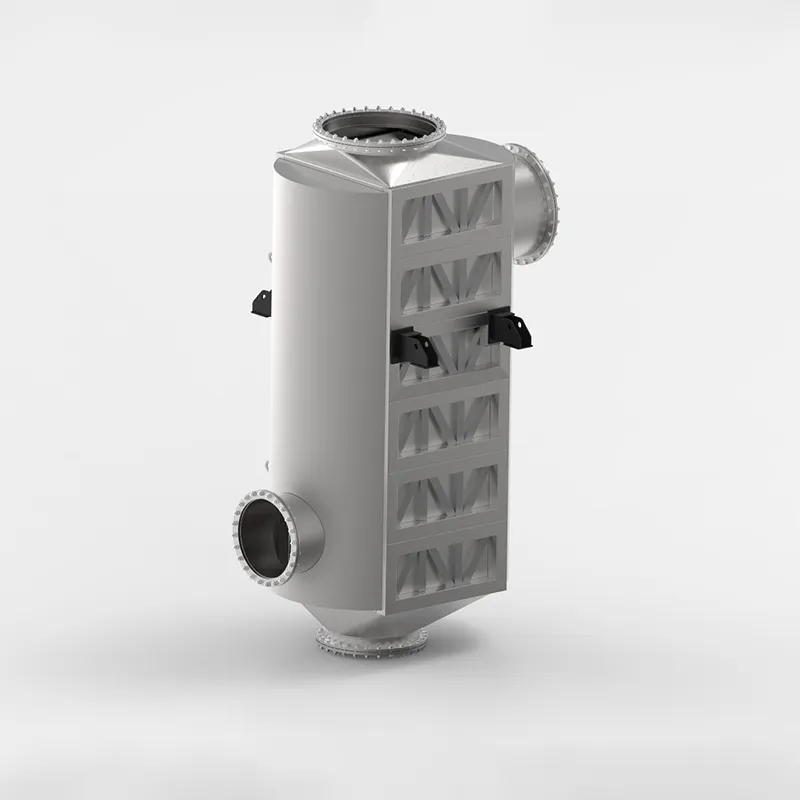
Plate type coolers are engineered with a highly efficient plate stack design that maximizes heat transfer surface area within a minimal volume. This geometric advantage allows the unit to deliver superior thermal performance while occupying significantly less floor space compared to traditional shell-and-tube heat exchangers of equivalent capacity.
The modular construction of plate coolers enables flexible installation configurations, including wall-mounted or ceiling-suspended setups, which are particularly beneficial in retrofitting projects or facilities with limited floor area. Their lightweight structure reduces structural load requirements and simplifies handling during installation.
Additionally, the compact footprint translates to lower overall system costs, as less piping, smaller foundations, and reduced insulation materials are needed. This space-saving attribute is critical in industries such as marine, HVAC, food processing, and chemical plants where real estate is at a premium.
Plate type coolers are engineered to adapt to a wide range of industrial requirements, offering unmatched flexibility in both design and capacity. Their modular construction allows for easy adjustment of thermal performance and physical footprint without replacing the entire system.
The following table illustrates typical customization parameters and scalability options available for plate type cooler configurations across different industrial scenarios.
| Parameter | Standard Range | Customization Option |
|---|---|---|
| Plate Material | Stainless Steel 304 / 316 | Titanium, Hastelloy, Nickel Alloys |
| Max Operating Pressure | 10 bar – 25 bar | Up to 40 bar (High Pressure Design) |
| Temperature Range | -20°C to 180°C | -50°C to 300°C (Special Gaskets / Welded) |
| Flow Capacity | 1 m³/h – 500 m³/h | Up to 2000 m³/h (Multi-Plate Stack) |
| Plate Gap | 2.5 mm – 5.0 mm | 1.5 mm (High Efficiency) / 8 mm (Viscous Fluids) |
| Connection Size | DN25 – DN150 | DN200, DN250, Custom Flange Standards |
The modular plate design enables straightforward capacity expansion by adding or removing plates, making it ideal for processes with fluctuating loads or future production increases. This scalability eliminates the need for oversized initial investments.
For specialized applications, plate type coolers can be engineered with custom port locations, alternative gasket materials, or fully welded construction to meet stringent hygiene or safety standards. This adaptability ensures seamless integration into existing piping systems and process lines.
Explore detailed product configurations: TP Welded Plate, Gasketed Plate, Air Preheaters, Wide Gap Welded, HT Bloc, Printed Circuit, Pillow Plates.
The robust construction of plate type coolers minimizes fouling and corrosion, significantly lowering the need for frequent cleaning and part replacement. This design directly contributes to a longer operational lifespan compared to traditional shell-and-tube units.
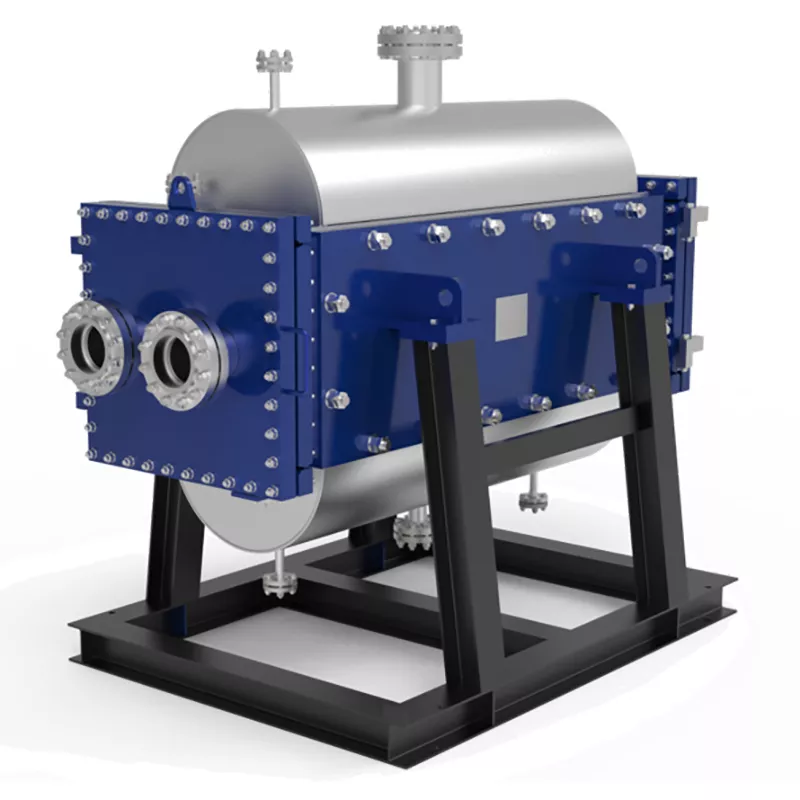
By utilizing high-grade materials and efficient thermal dynamics, these coolers resist wear from thermal cycling and chemical exposure. This results in fewer shutdowns for maintenance and a more reliable system over many years of service.
The simplified plate design allows for easy inspection and individual plate replacement if needed, further reducing downtime. This modularity ensures that the entire unit does not need to be replaced, extending the overall service life and lowering total cost of ownership.
Plate type coolers are engineered to maximize heat transfer efficiency while minimizing operational costs. Their compact design and high surface-to-volume ratio reduce the energy required for pumping and thermal exchange, directly lowering electricity and fuel expenses.
By utilizing counter-current flow and thin metal plates, these units achieve temperature approaches as close as 1°C, ensuring that less energy is wasted during cooling processes. This translates into significant savings over time, especially in continuous industrial operations.
Additionally, the modular nature of plate coolers allows for easy expansion or reconfiguration, avoiding costly system overhauls. Reduced fouling and simpler maintenance further contribute to lower lifecycle costs.
For industries seeking to balance performance with budget constraints, investing in a plate type cooler delivers rapid payback through diminished energy bills and enhanced process reliability. Learn more about plate cooler efficiency.
Summary of Key Benefits
Enhanced Heat Transfer Efficiency Through Optimized Plate Design
The corrugated plate geometry generates turbulent flow at lower velocities, significantly improving thermal exchange rates while minimizing fouling. This design achieves up to 40% higher heat transfer coefficients compared to conventional shell-and-tube units.
Compact Footprint and Space-Saving Installation Benefits
With a plate pack that occupies 30–50% less floor area than equivalent tubular exchangers, the plate type cooler simplifies layout planning and reduces structural support requirements. Ideal for retrofits and congested plant areas.
Superior Flexibility for Customization and Scalability
Plate geometry, number of plates, and frame size can be precisely matched to process conditions. Future capacity changes are easily accommodated by adding or removing plates without replacing the entire unit.
Reduced Maintenance Requirements and Extended Service Life
Accessible plate surfaces allow quick visual inspection and cleaning. Fewer gasket seals and no welded joints reduce leak points, while corrosion-resistant materials prolong operational lifespan under demanding industrial conditions.
Cost-Effective Operation with Lower Energy Consumption
Enhanced turbulence and countercurrent flow reduce pumping power by 15–25% for the same duty. Lower pressure drops and reduced fouling translate to sustained energy savings and a shorter payback period.
Together, these advantages make the plate type cooler a high-performance, adaptable, and economically sound choice for modern industrial heat transfer challenges. Its combination of efficiency, compactness, and low total cost of ownership supports both process optimization and sustainability goals.
We provide you with comprehensive foreign trade solutions to help enterprises achieve global development
Industrial processes involving particle-laden slurries, high-viscosity syrups, or fiber-rich pulp demand more than standard equipment—they require target-engineered thermal management. At SHPHE, we configure the TP Welded Plate Heat Exchanger to directly conquer your plant's severe fouling, blockage, and erosion threats. Combining custom-tailored channel geometries, wear-resistant metallurgy, and integrated CIP (Cleaning-in-Place) systems, we deliver absolute production continuity where conventional heat exchangers fail.
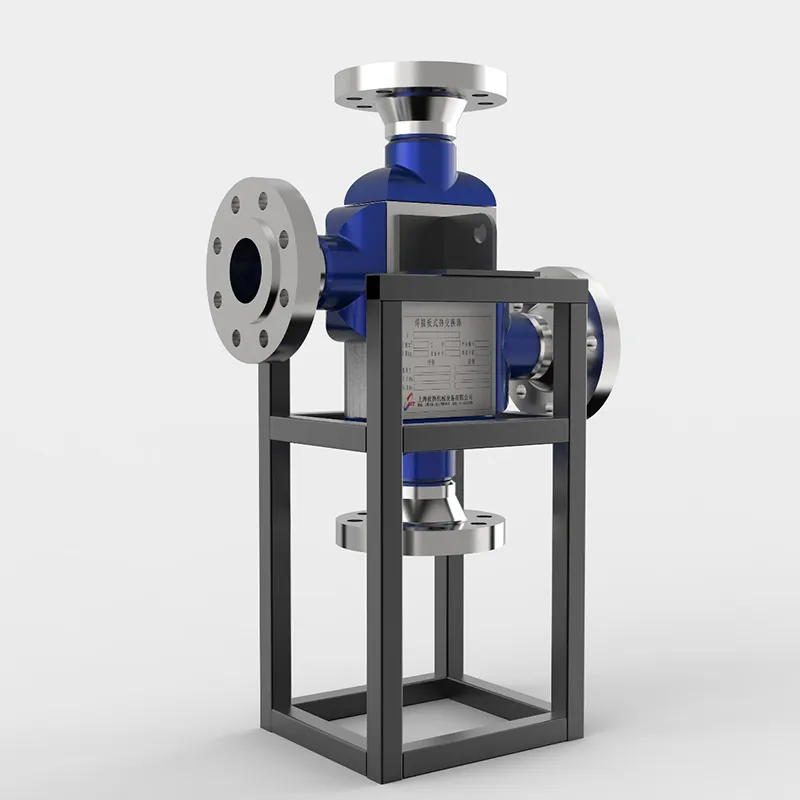
The SHPHE Printed Circuit Heat Exchanger (PCHE) represents a paradigm shift in microchannel thermal management, meticulously engineered for the world's most critical and demanding industrial boundaries. Developed to surpass the physical limitations of conventional shell-and-tube designs in ultra-high-pressure environments, our custom PCHEs integrate advanced photochemical etching and solid-state diffusion bonding to provide unmatched safety, thermal efficiency, and integrity under extreme stress. Initially deployed within high-consequence sectors such as aerospace and nuclear power generation, PCHE technology has completely revolutionized high-density thermal processing. Today, SHPHE brings this breakthrough engineering to mainstream energy transitions—including LNG liquefaction, supercritical CO² power cycles, hydrocarbon processing, and high-pressure hydrogen systems—enabling plants to maximize energy recovery, ensure zero-leakage security, and significantly shrink environmental footprints.
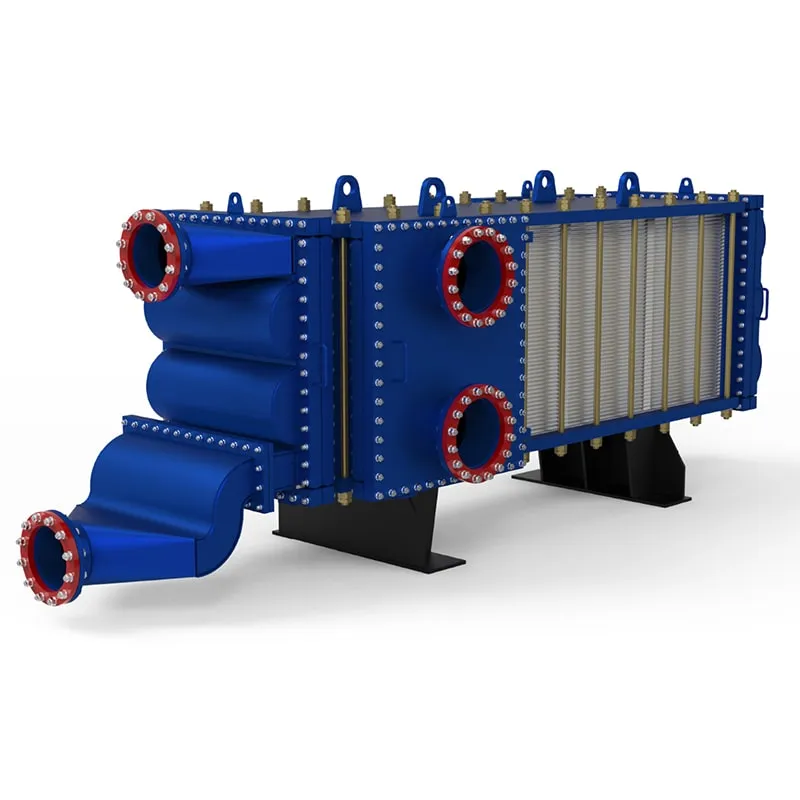
Custom-Engineered Anti-Clogging Solutions for High-Viscosity Slurries: Deployed specifically to conquer severe industrial fouling, SHPHE wide gap welded plate heat exchangers are tailor-built to handle complex media containing dense fibers, coarse crystals, or solid suspensions without clogging. Each non-obstructed channel is calculated and formed by laser-welded plate packs matching your fluid’s exact rheology and grain size, completely eliminating structural "dead zones" and media stagnation. Available in highly compact vertical and versatile horizontal configurations, our vertical engineering drastically reduces plant footprints while maintaining unhindered product throughput, minimal pressure drops, and flawless continuous operations across harsh process loops.
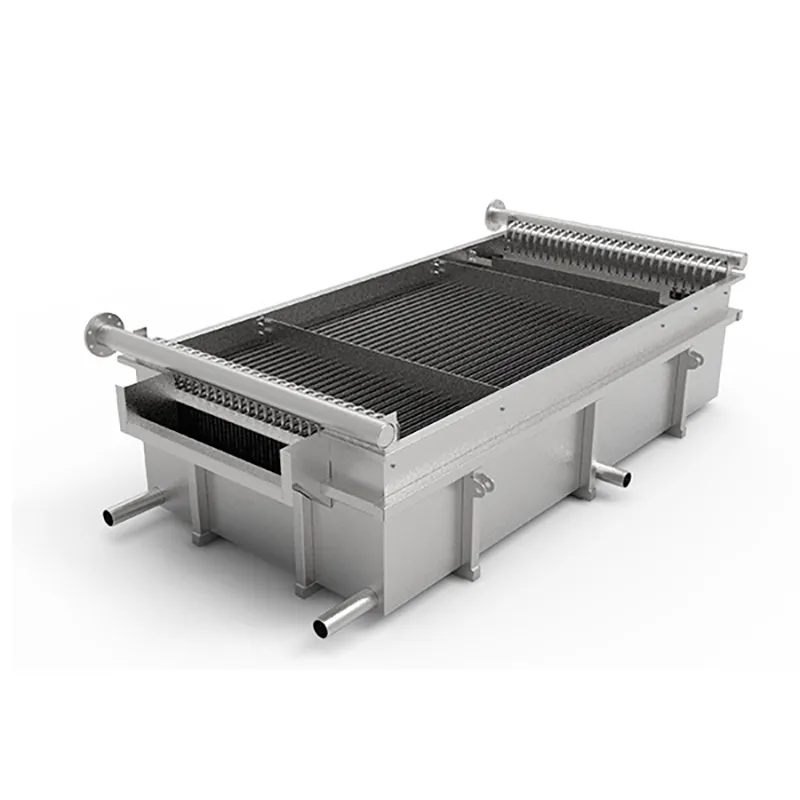
Originated in the mid-20th century to bypass the manufacturing bottlenecks and weight limitations of standard jacketed thermal components, the Pillow Plate (also known as a dimple plate or embossed plate) has revolutionized precision fluid-wall engineering. At SHPHE, we take this highly flexible technology and elevate it into a core foundation for bespoke industrial heat transfer integration. By utilizing state-of-the-art automated CNC fiber laser welding, our engineers customize the mechanical inflation profiles and spot pitch grids to directly match your specific fluid dynamics, pressure limits, and vessel configurations. Today, SHPHE's custom pillow plates are indispensable assets for worldwide processing plants prioritizing advanced thermal performance, zero-leak safety, and hygienic processing—serving as the definitive solution across food, pharmaceutical, chemical, and bulk solids cooling sectors.
Select the most popular foreign trade service products to meet your diverse needs
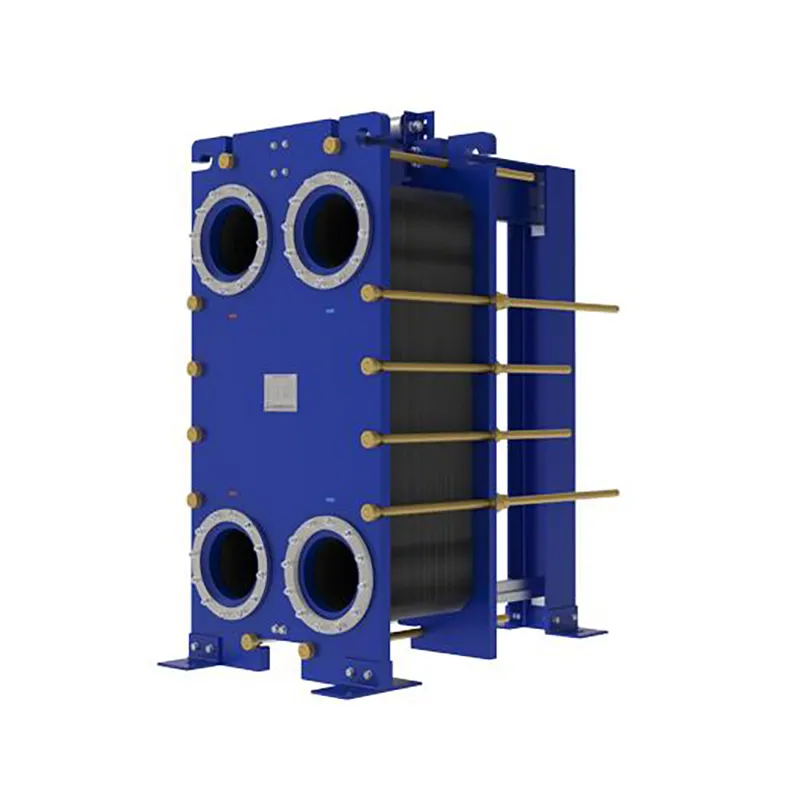
Since the invention of the plate heat exchanger (PHE) in 1923, thermal technology has evolved from standard food-grade processing to highly complex industrial operations. At SHPHE, we take this classic, versatile design and transform it into highly bespoke heat transfer solutions tailored to your unique process fluids and thermal loads. While traditional gasketed PHEs offer high efficiency and compact footprints, SHPHE optimizes plate corrugations, metallurgy, and sealing systems to handle your specific chemical, HVAC, or energy recovery parameters. Our custom-engineered gasketed plate heat exchangers provide outstanding scalability and ease of maintenance, serving as an indispensable asset for heavy industries—including oil and gas, metallurgy, and food processing—where uptime, energy recovery, and long-term sustainability are top priorities.
Custom-Engineered for Severe Process Demands. At SHPHE, we don't just supply equipment; we design tailored thermal solutions. Our HT-Bloc welded plate heat exchangers are custom-configured by our experienced engineers to overcome your specific industry challenges—whether handling high-viscosity media, extreme temperatures, or strict space constraints.
Custom-Engineered Anti-Clogging Solutions for High-Viscosity Slurries: Deployed specifically to conquer severe industrial fouling, SHPHE wide gap welded plate heat exchangers are tailor-built to handle complex media containing dense fibers, coarse crystals, or solid suspensions without clogging. Each non-obstructed channel is calculated and formed by laser-welded plate packs matching your fluid’s exact rheology and grain size, completely eliminating structural "dead zones" and media stagnation. Available in highly compact vertical and versatile horizontal configurations, our vertical engineering drastically reduces plant footprints while maintaining unhindered product throughput, minimal pressure drops, and flawless continuous operations across harsh process loops.



User Comments
Service Experience Sharing from Real Customers
Mike
Maintenance SupervisorWe swapped out our old shell-and-tube for this plate type cooler on a high-temp dairy pasteurization line. The heat transfer is noticeably better, and cleaning it in place has cut our downtime by almost an hour per shift. Just make sure your gasket kit is stocked—ours held up fine, but I learned that lesson the hard way on a previous brand.
Sarah
Chemical Process EngineerI specified this unit for a pilot plant cooling a corrosive brine solution. The titanium plates are holding up way better than the stainless we used before—no pitting after three months. Only gave it four stars because the frame bolts needed re-torquing after the first thermal cycle. Otherwise, solid performance for a compact footprint.
Tom
HVAC TechnicianInstalled this in a commercial building's chiller loop to replace a failing brazed plate. The modular design is a lifesaver—I could add plates on-site without sending the whole unit back. Cools like a champ even on those 100°F roof days. My only gripe is the manual could use better exploded-view diagrams.
Elena
Production ManagerWe run a craft brewery and needed something to crash-cool wort quickly. This plate cooler dropped our turnaround time by 40% compared to our old immersion chiller. The plates are easy to pull apart for inspection, which is key when you're paranoid about hop residue. Would be a five if the pressure drop was a tad lower on our pump setup.