Working Principle and Key Design Features of the Plate Type Evaporator
This article explains how a plate type evaporator works, its core design features, and typical performance parameters. Written for process engineers and procurement professionals, it covers the working principle, key advantages, common applications, and selection considerations. SHPHE, a Shanghai-based manufacturer founded in 2005 with ISO9001 and ASME U certifications, offers free thermal design and selection services for these units.
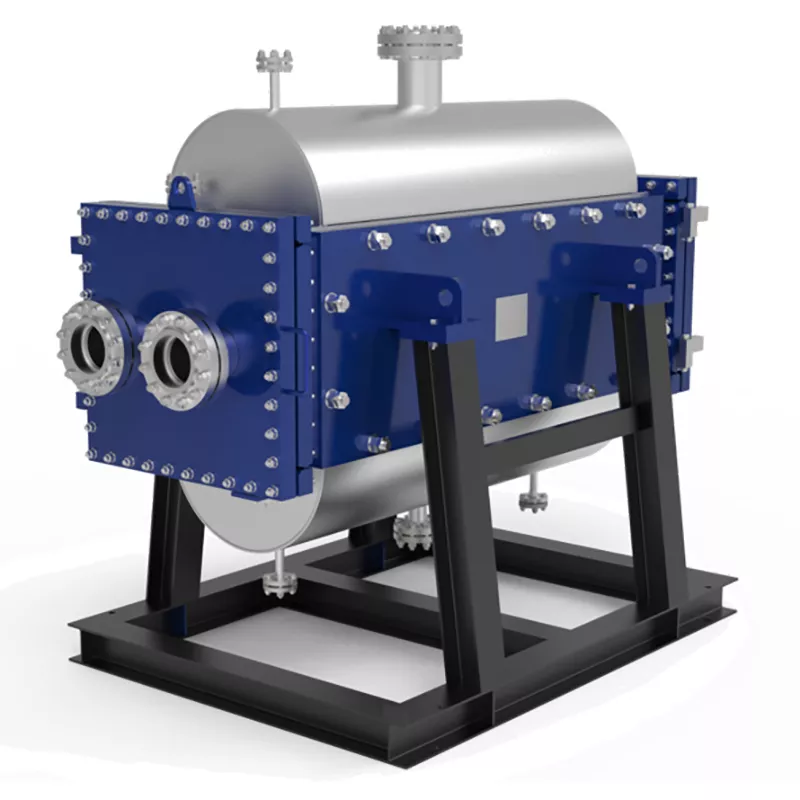
In many industrial processes, concentrating a liquid stream by removing solvent—usually water—is a critical step. A plate type evaporator achieves this by using a series of corrugated plates to transfer heat from a heating medium to the product. Unlike traditional shell-and-tube designs, the plate arrangement provides high turbulence, thin film flow, and excellent heat transfer coefficients, making it a preferred choice for heat-sensitive or fouling-prone fluids.
How Does a Plate Type Evaporator Work?
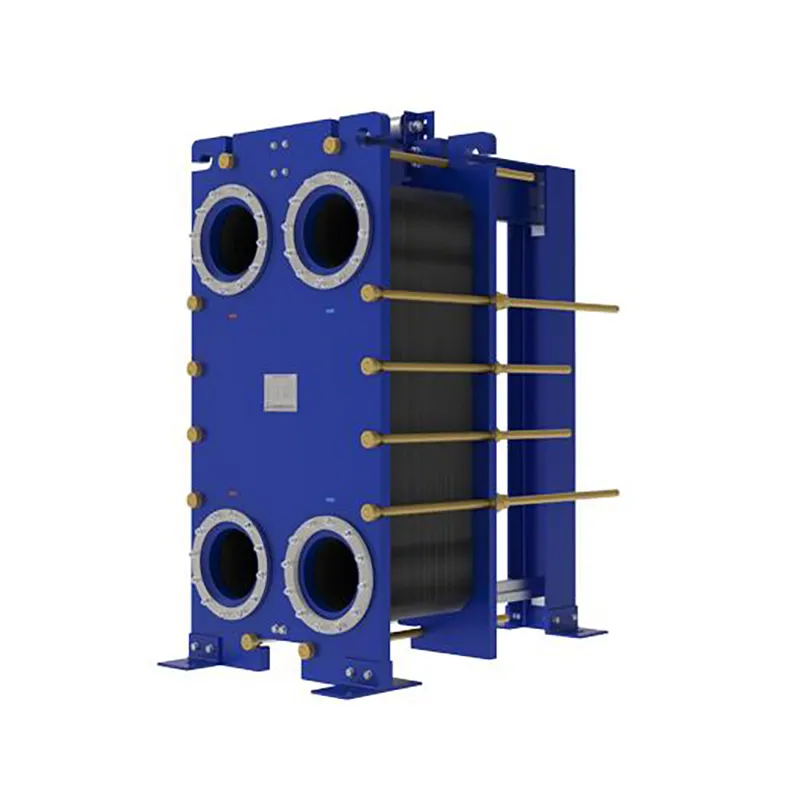
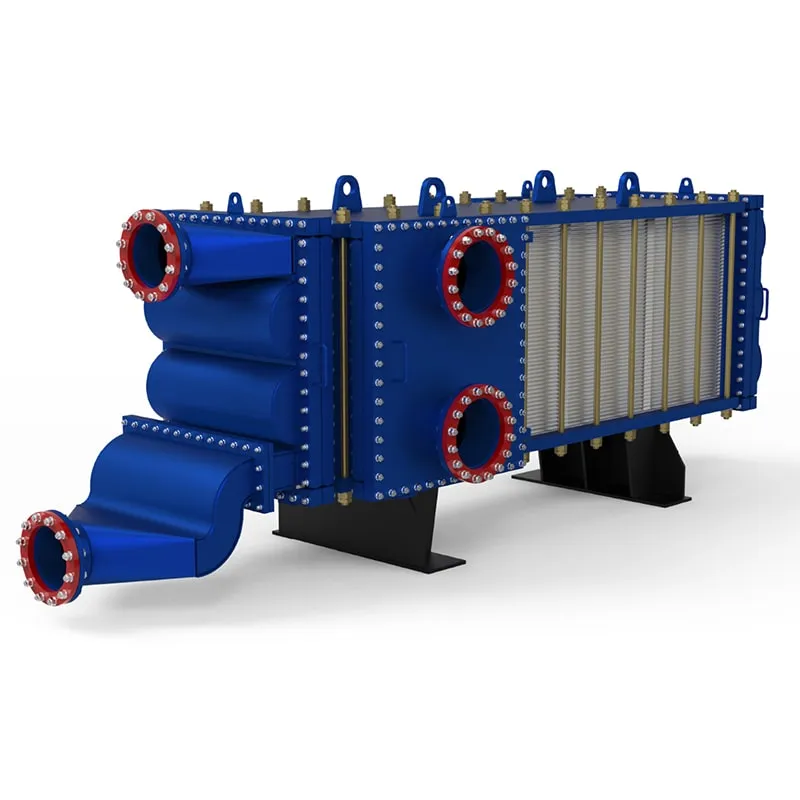
The working principle relies on a stack of thin, corrugated metal plates clamped together in a frame. The product liquid flows in a thin film over one side of each plate, while a heating medium—typically steam, hot water, or thermal oil—flows on the opposite side. The corrugations induce high turbulence even at low flow rates, which significantly improves heat transfer and reduces fouling. As the product absorbs heat, the solvent vaporizes, and the concentrated liquid exits from the bottom, while vapor is drawn off from the top.
This design allows for precise control of residence time and temperature, which is essential for products like fruit juices, dairy concentrates, and chemical intermediates that degrade under prolonged heating. The plate type evaporator can operate in single-pass or recirculation mode, depending on the required concentration ratio.
What Are the Key Design Features of a Plate Type Evaporator?
Several design elements make the plate type evaporator stand out:
- High heat transfer coefficient: Typically ranging from 3,000 to 7,000 W/m²·K, due to the thin film and turbulent flow.
- Compact footprint: A plate pack can achieve the same duty as a much larger shell-and-tube unit.
- Easy maintenance: Plates can be individually removed for cleaning or replacement.
- Flexible capacity: Adding or removing plates adjusts the heat transfer area without changing the frame.
- Low hold-up volume: The small liquid volume inside the unit reduces start-up time and product waste.
For applications involving viscous or particulate-laden fluids, a wide-gap plate design is available. SHPHE offers a wide gap welded plate heat exchanger that handles larger particles and higher viscosities without clogging.
Typical Parameter Ranges for Plate Type Evaporators
| Parameter |
Typical Range |
| Operating temperature |
Up to 200°C (with appropriate gaskets or welded design) |
| Operating pressure |
Full vacuum to 25 bar |
| Heat transfer area per unit |
1 to 500 m² |
| Plate material |
Stainless steel 304, 316L, titanium, or Hastelloy |
| Gasket material |
EPDM, NBR, Viton, or PTFE |
These ranges are industry-generic and can be tailored to specific process requirements. SHPHE provides free thermal design to match your exact duty.
Common Applications and Recommended Solutions
Plate type evaporators are widely used in:
- Food and beverage: Concentrating milk, whey, fruit juices, and sugar solutions. A gasketed plate design is common here for easy cleaning.
- Chemical processing: Evaporating solvents, acids, or heat-sensitive monomers. Welded plate designs prevent leakage.
- Pharmaceuticals: Gentle concentration of active ingredients under vacuum.
- Wastewater treatment: Reducing volume of brine or industrial effluents.
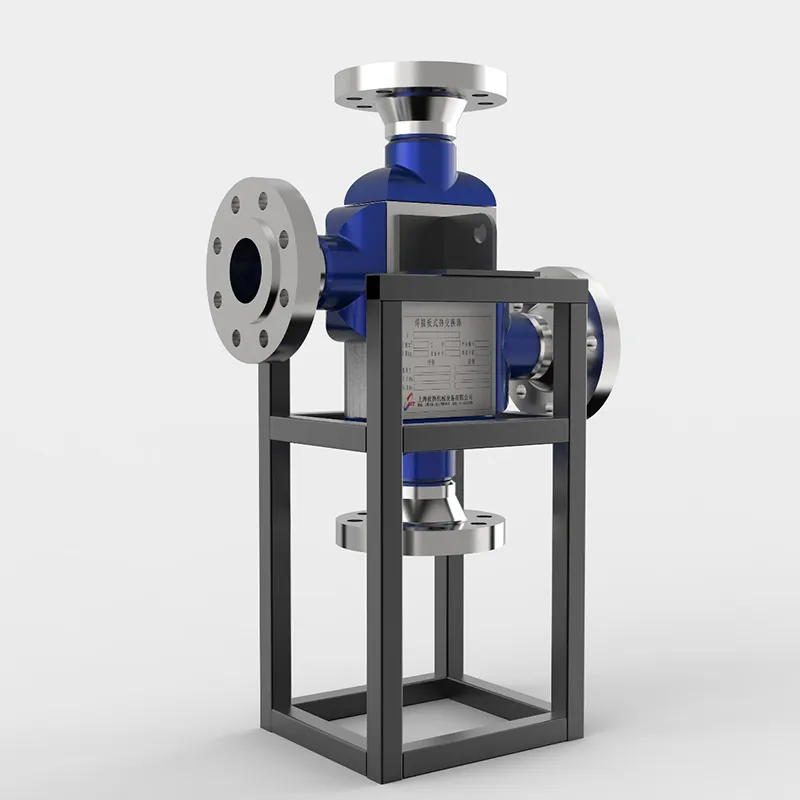
For high-temperature or high-pressure duties, consider a HT-Bloc welded plate heat exchanger, which eliminates gaskets and handles aggressive media. For applications requiring extremely high heat transfer in a compact space, the printed circuit heat exchanger (PCHE) is an alternative, though it is more suited to gas-gas or high-pressure liquid duties.
Why Choose SHPHE for Your Plate Type Evaporator?
SHPHE has been designing and manufacturing plate heat exchangers in Shanghai since 2005. Our product range includes gasketed, welded, wide-gap, and custom-engineered units, all backed by ISO9001 and ASME U certifications. We export to over 20 countries and offer free thermal design and selection services. Whether you need a standard plate type evaporator or a specialized solution for viscous fluids, our engineering team can recommend the right configuration.
Our gasketed plate heat exchangers are compatible with Alfa Laval and GEA frames, making them a cost-effective replacement option. For fully welded solutions, we offer alternatives to Compabloc designs.
Frequently Asked Questions
Q: What is the maximum concentration ratio achievable with a plate type evaporator?
A: It depends on the product viscosity and fouling tendency. For many aqueous solutions, a concentration ratio of 2:1 to 5:1 is typical in a single pass. With recirculation, higher ratios are possible but may require a wide-gap or scraped-surface design.
Q: Can a plate type evaporator handle fluids with suspended solids?
A: Yes, but only if the particle size is small enough to pass through the plate gaps. Standard plate gaps are 2–5 mm. For larger particles, a wide-gap welded plate heat exchanger is recommended, with gaps up to 15 mm.
Q: How do I clean a plate type evaporator?
A: For gasketed designs, the plate pack can be opened and each plate manually cleaned or run through a CIP (clean-in-place) cycle with appropriate detergents. Welded designs require chemical cleaning or backflushing.
Q: What is the typical lifespan of plates in a plate type evaporator?
A: With proper maintenance, stainless steel plates last 10–15 years. Gaskets need replacement every 3–5 years, depending on temperature and chemical exposure.
Q: Is a plate type evaporator suitable for vacuum operation?
A: Yes. Plate evaporators can operate under full vacuum, which lowers the boiling point and is ideal for heat-sensitive products. The frame and gaskets must be rated for the vacuum level.
Q: How does SHPHE ensure the plate type evaporator meets my process requirements?
A: We offer free thermal design and selection. You provide the flow rate, inlet/outlet temperatures, pressure, and media details, and our engineers calculate the required area, plate count, and material choice.
Request a Quote for Your Plate Type Evaporator
To get a tailored solution for your evaporation duty, please provide the following details: flow rate, inlet and outlet temperatures, operating pressure, heating medium type and temperature, and a brief description of the fluid (viscosity, solids content, pH). Our team will respond with a preliminary design and pricing. Contact SHPHE today to discuss your plate type evaporator requirements.

 English EN





User Comments
Service Experience Sharing from Real Customers
Liam
Maintenance SupervisorWe switched to this plate type evaporator six months ago for our fruit juice concentration line, and the difference in heat transfer efficiency is night and day. The plates are incredibly easy to access for cleaning, which has cut our downtime by almost a third. The gaskets held up perfectly even with acidic product. No complaints from my crew.
Nina
Process EngineerSpec’d this unit for a pilot plant project involving heat-sensitive pharmaceutical intermediates. The gentle evaporation profile and short residence time really preserved our compound’s integrity. My only minor gripe is that the initial manual says very little about scaling for different viscosities, but once we dialed it in, performance was rock solid.
Oscar
Plant ManagerWe were running an old falling film that kept fouling on our dairy whey. This plate type has been a workhorse—runs for weeks without needing a CIP. The modular design let us add a couple of extra plates to boost capacity without buying a whole new system. My operators actually like using it, which says a lot.
Elena
Shift Lead OperatorIt does the job for our brine concentration, but I’m giving it three stars because the plate alignment can be a real pain when reassembling after deep cleaning. If you don’t get the torque sequence exactly right, you get weeping at the edges. Once it’s sealed, it works fine, but it’s not as foolproof as the vendor made it sound.