How the Falling Film Plate Evaporator Enhances Industrial Evaporation Processes
Article Summary: This article explores how the falling film plate evaporator improves efficiency and reliability in industrial evaporation. It covers the working principle, key features, typical parameters, and real-world applications. Designed for process engineers and purchasing managers, the content provides practical insights into selecting the right heat exchanger for your needs, with a focus on the SHPHE product range.
Industrial evaporation processes often struggle with heat transfer inefficiency, fouling, and high energy consumption. The falling film plate evaporator addresses these challenges by combining the advantages of plate heat exchangers with a thin-film evaporation mechanism. This design ensures uniform liquid distribution, short residence time, and excellent thermal performance, making it a preferred choice for industries like food processing, chemical manufacturing, and wastewater treatment.
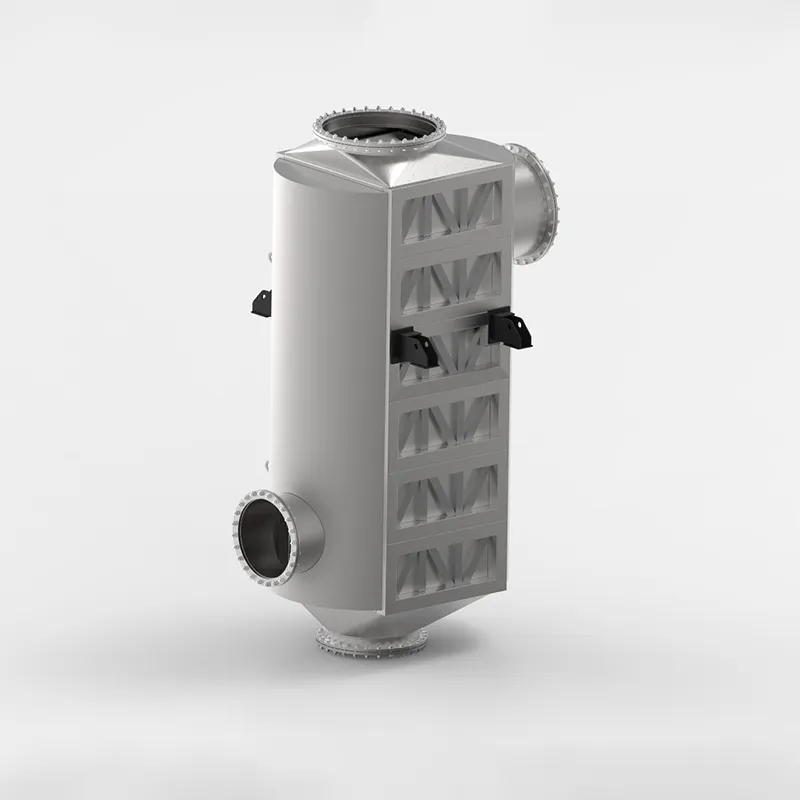
What Makes a Falling Film Plate Evaporator Different?
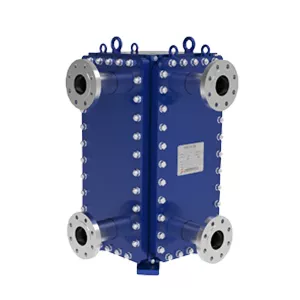
Unlike traditional shell-and-tube evaporators, a falling film plate evaporator uses corrugated plates to create a thin, continuous liquid film. This film flows downward under gravity, while heating media—typically steam or hot water—rises on the opposite side. The large surface area of the plates and the turbulent flow pattern significantly enhance heat transfer coefficients, often reaching 3,000–7,000 W/m²·K depending on the application.
Key advantages include:
- Short residence time, which minimizes thermal degradation of heat-sensitive products.
- Low liquid hold-up volume, reducing startup and shutdown times.
- Easy access for cleaning and inspection, thanks to the plate design.
- High turndown ratio, allowing flexible operation across varying loads.
How Does the Falling Film Principle Work in Plate Heat Exchangers?
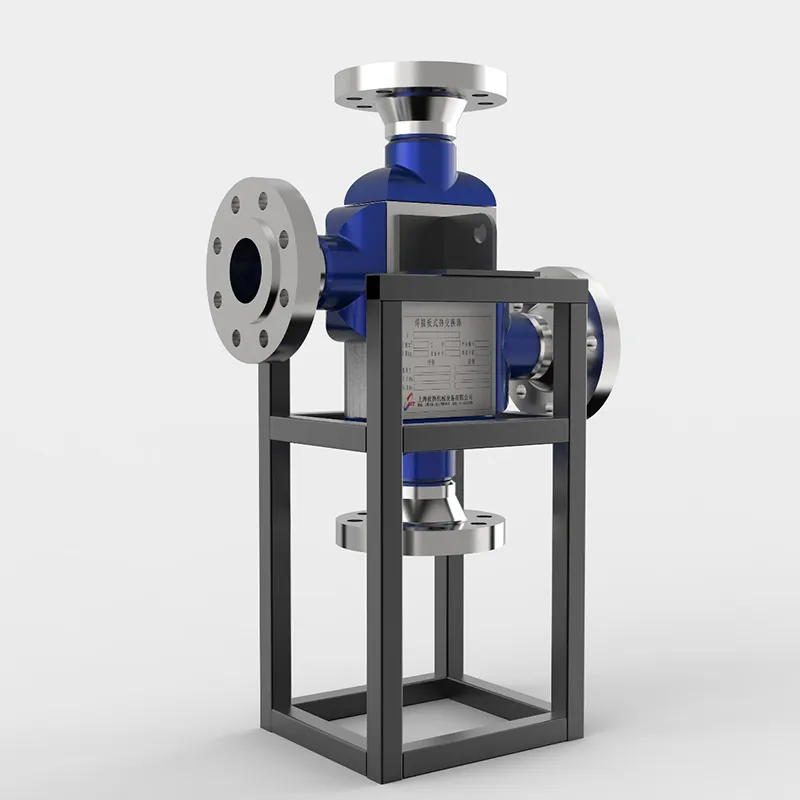
In a falling film plate evaporator, the liquid feed enters at the top of the plate pack and is distributed evenly across the plate surface. A distributor plate or nozzle system ensures uniform wetting, preventing dry spots that can lead to fouling. As the liquid flows downward, it forms a thin film that evaporates partially or completely, depending on the process requirements. The vapor exits from the bottom, while the concentrated liquid is collected separately.
This design is particularly effective for viscous or fouling fluids, because the film thickness is typically only 0.5–2 mm, which promotes rapid heat transfer and reduces the risk of scaling. For more details on plate heat exchanger configurations, check out our gasketed plate heat exchangers page.
Key Features and Typical Parameter Ranges
The falling film plate evaporator offers several features that make it stand out in industrial evaporation:
| Parameter |
Typical Range |
| Heat transfer coefficient |
2,500–6,500 W/m²·K |
| Operating temperature |
Up to 200°C (higher with special materials) |
| Operating pressure |
Full vacuum to 30 bar |
| Plate material |
Stainless steel 304/316L, titanium, Hastelloy |
| Flow rate per unit |
1–200 m³/h |
These parameters are industry-generic and can vary based on specific process conditions. Always consult with a thermal design engineer to match the evaporator to your exact needs.
What Are the Common Applications for Falling Film Plate Evaporators?
Falling film plate evaporators are widely used in:
- Food and beverage: Concentration of fruit juices, dairy products, and sugar solutions.
- Chemical processing: Evaporation of solvents, acids, and heat-sensitive intermediates.
- Pharmaceuticals: Gentle concentration of active ingredients and herbal extracts.
- Wastewater treatment: Recovery of valuable components or reduction of effluent volume.
- Desalination: Small-scale freshwater production from brine.
For heavy-duty applications involving high fouling or solids content, consider our wide gap welded plate heat exchangers, which offer wider plate spacing to handle particulates.
Why Choose SHPHE for Your Falling Film Plate Evaporator?
SHPHE, founded in 2005 and based in Shanghai, is a trusted plate heat exchanger manufacturer with ISO9001 and ASME U certifications. We export to over 20 countries and offer a comprehensive product line, including HT-Bloc and TP welded plate heat exchangers, gasketed plate heat exchangers, PCHE, plate air preheaters, and pillow plates. Our falling film plate evaporator designs are compatible with leading brands like Alfa Laval and GEA, providing a reliable alternative without compromising performance.
We provide free thermal design and selection services, ensuring your evaporator is optimized for your specific process conditions. Our engineering team uses advanced simulation tools to calculate heat transfer areas, pressure drops, and film thickness, so you get a solution that works right from day one. To learn more about our welded plate options, visit our HT-Bloc welded plate heat exchanger page.
Frequently Asked Questions About Falling Film Plate Evaporators
What is the typical residence time in a falling film plate evaporator?
Residence time is usually between 5 and 30 seconds, depending on the plate length and flow rate. This short contact time is ideal for heat-sensitive products because it minimizes thermal degradation.
Can a falling film plate evaporator handle viscous fluids?
Yes, it can handle viscosities up to around 500 cP, but performance depends on proper liquid distribution. For higher viscosities, a wide gap design or special plate geometry may be recommended.
How does the falling film plate evaporator compare to a shell-and-tube design?
Plate designs offer 2–4 times higher heat transfer coefficients, smaller footprint, and easier maintenance. However, shell-and-tube units may be more cost-effective for very high pressures or extremely large capacities.
What maintenance is required for a falling film plate evaporator?
Regular cleaning is needed to prevent fouling. The plate pack can be opened for inspection and manual cleaning. Depending on the fluid, chemical cleaning-in-place (CIP) systems are also commonly used.
Is the falling film plate evaporator suitable for vacuum operation?
Yes, it works well under vacuum, which lowers the boiling point of the liquid and reduces energy consumption. The plate design maintains good heat transfer even at low absolute pressures.
Can SHPHE provide a custom falling film plate evaporator for my process?
Absolutely. We offer free thermal design and selection. Just provide your flow rate, temperature, pressure, and media details, and our engineers will propose an optimized solution tailored to your needs.
Request a Quote for Your Falling Film Plate Evaporator
To get started, please share the following details with our team: flow rate, inlet and outlet temperatures, operating pressure, and media properties (e.g., viscosity, fouling tendency, pH). This information allows us to perform a precise thermal design and provide a competitive quotation. The falling film plate evaporator from SHPHE is engineered to deliver reliable performance and energy savings, backed by over 18 years of manufacturing expertise. Contact us today to discuss your project.

 English EN





User Comments
Service Experience Sharing from Real Customers
Marcus
Senior Process EngineerWe switched to this falling film plate evaporator six months ago for our fruit juice concentrate line. The thermal efficiency is noticeably better than our old tubular unit, and cleaning in place is a breeze. Downtime for scaling issues dropped significantly. Solid piece of equipment.
Lena
Lab TechnicianUsed this in a pilot study for recovering solvents from a pharmaceutical intermediate. The thin film distribution was surprisingly even at low flow rates, which gave us consistent data. Only reason it's not a five is because the gasket took a bit of fiddling to seat perfectly on first assembly. Overall, very impressed.
Derek
Operations ManagerI was skeptical about plate-type falling film units for our high-fouling dairy whey stream, but this one has handled it like a champ. The plates are easy to inspect and swap out. My maintenance crew actually likes working on it. Energy savings are starting to show on our monthly utility reports.
Priya
Chemical Plant Shift SupervisorWe use this for concentrating a dilute caustic solution. It runs steady and the control interface is intuitive for the operators. The only minor gripe is that the manual could have more troubleshooting diagrams for pressure drop issues. But performance-wise, it's been reliable over the last eight months.