Why Choose a Plate and Shell Condenser for Your Process Cooling Needs
When your process cooling demands high thermal efficiency and a compact footprint, a plate and shell condenser offers a reliable solution. This article explains how this heat exchanger type works, its key advantages over traditional shell-and-tube designs, and typical parameter ranges. We also cover common applications, selection tips, and answer frequent buyer questions to help you make an informed decision for your next cooling project.
What Is a Plate and Shell Condenser?
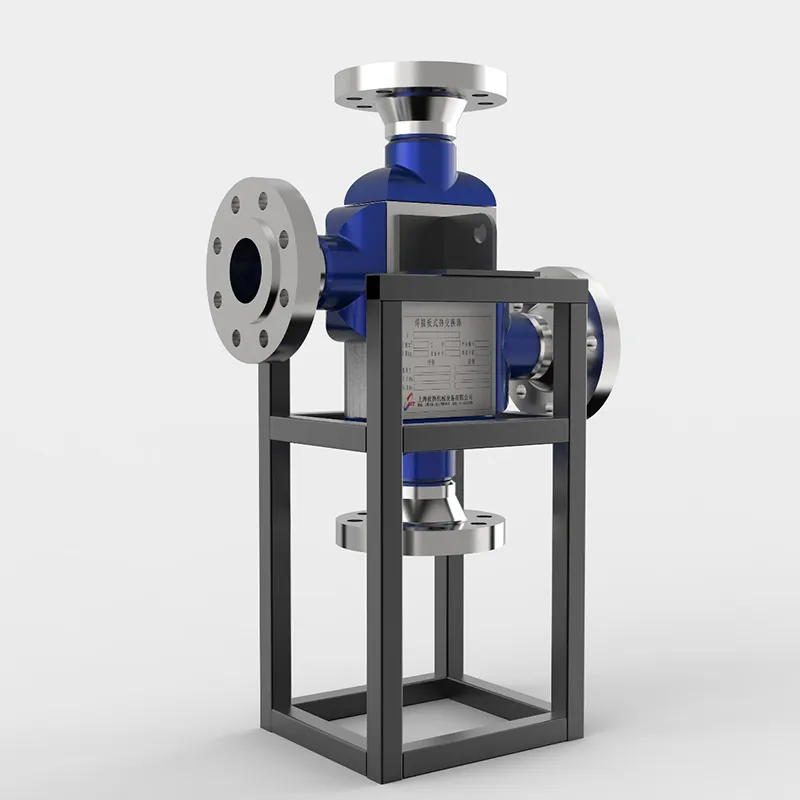
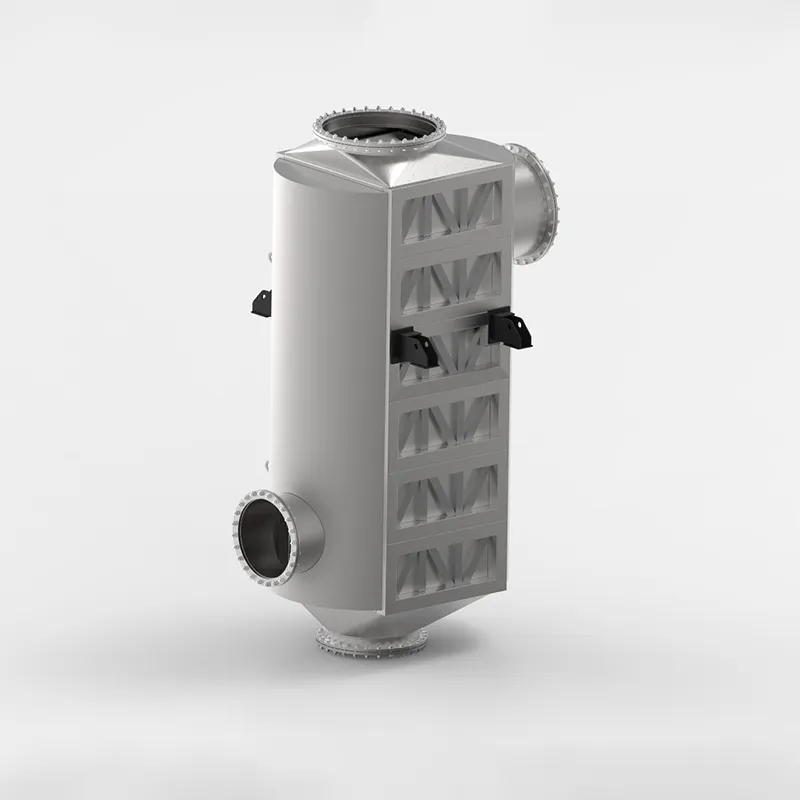
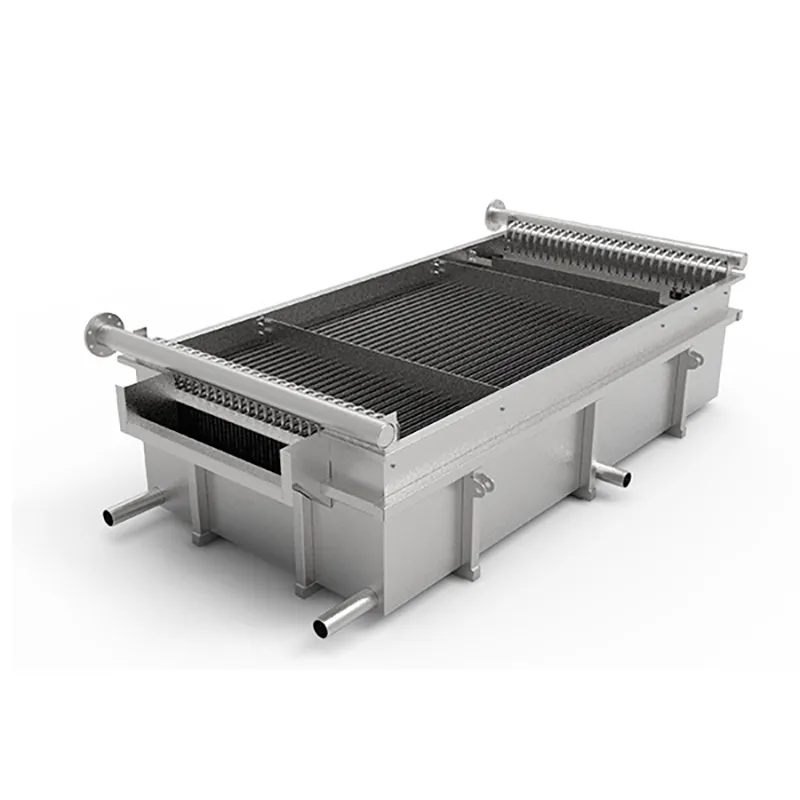
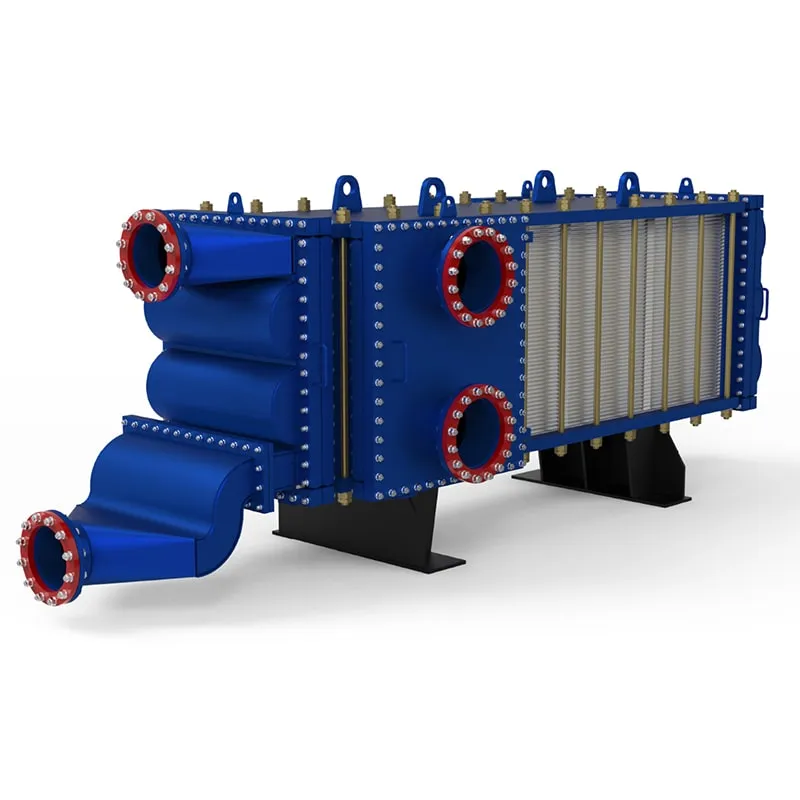
A plate and shell condenser combines a welded plate pack with a cylindrical pressure vessel. The plate pack provides a large heat transfer surface area in a compact volume, while the shell handles high pressure and temperature. This design is ideal for condensing vapors in process cooling loops, refrigeration systems, and chemical recovery units.
Unlike traditional shell-and-tube condensers, the plate and shell configuration achieves higher heat transfer coefficients—often 3 to 5 times greater—due to turbulent flow in narrow channels. This means you can reduce the physical footprint by up to 60% while maintaining or improving performance.
How Does a Plate and Shell Condenser Work?
The hot vapor enters the shell side and flows over the plate pack. Cooling fluid—typically water or a glycol mixture—passes through the plate channels counter-currently. The vapor condenses on the plate surfaces, releasing latent heat to the cooling medium. The condensed liquid collects at the bottom of the shell and is drained out.
Key to this process is the plate geometry. Corrugated plates create intense turbulence, which breaks the thermal boundary layer and accelerates heat transfer. This makes the plate and shell condenser especially effective for low-temperature difference applications.
What Are the Key Features and Typical Parameter Ranges?
Plate and shell condensers are built for demanding conditions. Below are commonly accepted parameter ranges for industrial units:
- Design pressure: Up to 100 bar (shell side), up to 30 bar (plate side)
- Design temperature: -40°C to 400°C
- Heat transfer coefficient: 3,000–7,000 W/m²·K (water-to-water); 1,500–4,000 W/m²·K (condensing duty)
- Flow rate range: 5–500 m³/h per unit
- Plate material: Stainless steel 304/316L, titanium, or Hastelloy
- Shell material: Carbon steel or stainless steel
- Connection sizes: DN50 to DN300
These ranges cover most process cooling needs. For specific requirements, thermal design software can optimize plate count, channel arrangement, and pressure drop.
What Are the Main Applications?
Plate and shell condensers are widely used across industries where efficient condensation is critical:
- Chemical processing: Condensing solvents, monomers, and reaction vapors
- Refrigeration: Ammonia and fluorocarbon condenser units
- Power generation: Steam condensation in small-scale turbines
- Food and beverage: Evaporator vapor condensation
- Pharmaceutical: Recovery of volatile organic compounds
In each case, the compact design and high thermal efficiency reduce energy consumption and installation costs. For example, replacing an old shell-and-tube condenser with a plate and shell unit can cut cooling water usage by 30–50%.
Why Choose SHPHE for Your Plate and Shell Condenser?
SHPHE is a Shanghai-based plate heat exchanger manufacturer founded in 2005. We export to over 20 countries and hold ISO9001 and ASME U certifications. Our product lines include HT-Bloc Welded Plate Heat Exchangers, Wide Gap Welded Plate Heat Exchangers, Gasketed Plate Heat Exchangers, PCHE, Plate Air Preheaters, and Pillow Plates.
We offer free thermal design and selection service. Our engineers analyze your process conditions—flow rate, temperature, pressure, and media—to recommend the optimal plate and shell condenser configuration. We also provide alternatives compatible with Alfa Laval, Compabloc, or GEA designs, ensuring seamless integration into existing systems.
How Does a Plate and Shell Condenser Compare to a Shell-and-Tube Unit?
The main difference lies in heat transfer efficiency and footprint. A plate and shell condenser typically delivers 3–5 times higher heat transfer coefficients than a shell-and-tube unit of the same volume. This allows for a much smaller installation footprint—often 40–60% less floor space.
Additionally, the plate design reduces fouling due to higher turbulence, meaning longer intervals between cleaning. Maintenance is also simpler because the plate pack can be removed as a single cartridge. For applications with high pressure or temperature, the shell provides robust containment.
What Should You Consider When Selecting a Plate and Shell Condenser?
Key factors to evaluate include:
- Operating conditions: Temperature, pressure, and flow rate of both vapor and cooling medium
- Material compatibility: Corrosion resistance for aggressive media
- Pressure drop limits: Ensure the unit fits within your system pump capacity
- Fouling tendency: For dirty fluids, consider wide gap or gasketed designs
- Space constraints: Compact units are ideal for retrofits or tight installations
Our team at SHPHE can help you match these parameters to the right plate and shell condenser model. We also offer custom-engineered PCHE and plate air preheaters for specialized needs.
Frequently Asked Questions
1. Can a plate and shell condenser handle high-viscosity fluids?
Yes, but with limitations. For fluids above 500 cP, pressure drop may increase significantly. We recommend using wide gap plate designs or consulting our engineers for a custom solution. In most process cooling applications, viscosity is low enough for standard units.
2. What is the typical lifespan of a plate and shell condenser?
With proper maintenance and compatible materials, these units last 15–25 years. The welded plate pack eliminates gasket failure risks, and the shell is designed for long-term pressure containment. Regular inspection of plate surfaces for scaling or corrosion is recommended.
3. Is a plate and shell condenser suitable for ammonia refrigeration?
Absolutely. Plate and shell condensers are widely used in ammonia systems due to their high heat transfer and compact size. Stainless steel plates resist ammonia corrosion, and the shell can handle typical refrigeration pressures up to 20 bar.
4. How do I clean a plate and shell condenser?
Cleaning is done by circulating a chemical cleaning solution through the plate channels. The plate pack can also be removed as a cartridge for mechanical cleaning. For fouling-prone fluids, we recommend installing a strainer upstream to reduce maintenance frequency.
5. Can I retrofit a plate and shell condenser into an existing system?
Yes. The compact footprint and flexible nozzle orientations make retrofitting straightforward. We provide connection adapters and support frames to match your existing piping. Our thermal design service ensures the new unit meets your current flow and temperature requirements.
6. What certifications does SHPHE hold for plate and shell condensers?
SHPHE is ISO9001 and ASME U certified. Our manufacturing follows strict quality control procedures. Each unit is pressure-tested before shipment. We also provide material certificates and design documentation upon request.
Request a Quote for Your Plate and Shell Condenser
To get a tailored recommendation, please provide the following details: flow rate (vapor and cooling medium), inlet and outlet temperatures, operating pressure, and media composition (including any corrosive or fouling components). Our engineering team will perform a free thermal design and selection, and send you a proposal with performance curves and dimensional drawings.
Choosing the right plate and shell condenser for your process cooling needs ensures energy savings, reduced downtime, and long equipment life. Contact SHPHE today to start your project with confidence.

 English EN





User Comments
Service Experience Sharing from Real Customers
Ethan
Maintenance SupervisorWe installed this plate and shell condenser in our ammonia refrigeration system six months ago. The pressure drop is significantly lower than the old shell-and-tube unit we had, and the compact footprint freed up floor space in our already cramped engine room. Cleaning the plates was straightforward during our last shutdown. No leaks so far, and the thermal performance has been rock solid even during peak summer loads. Definitely worth the upgrade.
Liam
Process EngineerFor a high-fouling application like our sugar juice evaporation plant, I was skeptical about using a plate-type condenser. But this plate and shell design handles the viscous syrup better than I expected. The only hiccup was that the gaskets took a bit longer to arrive when we needed a replacement set, but the actual unit runs efficiently. It saved us about 20% on cooling water consumption compared to our previous setup.
Sophie
Chief EngineerWe replaced three old shell-and-tube condensers on a marine vessel with a single plate and shell unit. The weight reduction alone was a game-changer for our stability calculations. No vibration issues despite the constant pitching at sea, and the heat transfer rate has been consistent even with seawater as the coolant. My crew appreciates how easy it is to inspect the plates without needing a crane. Would recommend to any marine engineer.
Marcus
Plant OperatorI've been running this condenser on a chemical batch reactor for about a year now. It handles the rapid temperature swings of our exothermic reactions without any thermal shock issues that we used to see. The only reason I'm not giving it a 5 is because the initial installation required some custom piping modifications since the nozzle orientation was different from our old unit. But once it was in, it's been trouble-free. Much quieter than the old system too.