Why Choose a Trusted Plate and Shell Heat Exchanger Manufacturer for Your Industrial Needs
Selecting the right plate and shell heat exchanger manufacturer is critical for process efficiency, equipment longevity, and operational safety. This article explains the working principles, key parameters, and application scenarios of plate and shell heat exchangers, and why a trusted manufacturer like SHPHE—founded in 2005, ISO9001 and ASME U certified, exporting to 20+ countries—delivers reliable thermal solutions for demanding industrial environments. We cover product lines, typical specifications, and practical buying considerations to help engineers and procurement managers make informed decisions.
What Is a Plate and Shell Heat Exchanger and Why Does It Matter?
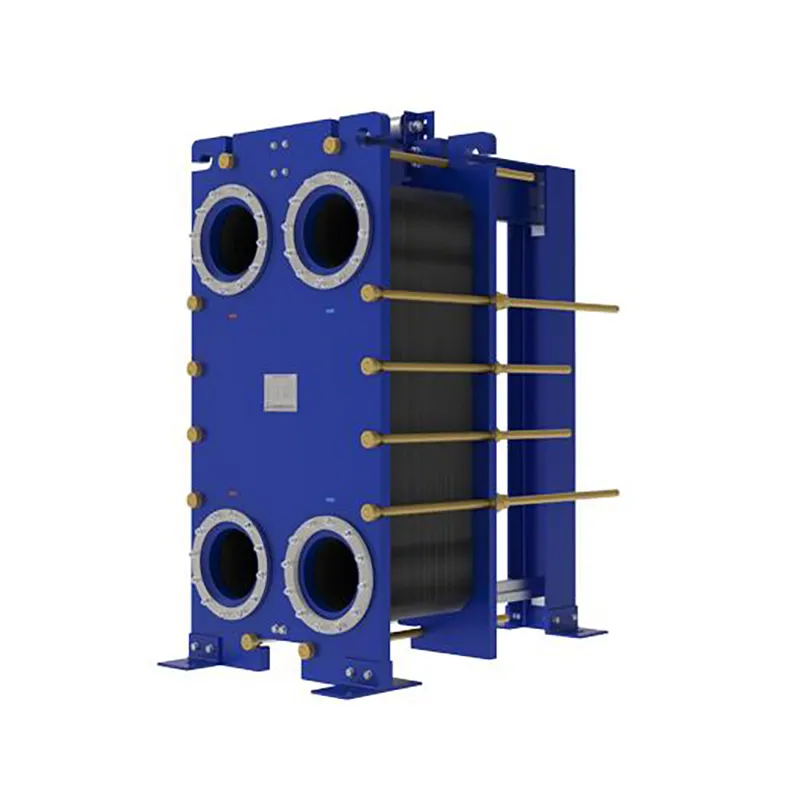
A plate and shell heat exchanger (PSHE) combines the compactness of plate-type designs with the pressure-handling capability of shell-and-tube units. It consists of a stack of corrugated plates enclosed in a cylindrical shell, allowing high heat transfer coefficients in a small footprint. For process engineers facing space constraints or high-temperature, high-pressure duties, a reliable plate and shell heat exchanger manufacturer offers equipment that handles up to 100 bar and 500°C, depending on materials and gasket selection. This design is especially effective for condensing, evaporating, and liquid-to-liquid applications where traditional shell-and-tube exchangers would be too large or inefficient.
How Does a Plate and Shell Heat Exchanger Work in Real Process Conditions?
In operation, the two process fluids flow through alternating plate channels. The plates are welded or gasketed to prevent mixing, while the shell contains the plate bundle and directs flow. The corrugated pattern creates turbulence, enhancing heat transfer and reducing fouling. Typical flow configurations include counter-current, co-current, and cross-flow. For example, in a chemical plant recovering heat from a hot gas stream, a plate and shell heat exchanger can achieve approach temperatures as low as 1–2°C, far better than shell-and-tube alternatives. The design also allows easy access for cleaning, especially when using fully welded plate pairs for aggressive media.
Key Features and Typical Parameter Ranges of Plate and Shell Heat Exchangers
When evaluating a plate and shell heat exchanger manufacturer, look for these performance indicators and construction features:
- Pressure range: Typically 10–100 bar, with custom designs up to 150 bar.
- Temperature range: -40°C to 500°C, depending on gasket material (EPDM, NBR, Viton) or fully welded construction.
- Flow capacity: From 1 m³/h to over 1,000 m³/h per unit.
- Heat transfer area: 1 m² to 500 m² per shell.
- Materials: Stainless steel 304/316L, titanium, Hastelloy, and duplex alloys.
- Connection sizes: DN25 to DN300, flanged or threaded.
- Design codes: ASME VIII Div.1, PED, and GB/T 151.
These parameters ensure the exchanger meets the demands of chemical, petrochemical, pharmaceutical, and food processing industries. A trusted TP welded plate heat exchanger from SHPHE, for instance, offers full welding for zero leakage risk, making it suitable for hazardous fluids.
What Applications Are Best Suited for Plate and Shell Heat Exchangers?
Plate and shell heat exchangers excel in several demanding scenarios:
- Chemical processing: Handling corrosive acids, solvents, and high-temperature reactions.
- Oil and gas: Gas cooling, condensate recovery, and amine treatment.
- Power generation: Steam condensation, turbine lube oil cooling, and flue gas heat recovery.
- Food and beverage: Pasteurization, CIP heating, and viscous product heating.
- Pharmaceuticals: Sterile water heating and solvent recovery under strict hygiene standards.
For high-fouling fluids like slurries or wastewater, a wide gap welded plate heat exchanger provides wider channels to reduce clogging. For ultra-compact, high-pressure duties, a printed circuit heat exchanger (PCHE) from the same manufacturer can handle up to 600 bar with minimal footprint.
Why SHPHE Is a Trusted Plate and Shell Heat Exchanger Manufacturer
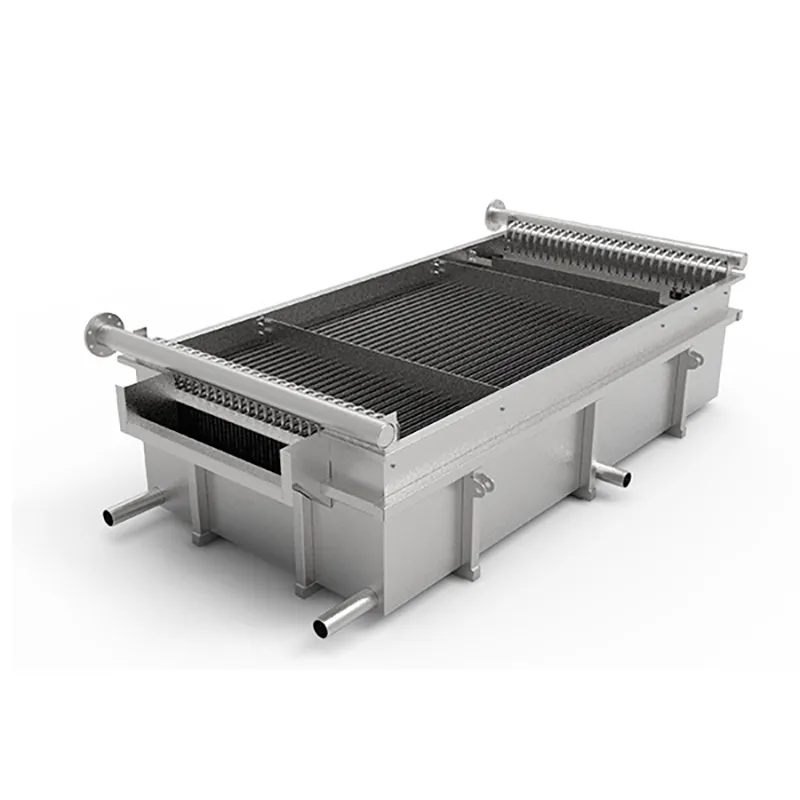
SHPHE, headquartered in Shanghai and founded in 2005, has built a reputation for engineering excellence and global reliability. With ISO9001 and ASME U certifications, the company produces a full range of plate heat exchangers, including HT-Bloc welded plate, wide gap welded, gasketed plate, PCHE, plate air preheaters, and pillow plates. Every unit undergoes rigorous pressure testing and thermal performance verification. The company exports to over 20 countries and offers free thermal design and selection services, helping clients match the right exchanger to their process conditions. Unlike generic suppliers, SHPHE provides custom-engineered solutions for non-standard pressures, temperatures, and media compatibility. For example, their HT-Bloc welded plate heat exchanger is a direct alternative to Compabloc and Alfa Laval units, offering equivalent performance at competitive pricing.
Frequently Asked Questions About Plate and Shell Heat Exchangers
1. What is the typical lifespan of a plate and shell heat exchanger?
A well-maintained plate and shell heat exchanger can last 15–25 years. Key factors include material selection, operating conditions, and cleaning frequency. Regular inspection of gaskets and welds extends service life.
2. Can a plate and shell heat exchanger handle high-viscosity fluids?
Yes, but it requires careful design. Wide gap plate designs or special plate corrugations can handle viscosities up to 10,000 cP. The manufacturer should perform thermal and hydraulic calculations for your specific fluid.
3. How do I choose between gasketed and welded plate exchangers?
Gasketed units are easier to clean and modify, suitable for moderate temperatures (up to 180°C) and pressures (up to 25 bar). Welded units handle higher temperatures and pressures, and are ideal for hazardous or aggressive fluids. Your process conditions dictate the choice.
4. What certifications should a reliable plate and shell heat exchanger manufacturer have?
Look for ISO9001 quality management, ASME U stamp for pressure vessels, and PED or CE marking for European markets. These certifications ensure design, fabrication, and testing meet international standards.
5. Can I get a custom design for non-standard flow rates?
Yes. Reputable manufacturers like SHPHE offer free thermal design and selection. You provide flow rate, inlet/outlet temperatures, pressure, and media details, and they propose an optimized exchanger with guaranteed performance.
6. Are plate and shell heat exchangers compatible with existing Alfa Laval or GEA systems?
Many manufacturers offer drop-in replacements or compatible designs. For example, SHPHE’s gasketed plate heat exchangers are dimensionally interchangeable with Alfa Laval M-series and GEA units, allowing easy retrofit without piping changes.
Request a Quote for Your Plate and Shell Heat Exchanger
To get a precise thermal design and quotation from a trusted plate and shell heat exchanger manufacturer, please provide the following details: flow rate (m³/h or kg/h), inlet and outlet temperatures, operating pressure, allowable pressure drop, media type (including viscosity and fouling tendency), and any special material or certification requirements. SHPHE’s engineering team will respond with a customized solution within 48 hours, ensuring your industrial needs are met with reliable, cost-effective heat transfer equipment.
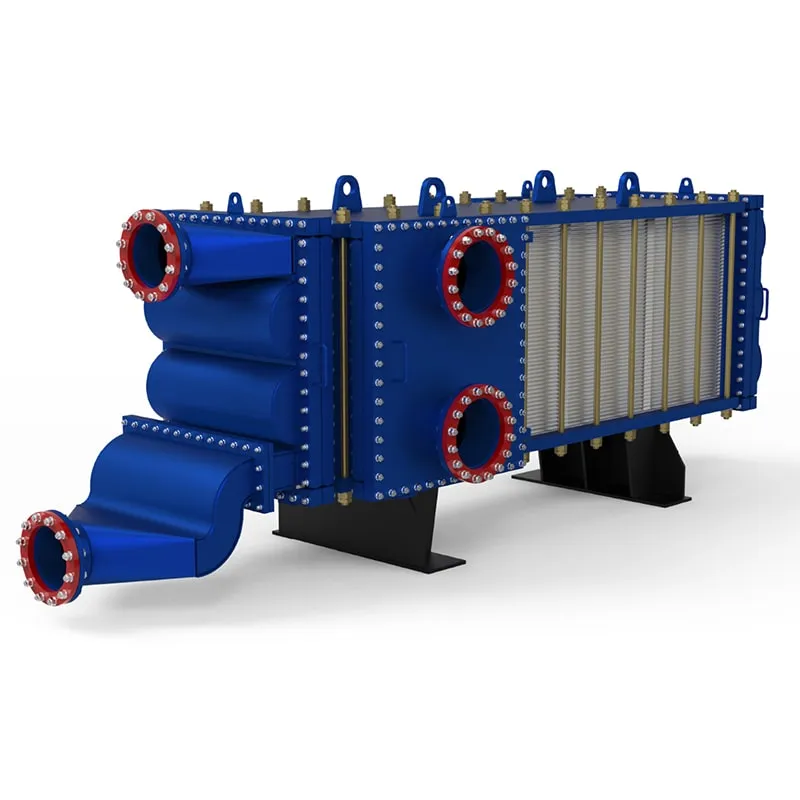
Choosing the right plate and shell heat exchanger manufacturer directly impacts your process efficiency, maintenance costs, and operational safety. With SHPHE’s two decades of experience, ISO and ASME certifications, and a comprehensive product range—from gasketed and welded plate exchangers to PCHE and plate air preheaters—you gain a partner committed to delivering high-performance thermal solutions. Contact SHPHE today with your process parameters and let their team design the optimal heat exchanger for your application.

 English EN





User Comments
Service Experience Sharing from Real Customers
Tommy R.
Plant Maintenance SupervisorWe swapped out an old shell-and-tube unit for one of their plate-and-shell exchangers last quarter. The footprint is way smaller and the heat transfer efficiency is noticeably better. Installation was straightforward, and the unit has been running smooth with zero leaks. Solid build quality.
Sarah L.
Senior Process EngineerNeeded a compact solution for a high-pressure glycol loop. This manufacturer's plate-and-shell design handled the pressure and thermal cycling without issues. Only giving 4 stars because the initial lead time was a bit longer than quoted, but the product itself is top-notch.
Mike K.
Facilities ManagerHonestly, I was skeptical about plate-and-shell vs traditional shell-and-tube for our district cooling system. But these guys proved me wrong. Easy to clean, great performance, and the customer support team was super helpful when I had sizing questions. Highly recommend.
Jenna W.
Production EngineerWe use these exchangers in a pretty aggressive dairy pasteurization line. CIP cycles are a breeze, and we haven't had any fouling issues like we did with the previous brand. The gasket design seems really robust. Definitely our go-to supplier now.