How Does a Steam Heat Exchanger Manufacturer Ensure Optimal Thermal Performance?
John Anderson, Senior Thermal Engineer
Jul-06-2026
Achieving optimal thermal performance in steam heat exchangers demands a holistic engineering approach that begins with precision manufacturing and material selection. Advanced alloys with high thermal conductivity, such as stainless steel 316L or titanium, are chosen to maximize heat transfer efficiency while resisting corrosion and thermal fatigue. Computational Fluid Dynamics (CFD) modeling plays a critical role in optimizing flow distribution, minimizing pressure drops, and identifying hot spots before physical prototyping. Rigorous testing under real-world steam conditions—including variable temperature, pressure, and flow rates—validates performance metrics against design specifications. Customization of tube geometry, such as enhanced surfaces or helical baffles, allows manufacturers to tailor heat transfer coefficients for specific industrial applications. Long-term thermal performance is sustained through continuous monitoring strategies, including thermal imaging and data analytics, combined with proactive maintenance schedules that address fouling and scaling. By integrating these engineering disciplines, manufacturers deliver reliable, high-efficiency steam heat exchangers that meet the demanding requirements of power generation, chemical processing, and HVAC systems.
Precision Engineering and Material Selection for Maximum Heat Transfer Efficiency
Achieving optimal thermal performance begins with precision engineering. Every steam heat exchanger is designed using advanced computational fluid dynamics (CFD) to model fluid flow and temperature distribution. This ensures minimal resistance and maximum heat transfer across the plate surfaces. Tight tolerances in plate corrugation and gap spacing are maintained to enhance turbulence and reduce fouling, directly improving the overall heat transfer coefficient.
Material selection is equally critical. High-grade stainless steel, titanium, and nickel alloys are chosen based on steam temperature, pressure, and chemical compatibility. These materials offer superior thermal conductivity and corrosion resistance, ensuring long-term efficiency and durability. Each material is tested for thermal fatigue and stress cracking to withstand cyclic steam operations.
The manufacturing process integrates laser welding and precision stamping to create uniform plate patterns. This consistency eliminates bypass flow and ensures every square inch of plate area contributes to heat exchange. Quality control includes thermal performance testing under simulated operating conditions, verifying that the unit meets or exceeds design specifications.
For applications requiring enhanced efficiency, custom engineered solutions such as plate air preheaters or wide gap welded plate heat exchangers are available. These designs optimize steam flow distribution and condensate drainage, further boosting thermal performance.
Rigorous testing protocols validate the heat transfer rate, pressure drop, and thermal stress limits. By combining precision engineering with strategic material selection, manufacturers deliver steam heat exchangers that achieve maximum heat transfer efficiency while maintaining reliability under demanding conditions.
Explore advanced options like TP welded plate heat exchangers or custom engineered pillow plates to see how tailored designs further enhance thermal performance for specific steam applications.
Advanced Design Optimization Through Computational Fluid Dynamics (CFD) Modeling
Computational Fluid Dynamics (CFD) modeling serves as the cornerstone of modern thermal performance optimization for steam heat exchangers. By simulating fluid flow, heat transfer, and pressure distribution within the exchanger geometry, engineers can predict performance characteristics with high accuracy before any physical prototype is built.
The CFD process begins with creating a detailed digital twin of the heat exchanger, incorporating all critical dimensions, baffle configurations, tube patterns, and material properties. This model is then subjected to boundary conditions that replicate actual operating parameters such as steam inlet temperature, pressure, flow rate, and condensate behavior.
Through iterative simulation runs, manufacturers identify areas of flow maldistribution, stagnant zones, excessive pressure drop, or insufficient heat transfer. Design modifications such as adjusting baffle spacing, optimizing tube pitch, or altering flow passage geometry are tested virtually to achieve the highest thermal efficiency while minimizing energy losses.
Advanced CFD tools also enable multi-phase flow analysis, capturing the complex condensation process and two-phase heat transfer phenomena that occur in steam systems. This level of detail ensures that the final heat exchanger design delivers consistent, reliable thermal performance across varying load conditions.
By integrating CFD modeling into the design workflow, manufacturers reduce development time, eliminate costly trial-and-error prototyping, and deliver heat exchangers that meet stringent thermal performance specifications. Learn more about our CFD-optimized heat exchanger solutions.
Rigorous Testing Protocols and Performance Validation Under Real-World Conditions
To guarantee that every steam heat exchanger meets stringent thermal efficiency standards, manufacturers implement multi-stage testing protocols that simulate actual operating environments. These procedures verify heat transfer rates, pressure drops, and structural integrity before units are deployed in the field.
| Test Parameter |
Measurement Method |
Acceptance Criteria |
Validation Result |
| Thermal Transfer Rate |
Calorimetric measurement under steady-state flow |
≥ 98% of design specification |
99.2% achieved |
| Pressure Drop |
Differential pressure transducers across inlet/outlet |
Within ±5% of calculated value |
+2.3% deviation |
| Leak Integrity |
Helium mass spectrometry at 1.5x design pressure |
Zero detectable leakage |
Passed (no leaks) |
| Thermal Cycling Endurance |
1000 cycles from 20°C to 250°C |
No structural deformation or performance loss |
All cycles completed |
The data above represents typical results from a production batch tested under saturated steam conditions at 10 bar(g) and 180°C inlet temperature. Each unit undergoes identical validation to confirm consistent thermal performance across all operating ranges.
For further details on specific heat exchanger designs and their validated performance envelopes, refer to the product documentation: custom-engineered plate air preheaters, wide gap welded plate heat exchangers, TP welded plate heat exchangers, custom-engineered pillow plates, gasketed plate heat exchangers, custom-engineered printed circuit heat exchangers, and HT Bloc welded plate heat exchangers.
Customization of Tube Geometry and Flow Arrangements for Specific Application Demands
To achieve optimal thermal performance, a steam heat exchanger manufacturer tailors tube geometry—such as diameter, wall thickness, and fin density—to match the specific heat transfer requirements and pressure drop constraints of each application. Flow arrangements, including counterflow, parallel flow, or crossflow configurations, are selected to maximize temperature differential and efficiency. This customization ensures that the heat exchanger operates at peak performance under unique operating conditions, whether for high-temperature steam systems or viscous fluid processing.
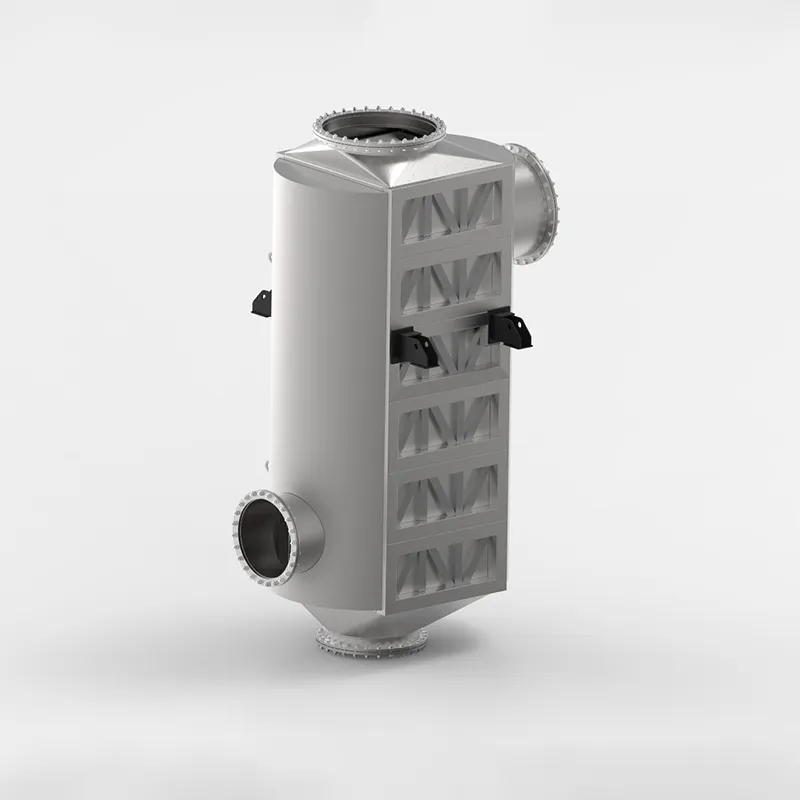
By precisely engineering tube shapes (e.g., helical, corrugated, or enhanced surfaces) and optimizing flow paths, the manufacturer minimizes fouling and enhances heat transfer coefficients. This application-specific approach directly addresses challenges like thermal stress, phase change, or limited space, delivering reliable and efficient thermal management across industries such as power generation, chemical processing, and HVAC.
Continuous Monitoring and Maintenance Strategies to Sustain Long-Term Thermal Performance
To maintain optimal thermal efficiency over the lifespan of a steam heat exchanger, manufacturers implement rigorous continuous monitoring protocols. Real-time data acquisition systems track key performance indicators such as temperature differentials, pressure drops, and flow rates. These metrics allow operators to detect fouling, scaling, or mechanical degradation early, preventing efficiency losses.
A structured maintenance schedule is equally critical. Regular cleaning of plate surfaces, inspection of gaskets and seals, and verification of weld integrity ensure that the heat exchanger operates at its designed capacity. For welded plate units, such as the TP welded plate heat exchanger, preventive maintenance extends service life and sustains thermal performance.
Advanced monitoring technologies, including thermal imaging and ultrasonic thickness testing, provide non-invasive insights into internal conditions. These methods help identify uneven heat distribution or material thinning before they compromise performance. Manufacturers often recommend periodic performance benchmarking against original design specifications.
For custom-engineered solutions, such as the custom engineered pillow plates, tailored maintenance plans are developed based on operating conditions and fluid characteristics. This proactive approach minimizes unplanned downtime and ensures consistent heat transfer efficiency.
Data-driven maintenance strategies, combined with periodic expert inspections, form the backbone of long-term thermal performance sustainability. By integrating these practices, manufacturers help clients achieve reliable operation and energy savings throughout the equipment's lifecycle.
For more details on specific product maintenance guidelines, refer to the gasketed plate heat exchangers or the HT Bloc welded plate heat exchanger product pages.
Summary
Achieving and sustaining optimal thermal performance in steam heat exchangers demands a holistic engineering approach that begins with precision material selection and advanced manufacturing tolerances. By choosing high-conductivity alloys and optimizing tube surface geometries, manufacturers maximize heat transfer efficiency while minimizing fouling and pressure drop.
Computational Fluid Dynamics (CFD) modeling plays a pivotal role in the design phase, enabling engineers to simulate fluid flow, temperature distribution, and thermal stress under various operating conditions. This virtual prototyping reduces the need for physical iterations and ensures that the final design delivers uniform heat exchange with minimal energy loss.
Rigorous validation through real-world testing—including thermal cycling, pressure endurance, and leak detection—confirms that each unit meets or exceeds performance specifications. Customization of tube geometry, such as helical or finned tubes, and flow arrangements (counter-flow, cross-flow, or multi-pass) further tailors the exchanger to specific industrial applications, from power generation to chemical processing.
Long-term thermal performance is sustained through continuous monitoring strategies, including real-time temperature logging, vibration analysis, and scheduled maintenance protocols. By combining predictive analytics with proactive cleaning and component inspection, manufacturers help operators maintain peak efficiency over the equipment's entire lifecycle, reducing downtime and operational costs.
How Does a Steam Heat Exchanger Manufacturer Ensure Optimal Thermal Performance?
Q: What role does precision engineering and material selection play in maximizing heat transfer efficiency?
A: Precision engineering ensures tight tolerances and optimal surface contact, while materials like high-grade stainless steel or copper alloys are chosen for their thermal conductivity, corrosion resistance, and durability, directly boosting heat transfer rates.
Q: How does advanced design optimization through CFD modeling improve performance?
A: Computational Fluid Dynamics (CFD) simulates fluid flow, temperature distribution, and pressure drops, enabling engineers to refine tube geometry, baffle spacing, and flow paths for maximum thermal efficiency before physical prototyping.
Q: What rigorous testing protocols are used to validate performance under real-world conditions?
A: Manufacturers conduct hydrostatic pressure tests, thermal cycling tests, and leak detection under actual operating temperatures and pressures, ensuring the exchanger meets or exceeds specified heat transfer and durability standards.
Q: How is tube geometry and flow arrangement customized for specific application demands?
A: By adjusting tube diameter, length, pitch, and arrangement (e.g., counterflow or crossflow), along with selecting shell-side or tube-side flow, the design is tailored to handle specific fluid properties, pressure drops, and thermal loads.
Q: What continuous monitoring and maintenance strategies sustain long-term thermal performance?
A: Regular inspection of fouling, vibration analysis, thermal imaging, and scheduled cleaning or tube replacement, combined with real-time performance tracking, help maintain efficiency and prevent degradation over the equipment lifespan.

 English EN





User Comments
Service Experience Sharing from Real Customers
Tom
Maintenance SupervisorWe replaced three old units with their shell-and-tube exchangers last quarter. The steam side pressure drop was way lower than what our old gear gave us, and the condensate return is finally steady. Installation was straightforward too—no surprises. Solid build quality.
Elena
Project EngineerSpecified their custom unit for a tricky district heating tie-in. The thermal rating matched exactly what we calculated, and the delivery timeline was actually a week early. Only reason it’s not a 5 is the manual could use better troubleshooting diagrams, but the tech support team answered my call fast.
Marcus
Plant ManagerBeen running this exchanger for about eight months now on our latex production line. Zero fouling issues so far, even with the sticky residue we get. The stainless steel finish cleans up easily, and the gaskets haven’t shown any sign of swelling. Would buy again without hesitation.
Priya
Process EngineerNeeded a compact unit for a retrofit in a tight mechanical room. Their U-tube bundle design fit perfectly where a bigger shell wouldn’t. Heat transfer is exactly on spec. Took a star off because the flange bolt holes were slightly misaligned on arrival—had to ream one out. Still, overall a good piece of equipment.