Unmatched Thermal Management with Microchannel Heat Exchanger Technology
Microchannel heat exchanger technology is reshaping how process engineers approach thermal management in demanding industrial applications. This article explores the working principles, key performance parameters, and practical selection criteria for microchannel heat exchangers, with a focus on how SHPHE’s engineered solutions deliver reliable, high-efficiency heat transfer. Whether you are upgrading existing systems or specifying new equipment, understanding the nuances of microchannel design can help you achieve tighter temperature control, reduced footprint, and lower operating costs.
What Makes a Microchannel Heat Exchanger Different?
A microchannel heat exchanger uses a series of small, parallel channels—typically with hydraulic diameters between 0.5 mm and 3 mm—to transfer heat between two fluids. This design dramatically increases the surface-area-to-volume ratio compared to conventional shell-and-tube or gasketed plate units. For process engineers, the immediate benefit is higher heat transfer coefficients in a much smaller package. In many cases, a microchannel heat exchanger can achieve the same thermal duty as a traditional unit while occupying 40–60% less space.
The compact geometry also reduces the internal fluid inventory, which is critical when handling expensive or hazardous process media. Lower hold-up volume means faster response to temperature changes and less material at risk in the event of a leak. For purchasing managers, this translates to lower capital expenditure on supporting structures and reduced insurance premiums for high-risk applications.
How Does Microchannel Heat Exchanger Technology Work in Practice?
In a typical microchannel heat exchanger, the primary fluid flows through hundreds of narrow channels etched or formed into metal plates, while the secondary fluid passes over the outside of those plates. The thin walls between channels—often just 0.3 mm to 0.8 mm thick—minimize conductive resistance. Combined with the turbulent flow regime induced by the small channel geometry, overall heat transfer coefficients can reach 3,000–7,000 W/m²·K for liquid-to-liquid applications and 500–1,500 W/m²·K for gas-to-liquid duties.
One common process scenario involves cooling a hot process stream from 120°C down to 60°C using cooling water at 30°C. A microchannel heat exchanger can handle this with a temperature approach as low as 3–5°C, whereas a shell-and-tube unit might struggle below 8–10°C. The result is either a smaller heat exchanger for the same duty or the ability to recover more heat for preheating or waste heat recovery loops.
Key Features and Typical Parameter Ranges
- Channel dimensions: 0.5–3 mm hydraulic diameter, with plate thickness from 0.3 mm to 1.0 mm.
- Operating pressure: Up to 30 bar for standard designs; higher with reinforced construction.
- Temperature range: –40°C to +250°C, depending on gasket or welded sealing method.
- Materials: Stainless steel 304/316L, titanium, Hastelloy, and nickel alloys for corrosive media.
- Flow configuration: Countercurrent, cocurrent, or crossflow, with single-pass or multi-pass arrangements.
- Fouling resistance: Typically 0.00005–0.0002 m²·K/W for clean fluids; wider gap variants available for dirty streams.
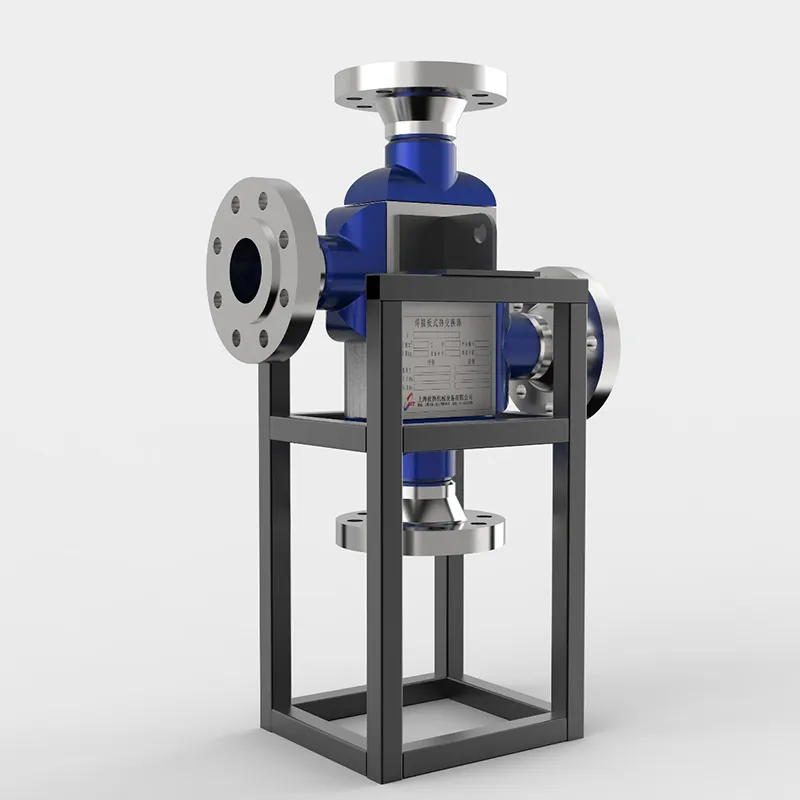
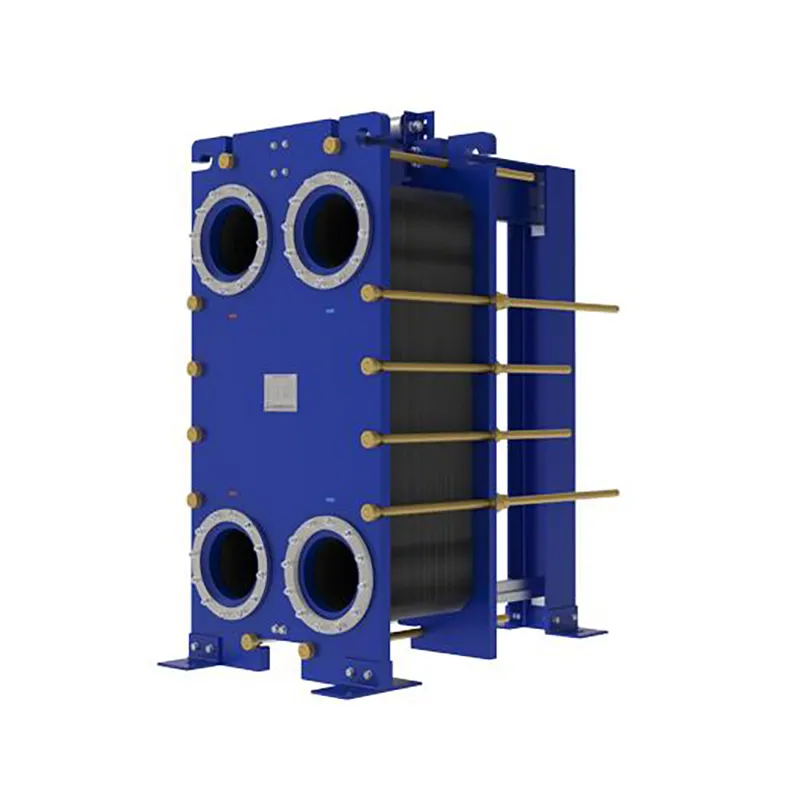
SHPHE offers microchannel heat exchanger designs that are fully compatible with existing piping and control systems. For applications requiring frequent cleaning, the gasketed plate version allows easy disassembly. For high-pressure or high-temperature duties, our TP Welded Plate Heat Exchanger provides a permanent, leak-tight seal.
Applications and Recommended Solutions
Microchannel heat exchangers are widely used in chemical processing, oil and gas, pharmaceutical manufacturing, food and beverage, and HVAC systems. Their compact size makes them ideal for retrofit projects where floor space is limited. For example, in a refinery, replacing a bulky shell-and-tube cooler with a microchannel unit can free up space for additional process equipment without expanding the plant footprint.
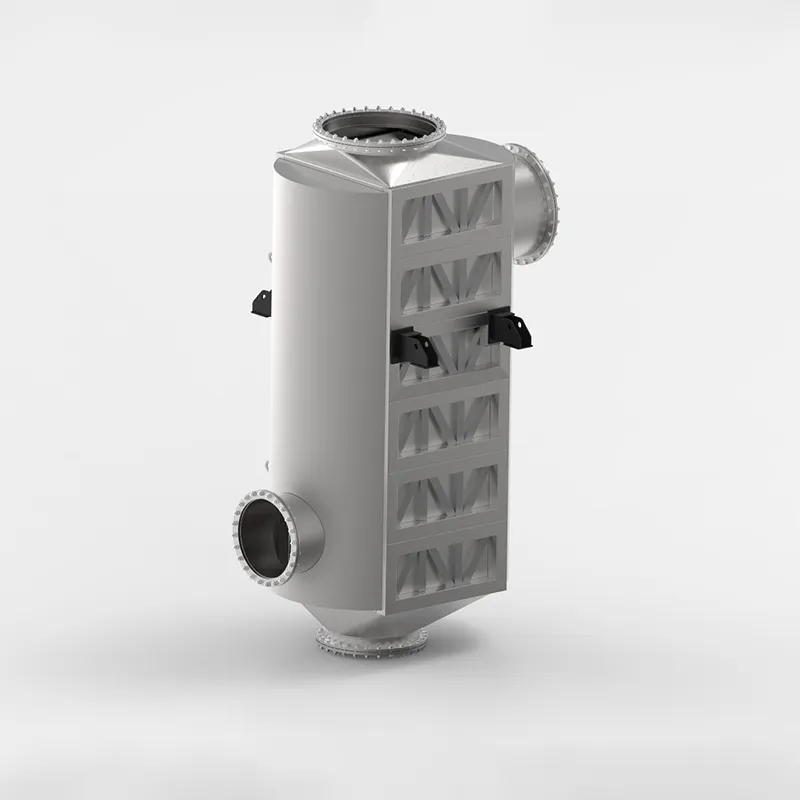
For gas-to-liquid duties such as intercoolers or aftercoolers, our Wide Gap Welded Plate Heat Exchanger handles particulates and viscous fluids without clogging. When dealing with ultra-high pressures or corrosive chemicals, the Printed Circuit Heat Exchanger (PCHE) offers superior strength and compactness. For standard water-to-water or steam heating, our Gasketed Plate Heat Exchangers provide a cost-effective, serviceable solution.
Why SHPHE for Your Microchannel Heat Exchanger Needs?
SHPHE has been designing and manufacturing plate heat exchangers in Shanghai since 2005. We export to more than 20 countries and hold ISO9001 and ASME U certifications. Our product range includes HT-Bloc/TP Welded Plate Heat Exchangers, Wide Gap Welded Plate Heat Exchangers, Gasketed Plate Heat Exchangers, PCHE, Plate Air Preheaters, and Pillow Plates. Every unit is backed by free thermal design and selection service, ensuring you get the right microchannel heat exchanger for your specific process conditions.
We do not claim to be a direct replacement for every brand on the market, but our designs are compatible with Alfa Laval, Compabloc, and GEA interfaces, making retrofit straightforward. Our engineering team works closely with your process engineers to optimize channel geometry, material selection, and flow arrangement for maximum thermal efficiency and long-term reliability.
Frequently Asked Questions About Microchannel Heat Exchangers
Q1: Can a microchannel heat exchanger handle dirty or fouling fluids?
Yes, but with limitations. Standard microchannel designs work best with clean fluids. For streams containing particles or sticky deposits, SHPHE offers wide gap variants with channel spacing up to 5 mm, which reduce clogging risk. Regular cleaning cycles should be planned based on the specific fouling tendency of your process fluid.
Q2: What is the typical pressure drop across a microchannel heat exchanger?
Pressure drop depends on channel geometry, fluid velocity, and viscosity. For liquid applications, expect 0.5–2.5 bar per pass. For gases, pressure drop is lower, typically 0.1–0.5 bar. Our thermal design service optimizes the balance between heat transfer and allowable pressure drop to match your pump or compressor capacity.
Q3: How does a microchannel heat exchanger compare to a shell-and-tube unit in terms of cost?
Initial purchase cost is often 10–20% lower for equivalent duty, but the real savings come from reduced installation costs, smaller footprint, and lower maintenance requirements. Over a 10-year lifecycle, total cost of ownership can be 25–40% less, especially when floor space is at a premium.
Q4: Can I use a microchannel heat exchanger for steam heating?
Absolutely. Microchannel designs are excellent for steam-to-liquid heating because the high heat transfer coefficient allows rapid condensation. Our HT-Bloc Welded Plate Heat Exchanger is particularly well-suited for steam applications up to 250°C and 25 bar.
Q5: What materials are available for corrosive environments?
We offer stainless steel 304/316L as standard, with titanium, Hastelloy C276, and nickel alloys for aggressive media. For applications involving chlorides or sulfuric acid, material selection is critical. Our engineers will recommend the most cost-effective alloy based on your fluid composition and operating temperature.
Q6: How long does it take to get a custom microchannel heat exchanger?
Typical lead time for a custom unit is 6–10 weeks after design approval. For standard sizes, we can ship within 2–4 weeks. We also offer expedited service for urgent projects. The free thermal design stage usually takes 2–3 business days once you provide your process parameters.
Request a Quote for Your Microchannel Heat Exchanger
To get a precise thermal design and quotation for your microchannel heat exchanger, please provide the following details: flow rate (for both hot and cold sides), inlet and outlet temperatures, operating pressure, and the type of media involved (including any known fouling or corrosive properties). Our team will prepare a customized solution with performance curves, dimensional drawings, and a firm price within three working days.
Contact SHPHE today to discuss how microchannel heat exchanger technology can improve your thermal management efficiency. We look forward to helping you select the right equipment for your next project.

 English EN





User Comments
Service Experience Sharing from Real Customers
Mike
HVAC Systems EngineerI swapped out an old shell-and-tube unit for this microchannel heat exchanger on a rooftop unit last month. The weight difference is insane — my back actually thanked me. Performance-wise, the heat transfer is noticeably better, and I haven't seen any fouling issues yet. Just make sure your water quality is decent; it's not as forgiving as copper coils.
Sophia
Process Development ChemistWe integrated this into a lab-scale continuous flow reactor setup. The temperature control is incredibly tight — we're talking ±0.5°C even at high flow rates. The only reason it's not a perfect five is that the mounting bracket design could be more intuitive for our small rig. Still, for precision cooling in a compact space, it's hard to beat.
Elena
Data Center Facility ManagerWe retrofitted our cooling loops with these for a pilot row of high-density racks. The pressure drop is lower than I expected, and our PUE dropped by nearly 0.08 in the first week. Installation was straightforward, though you definitely need a torque wrench — don't overtighten those headers. Highly recommend for anyone dealing with space constraints.
Raj
Senior Refrigeration TechnicianI've installed about a dozen of these on walk-in coolers. They work great for heat rejection when they're clean, but I've had two units clog up with debris from a dirty condenser coil. The aluminum fins are efficient but fragile — you have to be really careful with coil cleaner. Good product if you maintain it religiously, but not for rough environments.