Critical Role of Methanol Plant Heat Exchanger in Process Optimization
In methanol production, the heat exchanger is not just a supporting component—it directly determines energy efficiency, operating cost, and plant reliability. This article examines how a properly selected methanol plant heat exchanger can optimize heat recovery, reduce steam consumption, and extend equipment life. We cover working principles, key parameters, common challenges, and practical solutions for process engineers and procurement managers looking to improve plant performance.
What Makes a Methanol Plant Heat Exchanger Critical for Energy Recovery?
Methanol synthesis is highly exothermic, generating large amounts of heat that must be recovered or dissipated. A methanol plant heat exchanger handles duties such as syngas cooling, reactor effluent heat recovery, reboiler heating, and distillation column condensing. When the heat exchanger underperforms, the plant either wastes thermal energy or requires additional steam, directly increasing operating costs. For a typical 500,000-ton-per-year methanol plant, a 10% improvement in heat recovery can translate into annual savings of several hundred thousand dollars in fuel or steam costs.
The challenge lies in the process conditions: high pressure (up to 100 bar), moderate to high temperatures (150–300°C), and the presence of hydrogen, carbon monoxide, and trace catalyst fines. Standard gasketed plate heat exchangers often fail under these conditions due to gasket degradation or leakage. That is why many plants now specify welded plate heat exchangers or compact brazed units for critical methanol services.
How Does a Methanol Plant Heat Exchanger Work in the Synthesis Loop?
In a typical methanol loop, the reactor outlet gas at around 250–280°C must be cooled to condense crude methanol. A series of heat exchangers performs this duty: first, the hot reactor effluent preheats the incoming syngas in a feed-effluent exchanger; then, a water-cooled or air-cooled condenser brings the temperature down to 40–50°C. The methanol plant heat exchanger in the feed-effluent position is the most thermally stressed, as it handles a large temperature difference (often 100–150°C) and high pressure on both sides.
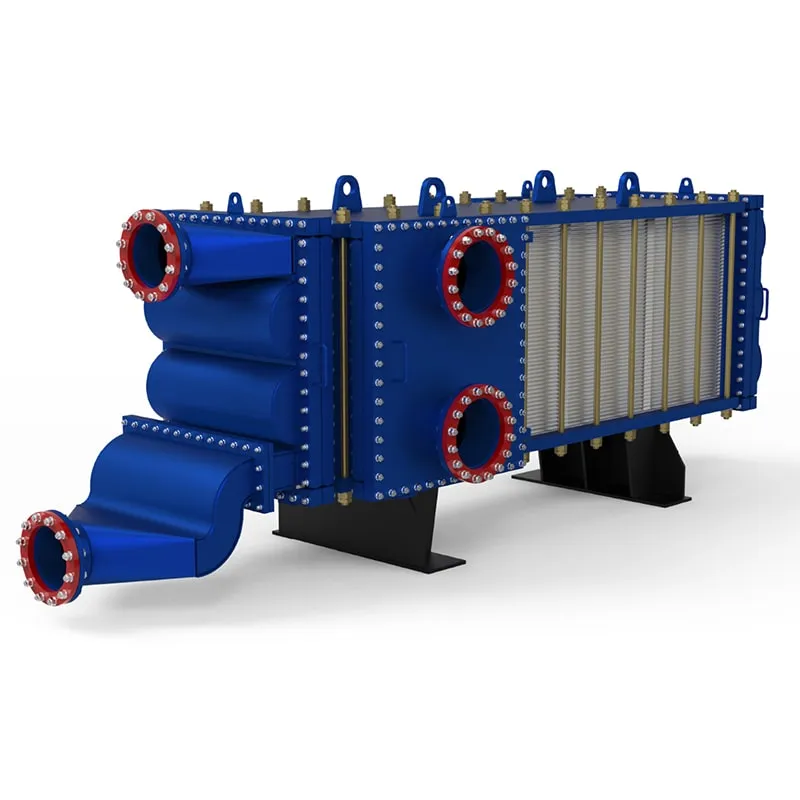
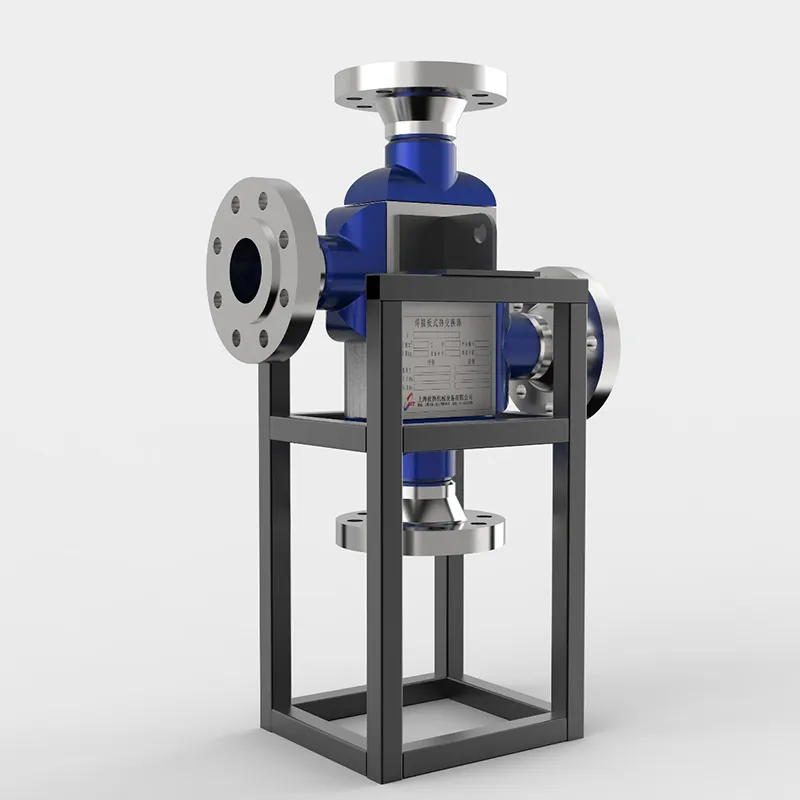
Welded plate heat exchangers, such as the HT-Bloc or TP series from SHPHE, are well-suited for this application. They use laser-welded plate pairs to form all-metal flow channels, eliminating gasket failure risks. The countercurrent flow arrangement achieves temperature approaches as close as 5°C, maximizing heat recovery. For example, a TP Welded Plate Heat Exchanger can handle design pressures up to 100 bar and temperatures up to 350°C, making it a reliable choice for methanol synthesis loop duties.
Key Features and Typical Parameter Ranges for Methanol Service
When evaluating a methanol plant heat exchanger, engineers should focus on the following performance indicators and design features:
- Design pressure: Typically 60–100 bar for synthesis loop exchangers; some applications require up to 150 bar.
- Design temperature: 200–350°C, with peak transient temperatures up to 400°C during startup.
- Heat transfer coefficient: 800–1500 W/m²·K for gas-to-gas duties; 2000–4000 W/m²·K for gas-to-liquid or condensing services.
- Pressure drop: Usually limited to 0.3–1.0 bar per side to minimize compressor load.
- Material compatibility: Stainless steel 304L or 316L for standard services; duplex or super-austenitic grades for corrosive streams containing CO₂ or H₂S.
- Fouling resistance: Methanol streams can deposit catalyst fines and byproduct wax; wide-gap plate designs or enhanced surface patterns reduce fouling buildup.
The table below summarizes common parameter ranges for methanol plant heat exchangers in different process sections:
| Process Section |
Pressure (bar) |
Temperature (°C) |
Typical Duty (MW) |
Recommended Type |
| Feed-effluent exchanger |
60–100 |
200–300 |
5–20 |
Welded plate (HT-Bloc/TP) |
| Reactor effluent cooler |
50–80 |
150–250 |
3–10 |
Wide gap welded plate |
| Distillation reboiler |
5–15 |
120–160 |
2–8 |
Gasketed or welded plate |
| Condenser (water/air) |
5–10 |
40–80 |
5–15 |
Gasketed plate or PCHE |
What Are the Most Common Failure Modes and How to Prevent Them?
In methanol plants, heat exchanger failures often stem from three root causes: thermal fatigue, fouling, and corrosion. Thermal fatigue occurs when rapid temperature changes during startup or shutdown create differential expansion between plates and nozzles. A methanol plant heat exchanger with flexible nozzle connections or expansion bellows can mitigate this risk. Fouling from catalyst fines and heavy hydrocarbons reduces heat transfer and increases pressure drop. Wide-gap welded plate heat exchangers, with channel gaps of 5–16 mm, allow particulates to pass through without blocking. Corrosion is typically caused by trace chlorides or acidic condensate; selecting the correct material (e.g., 316L or duplex) and maintaining proper pH control in cooling water are essential preventive measures.
Regular inspection intervals should be based on service severity. For feed-effluent exchangers, annual internal inspection is recommended; for less severe services, every two to three years may suffice. Non-destructive testing methods such as ultrasonic thickness measurement and helium leak testing help detect early-stage degradation.
Applications and Recommended Solutions for Methanol Plants
Different sections of a methanol plant require different heat exchanger configurations. Below are common applications and the recommended product types:
- Syngas preheating and reactor effluent cooling: Use a welded plate heat exchanger (HT-Bloc or TP series) for high pressure and temperature. These units are compatible with Alfa Laval Compabloc designs and offer a compact footprint.
- Crude methanol condensation: A gasketed plate heat exchanger or printed circuit heat exchanger (PCHE) works well for clean condensing duties at moderate pressures. PCHE units are especially suitable for offshore or space-constrained plants.
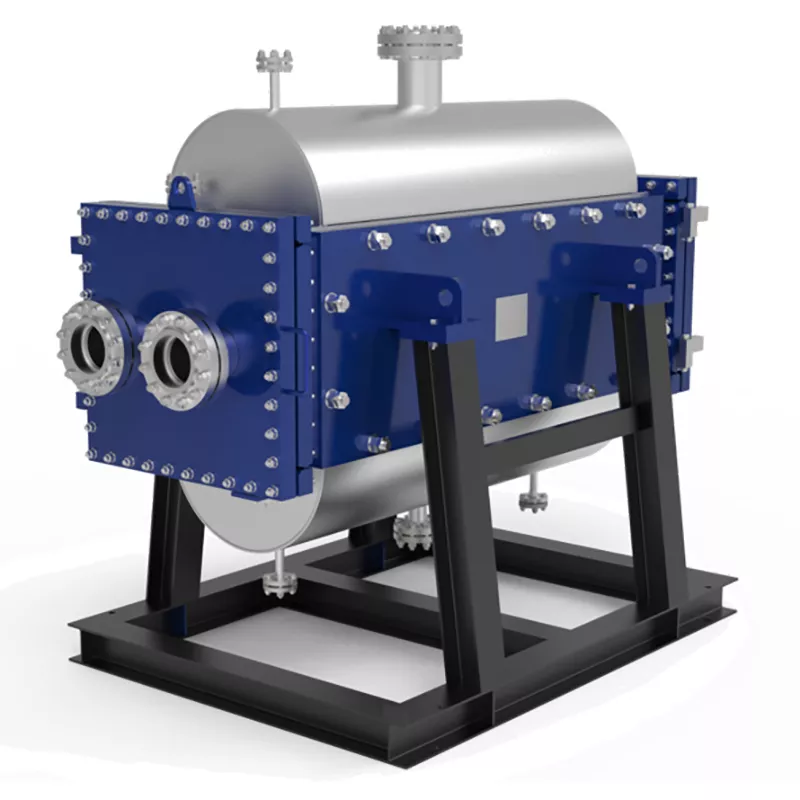
- Distillation column reboilers and condensers: Wide-gap welded plate heat exchangers handle dirty streams and provide easy cleaning access. They are an alternative to GEA wide-gap units.
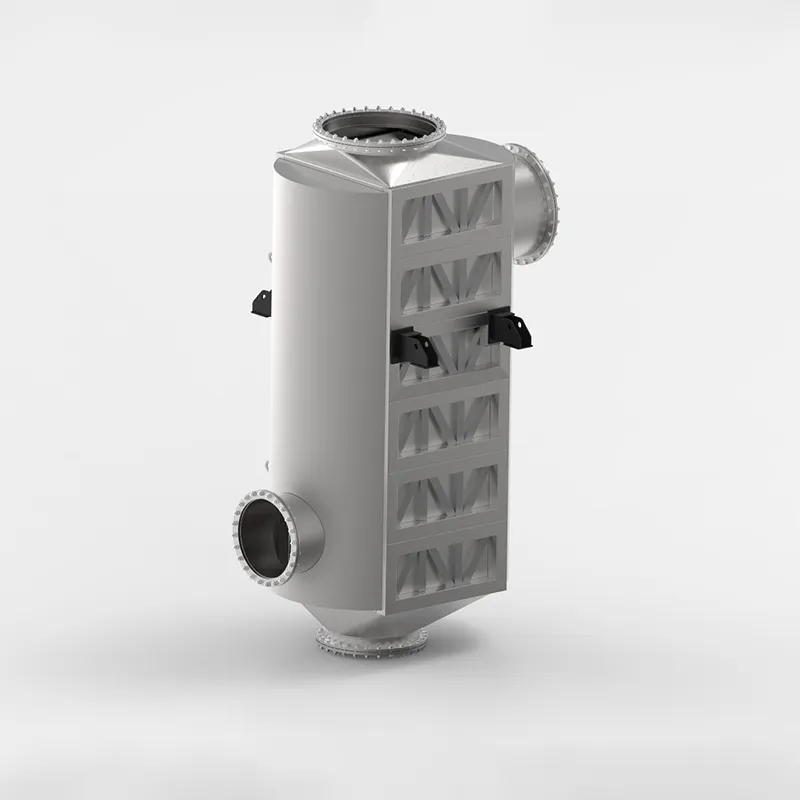
- Waste heat recovery from flue gas: Plate air preheaters recover heat from reformer or boiler flue gas to preheat combustion air, improving overall thermal efficiency by 5–8%.
- Heat tracing and tank heating: Pillow plates offer a simple, leak-proof solution for heating methanol storage tanks or process vessels.
For each application, SHPHE provides free thermal design and selection services. Engineers can submit process conditions and receive a detailed proposal within 48 hours. This service is available for both new projects and retrofit upgrades.
Why SHPHE for Your Methanol Plant Heat Exchanger Needs?
SHPHE is a Shanghai-based plate heat exchanger manufacturer founded in 2005. The company exports to more than 20 countries and holds ISO9001 and ASME U certifications. Its product portfolio includes HT-Bloc and TP welded plate heat exchangers, wide-gap welded plate heat exchangers, gasketed plate heat exchangers, printed circuit heat exchangers (PCHE), plate air preheaters, and pillow plates. All units are designed and manufactured in-house, with full traceability of materials and welding procedures.
For methanol plant heat exchanger applications, SHPHE offers several advantages:
- Proven track record in methanol plants across Asia, the Middle East, and South America.
- Custom-engineered solutions for non-standard pressure, temperature, and material requirements.
- Short lead times—typically 8–12 weeks for welded plate units.
- Competitive pricing without compromising quality, backed by a 12-month warranty.
- Technical support from experienced process engineers who understand methanol synthesis loop dynamics.
Whether you need a replacement unit for an existing methanol plant or a complete heat exchanger package for a new grassroots project, SHPHE can deliver a reliable, cost-effective solution.
Frequently Asked Questions About Methanol Plant Heat Exchangers
Q1: What is the typical lifespan of a methanol plant heat exchanger?
A: A well-designed and properly maintained methanol plant heat exchanger typically lasts 10–15 years. Welded plate units often exceed 15 years because they have no gaskets to degrade. Regular cleaning and corrosion monitoring are key to achieving maximum service life.
Q2: Can a gasketed plate heat exchanger be used in methanol synthesis service?
A: Gasketed plate heat exchangers are generally not recommended for high-pressure synthesis loop duties above 30 bar. For pressures above 30 bar, welded plate or PCHE designs are preferred. Gasketed units are suitable for low-pressure services such as cooling water circuits or distillation condensers.
Q3: How do I select the right material for a methanol plant heat exchanger?
A: For clean syngas and methanol streams, 304L or 316L stainless steel is sufficient. If the feed contains chlorides, H₂S, or CO₂, consider duplex stainless steel (e.g., 2205) or super-austenitic grades. Always verify the compatibility with the actual process chemistry through a corrosion review.
Q4: What is the advantage of a wide-gap welded plate heat exchanger over a standard welded plate?
A: Wide-gap designs have channel gaps of 5–16 mm, compared to 2–5 mm for standard plates. This allows particles and viscous fluids to pass through without clogging. For methanol plants with catalyst carryover or waxy byproducts, wide-gap units reduce fouling and extend cleaning intervals.
Q5: How do I calculate the required heat transfer area for a methanol plant heat exchanger?
A: The required area is calculated using the basic heat transfer equation: Q = U × A × ΔTlm. You need the duty (Q), overall heat transfer coefficient (U), and log mean temperature difference (ΔTlm). For accurate results, provide detailed process data including flow rates, inlet/outlet temperatures, and allowable pressure drops. SHPHE offers free thermal design to perform this calculation.
Q6: Can I retrofit a shell-and-tube heat exchanger with a plate heat exchanger in an existing methanol plant?
A: Yes, retrofitting is common and often yields significant space and efficiency benefits. Plate heat exchangers typically occupy 30–50% less footprint than shell-and-tube units. However, you must verify that the plate unit can handle the existing piping loads and that the pressure drop is acceptable. A site survey is recommended before finalizing the retrofit design.
Request a Quote for Your Methanol Plant Heat Exchanger
To receive a tailored proposal for your methanol plant heat exchanger, please provide the following process parameters: flow rate (kg/h or m³/h), inlet and outlet temperatures, operating pressure, allowable pressure drop, and media composition (including any corrosive components or solids). Our engineering team will review your requirements and deliver a thermal design, mechanical drawing, and commercial quotation within two business days.
Contact us through the website or send your inquiry directly to our sales team. We look forward to helping you optimize your methanol plant heat exchanger performance and reduce your operating costs.

 English EN





User Comments
Service Experience Sharing from Real Customers
liam
Senior Process EngineerWe swapped out an old shell-and-tube unit on our methanol synthesis loop with this exchanger. The thermal performance is spot-on—our delta T across the reactor feed dropped by nearly 4°C, which translated into a solid yield bump. Fabrication quality is clean, no weld defects on the tube-to-tubesheet joints. Only gripe is the delivery lead time was a bit tight, but the project manager kept us in the loop.
nina
Maintenance SupervisorBeen running this unit for six months now in our methanol plant's reboiler service. It handles the fouling from heavy ends way better than the old design—we've gone from monthly cleaning to every three months. The gasket material seems to hold up against the methanol and water mix without weeping. I'd give five stars if the drain port was a bit larger; it's a pain to rod out during turnarounds.
marcus
Project ManagerSpec'd this heat exchanger for a grassroots methanol plant expansion. The vendor worked with us on the nozzle orientation to fit our tight skid layout, and the ASME U-stamp paperwork was spotless. Commissioning went smooth—no leaks at the hydrotest, and the control valves settled in right at the design outlet temp. Saved us at least two weeks on schedule compared to the previous supplier's typical delivery.
alex
Shift OperatorIt does the job for preheating the methanol feed before the reformer, but I've noticed the pressure drop creeps up faster than the old unit after a few weeks online. Maybe it's the baffle spacing? Not a deal-breaker, but it means we nudge the recycle compressor a bit harder. The nameplate data matches what's in the DCS, so at least the engineering specs are honest. Just wish it was a little more forgiving on the fouling side.