Maximizing Thermal Performance in Power Plant Plate Heat Exchanger Systems
In power generation, every degree of temperature recovery directly impacts fuel efficiency and operating costs. Plate heat exchangers are critical for condensing steam, cooling lubricating oil, and preheating feedwater. This article explores how to maximize thermal performance in power plant plate heat exchanger systems, covering design principles, common challenges, and practical selection criteria for engineers and procurement managers.
Power plants operate under demanding thermal cycles where heat exchanger efficiency determines overall plant output. Whether you are retrofitting an existing unit or specifying new equipment, understanding the factors that drive thermal performance is essential. A well-designed plate heat exchanger can reduce approach temperatures to as low as 1–2°C, significantly improving Rankine cycle efficiency.
What Are the Key Factors Affecting Heat Transfer in Power Plant Heat Exchangers?
Several variables influence the thermal performance of plate heat exchangers in power plant applications:
- Flow arrangement: Counter-current flow provides the highest log mean temperature difference (LMTD), maximizing heat recovery.
- Plate geometry: Chevron patterns with angles between 30° and 60° create turbulence, enhancing convective heat transfer coefficients.
- Material selection: Stainless steel 316L or titanium plates resist corrosion from cooling water while maintaining thermal conductivity.
- Fouling resistance: Deposits from untreated water or oil degradation reduce heat transfer; proper cleaning cycles and wide-gap designs mitigate this.
- Pressure drop constraints: Higher flow velocity improves heat transfer but increases pumping costs; optimal velocity typically ranges from 0.5 to 2.0 m/s.
How Does Plate Heat Exchanger Design Improve Condenser and Cooler Performance?
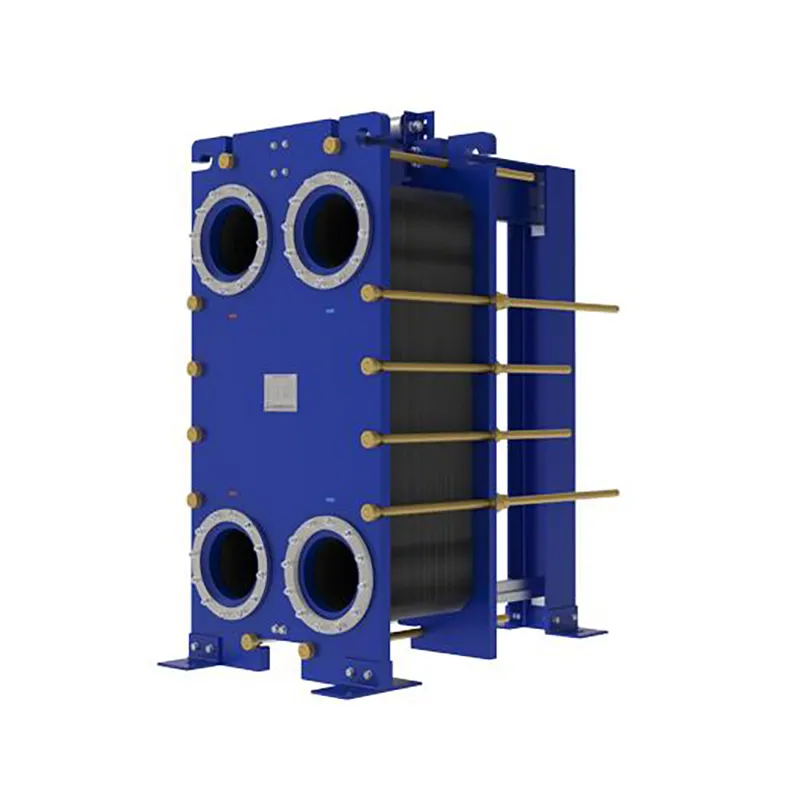
In power plants, plate heat exchangers serve as surface condensers, lube oil coolers, and intercoolers. Their compact design offers a heat transfer area up to five times greater than shell-and-tube units per unit volume. For example, a gasketed plate heat exchanger can handle steam condensation at low pressure drops while maintaining tight temperature control. The close plate spacing (typically 2–5 mm) ensures high turbulence even at moderate flow rates, which is ideal for low-viscosity fluids like condensate or cooling water.
Common Applications of Plate Heat Exchangers in Power Generation
Plate heat exchangers are used in multiple subsystems within a power plant:
- Condenser systems: Rejecting latent heat from turbine exhaust steam to cooling water.
- Lube oil cooling: Maintaining bearing oil temperatures below 55°C to ensure turbine reliability.
- Feedwater preheating: Recovering waste heat from flue gas or intermediate steam cycles.
- Closed-loop cooling: Isolating process fluids from raw water sources using intermediate heat exchangers.
Typical Parameter Ranges for Power Plant Plate Heat Exchangers
The following table summarizes commonly accepted operating ranges for plate heat exchangers in power plant service:
| Parameter |
Typical Range |
| Operating temperature |
-20°C to 200°C (gasketed); up to 350°C (welded) |
| Design pressure |
Up to 30 bar (gasketed); up to 100 bar (welded) |
| Heat transfer coefficient |
3,000–7,000 W/m²·K (water-to-water) |
| Plate material thickness |
0.4–0.8 mm |
| Fouling factor |
0.00005–0.0002 m²·K/W |
Why Choose SHPHE for Power Plant Heat Exchanger Solutions?
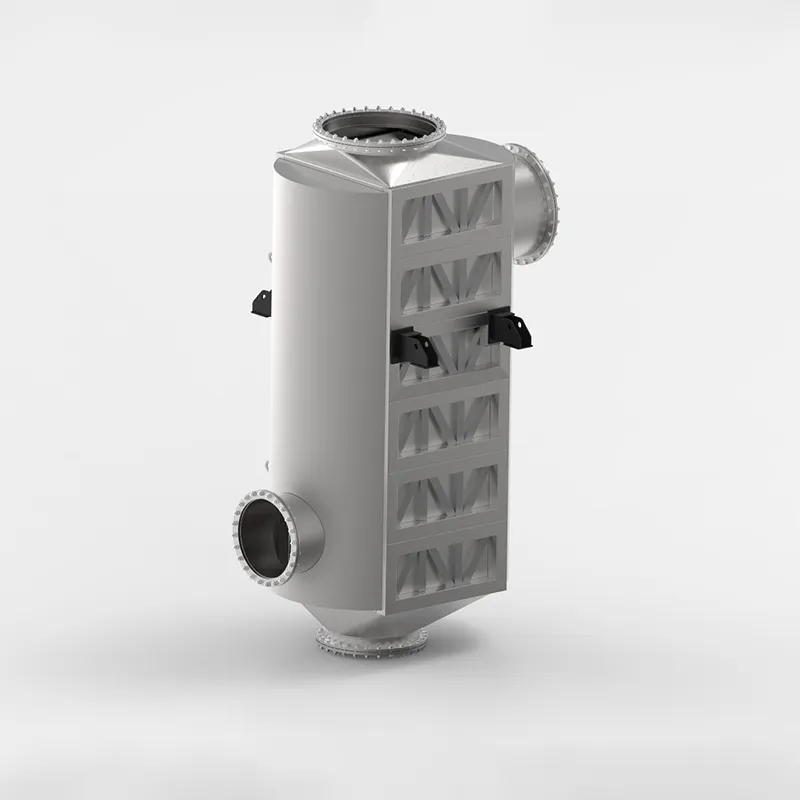
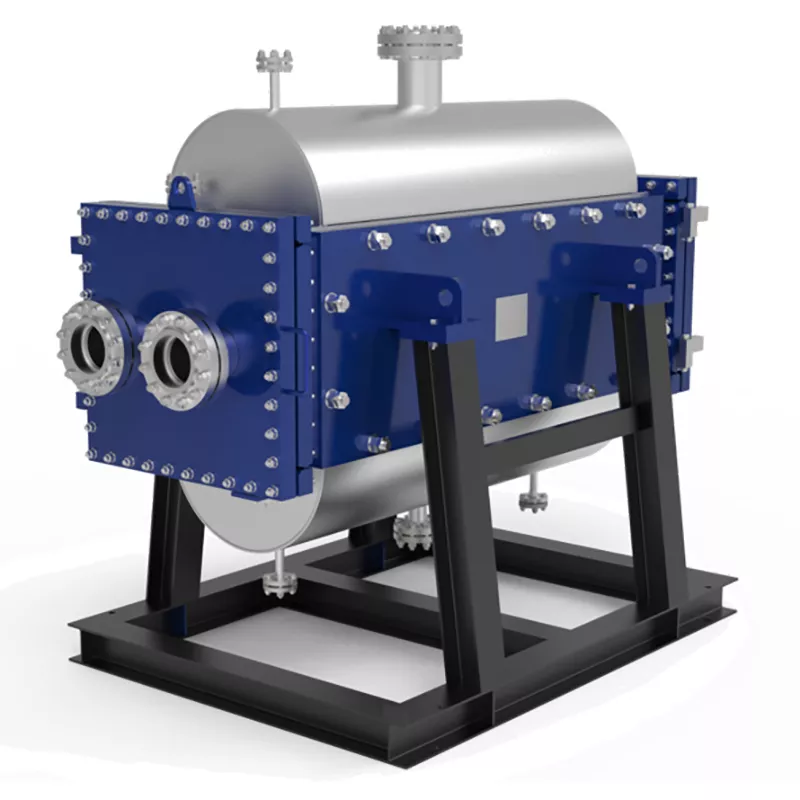
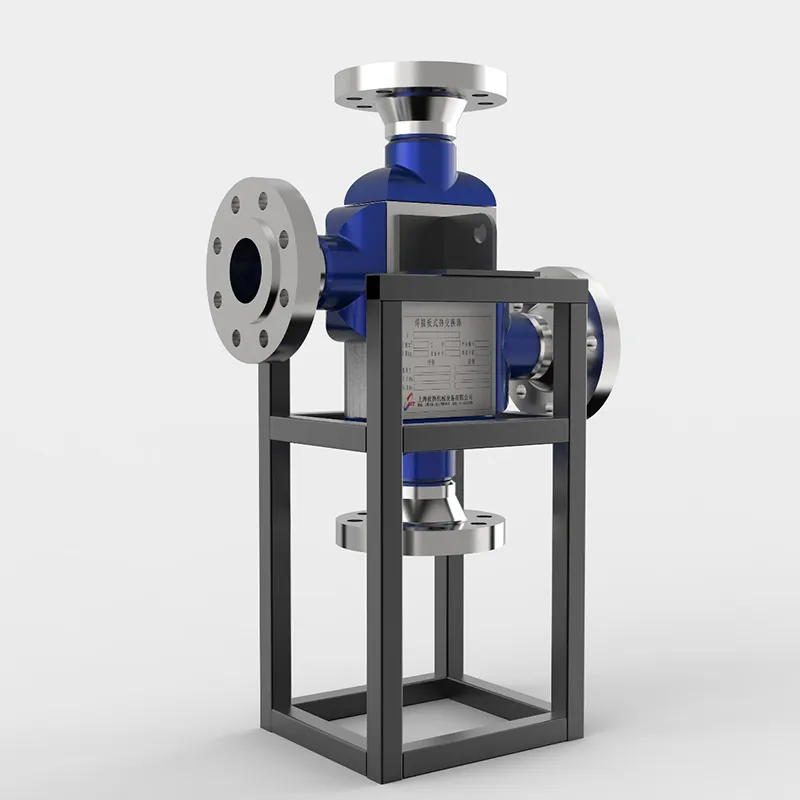
SHPHE, a Shanghai-based manufacturer established in 2005, specializes in plate heat exchangers for demanding industrial applications. With ISO9001 and ASME U certifications, our products are exported to over 20 countries. Our portfolio includes HT-Bloc welded plate heat exchangers for high-temperature service, wide gap welded plate heat exchangers for fluids with solids, and gasketed models compatible with Alfa Laval and GEA frames. We offer free thermal design and selection services to help you maximize thermal performance in power plant plate heat exchanger systems without oversizing.
Frequently Asked Questions About Power Plant Plate Heat Exchangers
Q1: Can plate heat exchangers handle steam condensation directly?
Yes, gasketed and welded plate heat exchangers are widely used for steam condensation in power plants. The plates create thin-film condensation, achieving high heat transfer coefficients. Ensure proper drainage and venting to avoid vapor locking.
Q2: What is the typical lifespan of a plate heat exchanger in a power plant?
With proper maintenance and water treatment, gasketed units last 10–15 years before gasket replacement; welded units can exceed 20 years. Regular cleaning and monitoring of fouling are essential to maintain thermal performance.
Q3: How do I select between gasketed and welded plate heat exchangers?
Gasketed units are cost-effective for low-to-moderate temperatures and pressures, and allow plate replacement. Welded units, such as the HT-Bloc, are better for high-temperature or aggressive fluids where gasket failure is a concern.
Q4: Can I retrofit a plate heat exchanger into an existing shell-and-tube system?
Yes, plate heat exchangers often require less than half the footprint of shell-and-tube units. Retrofitting can improve thermal performance and reduce maintenance. SHPHE offers custom nozzle orientations and frame sizes to match existing piping.
Q5: What maintenance is required for plate heat exchangers in power plants?
Periodic backflushing, chemical cleaning, and gasket inspection are standard. For cooling water with high suspended solids, a wide gap design or upstream filtration reduces fouling. SHPHE provides maintenance guidelines with every unit.
Q6: How does SHPHE ensure thermal performance meets design specs?
We use validated thermal design software and performance testing per ASME standards. Each unit is hydrostatically tested before shipment. Free thermal design service is provided to optimize the selection for your specific operating conditions.
Request a Quote for Your Power Plant Heat Exchanger
To maximize thermal performance in power plant plate heat exchanger systems, accurate sizing is critical. Please provide the following details when requesting a quote: flow rate (hot and cold side), inlet/outlet temperatures, operating pressure, and media composition (e.g., steam, cooling water, or oil). Our engineering team will prepare a free thermal design and selection within 48 hours. Contact us today to discuss your project requirements.

 English EN





User Comments
Service Experience Sharing from Real Customers
Liam
Senior Mechanical EngineerWe retrofitted an aging natural gas plant with these plate heat exchangers last quarter. The thermal efficiency jump was immediate and measurable—our outlet temps are now spot on. Installation was straightforward, and the gasket design seems robust against the thermal cycling we see in peaking operations. Highly recommend for anyone dealing with variable loads.
Sophie
Shift Operations ManagerI've been overseeing the cooling side of a coal-fired plant for 12 years, and we finally swapped out our old shell-and-tube units for these plates. The footprint savings alone freed up room for a new pump skid. Only gripe is that the cleaning schedule is a bit more finicky with the plate gaps, but the performance gain makes it worth the extra attention.
Carlos
Maintenance TechnicianThese things take a beating in our combined cycle plant and keep going. Had a minor steam leak scare last month, but the plates held up fine after a quick retorque. The titanium option we went with handles the chlorides in our cooling water like a champ. My crew actually likes working on them—way easier to pull apart than the old units.
Emma
Project Procurement SpecialistSourced these for a new biomass-to-energy facility we're commissioning. The supplier was responsive with the heat duty calculations, and the units arrived well within the lead time. On the floor they've been running steady for three months with zero fouling issues so far. Cost-wise they beat the competitor quotes by about 12%. Solid choice for a tight budget.