 English EN


PCHE in Hydrocarbon Processing and Refining: High-Pressure Heat Recovery Solutions
Printed Circuit Heat Exchanger solutions deliver high-pressure heat recovery, efficiency, and reliability for hydrocarbon processing and refining industries.
More
John A. Smith, Maria K. Johnson
Jul-06-2026
In chemical industry operations, heat exchangers play a critical role in capturing thermal energy from process streams and repurposing it for preheating, power generation, or downstream applications. This heat recovery mechanism directly reduces fuel consumption and lowers operational costs.
By integrating advanced heat exchanger designs, facilities can achieve significant energy savings. For example, custom plate air preheaters recover waste heat from flue gases, while gasketed plate heat exchangers efficiently transfer heat between liquid streams with minimal fouling.
The reuse of recovered heat reduces the demand for primary energy sources, contributing to lower greenhouse gas emissions. Technologies such as printed circuit heat exchangers offer compact solutions for high-pressure and high-temperature applications, maximizing heat transfer surface area within a small footprint.
For processes involving viscous fluids or particulates, wide-gap welded plate heat exchangers provide robust performance. Similarly, TP welded plate heat exchangers and HT Bloc welded plate heat exchangers deliver durability in demanding chemical environments.
Beyond energy savings, heat recovery systems enhance overall process stability by maintaining consistent inlet temperatures. Custom engineered pillow plates are often employed for jacketed vessels or immersion heating, offering uniform heat distribution.
Adopting these heat exchanger technologies enables chemical plants to align with sustainability goals while improving profitability through reduced energy expenditure.
In chemical industry operations, precise temperature regulation is critical for reaction efficiency, product quality, and safety. Heat exchangers serve as essential thermal management units, enabling controlled heat addition or removal to sustain ideal reaction conditions.
By precisely adjusting the temperature of reactants and products, heat exchangers prevent undesirable side reactions, maintain catalyst activity, and ensure consistent output. They facilitate rapid heat transfer between process streams, allowing operators to respond quickly to temperature fluctuations.
Effective thermal control also minimizes energy consumption by recovering waste heat and reducing the load on heating or cooling utilities. This contributes to both operational cost savings and environmental sustainability.
Ultimately, heat exchangers are indispensable for maintaining the narrow temperature windows required in exothermic reactions, distillation processes, and polymerization, directly impacting yield and process reliability.
In chemical processing, precise temperature control via heat exchangers is critical to avoid overheating that can break down sensitive compounds. By maintaining optimal thermal conditions, heat exchangers preserve molecular integrity, reduce byproduct formation, and ensure consistent product specifications.
The table below illustrates typical temperature thresholds and degradation risks for common chemical products, highlighting how heat exchanger performance directly impacts quality outcomes.
| Chemical Product | Max Safe Temp (°C) | Degradation Risk | Quality Impact |
|---|---|---|---|
| Polymer Resin | 180 | Chain scission | Reduced tensile strength |
| Pharmaceutical Intermediate | 120 | Active moiety breakdown | Loss of potency |
| Food Flavoring Oil | 90 | Oxidation & volatilization | Off-flavor development |
| Specialty Solvent | 150 | Decomposition | Purity reduction |
Data confirms that even brief temperature excursions above safe limits can trigger irreversible chemical changes. Heat exchangers engineered with precise flow control and rapid heat transfer capabilities minimize hot spots and residence time, directly safeguarding product quality.
For further insight into specialized heat exchanger designs that address thermal degradation challenges, explore printed circuit heat exchangers or welded plate solutions.
Heat exchangers are integral to chemical processes that require a substance to change its physical state. During condensation, the exchanger removes latent heat from a vapor, allowing it to transition into a liquid. This is critical in distillation columns and refrigeration cycles, where efficient heat removal ensures product purity and system stability.
In evaporation operations, heat exchangers supply the necessary thermal energy to convert a liquid into vapor. This process is widely used in concentration units, such as evaporators for chemical solutions, where precise temperature control prevents thermal degradation and maximizes energy recovery.
By managing latent heat transfer, these devices enable continuous phase change with minimal energy loss. Their design—whether shell-and-tube, plate, or custom-engineered—directly impacts the rate and uniformity of condensation or evaporation, making them indispensable for reactors, separators, and heat recovery systems in the chemical industry.
Heat integration in chemical plants recovers waste thermal energy, directly lowering fuel and utility expenses while cutting emissions. By strategically pairing hot and cold process streams, heat exchangers minimize external heating and cooling demands.
Reusing process heat reduces reliance on steam, cooling water, and electricity. For example, preheating feed streams with reactor effluent can cut furnace fuel consumption by up to 30%. Lower energy use directly translates to reduced operational expenditure.
Decreased fossil fuel combustion lowers CO₂, NOₓ, and SOₓ emissions. Efficient heat exchange also reduces thermal pollution in water bodies by minimizing cooling tower discharge. Many facilities achieve regulatory compliance and sustainability targets through optimized heat exchanger networks.
Plate heat exchangers, welded block exchangers, and printed circuit heat exchangers are commonly deployed for high-efficiency heat transfer. Their compact design and high thermal performance enable significant energy savings in tight plant layouts.
Explore advanced heat exchanger solutions for your heat integration projects:
Custom Plate Air Preheater
Printed Circuit Heat Exchanger
Gasketed Plate Heat Exchanger
Custom Pillow Plates
HT Bloc Welded Plate Exchanger
TP Welded Plate Exchanger
Wide Gap Welded Plate Exchanger
We provide you with comprehensive foreign trade solutions to help enterprises achieve global development
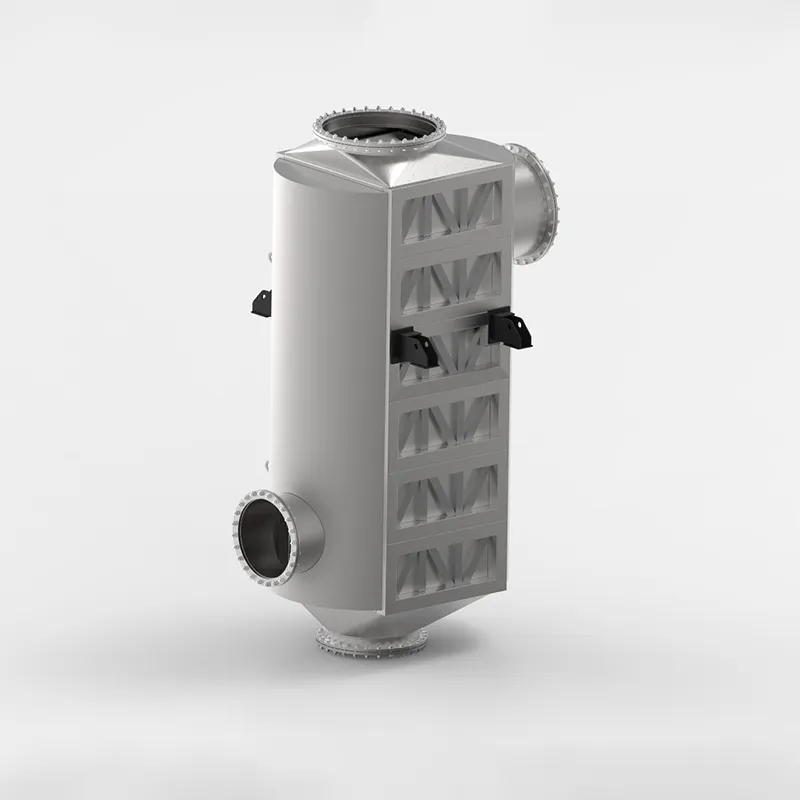
Industrial furnace and boiler exhaust gases carry vast amounts of unutilized thermal energy. The SHPHE custom Plate Air Preheater (PAPH) is target-engineered to intercept this high-temperature flue gas, recovering valuable waste heat and transferring it directly back to incoming combustion air or process gas streams. By substantially elevating the temperature of your flame feed, our custom systems optimize combustion thermodynamics, deliver massive fuel savings, and significantly reduce industrial carbon and emissions footprints. Built to withstand severe flue-gas environments, SHPHE PAPH systems serve as the premier choice for modern, energy-intensive plants prioritizing decarb compliance and maximum thermal efficiency.
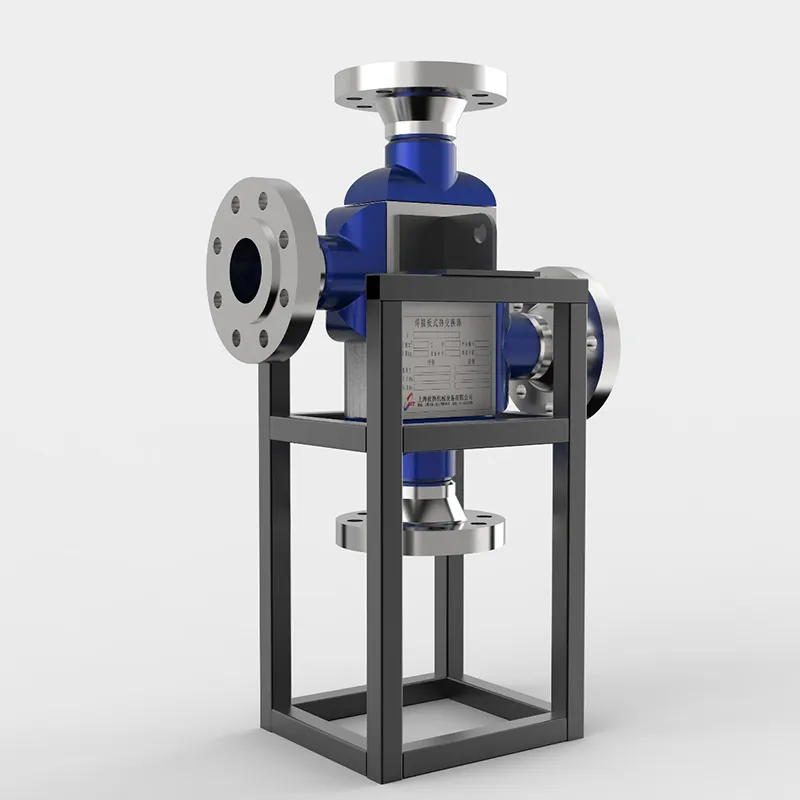
The SHPHE Printed Circuit Heat Exchanger (PCHE) represents a paradigm shift in microchannel thermal management, meticulously engineered for the world's most critical and demanding industrial boundaries. Developed to surpass the physical limitations of conventional shell-and-tube designs in ultra-high-pressure environments, our custom PCHEs integrate advanced photochemical etching and solid-state diffusion bonding to provide unmatched safety, thermal efficiency, and integrity under extreme stress. Initially deployed within high-consequence sectors such as aerospace and nuclear power generation, PCHE technology has completely revolutionized high-density thermal processing. Today, SHPHE brings this breakthrough engineering to mainstream energy transitions—including LNG liquefaction, supercritical CO² power cycles, hydrocarbon processing, and high-pressure hydrogen systems—enabling plants to maximize energy recovery, ensure zero-leakage security, and significantly shrink environmental footprints.
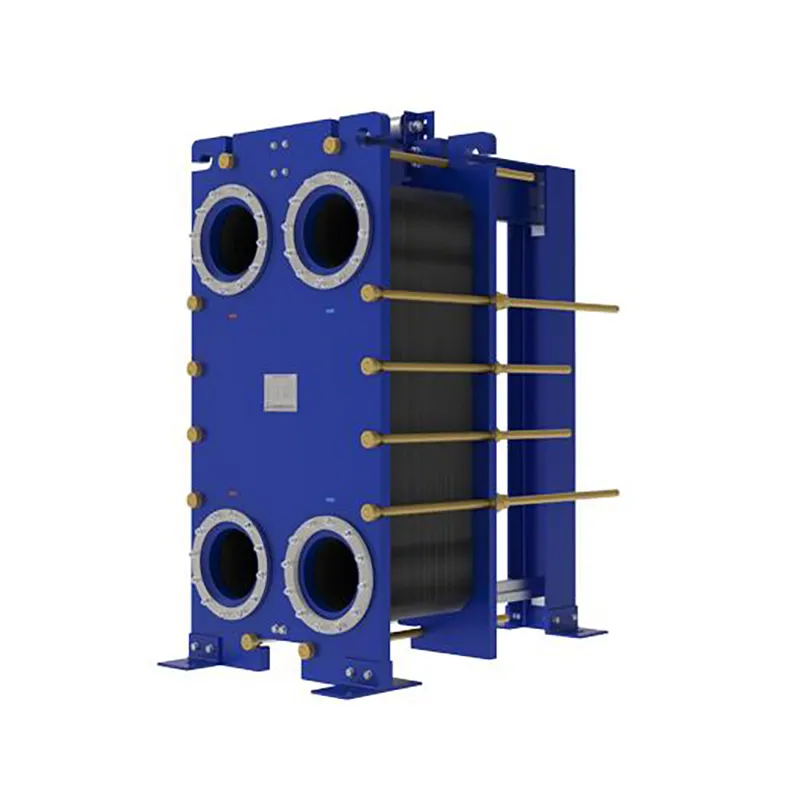
Since the invention of the plate heat exchanger (PHE) in 1923, thermal technology has evolved from standard food-grade processing to highly complex industrial operations. At SHPHE, we take this classic, versatile design and transform it into highly bespoke heat transfer solutions tailored to your unique process fluids and thermal loads. While traditional gasketed PHEs offer high efficiency and compact footprints, SHPHE optimizes plate corrugations, metallurgy, and sealing systems to handle your specific chemical, HVAC, or energy recovery parameters. Our custom-engineered gasketed plate heat exchangers provide outstanding scalability and ease of maintenance, serving as an indispensable asset for heavy industries—including oil and gas, metallurgy, and food processing—where uptime, energy recovery, and long-term sustainability are top priorities.
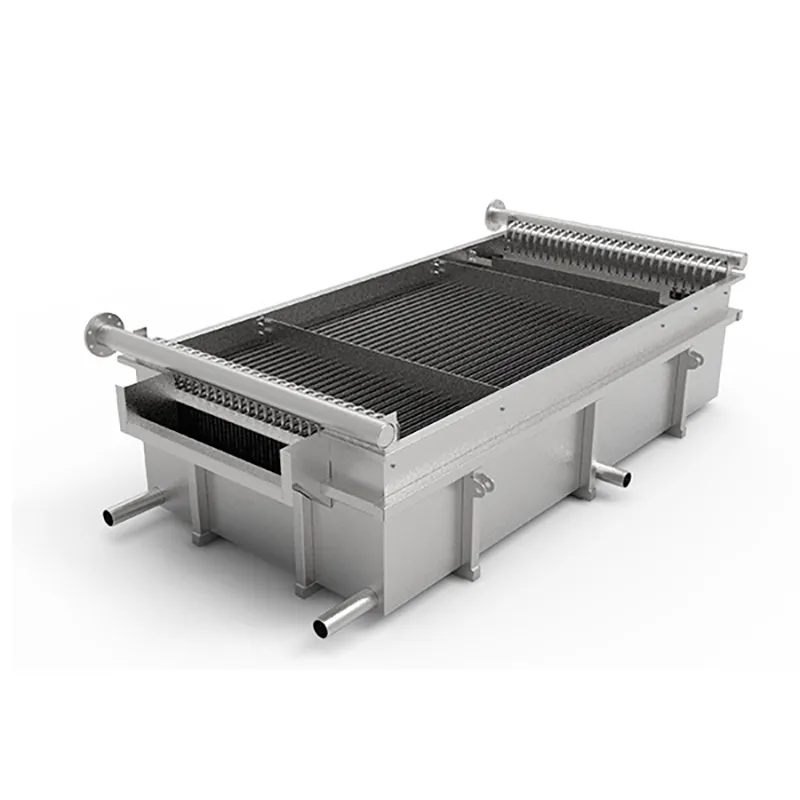
Originated in the mid-20th century to bypass the manufacturing bottlenecks and weight limitations of standard jacketed thermal components, the Pillow Plate (also known as a dimple plate or embossed plate) has revolutionized precision fluid-wall engineering. At SHPHE, we take this highly flexible technology and elevate it into a core foundation for bespoke industrial heat transfer integration. By utilizing state-of-the-art automated CNC fiber laser welding, our engineers customize the mechanical inflation profiles and spot pitch grids to directly match your specific fluid dynamics, pressure limits, and vessel configurations. Today, SHPHE's custom pillow plates are indispensable assets for worldwide processing plants prioritizing advanced thermal performance, zero-leak safety, and hygienic processing—serving as the definitive solution across food, pharmaceutical, chemical, and bulk solids cooling sectors.
Select the most popular foreign trade service products to meet your diverse needs
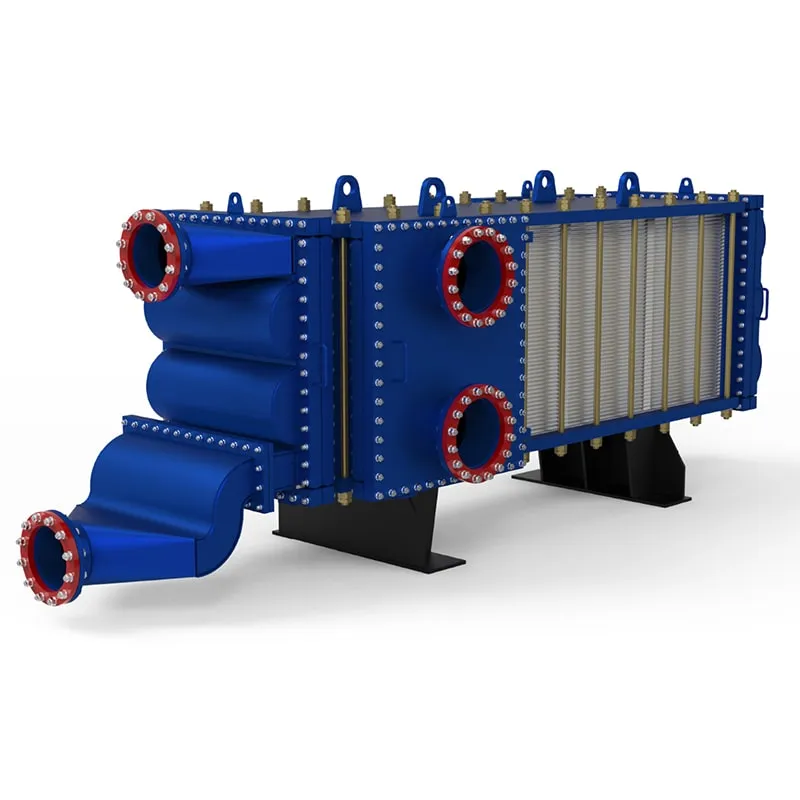
Custom-Engineered Anti-Clogging Solutions for High-Viscosity Slurries: Deployed specifically to conquer severe industrial fouling, SHPHE wide gap welded plate heat exchangers are tailor-built to handle complex media containing dense fibers, coarse crystals, or solid suspensions without clogging. Each non-obstructed channel is calculated and formed by laser-welded plate packs matching your fluid’s exact rheology and grain size, completely eliminating structural "dead zones" and media stagnation. Available in highly compact vertical and versatile horizontal configurations, our vertical engineering drastically reduces plant footprints while maintaining unhindered product throughput, minimal pressure drops, and flawless continuous operations across harsh process loops.
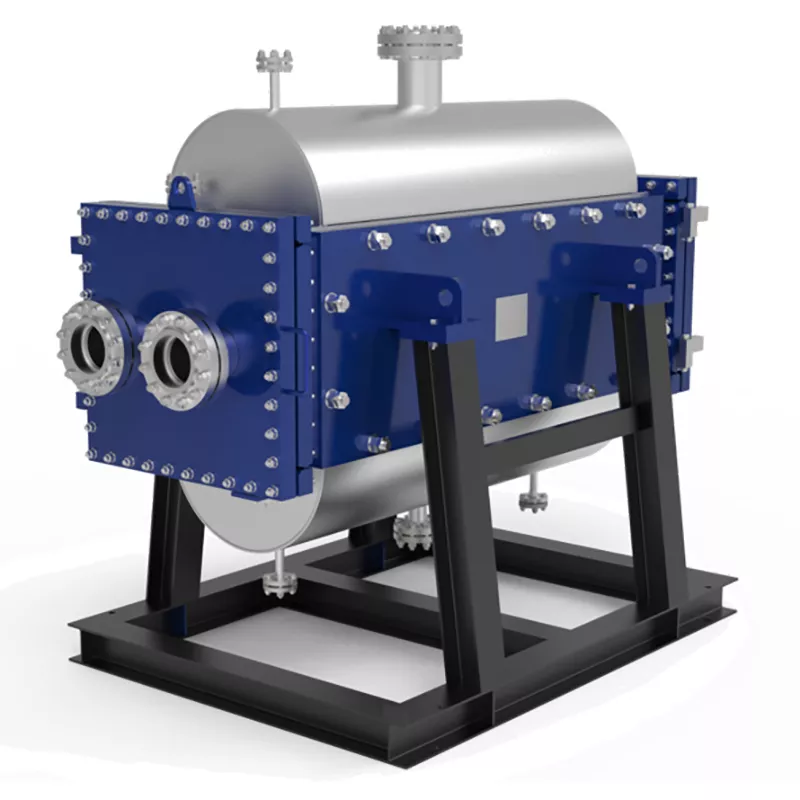
Industrial processes involving particle-laden slurries, high-viscosity syrups, or fiber-rich pulp demand more than standard equipment—they require target-engineered thermal management. At SHPHE, we configure the TP Welded Plate Heat Exchanger to directly conquer your plant's severe fouling, blockage, and erosion threats. Combining custom-tailored channel geometries, wear-resistant metallurgy, and integrated CIP (Cleaning-in-Place) systems, we deliver absolute production continuity where conventional heat exchangers fail.
The SHPHE Printed Circuit Heat Exchanger (PCHE) represents a paradigm shift in microchannel thermal management, meticulously engineered for the world's most critical and demanding industrial boundaries. Developed to surpass the physical limitations of conventional shell-and-tube designs in ultra-high-pressure environments, our custom PCHEs integrate advanced photochemical etching and solid-state diffusion bonding to provide unmatched safety, thermal efficiency, and integrity under extreme stress. Initially deployed within high-consequence sectors such as aerospace and nuclear power generation, PCHE technology has completely revolutionized high-density thermal processing. Today, SHPHE brings this breakthrough engineering to mainstream energy transitions—including LNG liquefaction, supercritical CO² power cycles, hydrocarbon processing, and high-pressure hydrogen systems—enabling plants to maximize energy recovery, ensure zero-leakage security, and significantly shrink environmental footprints.



User Comments
Service Experience Sharing from Real Customers
Marcus
Senior Process EngineerWe installed a shell-and-tube unit from this supplier in our ethylene glycol plant six months ago. The thermal efficiency is noticeably better than our old unit—we're seeing about a 12% improvement in heat recovery. The fouling factor has been minimal even with the sticky process fluids. Only gripe is the initial lead time was a bit longer than quoted, but the performance makes up for it.
Lena
Shift SupervisorWe're running a batch process for specialty adhesives, and this plate heat exchanger handles the frequent temperature swings without leaking—something our previous unit struggled with. Cleaning is straightforward, which is critical because we switch products every other day. I'd give it a perfect score if the gaskets came with a spare set included in the price.
Tom
Plant ManagerFor a mid-size ammonia production facility, this heat exchanger was a game-changer. We retrofitted it into an existing loop, and the pressure drop was lower than expected, which saved us from having to upgrade our pumps. The stainless steel construction has held up well against the corrosive environment. My team appreciates the clear maintenance manual too.
Priya
Chemical EngineerThe heat exchanger works fine for our solvent recovery column, but I'm not blown away. The design is standard—nothing innovative. It does the job, but we had some vibration issues at startup that took a few calls to resolve. Customer support was helpful eventually, but the back-and-forth cost us a day of production. Decent value for the price, though.