How a Desalination Heat Exchanger Enhances Thermal Efficiency in Water Treatment
In thermal desalination plants, energy costs often account for over 40% of total operating expenses. A well-designed desalination heat exchanger directly tackles this challenge by recovering waste heat and maximizing every kilowatt of thermal input. This article explains how modern plate heat exchanger technology—specifically welded and gasketed designs—improves thermal efficiency, reduces scaling risks, and lowers lifecycle costs for seawater and brackish water treatment. Whether you are evaluating an alternative to traditional shell-and-tube units or looking to retrofit an existing multi-effect distillation (MED) or multi-stage flash (MSF) system, you will find practical insights backed by real engineering parameters.
What Makes a Desalination Heat Exchanger Different from Standard Units?
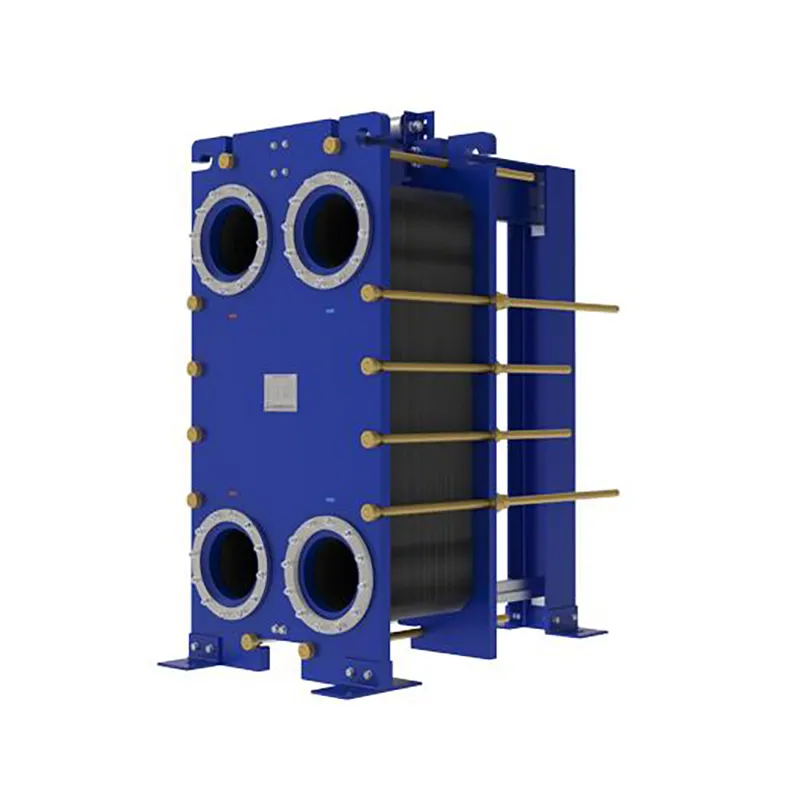
Seawater contains high levels of dissolved salts, suspended solids, and corrosive chlorides. A standard gasketed plate heat exchanger may suffer from rapid fouling, gasket degradation, or chloride stress corrosion cracking. A dedicated desalination heat exchanger addresses these issues through material selection, plate geometry, and flow path design. For instance, titanium or super-duplex stainless steel plates resist pitting and crevice corrosion in chloride-rich environments. Wide-gap plate patterns allow larger particles to pass through without clogging, while counter-current flow arrangements maintain a high log mean temperature difference (LMTD) even at low temperature differentials. These features directly translate into higher thermal efficiency and longer service intervals.
How Does a Welded Plate Heat Exchanger Improve Energy Recovery in MED Systems?
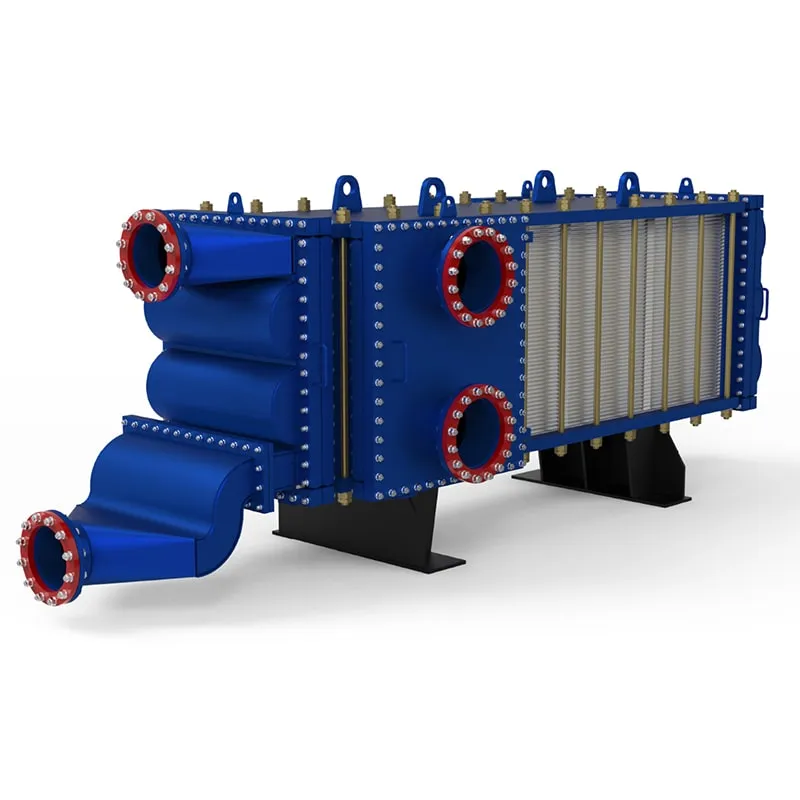
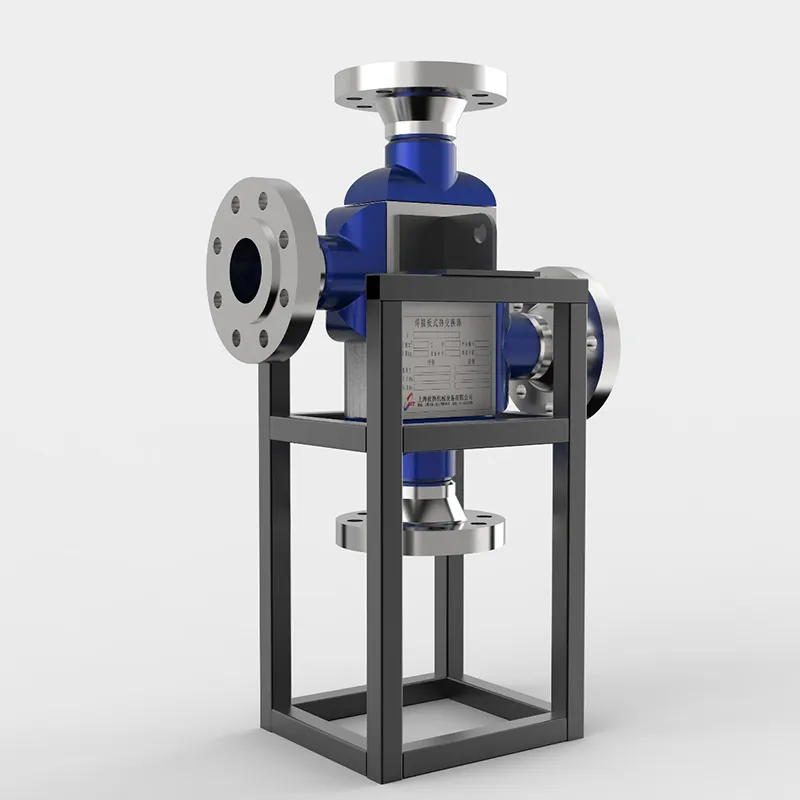
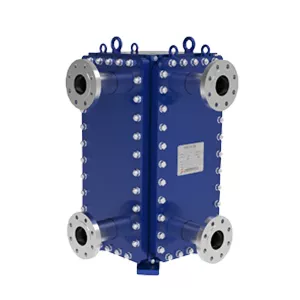
In multi-effect distillation (MED), the heat exchanger preheats feed seawater using vapor from the last effect. A welded plate heat exchanger, such as the HT-Bloc or TP series from SHPHE, eliminates gaskets entirely, removing the risk of leakage at high temperatures and pressures. The all-welded construction allows operating pressures up to 30 bar and temperatures up to 350°C, making it suitable for the brine heater and distillate cooler sections. Because the plates are corrugated, they induce turbulent flow at lower Reynolds numbers compared to smooth tubes, enhancing heat transfer coefficients by 2–3 times. This means you can achieve the same thermal duty with a smaller footprint and less pumping power.
Key Performance Parameters for Desalination Heat Exchangers
When selecting a heat exchanger for desalination, engineers typically evaluate the following parameters. The table below summarizes commonly accepted ranges for plate-type units used in seawater applications:
| Parameter |
Typical Range |
Remarks |
| Design pressure |
10–30 bar |
Higher for welded designs |
| Design temperature |
80–350°C |
Depends on material and gasket type |
| Heat transfer coefficient |
3,000–7,000 W/m²·K |
Plate type vs. shell-and-tube |
| Fouling factor |
0.00005–0.0002 m²·K/W |
Lower with wide-gap plates |
| Plate material |
Ti, SS316L, Duplex 2205 |
Titanium for corrosion resistance |
| Flow rate per unit |
10–500 m³/h |
Customizable in parallel |
Applications of Desalination Heat Exchangers in Water Treatment Plants
Desalination heat exchangers are used in several critical stages of thermal and membrane-based processes:
- Brine heater in MSF plants: Preheats seawater to 90–120°C using steam. A welded plate design reduces thermal stress and allows compact installation.
- Distillate cooler in MED: Cools product water while recovering heat for feed preheating. Wide-gap plates handle non-condensable gases without venting issues.
- Heat recovery in reverse osmosis (RO) pretreatment: Uses waste heat from diesel generators or steam turbines to warm feed water, improving membrane flux in cold climates.
- Zero liquid discharge (ZLD) systems: Concentrates brine before evaporation. A wide gap welded plate heat exchanger handles slurries and high-fouling streams.
Why Choose SHPHE for Your Desalination Heat Exchanger Needs?
SHPHE, founded in Shanghai in 2005, has supplied plate heat exchangers to over 20 countries. Our product range includes HT-Bloc welded plate heat exchangers, TP welded units, wide-gap designs, gasketed plate heat exchangers, printed circuit heat exchangers (PCHE), plate air preheaters, and pillow plates. All designs are ISO9001 and ASME U certified. We offer free thermal design and selection—our engineers simulate your specific flow rate, temperature, pressure, and media composition to recommend the optimal configuration. Whether you need a direct replacement for an Alfa Laval or Compabloc unit, or a custom solution for a new plant, we can match or exceed the performance of existing equipment.
Frequently Asked Questions About Desalination Heat Exchangers
Can I use a gasketed plate heat exchanger for seawater?
Yes, but only with proper material selection. Gasketed units with titanium plates and EPDM or NBR gaskets can handle seawater at moderate temperatures (below 150°C). For higher temperatures or aggressive chemicals, a welded design is more reliable. SHPHE offers both options, and our free selection service helps you choose the right type based on your feed water analysis.
How does a desalination heat exchanger reduce scaling?
Scaling is minimized through high turbulence and smooth plate surfaces. The corrugated pattern creates shear forces that prevent calcium and magnesium deposits from adhering. Additionally, wide-gap designs allow for larger flow passages, reducing the risk of blockage. Periodic cleaning-in-place (CIP) cycles are still recommended, but intervals can extend to 6–12 months with proper design.
What is the typical payback period for upgrading to a welded plate heat exchanger?
Depending on energy prices and plant size, payback periods range from 12 to 24 months. The higher thermal efficiency reduces steam or fuel consumption by 15–30%, while the compact footprint lowers installation costs. For a 10,000 m³/day MED plant, annual energy savings can exceed $150,000.
Are SHPHE heat exchangers compatible with Alfa Laval or GEA frames?
Yes, many of our gasketed plate heat exchangers are designed as direct replacements for Alfa Laval, Compabloc, and GEA units. We match bolt patterns, port sizes, and plate pack dimensions. For welded designs, we can customize the nozzle orientation to fit your existing piping. Contact our team with your current model number for a compatibility check.
What maintenance is required for a desalination heat exchanger?
Routine maintenance includes visual inspection of gaskets (for gasketed units), pressure testing, and cleaning-in-place every 6–12 months. Welded units require less frequent disassembly. We recommend annual thermal performance monitoring to detect fouling early. SHPHE provides full technical support and spare parts for all our products.
Can I get a custom design for a high-pressure desalination application?
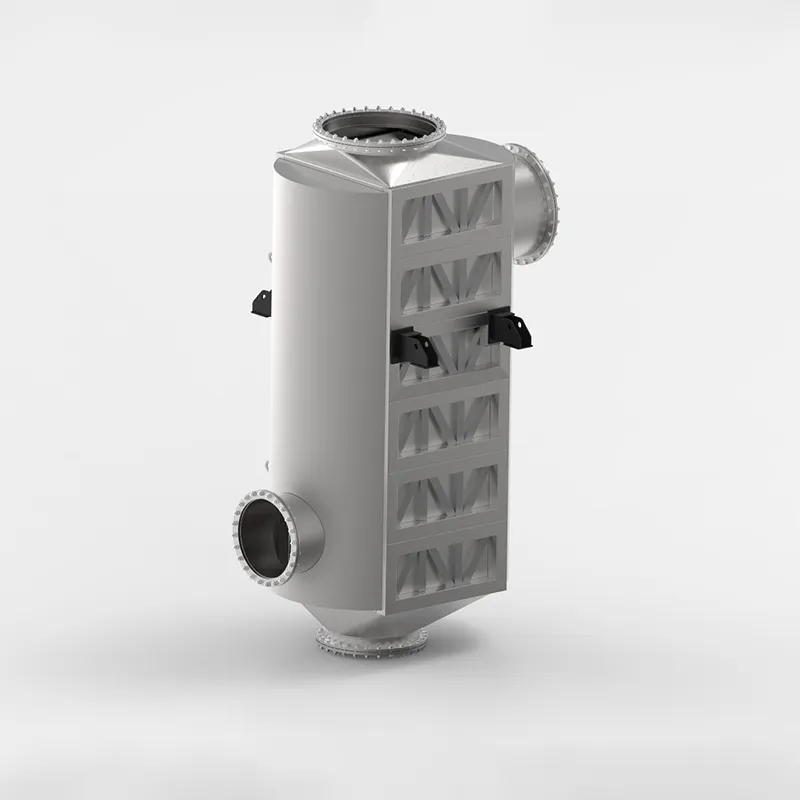
Absolutely. Our printed circuit heat exchanger (PCHE) handles pressures up to 600 bar and temperatures up to 800°C, making it suitable for supercritical desalination or high-pressure brine concentration. We also offer custom-engineered pillow plates for jacketed heating or cooling. Provide your process parameters, and we will deliver a tailored solution.
Request a Quote for Your Desalination Heat Exchanger
To receive a thermal design and quotation for your desalination heat exchanger, please send us the following information: flow rate (hot and cold side), inlet and outlet temperatures, operating pressure, media composition (especially chloride and solids content), and any space constraints. Our engineering team will respond within 48 hours with a recommended model, performance curves, and a firm price. Contact SHPHE today to optimize your water treatment plant’s thermal efficiency.

 English EN





User Comments
Service Experience Sharing from Real Customers
Linda
Process EngineerWe installed this heat exchanger in our pilot desalination plant six months ago, and the performance is rock-solid. The titanium plates handle the brine corrosion beautifully, and we've seen a 15% improvement in thermal recovery compared to our old unit. Maintenance is a breeze too—just a quick flush every few weeks. Highly recommend for anyone scaling up from lab to production.
Raj
Maintenance SupervisorI was skeptical at first because we've had issues with scaling in the past, but this heat exchanger has been a champ. The gaskets are holding up well even with the high-pressure side. Only reason I'm not giving 5 stars is the initial installation manual was a bit vague on the torque specs for the bolts—had to call support. But once it was up, it's been smooth sailing.
Mia
Senior R&D ChemistAs someone who tests membrane and thermal processes daily, I appreciate the precision engineering here. The counter-flow design gives us consistent outlet temperatures within 0.5°C, which is critical for our lab-scale desalination research. Plus, the compact footprint saved us bench space. It's expensive, but you get what you pay for in durability and data quality.
Tom
Facility ManagerIt does the job for our small community desal unit, but don't expect miracles if your feed water has high silt density. We had to add a pre-filter because the narrow channels clogged up twice in the first month. Once that was sorted, heat transfer is decent and the pressure drop is acceptable. For the price, I'd say it's a solid mid-range option, not top-tier.