How an Exhaust Gas Heat Exchanger Improves Industrial Energy Efficiency
Industrial facilities often release high-temperature exhaust gases directly into the atmosphere, wasting a significant amount of thermal energy. An exhaust gas heat exchanger captures this heat and repurposes it for preheating combustion air, heating process fluids, or generating steam. This article explains how these systems work, their typical performance parameters, and why selecting the right heat exchanger type—such as those offered by SHPHE—can lead to measurable energy savings and lower operating costs.
What Is an Exhaust Gas Heat Exchanger and Why Does It Matter?
An exhaust gas heat exchanger is a device that transfers thermal energy from hot flue or exhaust gases to a cooler fluid—typically water, thermal oil, or combustion air. In many industrial processes, exhaust gases leave furnaces, boilers, or engines at temperatures between 300°C and 600°C. Without recovery, this heat is lost. By installing an exhaust gas heat exchanger, plants can reclaim 30% to 60% of that waste heat, directly reducing fuel consumption and emissions.
For process engineers and purchasing managers, the key metric is the payback period. Most well-designed exhaust gas heat recovery systems pay for themselves within 12 to 24 months, depending on operating hours and fuel costs. This makes them a practical investment for any facility running continuous or batch processes.
How Does an Exhaust Gas Heat Exchanger Work in a Typical Process?
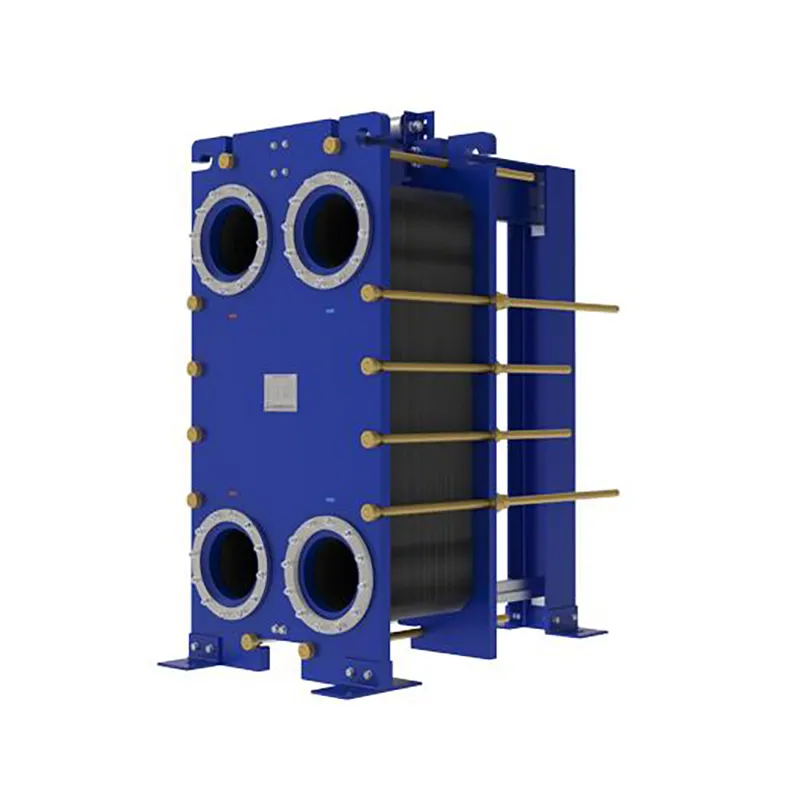
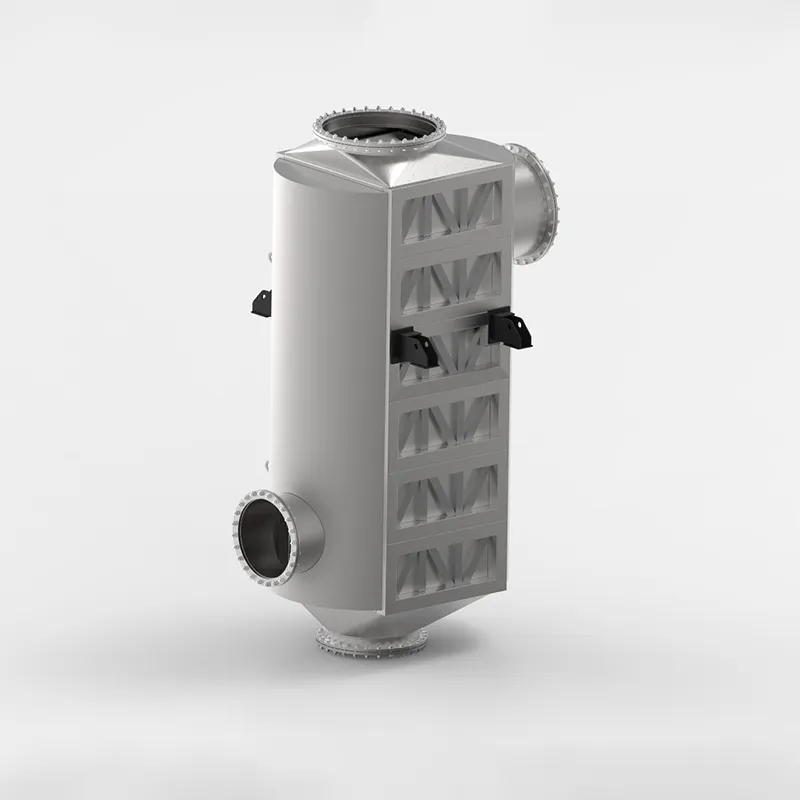
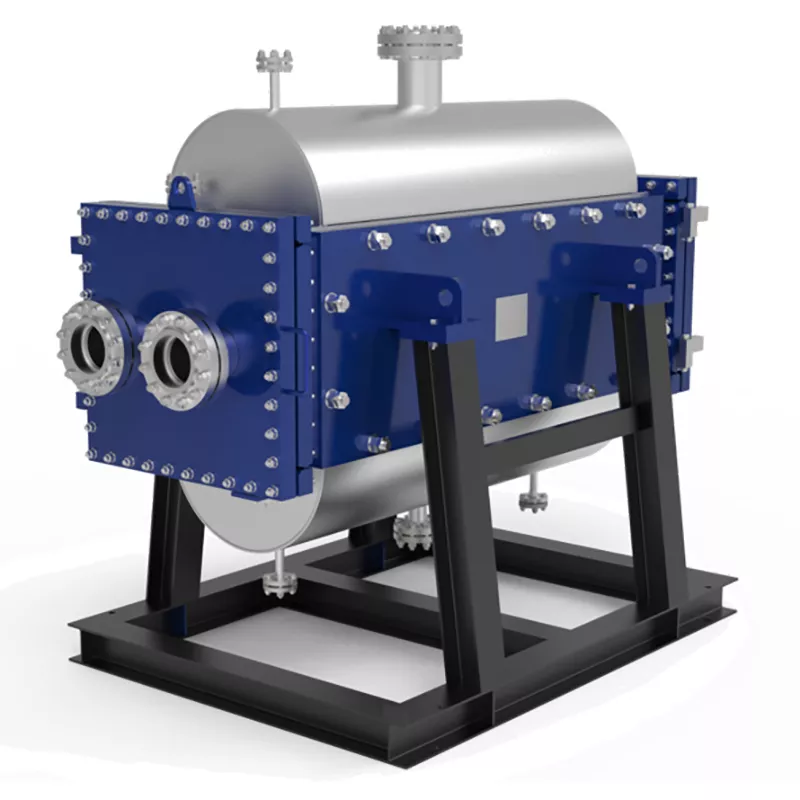
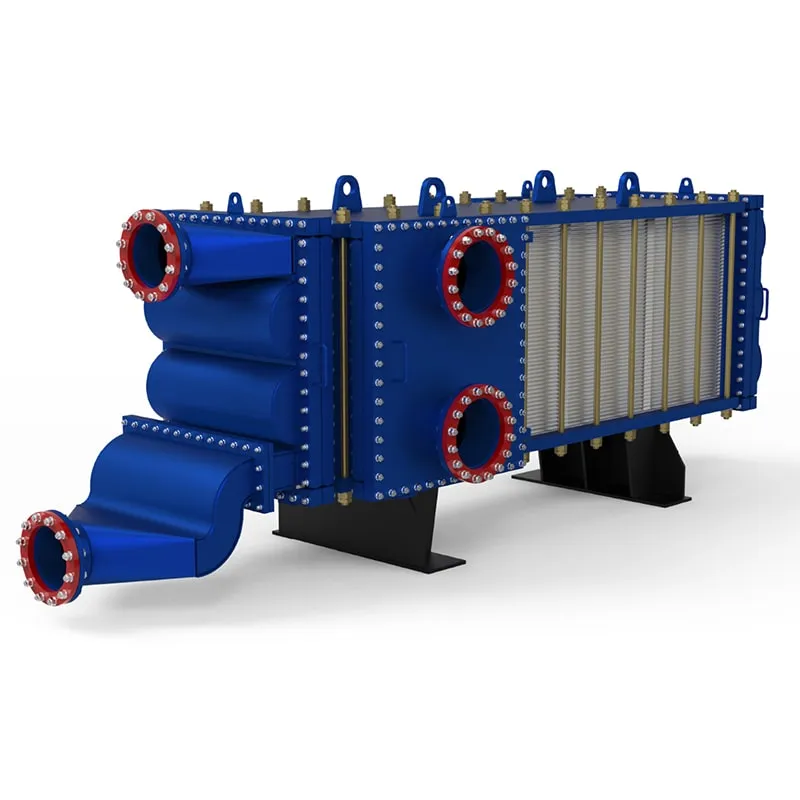
The working principle is straightforward: hot exhaust gas flows over or through a set of heat transfer surfaces, while a cooler fluid flows on the opposite side. The heat passes through the wall, raising the temperature of the receiving fluid. In a HT-Bloc welded plate heat exchanger, for example, the gas path is designed to handle high temperatures and particulates, while the plate geometry maximizes turbulence for efficient heat transfer.
Common process scenarios include:
- Preheating combustion air in boilers or furnaces (air preheater application)
- Heating process water or thermal oil for downstream use
- Generating low-pressure steam from engine exhaust
- Recovering heat from dryer exhaust in food or chemical processing
What Are the Key Features and Typical Parameter Ranges?
When evaluating an exhaust gas heat exchanger, focus on these parameters:
| Parameter |
Typical Range |
| Gas inlet temperature |
250°C – 650°C |
| Gas outlet temperature |
120°C – 200°C (above dew point) |
| Heat recovery efficiency |
30% – 60% |
| Pressure drop (gas side) |
100 – 500 Pa |
| Design pressure (fluid side) |
Up to 30 bar |
| Material options |
Stainless steel 316L, 304, Hastelloy |
These ranges are industry-generic. Your actual values depend on gas composition, flow rate, and fouling potential. For dirty exhaust streams, a wide gap welded plate heat exchanger is often recommended to prevent clogging.
What Are the Common Applications and Recommended Solutions?
Exhaust gas heat exchangers are used across many industries. Here are the most common applications and the heat exchanger types that fit best:
- Chemical processing: Recover heat from reactor off-gases to preheat feed streams. Recommended: TP welded plate heat exchangers for high-temperature and corrosive gases.
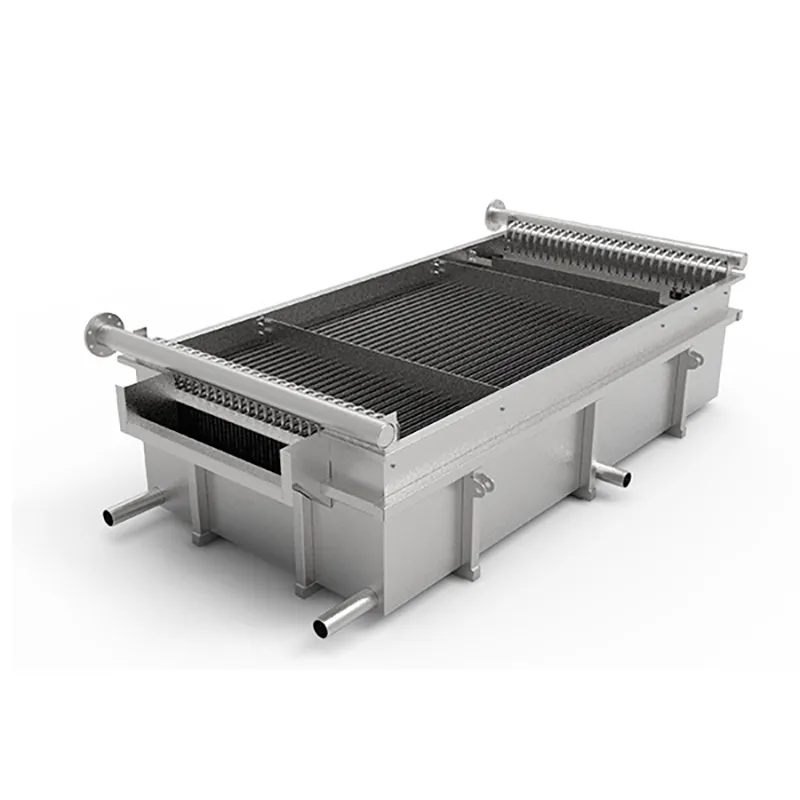
- Power generation: Capture engine exhaust heat for cogeneration. Recommended: plate air preheaters for combustion air heating.
- Food and beverage: Use dryer exhaust heat to warm wash water. Recommended: gasketed plate heat exchangers for clean gas streams.
- Oil and gas: Heat crude oil or amine solutions using turbine exhaust. Recommended: PCHE for compact, high-pressure applications.
Each solution must be matched to your specific gas temperature, flow rate, and fouling characteristics. A free thermal design service can help narrow down the options without upfront cost.
Why Choose SHPHE for Your Exhaust Gas Heat Exchanger?
SHPHE is a Shanghai-based plate heat exchanger manufacturer founded in 2005, exporting to more than 20 countries. The company holds ISO9001 and ASME U certifications, ensuring that every unit meets international quality standards. Their product range includes HT-Bloc and TP welded plate heat exchangers, wide gap welded plate heat exchangers, gasketed plate heat exchangers, PCHE, plate air preheaters, and pillow plates.
What sets SHPHE apart is the free thermal design and selection service. Engineers can submit their process conditions—gas flow rate, inlet temperature, target outlet temperature, and allowable pressure drop—and receive a tailored heat exchanger proposal. This approach ensures that the exhaust gas heat exchanger you order is optimized for your specific operating conditions, not a generic off-the-shelf unit.
For facilities currently using equipment from Alfa Laval, Compabloc, or GEA, SHPHE units are designed as compatible alternatives, offering similar performance at competitive pricing. The company also provides custom-engineered pillow plates for unique geometries or space constraints.
Frequently Asked Questions About Exhaust Gas Heat Exchangers
What is the typical payback period for an exhaust gas heat exchanger?
The payback period usually ranges from 12 to 24 months. This depends on factors like operating hours per year, fuel cost, and the temperature difference between the exhaust gas and the receiving fluid. Facilities running 8,000 hours annually see faster returns.
Can an exhaust gas heat exchanger handle dirty or particulate-laden gas?
Yes, but you need the right design. Wide gap welded plate heat exchangers or plate air preheaters with large channel spacing are recommended for dirty gases. Regular cleaning schedules and soot blowers can also be integrated to maintain performance.
What materials are best for high-temperature exhaust gas applications?
Stainless steel 316L is common for temperatures up to 450°C. For higher temperatures or corrosive gases, Hastelloy or Inconel alloys are used. The material selection should also consider the dew point of the exhaust to avoid acid corrosion.
How does an exhaust gas heat exchanger differ from a standard shell-and-tube unit?
Plate-type exhaust gas heat exchangers offer higher thermal efficiency and a more compact footprint compared to shell-and-tube designs. They also provide better access for cleaning and are easier to expand if capacity needs increase.
Do I need to worry about condensation in the exhaust gas heat exchanger?
Yes, condensation can cause corrosion if the gas temperature drops below its dew point. Design the system to keep the outlet gas temperature at least 20°C above the dew point, or use corrosion-resistant materials and include a condensate drain.
Can I retrofit an exhaust gas heat exchanger into an existing system?
In most cases, yes. Retrofitting requires adding a bypass duct and supports. The compact design of welded plate heat exchangers makes them suitable for tight spaces. A site survey by an engineer can confirm feasibility.
Request a Quote for Your Exhaust Gas Heat Exchanger
To get started, share your process details with the SHPHE engineering team. They will provide a free thermal design and a quotation tailored to your exhaust gas heat exchanger needs. Please include the following information in your inquiry:
- Gas flow rate (Nm³/h or kg/h)
- Gas inlet and target outlet temperature
- Gas composition and particulate content
- Available pressure drop on the gas side
- Fluid type, flow rate, and inlet temperature on the receiving side
- Operating pressure on both sides
With accurate data, the team can recommend the most cost-effective exhaust gas heat exchanger solution for your facility, helping you reduce energy waste and improve overall efficiency.

 English EN





User Comments
Service Experience Sharing from Real Customers
Liam
Marine EngineerBeen using this exhaust gas heat exchanger on our offshore supply vessel for six months now. It handles the constant saltwater exposure and thermal cycling like a champ. The pressure drop is minimal compared to our old unit, and the fuel savings are actually noticeable on the monthly logs. Installed it myself with a standard toolkit; the flanges lined up perfectly.
Sophie
Facility Maintenance ManagerWe retrofitted this into an older cogeneration setup at a food processing plant. Had a small issue with the gasket on initial startup, but customer support walked me through a quick fix. Now it's been running 24/7 for three weeks without a hiccup. The heat recovery is solid; we're preheating boiler feedwater and it's cut our gas bill by about 12%. Would buy again.
Derek
Power Generation TechnicianI maintain a fleet of natural gas generators at a remote data center. We swapped out a failing exchanger with this model last month. The build quality is excellent—heavy-duty stainless shell, clean welds. It's already handling the high exhaust temps without any vibration issues. The thermocouple port location is convenient for our monitoring system. No complaints.
Priya
Process EngineerDecent unit for the price, but the documentation could be clearer. We installed it on a small chemical reactor vent line to recover some waste heat. It works, but I noticed the fins on the gas side are a bit tightly spaced—had to increase our cleaning frequency to prevent fouling from particulate. Not a dealbreaker, but something to consider if your exhaust is dirty. Good for clean-burning applications.