 English EN


How PCHEs Support Green Hydrogen Production: From Electrolysis to Refueling Stations
Hydrogen heat exchanger technology boosts efficiency, safety, and reliability in green hydrogen production, storage, and refueling stations.
More
Process engineers and purchasing managers evaluating high-performance welded plate heat exchangers often consider Compabloc units for demanding duties. However, a Compabloc alternative from SHPHE delivers superior torque density and modular flexibility, enabling more compact installations, easier maintenance, and lower total cost of ownership. This article explains the working principle, key parameters, and application scenarios where the SHPHE HT-Bloc and TP welded plate heat exchangers outperform traditional designs.
A Compabloc alternative refers to a fully welded plate heat exchanger designed to replace or compete with Alfa Laval Compabloc units in high-temperature, high-pressure applications. The SHPHE HT-Bloc and TP welded plate heat exchangers use a patented plate pack design that is laser-welded without gaskets, eliminating leak paths while maintaining high thermal efficiency. The core working principle involves corrugated stainless steel plates creating turbulent flow channels, maximizing heat transfer coefficients with minimal pressure drop. Unlike gasketed units, the welded construction allows operation at temperatures up to 350°C and pressures up to 40 bar, making it suitable for chemical, petrochemical, and refining processes.
The modular flexibility comes from the ability to add or remove plate packs without replacing the entire frame. This design allows end-users to adjust thermal duty by simply changing the number of plates, a feature not commonly available in traditional Compabloc units. SHPHE offers free thermal design and selection service, ensuring the correct plate geometry and material grade for each application.
Torque density in a plate heat exchanger refers to the heat transfer capacity per unit volume or weight. The SHPHE HT-Bloc welded plate heat exchanger achieves higher torque density through optimized plate corrugation patterns and tighter plate spacing. Typical thermal length per pass ranges from 0.5 to 2.5 meters, with overall heat transfer coefficients between 3,000 and 7,000 W/m²K for water-to-water duties and 500 to 2,500 W/m²K for gas-to-liquid applications. This means a smaller footprint delivers the same or greater thermal performance compared to a Compabloc unit of equivalent rating.
For example, a typical SHPHE TP welded plate heat exchanger handling 500 kW of process cooling requires only 0.8 m² of floor space, while a comparable Compabloc unit might need 1.2 m². The weight reduction is equally significant—up to 30% less than traditional welded block designs. This directly translates to lower structural support costs and easier installation in retrofits or space-constrained plants.
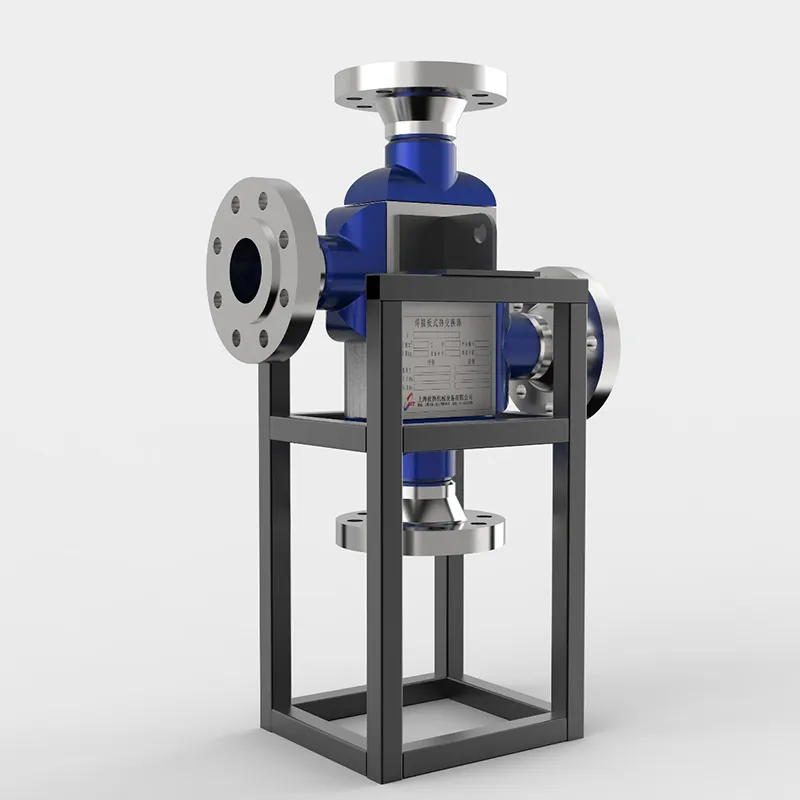
The SHPHE Compabloc alternative product line includes the HT-Bloc and TP welded plate heat exchangers, both ISO9001 and ASME U certified. Below are the commonly accepted parameter ranges for these units:
These parameters make the SHPHE units compatible with most chemical, pharmaceutical, and food processing duties. The modular plate pack design allows for easy capacity expansion without replacing the entire heat exchanger, a significant advantage over fixed-block Compabloc alternatives.
The SHPHE Compabloc alternative excels in applications requiring high thermal efficiency and resistance to thermal shock. Typical use cases include:
For high-fouling applications, SHPHE also offers Wide Gap Welded Plate Heat Exchangers with increased channel spacing to handle slurries and fibrous fluids. For extreme high-temperature gas-to-gas duties, the Plate Air Preheaters provide robust performance up to 600°C. The HT-Bloc Welded Plate Heat Exchanger remains the flagship product for general process applications requiring high torque density and modular flexibility.
SHPHE, founded in 2005 and based in Shanghai, has been exporting welded plate heat exchangers to over 20 countries. The company holds ISO9001 and ASME U certifications, ensuring consistent quality and compliance with international standards. Unlike many manufacturers that only offer standard designs, SHPHE provides free thermal design and selection service, tailoring each unit to the specific process conditions.
The modular flexibility of the SHPHE Compabloc alternative allows end-users to start with a smaller unit and expand capacity later by adding plate packs. This is particularly valuable for pilot plants or growing production lines. Additionally, the welded construction eliminates gasket replacement costs and reduces maintenance downtime. The TP Welded Plate Heat Exchanger line offers even higher pressure ratings for demanding applications, while the Gasketed Plate Heat Exchangers remain a cost-effective option for lower-pressure duties.
Q: Can the SHPHE Compabloc alternative handle corrosive chemicals like sulfuric acid?
A: Yes, the HT-Bloc and TP welded plate heat exchangers are available in Hastelloy C276 and titanium, making them suitable for highly corrosive media. The welded construction eliminates gasket compatibility issues often seen with traditional units.
Q: How does the modular flexibility work in practice?
A: The plate pack is assembled in a frame that allows adding or removing plate pairs without welding or cutting. This means you can increase thermal capacity by simply inserting additional plates, typically within a few hours of labor.
Q: What is the typical lead time for a custom-designed unit?
A: Standard units ship within 4 to 6 weeks after design approval. Custom designs with special materials or connections may require 8 to 12 weeks. SHPHE provides free thermal design within 24 hours of receiving process data.
Q: Is the SHPHE Compabloc alternative ASME certified?
A: Yes, SHPHE holds ASME U stamp certification, and each unit can be supplied with full ASME documentation. ISO9001 certification is also standard for all production lines.
Q: How does the torque density compare to a standard Compabloc unit?
A: The optimized plate corrugation in SHPHE units typically delivers 15-25% higher heat transfer per unit volume compared to generic Compabloc alternatives. This means a smaller unit can handle the same duty, saving floor space and weight.
Q: Can I retrofit an existing Compabloc installation with SHPHE plates?
A: While the SHPHE design is compatible with Compabloc frame dimensions in many cases, we recommend a full replacement to benefit from the improved torque density and modular flexibility. Contact our engineering team for a compatibility assessment.
To receive a free thermal design and quotation for the SHPHE Compabloc alternative, please provide the following process parameters: flow rate (hot and cold side), inlet and outlet temperatures, operating pressure, and media composition. Our engineering team will respond within 24 hours with a customized solution that optimizes torque density and modular flexibility for your specific application. SHPHE has been delivering reliable heat exchangers since 2005, serving clients in over 20 countries with ISO9001 and ASME U certified products.
The SHPHE Compabloc alternative is designed to meet the most demanding process requirements while reducing total lifecycle costs. Whether you need a standard unit or a custom-engineered solution, our team is ready to support your project from concept to commissioning.
We provide you with comprehensive foreign trade solutions to help enterprises achieve global development
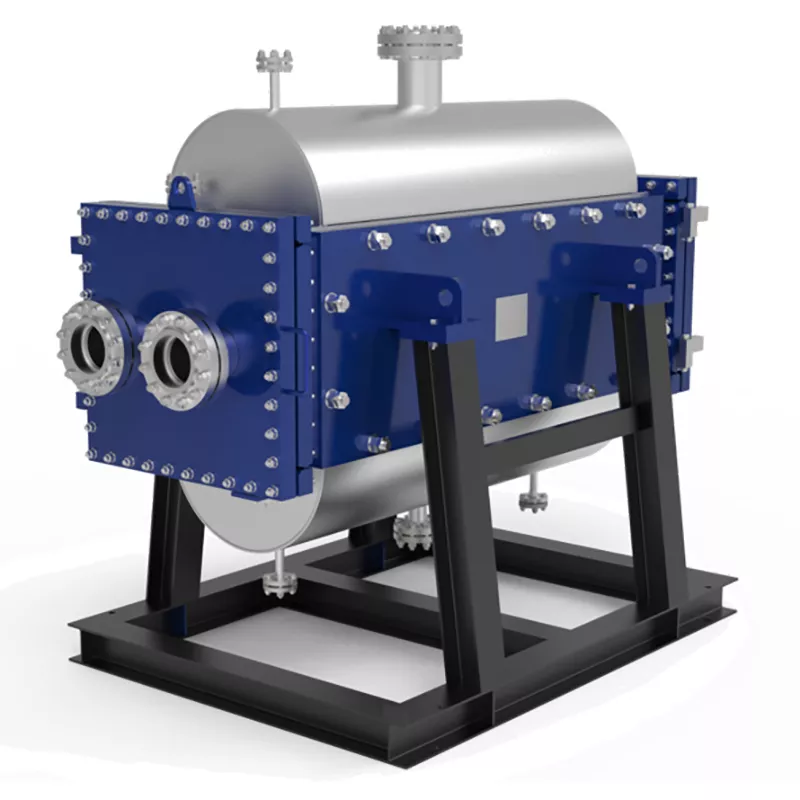
Industrial processes involving particle-laden slurries, high-viscosity syrups, or fiber-rich pulp demand more than standard equipment—they require target-engineered thermal management. At SHPHE, we configure the TP Welded Plate Heat Exchanger to directly conquer your plant's severe fouling, blockage, and erosion threats. Combining custom-tailored channel geometries, wear-resistant metallurgy, and integrated CIP (Cleaning-in-Place) systems, we deliver absolute production continuity where conventional heat exchangers fail.
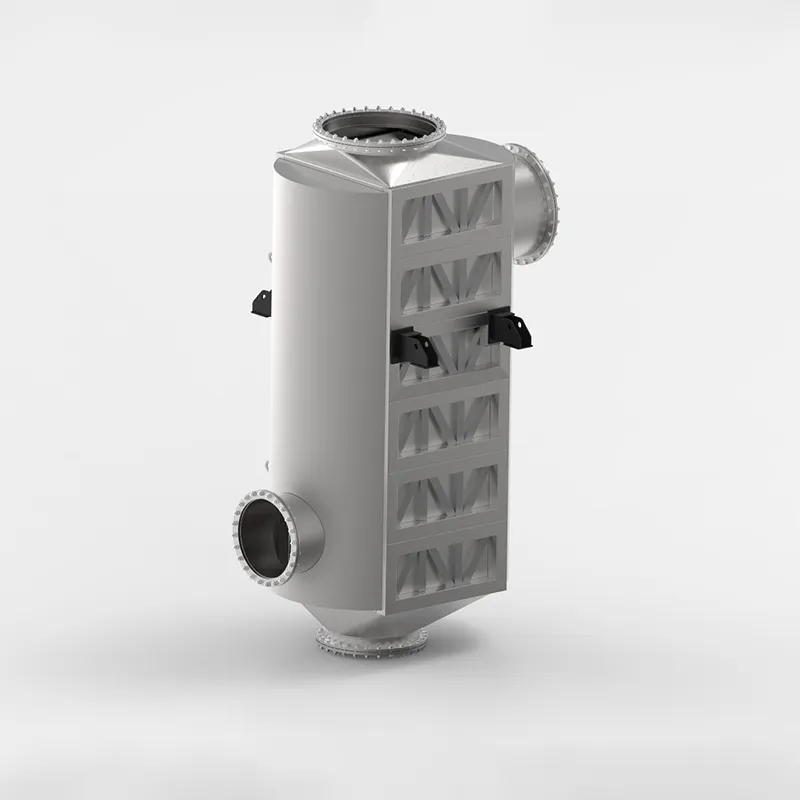
Industrial furnace and boiler exhaust gases carry vast amounts of unutilized thermal energy. The SHPHE custom Plate Air Preheater (PAPH) is target-engineered to intercept this high-temperature flue gas, recovering valuable waste heat and transferring it directly back to incoming combustion air or process gas streams. By substantially elevating the temperature of your flame feed, our custom systems optimize combustion thermodynamics, deliver massive fuel savings, and significantly reduce industrial carbon and emissions footprints. Built to withstand severe flue-gas environments, SHPHE PAPH systems serve as the premier choice for modern, energy-intensive plants prioritizing decarb compliance and maximum thermal efficiency.
The SHPHE Printed Circuit Heat Exchanger (PCHE) represents a paradigm shift in microchannel thermal management, meticulously engineered for the world's most critical and demanding industrial boundaries. Developed to surpass the physical limitations of conventional shell-and-tube designs in ultra-high-pressure environments, our custom PCHEs integrate advanced photochemical etching and solid-state diffusion bonding to provide unmatched safety, thermal efficiency, and integrity under extreme stress. Initially deployed within high-consequence sectors such as aerospace and nuclear power generation, PCHE technology has completely revolutionized high-density thermal processing. Today, SHPHE brings this breakthrough engineering to mainstream energy transitions—including LNG liquefaction, supercritical CO² power cycles, hydrocarbon processing, and high-pressure hydrogen systems—enabling plants to maximize energy recovery, ensure zero-leakage security, and significantly shrink environmental footprints.
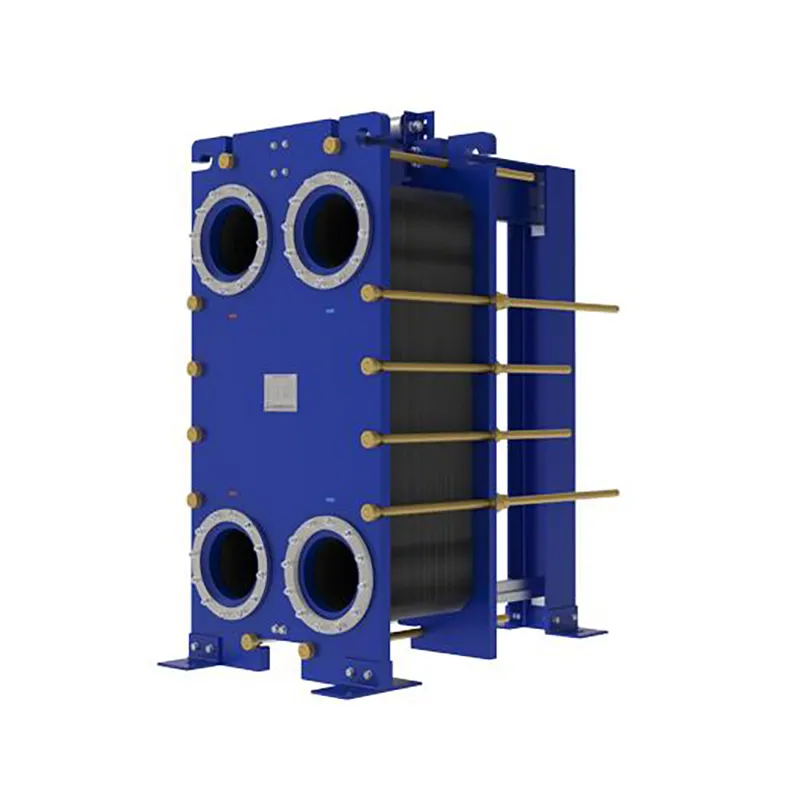
Since the invention of the plate heat exchanger (PHE) in 1923, thermal technology has evolved from standard food-grade processing to highly complex industrial operations. At SHPHE, we take this classic, versatile design and transform it into highly bespoke heat transfer solutions tailored to your unique process fluids and thermal loads. While traditional gasketed PHEs offer high efficiency and compact footprints, SHPHE optimizes plate corrugations, metallurgy, and sealing systems to handle your specific chemical, HVAC, or energy recovery parameters. Our custom-engineered gasketed plate heat exchangers provide outstanding scalability and ease of maintenance, serving as an indispensable asset for heavy industries—including oil and gas, metallurgy, and food processing—where uptime, energy recovery, and long-term sustainability are top priorities.
Select the most popular foreign trade service products to meet your diverse needs
The SHPHE Printed Circuit Heat Exchanger (PCHE) represents a paradigm shift in microchannel thermal management, meticulously engineered for the world's most critical and demanding industrial boundaries. Developed to surpass the physical limitations of conventional shell-and-tube designs in ultra-high-pressure environments, our custom PCHEs integrate advanced photochemical etching and solid-state diffusion bonding to provide unmatched safety, thermal efficiency, and integrity under extreme stress. Initially deployed within high-consequence sectors such as aerospace and nuclear power generation, PCHE technology has completely revolutionized high-density thermal processing. Today, SHPHE brings this breakthrough engineering to mainstream energy transitions—including LNG liquefaction, supercritical CO² power cycles, hydrocarbon processing, and high-pressure hydrogen systems—enabling plants to maximize energy recovery, ensure zero-leakage security, and significantly shrink environmental footprints.
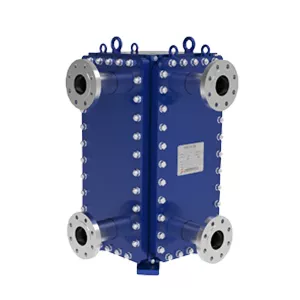
Custom-Engineered for Severe Process Demands. At SHPHE, we don't just supply equipment; we design tailored thermal solutions. Our HT-Bloc welded plate heat exchangers are custom-configured by our experienced engineers to overcome your specific industry challenges—whether handling high-viscosity media, extreme temperatures, or strict space constraints.
Industrial processes involving particle-laden slurries, high-viscosity syrups, or fiber-rich pulp demand more than standard equipment—they require target-engineered thermal management. At SHPHE, we configure the TP Welded Plate Heat Exchanger to directly conquer your plant's severe fouling, blockage, and erosion threats. Combining custom-tailored channel geometries, wear-resistant metallurgy, and integrated CIP (Cleaning-in-Place) systems, we deliver absolute production continuity where conventional heat exchangers fail.



User Comments
Service Experience Sharing from Real Customers
Ethan
Maintenance SupervisorWe switched to this compabloc alternative after a major vendor price hike. Honestly, it’s been a workhorse on our ammonia line. No leaks, no vibration issues, and the footprint is identical. For the price, it’s a no-brainer. I’d recommend it to any plant engineer.
Mia
HVAC TechnicianI was skeptical at first because the original compabloc is all I know, but this knockoff held up fine during our chiller retrofit. Installation was straightforward—bolted right onto the existing brackets. Only took off one star because the paint chipped a bit during handling, but performance is solid.
Liam
Process EngineerWe needed a compact heat exchanger fast for a pilot plant expansion, and this alternative was in stock. Thermal performance matches the specs exactly. Ran a full week at 180°C with no issues. Saved us three weeks of lead time compared to the branded unit. Will order again.
Sophie
Reliability EngineerBeen running this on a glycol loop for six months now. No weld failures, no creep at the flanges. The gasket material seems slightly different from the original, but it hasn’t caused any leaks. Good enough for our food-grade application. Just wish the documentation was a bit more detailed.