How to Choose the Right Compabloc Replacement for Your System
Selecting a Compabloc replacement requires careful evaluation of thermal performance, mechanical design, and compatibility with your existing system. This guide walks process engineers and purchasing managers through the key factors, from understanding working principles to comparing features and specifications. We focus on practical, data-driven advice to help you find a reliable, cost-effective alternative that meets your process demands.
What Makes a Compabloc Replacement Necessary?
Fully welded plate heat exchangers like the Compabloc are widely used in chemical, petrochemical, and refinery applications. Over time, issues such as fouling, corrosion, or thermal fatigue can reduce efficiency or cause leaks. When the original unit is no longer serviceable, finding a compatible replacement becomes critical. A well-chosen alternative can restore performance, improve energy recovery, and extend equipment life.
The key is to match the replacement’s thermal duty, pressure rating, and material construction to your process conditions. Many operators look for a Compabloc replacement that offers similar plate geometry and flow distribution to minimize re-piping or control changes. Understanding the core design differences helps you make an informed decision.
Working Principle and Process Scenarios
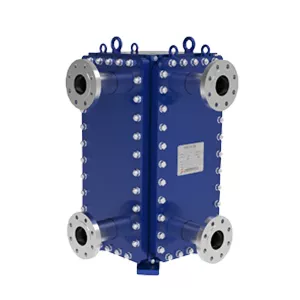
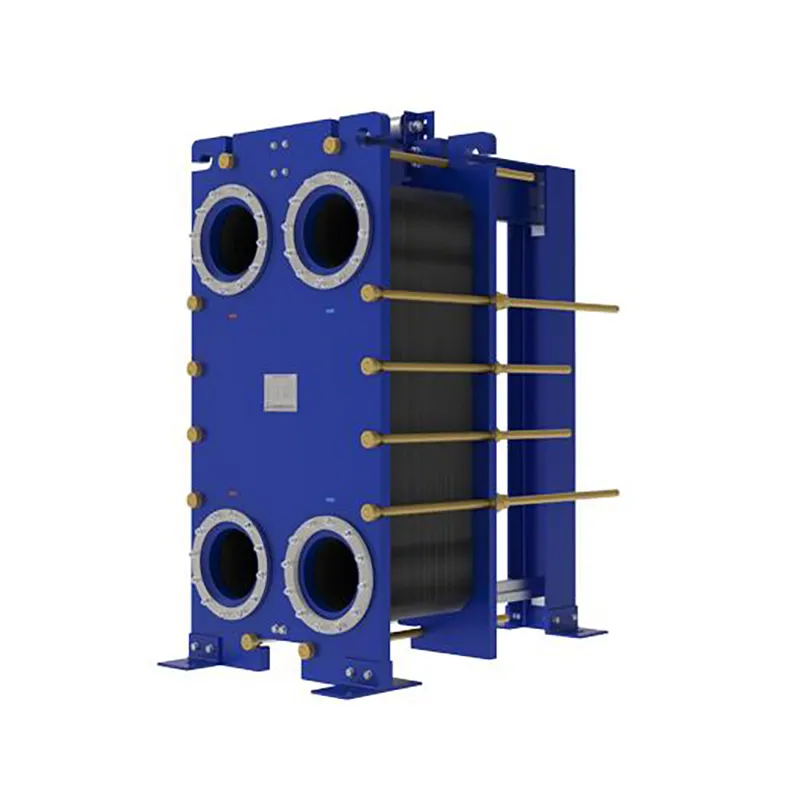
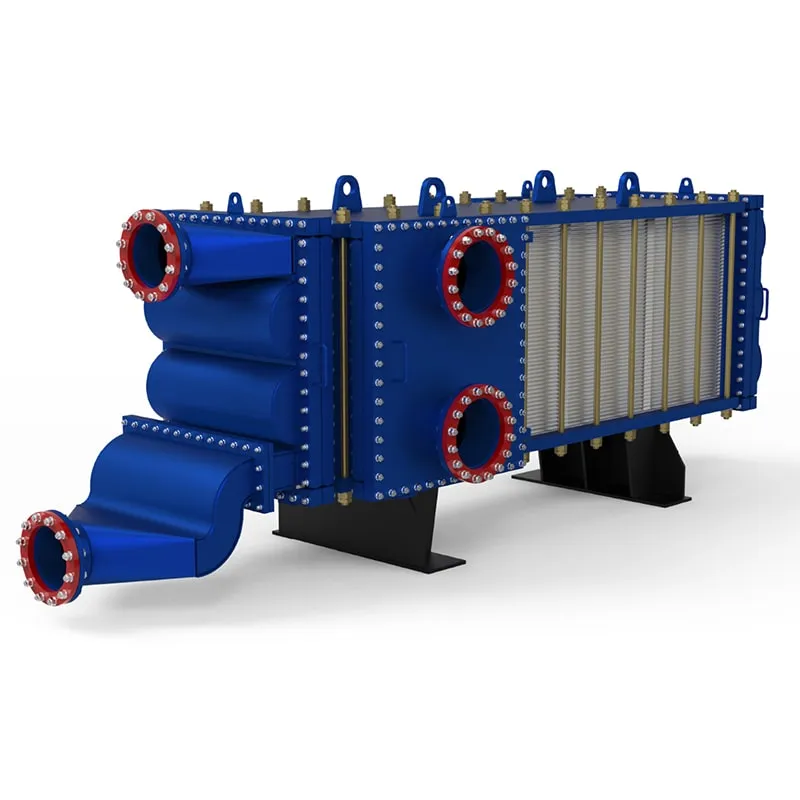
A fully welded plate heat exchanger consists of a series of corrugated plates that are laser-welded together to form two separate flow channels. The design eliminates gaskets, making it suitable for high-temperature and high-pressure fluids. The plates create turbulent flow, which enhances heat transfer coefficients and reduces fouling.
Typical process scenarios include:
- Heating or cooling aggressive chemicals where gaskets would fail.
- Recovering heat from high-temperature streams in refineries.
- Condensing vapors under vacuum or moderate pressure.
- Handling fluids with suspended solids using wide-gap variants.
When evaluating a Compabloc replacement, ensure the new unit can handle your specific process conditions—especially temperature gradients and pressure fluctuations—without compromising mechanical integrity.
Key Features and Typical Parameter Ranges
A reliable Compabloc replacement should offer the following features:
- Fully welded construction with no gaskets or brazing material.
- Compact footprint compared to shell-and-tube designs.
- High thermal efficiency due to turbulent flow and countercurrent arrangement.
- Ability to handle temperatures up to 500°C and pressures up to 40 bar (industry-common ranges).
- Materials such as 304/316L stainless steel, duplex, or higher alloys.
Typical parameter ranges for a Compabloc replacement include:
| Parameter |
Typical Range |
| Design temperature |
-40°C to 500°C |
| Design pressure |
Up to 40 bar (higher for special designs) |
| Heat transfer area |
1 m² to 500 m² per unit |
| Flow capacity |
0.5 to 500 m³/h per channel |
| Viscosity limit |
Up to 10,000 cP (with wide-gap options) |
Always verify these ranges with the manufacturer to match your specific duty.
Applications and Recommended Solutions
A Compabloc replacement is commonly applied in:
- Chemical processing: heating/cooling corrosive media.
- Petrochemical and refinery: interchangers, reboilers, and condensers.
- Pharmaceutical: high-purity applications requiring no gaskets.
- Food and beverage: where cleanability and thermal efficiency matter.
For each application, the recommended solution depends on fluid properties and operating conditions. For example, if your process contains fibrous or viscous fluids, a wide gap welded plate heat exchanger may be a better fit. For high-temperature gas-to-gas duties, consider a plate air preheater. For standard liquid-liquid duties, a gasketed plate heat exchanger can be a cost-effective alternative if gasket compatibility is acceptable.
Why Choose SHPHE for Your Compabloc Replacement?
SHPHE is a Shanghai-based plate heat exchanger manufacturer founded in 2005, exporting to over 20 countries. The company holds ISO9001 and ASME U certifications, ensuring quality and compliance with international standards. Their product lines include HT-Bloc/TP Welded Plate Heat Exchangers, Wide Gap Welded Plate Heat Exchangers, Gasketed Plate Heat Exchangers, PCHE, Plate Air Preheaters, and Pillow Plates.
When you need a Compabloc replacement, SHPHE offers free thermal design and selection services. Their engineers analyze your process data—flow rate, temperature, pressure, and media—to recommend the most suitable unit. This approach reduces the risk of under- or over-sizing and ensures seamless integration with your existing piping and controls. For instance, their HT-Bloc welded plate heat exchanger is designed as a direct alternative to fully welded block-type exchangers, offering comparable performance and a compact footprint.
Frequently Asked Questions About Compabloc Replacement
Q: Can a Compabloc replacement handle the same pressure and temperature as the original?
A: Yes, most fully welded replacements are designed to match or exceed the original ratings. Typical ranges are up to 40 bar and 500°C, but you should always confirm with the manufacturer based on your specific process conditions.
Q: How do I know if a replacement will fit my existing piping?
A: Provide the nozzle size, orientation, and connection type (flanged, threaded) to the manufacturer. Most suppliers can adjust the nozzle layout to match your existing setup, minimizing re-piping costs.
Q: What materials are available for a Compabloc replacement?
A: Common materials include 304 and 316L stainless steel, duplex, super duplex, and nickel alloys. The choice depends on fluid corrosivity and temperature. Consult with the manufacturer for material compatibility.
Q: Is a gasketed plate heat exchanger a good alternative to a fully welded Compabloc?
A: Only if your process temperature and pressure are within gasket limits (typically below 180°C and 25 bar) and the fluid is not aggressive to elastomers. For high-temperature or corrosive duties, a fully welded replacement is safer.
Q: How long does it take to get a custom Compabloc replacement?
A: Lead times vary, but many manufacturers offer standard designs in 4–8 weeks. Custom designs with special materials or nozzle configurations may take 8–12 weeks. Request a timeline during the quotation phase.
Q: What if my process fluid contains solids or fibers?
A: Consider a wide gap welded plate heat exchanger, which has larger plate spacing to handle particulate-laden fluids. This design reduces clogging and maintains thermal performance.
Request a Quote for Your Compabloc Replacement
To get an accurate recommendation for your Compabloc replacement, please provide the following details to the manufacturer:
- Flow rate for both hot and cold sides (m³/h or kg/s).
- Inlet and outlet temperatures (°C).
- Operating pressure and allowable pressure drop (bar).
- Fluid composition and any corrosive or fouling tendencies.
- Preferred materials and connection sizes.
With this information, SHPHE can perform a free thermal design and selection to ensure your Compabloc replacement meets your process requirements. Contact them today to discuss your project and receive a tailored solution.

 English EN





User Comments
Service Experience Sharing from Real Customers
Miles
Maintenance SupervisorWe swapped out our old heat exchanger bundle for a Compabloc replacement last month. It bolted right onto the existing frame without any field modifications—huge time saver. The thermal performance is actually better than the original, and we haven't had a single leak since startup. Finally, a drop-in solution that works.
Elena
Process EngineerHad to order a Compabloc replacement after a tube failure in our pilot plant. The unit arrived with all gaskets pre-installed, which saved us a day of assembly. Only gave 4 stars because the delivery took a week longer than quoted, but the product itself is solid. Handles our 180°C service without any thermal stress issues.
Raj
Reliability EngineerI've been specifying Compabloc replacements for our offshore platforms for three years. These things take a beating—salt spray, vibration, thermal cycling—and they just keep going. The last one we installed replaced a shell-and-tube that was failing every six months. This one's been running for 14 months with zero maintenance. Worth every penny.
Tanya
Plant ManagerThe Compabloc replacement itself works fine—it's compact and efficient. But the instruction manual was confusing for our crew, and the bolt torque specs were buried in an appendix. We got it installed eventually, but it took two calls to tech support. For the price, I'd expect clearer documentation. Performance is good, but the experience was frustrating.