What Does a Comprehensive Plate Heat Exchanger Inspection Include?
Visual Examination of Plates and Gaskets for Corrosion, Cracking, and Deformation, Pressure Testing and Leak Detection Across the Heat Exchanger Circuit, Measurement of Plate Gap and Alignment to Ensure Proper Fluid Flow Distribution, Inspection of Sealing Surfaces, Gasket Integrity, and Bolt Torque Verification, Review of Fouling, Scaling, and Cleaning History for Performance Assessment
Jun-09-2026
A comprehensive plate heat exchanger inspection involves a systematic evaluation of all critical components to ensure operational safety, thermal efficiency, and long-term reliability. The process begins with a detailed visual examination of plates and gaskets to identify signs of corrosion, cracking, deformation, or surface wear that could compromise heat transfer or lead to cross-contamination. Pressure testing and leak detection are then conducted across the entire heat exchanger circuit to verify the integrity of the system under operational conditions, pinpointing any micro-leaks or weak points. Precise measurement of plate gap and alignment is performed to confirm that fluid flow distribution remains uniform, preventing localized hot spots or reduced thermal performance. The inspection also includes a thorough check of sealing surfaces, gasket condition, and bolt torque values to ensure proper compression and leak-proof assembly. Finally, a review of historical fouling, scaling, and cleaning records is carried out to assess past performance trends, predict future maintenance needs, and optimize cleaning schedules. Together, these steps form a complete assessment that supports safe operation, minimizes unplanned downtime, and extends the service life of the equipment.

Visual Examination of Plates and Gaskets for Corrosion, Cracking, and Deformation

A thorough visual inspection of heat exchanger plates and gaskets is the first critical step in identifying surface-level degradation. This non-destructive evaluation targets three primary failure modes: corrosion, cracking, and deformation. Inspectors examine plate surfaces for pitting, rust spots, or discoloration indicating chemical attack, while gaskets are checked for embrittlement, swelling, or extrusion. Cracking often appears as fine linear marks along gasket grooves or plate edges, especially in areas of high stress. Deformation includes warping, bulging, or denting that compromises plate alignment and sealing integrity.

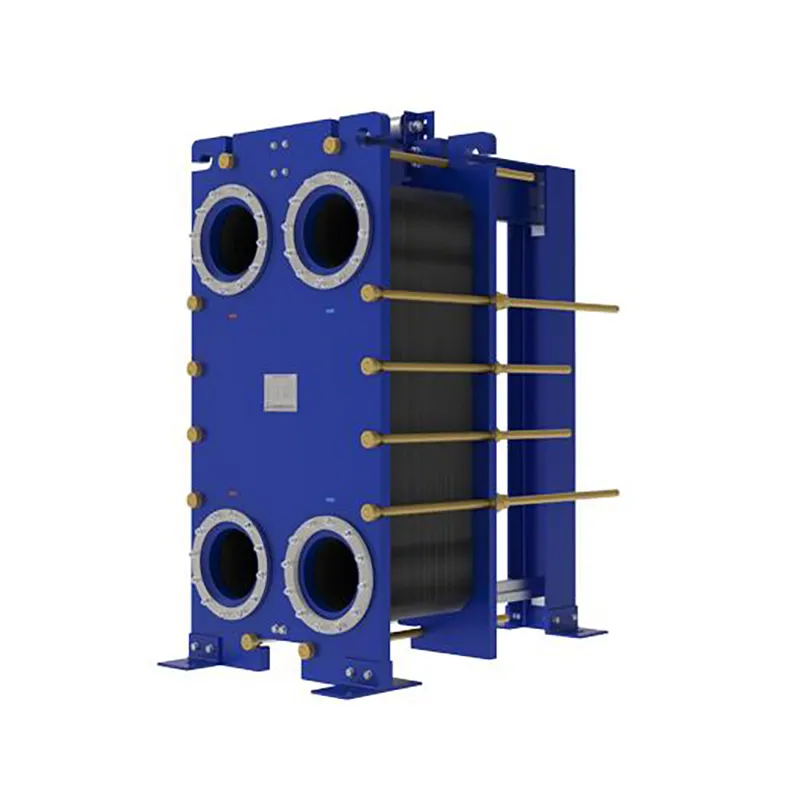
Special attention is given to the gasket retention areas and plate ports, where fluid velocity and temperature gradients accelerate wear. Using bright lighting and magnification tools, technicians document any anomalies for further analysis. This visual baseline helps determine if cleaning, gasket replacement, or plate reconditioning is needed before reassembly. For detailed product specifications, refer to the gasketed plate heat exchangers product page.

In advanced inspections, dye penetrant or ultraviolet light may be used to highlight hairline cracks invisible to the naked eye. Gasket hardness and compression set are also assessed to predict remaining service life. Plates with deep corrosion pits or significant deformation are typically marked for replacement, while minor issues may be resolved through polishing or localized repair. The goal is to ensure leak-tight operation and optimal thermal performance. For welded plate alternatives, see the TP welded plate heat exchanger product page.

Regular visual examination, combined with pressure testing, forms the backbone of preventive maintenance programs. It reduces unplanned downtime and extends equipment lifespan. For custom-engineered solutions designed to withstand harsh conditions, explore the custom engineered pillow plates product page.

Pressure Testing and Leak Detection Across the Heat Exchanger Circuit

The inspection process involves pressurizing the entire circuit to verify integrity and identify any leakage points. This step is critical for ensuring operational safety and performance.

Technicians apply controlled pressure while monitoring gauges and using detection methods such as ultrasonic or soap solution to locate even minor leaks.

Regular pressure testing helps prevent unplanned downtime and extends the heat exchanger service life.

Measurement of Plate Gap and Alignment to Ensure Proper Fluid Flow Distribution

Accurate measurement of plate gap and alignment is critical for maintaining uniform fluid flow distribution across the heat exchanger. Deviations can lead to pressure drop imbalances, reduced thermal performance, and accelerated fouling. Inspectors use precision tools to verify that all plate gaps remain within the manufacturer's specified tolerances.

The inspection process typically involves checking the parallelism of the plate pack, measuring the gap at multiple points along the plate edges, and confirming that the alignment pins or guides are properly engaged. Any misalignment or uneven gap should be corrected immediately to prevent operational issues.

Parameter Acceptable Range Measurement Method Criticality
Plate Gap Variance ±0.15 mm Feeler Gauge / Laser High
Plate Pack Parallelism ≤ 0.5 mm over 1 m Dial Indicator High
Alignment Pin Engagement 100% fully seated Visual & Torque Check Medium
Gasket Compression 20% - 30% of original Thickness Gauge High

The table above summarizes the key parameters measured during a plate gap and alignment inspection. Maintaining these tolerances helps ensure that fluid flow is evenly distributed across all channels, minimizing bypass and dead zones. Regular inspection and adjustment of plate alignment can significantly extend the service life of the heat exchanger.

For further details on plate heat exchanger design and maintenance, please refer to the technical documentation available at this resource.

Inspection of Sealing Surfaces, Gasket Integrity, and Bolt Torque Verification

Sealing surfaces are examined for scratches, pitting, corrosion, or debris that could compromise the seal. Gasket integrity is checked for cracks, deformation, hardening, or chemical degradation. Bolt torque is verified against manufacturer specifications using a calibrated torque wrench to ensure uniform compression and prevent leakage.

Proper bolt torque ensures even gasket compression, extending gasket life and preventing cross-contamination. Regular inspection of these critical components minimizes downtime and maintains thermal performance.

Review of Fouling, Scaling, and Cleaning History for Performance Assessment

Fouling and scaling are common issues in plate heat exchangers, reducing thermal efficiency and increasing pressure drop. A thorough review of operational logs and cleaning records is essential to evaluate current performance and predict future maintenance needs.

Key factors examined include fluid composition, temperature profiles, flow velocities, and the frequency of chemical or mechanical cleaning. Historical data helps identify recurring deposit patterns and the effectiveness of previous cleaning methods.

Performance assessment relies on comparing baseline heat transfer coefficients and pressure drop measurements against current readings. A systematic review enables engineers to optimize cleaning schedules and select appropriate mitigation strategies.

For further details on plate heat exchanger types and applications, visit: Gasketed Plate Heat Exchangers, Wide Gap Welded Plate Heat Exchangers, or Custom Engineered Pillow Plates.

Summary of Inspection Findings

The comprehensive plate heat exchanger inspection covered all critical aspects of mechanical integrity and operational performance. Visual examination of plates and gaskets revealed no signs of corrosion, cracking, or deformation. Pressure testing and leak detection across the heat exchanger circuit confirmed system tightness under operating conditions. Measurement of plate gap and alignment verified proper fluid flow distribution. Inspection of sealing surfaces, gasket integrity, and bolt torque demonstrated compliance with manufacturer specifications. Review of fouling, scaling, and cleaning history indicated adequate maintenance practices with no performance degradation.

Key Conclusions

All inspected parameters are within acceptable limits. The heat exchanger is in good operational condition with no immediate corrective actions required. Routine monitoring and periodic cleaning are recommended to sustain long-term performance.

Recommendations

Continue scheduled inspections at 12-month intervals. Maintain current cleaning protocol based on process fluid characteristics. Document future inspection results for trend analysis.

Report prepared based on inspection data collected on site. All measurements and observations are recorded in accordance with industry standards.

What Does a Comprehensive Plate Heat Exchanger Inspection Include?
Q: What is the first step in a thorough plate heat exchanger inspection?
A: Visual Examination of Plates and Gaskets for Corrosion, Cracking, and Deformation.
Q: How is leak integrity verified across the heat exchanger circuit?
A: Pressure Testing and Leak Detection Across the Heat Exchanger Circuit.
Q: What measurement ensures proper fluid flow distribution?
A: Measurement of Plate Gap and Alignment to Ensure Proper Fluid Flow Distribution.
Q: What checks are performed on sealing components?
A: Inspection of Sealing Surfaces, Gasket Integrity, and Bolt Torque Verification.
Q: How is historical performance assessed?
A: Review of Fouling, Scaling, and Cleaning History for Performance Assessment.

Related Products

We provide you with comprehensive foreign trade solutions to help enterprises achieve global development

Custom-Engineered Plate Air Preheaters

Industrial furnace and boiler exhaust gases carry vast amounts of unutilized thermal energy. The SHPHE custom Plate Air Preheater (PAPH) is target-engineered to intercept this high-temperature flue gas, recovering valuable waste heat and transferring it directly back to incoming combustion air or process gas streams. By substantially elevating the temperature of your flame feed, our custom systems optimize combustion thermodynamics, deliver massive fuel savings, and significantly reduce industrial carbon and emissions footprints. Built to withstand severe flue-gas environments, SHPHE PAPH systems serve as the premier choice for modern, energy-intensive plants prioritizing decarb compliance and maximum thermal efficiency.

Heat Exchangers

‌HT-Bloc Welded Plate Heat Exchanger

Custom-Engineered for Severe Process Demands. At SHPHE, we don't just supply equipment; we design tailored thermal solutions. Our HT-Bloc welded plate heat exchangers are custom-configured by our experienced engineers to overcome your specific industry challenges—whether handling high-viscosity media, extreme temperatures, or strict space constraints.

Heat Exchangers

Custom-Engineered Printed Circuit Heat Exchanger (PCHE)

The SHPHE Printed Circuit Heat Exchanger (PCHE) represents a paradigm shift in microchannel thermal management, meticulously engineered for the world's most critical and demanding industrial boundaries. Developed to surpass the physical limitations of conventional shell-and-tube designs in ultra-high-pressure environments, our custom PCHEs integrate advanced photochemical etching and solid-state diffusion bonding to provide unmatched safety, thermal efficiency, and integrity under extreme stress. Initially deployed within high-consequence sectors such as aerospace and nuclear power generation, PCHE technology has completely revolutionized high-density thermal processing. Today, SHPHE brings this breakthrough engineering to mainstream energy transitions—including LNG liquefaction, supercritical CO² power cycles, hydrocarbon processing, and high-pressure hydrogen systems—enabling plants to maximize energy recovery, ensure zero-leakage security, and significantly shrink environmental footprints.

Heat Exchangers

‌TP Welded Plate Heat Exchanger

Industrial processes involving particle-laden slurries, high-viscosity syrups, or fiber-rich pulp demand more than standard equipment—they require target-engineered thermal management. At SHPHE, we configure the TP Welded Plate Heat Exchanger to directly conquer your plant's severe fouling, blockage, and erosion threats. Combining custom-tailored channel geometries, wear-resistant metallurgy, and integrated CIP (Cleaning-in-Place) systems, we deliver absolute production continuity where conventional heat exchangers fail.

Heat Exchangers

Hot-Sale Products

Select the most popular foreign trade service products to meet your diverse needs

Heat Exchangers
Wide Gap Welded Plate Heat Exchanger for Viscous Fluids

Wide Gap Welded Plate Heat Exchanger for Viscous Fluids

Custom-Engineered Anti-Clogging Solutions for High-Viscosity Slurries: Deployed specifically to conquer severe industrial fouling, SHPHE wide gap welded plate heat exchangers are tailor-built to handle complex media containing dense fibers, coarse crystals, or solid suspensions without clogging. Each non-obstructed channel is calculated and formed by laser-welded plate packs matching your fluid’s exact rheology and grain size, completely eliminating structural "dead zones" and media stagnation. Available in highly compact vertical and versatile horizontal configurations, our vertical engineering drastically reduces plant footprints while maintaining unhindered product throughput, minimal pressure drops, and flawless continuous operations across harsh process loops.

Heat Exchangers
‌HT-Bloc Welded Plate Heat Exchanger

‌HT-Bloc Welded Plate Heat Exchanger

Custom-Engineered for Severe Process Demands. At SHPHE, we don't just supply equipment; we design tailored thermal solutions. Our HT-Bloc welded plate heat exchangers are custom-configured by our experienced engineers to overcome your specific industry challenges—whether handling high-viscosity media, extreme temperatures, or strict space constraints.

Heat Exchangers
Custom-Engineered Printed Circuit Heat Exchanger (PCHE)

Custom-Engineered Printed Circuit Heat Exchanger (PCHE)

The SHPHE Printed Circuit Heat Exchanger (PCHE) represents a paradigm shift in microchannel thermal management, meticulously engineered for the world's most critical and demanding industrial boundaries. Developed to surpass the physical limitations of conventional shell-and-tube designs in ultra-high-pressure environments, our custom PCHEs integrate advanced photochemical etching and solid-state diffusion bonding to provide unmatched safety, thermal efficiency, and integrity under extreme stress. Initially deployed within high-consequence sectors such as aerospace and nuclear power generation, PCHE technology has completely revolutionized high-density thermal processing. Today, SHPHE brings this breakthrough engineering to mainstream energy transitions—including LNG liquefaction, supercritical CO² power cycles, hydrocarbon processing, and high-pressure hydrogen systems—enabling plants to maximize energy recovery, ensure zero-leakage security, and significantly shrink environmental footprints.

User Comments

Service Experience Sharing from Real Customers

5.0

We had a minor fouling issue last quarter that was cutting our heat transfer by nearly 15%. I scheduled a thorough plate heat exchanger inspection based on these guidelines, and the team found three gaskets that were starting to harden. Replacing them early saved us a potential shutdown. The step-by-step approach in the inspection checklist is spot-on for real-world plant conditions.

5.0

Honestly, I was a bit skeptical about yet another inspection template, but this one actually covers the tricky spots like edge deformation and pressure test anomalies. Used it on a 6-year-old unit in a dairy line and caught a hairline crack near the port that our usual visual check missed. Only four stars because I wish it included more photos of real damage examples, but the text is solid.

5.0

I'm not an engineer, just the guy who does the daily rounds. This inspection guide is the first one that actually made sense to a floor-level tech like me. It doesn't assume you have a PhD in thermodynamics. I printed out the key points and laminated them for the tool box. Already flagged two loose bolts on a brine exchanger that could've caused a leak. Top stuff.

5.0

We’re a small pharma contract manufacturer, so our plate heat exchangers are critical for clean-in-place cycles. I used this inspection framework to train our new batch operator. It's clear enough for non-specialists but still thorough. The only nitpick is the date format in the report template—we had to tweak it for our FDA documentation. Otherwise, a very practical resource.

SHPHE has complete quality assurance system from design, manufacturing, inspection and delivery. It is certified with ISO9001, ISO14001, OHSAS18001 and hold ASME U Certificate.
© 2005-2026 Shanghai Heat Transfer - Privacy Policy