How a Gas to Liquid Plate Heat Exchanger Enhances Thermal Efficiency in Industrial Systems
Article Summary: This article explains how a gas to liquid plate heat exchanger improves thermal efficiency in industrial processes. We cover the working principle, key design features, typical performance parameters, and practical applications. The content is written for process engineers and procurement managers who need reliable, data-backed insights. We also include a comparison of welded and gasketed solutions, a FAQ section addressing real buyer concerns, and guidance on how to request a custom thermal design. The goal is to help you select the right heat exchanger for your system without overselling.
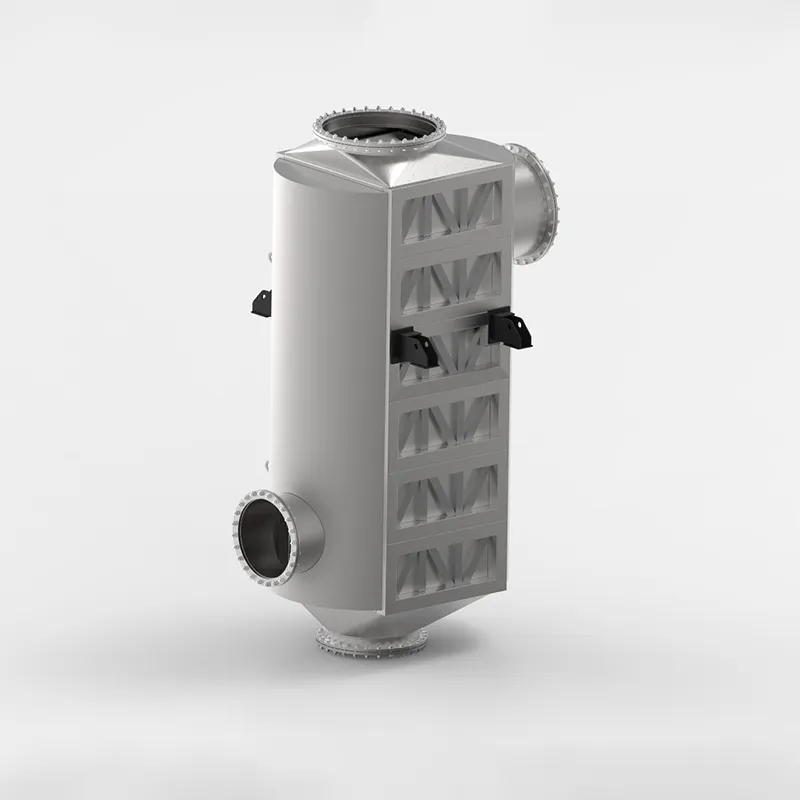
In many industrial systems, recovering heat from hot gas streams and transferring it to a liquid process fluid is a critical step for improving overall energy efficiency. A gas to liquid plate heat exchanger is specifically designed to handle this duty, offering compact construction, high thermal performance, and the ability to operate under challenging conditions. Unlike shell-and-tube units, plate heat exchangers provide a larger surface area per volume, which directly translates into better heat transfer coefficients and reduced footprint. For engineers and plant managers looking to cut energy costs and meet sustainability targets, understanding how these units work—and when to specify them—is essential.
What Is a Gas to Liquid Plate Heat Exchanger and Why Does Thermal Efficiency Matter?
A gas to liquid plate heat exchanger is a type of compact heat exchanger where a hot gas stream (such as flue gas, exhaust air, or process vapor) flows on one side of corrugated plates, while a liquid coolant or heat recovery fluid flows on the opposite side. The plates are typically made of stainless steel or other corrosion-resistant alloys, and the design can be either gasketed or fully welded. The primary advantage is the high thermal efficiency achieved through turbulent flow patterns induced by the plate corrugations. This turbulence reduces fouling resistance and improves the overall heat transfer coefficient (U-value), often reaching values between 30 and 60 W/m²·K for gas-liquid applications, depending on gas composition and flow conditions.
Thermal efficiency in this context refers to the ratio of actual heat recovered to the maximum possible heat transfer. A well-designed plate heat exchanger can achieve temperature approaches as low as 2–5°C, meaning the liquid outlet temperature can be very close to the gas inlet temperature. This is particularly valuable in processes like waste heat recovery from furnaces, dryers, or gas turbines, where every degree of recovered heat reduces fuel consumption. For example, in a typical industrial dryer exhaust at 200°C, a gas to liquid plate heat exchanger can preheat incoming water from 20°C to 160°C, cutting energy use by 30–40%.
How Does a Gas to Liquid Plate Heat Exchanger Work in Practice?
The operating principle is straightforward but relies on precise engineering. Hot gas enters the exchanger through dedicated gas ports and flows through alternating plate channels. The liquid flows counter-currently or co-currently through the adjacent channels. The plates are pressed with a herringbone or chevron pattern, which creates multiple contact points and induces high turbulence even at moderate flow velocities. This turbulence is key to achieving high heat transfer coefficients while keeping the pressure drop within acceptable limits—typically 0.5–2.0 kPa per plate pass for gas side and 10–50 kPa for liquid side.
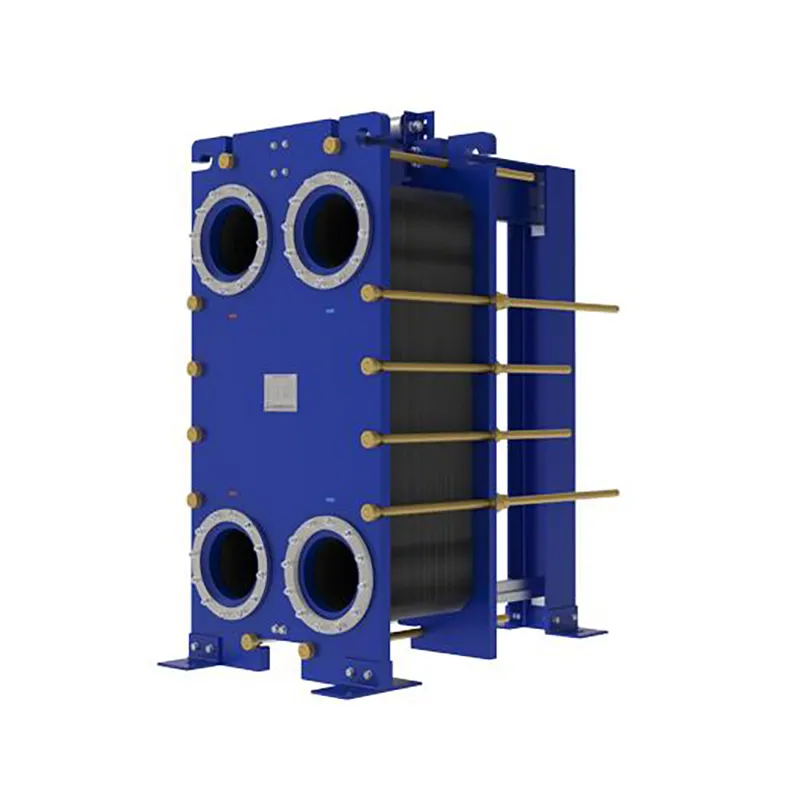
For gas-to-liquid applications, special attention is given to the gas-side channel geometry. Wide-gap plate designs are often used when the gas stream contains particulates or condensable vapors, as they provide larger flow passages (typically 5–15 mm gap) to prevent clogging. In contrast, standard gasketed plate heat exchangers with 2–5 mm gaps are suitable for clean gases. SHPHE, a Shanghai-based manufacturer founded in 2005, offers both wide gap welded plate heat exchangers and gasketed plate heat exchangers for such duties, with free thermal design and selection service.
Key Features and Typical Parameter Ranges
When evaluating a gas to liquid plate heat exchanger, engineers should consider the following features and industry-accepted parameter ranges:
- Plate Material: 304/316L stainless steel for most gas-liquid duties; titanium or duplex alloys for corrosive gas streams.
- Design Pressure: Typically up to 30 bar for gasketed units; welded designs can handle up to 100 bar.
- Design Temperature: -20°C to 250°C for gasketed; up to 550°C for fully welded or plate air preheaters.
- Heat Transfer Coefficient (U): 30–60 W/m²·K for gas-liquid; higher if liquid side is water or thermal oil.
- Gas Flow Rate: 100–100,000 Nm³/h depending on unit size and plate count.
- Liquid Flow Rate: 1–500 m³/h per unit; multiple units can be paralleled.
- Pressure Drop: Gas side 0.2–2.0 kPa per pass; liquid side 10–80 kPa.
- Temperature Approach: As low as 2°C with counter-current flow.
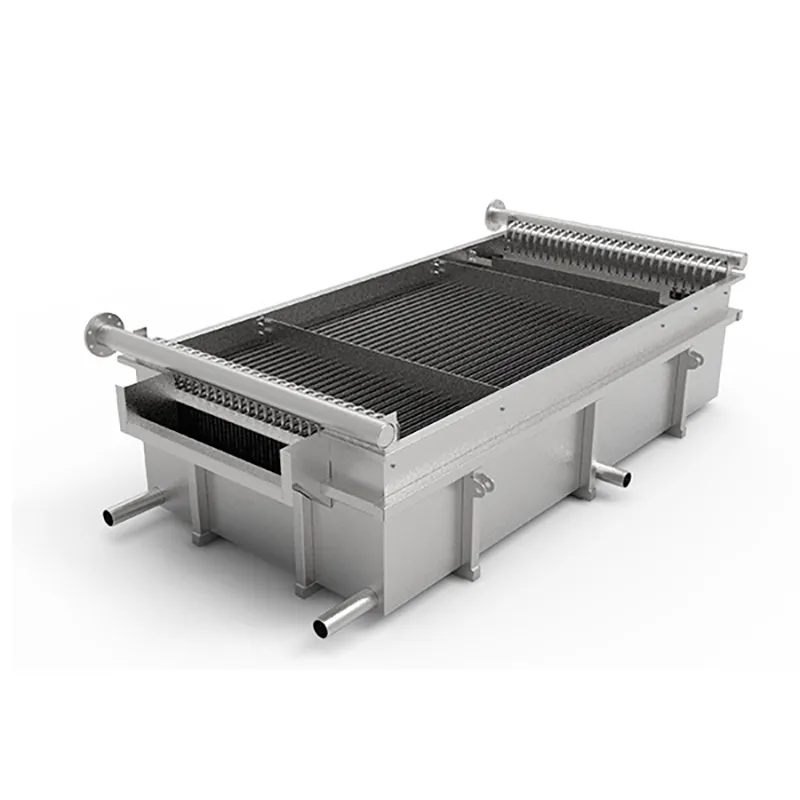
These ranges are commonly accepted in the industry and are not specific to any single manufacturer. For applications requiring extreme temperatures or pressures, welded plate heat exchangers such as the HT-Bloc or TP series are often specified. SHPHE’s HT-Bloc welded plate heat exchangers are designed for high-temperature gas-liquid duties up to 550°C, making them a reliable alternative to traditional shell-and-tube units.
Applications and Recommended Solutions
Gas to liquid plate heat exchangers are used across many industries. Common applications include:
- Waste heat recovery from boiler flue gas: Preheating combustion air or feedwater using exhaust gas at 150–300°C.
- Dryer exhaust heat recovery: Capturing heat from hot air or steam in food, chemical, and textile dryers.
- Gas turbine intercooling: Cooling compressed air between stages using water or glycol.
- Process gas cooling: Cooling hot process gases (e.g., hydrogen, nitrogen) before compression or storage.
- Air preheating in furnaces: Using flue gas to preheat incoming combustion air, improving burner efficiency.
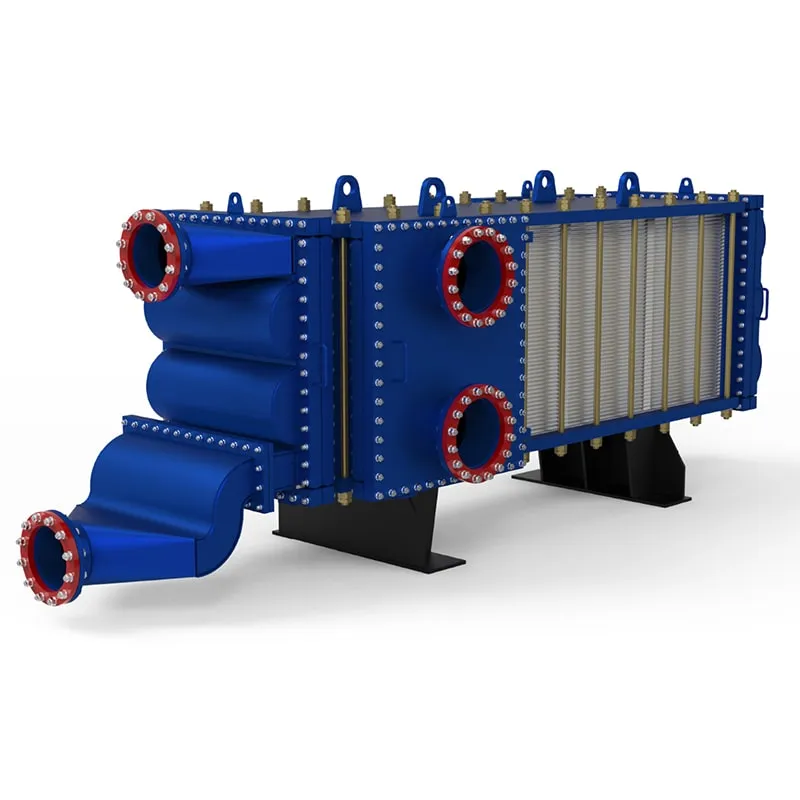
For each application, the choice between gasketed and welded designs depends on gas cleanliness, temperature, and pressure. For clean, low-pressure gas streams, gasketed units offer lower cost and easy maintenance. For dirty or high-temperature gas, welded plate heat exchangers are preferred. SHPHE’s product line includes custom-engineered plate air preheaters and printed circuit heat exchangers (PCHE) for high-pressure gas-liquid duties, compatible with systems from Alfa Laval, Compabloc, or GEA.
Why SHPHE for Your Gas to Liquid Plate Heat Exchanger?
SHPHE has been manufacturing plate heat exchangers in Shanghai since 2005, with exports to over 20 countries. The company holds ISO9001 and ASME U certifications, ensuring consistent quality and compliance with international standards. Their engineering team provides free thermal design and selection service, helping clients determine the optimal plate configuration, material, and size for their specific gas-liquid duty. Whether you need a standard gasketed unit for a clean gas stream or a fully welded HT-Bloc for high-temperature flue gas, SHPHE offers a range of solutions that are compatible with or serve as alternatives to major brands like Alfa Laval, Compabloc, and GEA.
The company’s product portfolio includes custom-engineered pillow plates for specialized heat transfer surfaces, as well as TP welded plate heat exchangers for high-pressure gas-liquid applications. All units are designed with thermal efficiency as a priority, and the company’s experience in gas-to-liquid applications spans industries such as petrochemical, power generation, food processing, and HVAC.
Frequently Asked Questions
Q1: Can a gas to liquid plate heat exchanger handle dirty or particulate-laden gas?
Yes, but you need a wide-gap welded design. Standard gasketed plates have narrow gaps (2–5 mm) that can clog with dust or fibers. Wide-gap welded plate heat exchangers, with gaps of 5–15 mm, are specifically designed for such conditions. SHPHE offers wide-gap units that can handle gas streams with up to 200 mg/Nm³ of particulate matter without frequent cleaning.
Q2: What is the maximum temperature a gas to liquid plate heat exchanger can withstand?
For gasketed units, the maximum temperature is typically 250°C due to elastomer gasket limits. For fully welded designs (e.g., HT-Bloc or TP series), temperatures up to 550°C are achievable. If you need to handle gas above 550°C, a printed circuit heat exchanger (PCHE) or plate air preheater with ceramic coating may be required. SHPHE can advise on the best solution for your specific temperature range.
Q3: How do I calculate the required heat transfer area for my gas-liquid duty?
The required area (A) is calculated using the formula A = Q / (U × LMTD), where Q is the heat duty in kW, U is the overall heat transfer coefficient in W/m²·K, and LMTD is the log mean temperature difference. For gas-liquid applications, U typically ranges from 30 to 60 W/m²·K. SHPHE offers free thermal design calculations—just provide your flow rates, inlet/outlet temperatures, and pressure limits, and they will recommend the optimal plate count and configuration.
Q4: Are gas to liquid plate heat exchangers compatible with existing Alfa Laval or GEA systems?
Yes, SHPHE designs its gasketed plate heat exchangers to be compatible with major brands like Alfa Laval, Compabloc, and GEA in terms of port dimensions and plate patterns. For welded units, compatibility depends on the specific connection requirements. It is best to provide your existing unit’s datasheet for a direct replacement or retrofit recommendation.
Q5: What maintenance is required for a gas to liquid plate heat exchanger?
For gasketed units, periodic inspection and gasket replacement (every 3–5 years) are needed. Plates can be cleaned chemically or mechanically. Welded units require less maintenance but may need chemical cleaning if fouling occurs. Regular monitoring of pressure drop and outlet temperatures helps detect fouling early. SHPHE provides maintenance guidelines with every unit.
Q6: How long does it take to get a custom thermal design and quotation?
SHPHE typically provides a free thermal design and preliminary quotation within 1–3 business days after receiving your process parameters. For standard units, delivery can be 4–6 weeks. Custom-engineered solutions may take 8–12 weeks depending on complexity. The company’s engineering team works closely with clients to ensure the design meets all performance and budget requirements.
Request a Custom Thermal Design for Your Gas to Liquid Plate Heat Exchanger
To ensure you get the most efficient gas to liquid plate heat exchanger for your system, it is important to provide accurate process data. When contacting SHPHE for a proposal, please include the following details:
- Flow rate of both gas and liquid (in Nm³/h or kg/h for gas; m³/h or L/min for liquid).
- Inlet and outlet temperatures for both streams.
- Operating pressure and allowable pressure drop on each side.
- Media composition (gas: flue gas, air, steam, etc.; liquid: water, glycol, thermal oil, etc.) and any corrosive or fouling components.
- Desired materials (e.g., 316L stainless steel, titanium) or if you need a recommendation.
With this information, SHPHE’s engineers can perform a free thermal design and select the optimal gas to liquid plate heat exchanger configuration—whether gasketed, welded, or wide-gap—to maximize thermal efficiency in your industrial system. Contact them today to start the process.

 English EN





User Comments
Service Experience Sharing from Real Customers
Mike
Process EngineerWe swapped out our old shell-and-tube for one of these gas-to-liquid plate exchangers in a revamp project. The heat transfer coefficient is noticeably higher, and the footprint is half the size. Had a minor concern about gasket material at first, but the tech support walked me through the selection. Solid piece of kit.
Sarah
Maintenance SupervisorHonestly, I was skeptical about plate heat exchangers for gas service because of pressure drop worries. But this unit has been running on our flare gas recovery line for six months without a single leak. Cleaning the plates was easier than I expected, too. Only giving 4 stars because the initial bolt torque spec seemed a bit fussy.
Tom
Senior Project ManagerNeeded a compact solution for a biogas upgrading skid, and this gas-to-liquid plate exchanger fit the bill perfectly. The thermal performance matched the datasheet within 2% on commissioning. Delivery was on time, and the documentation was clear. Would definitely spec these again for similar duties.
Lisa
Shift OperatorBeen running this exchanger on a nitrogen cooling loop for about eight months now. It handles the temperature swings without any weird noises or vibrations, which is more than I can say for some other gear we have. The only downside is that the drain valve is a bit awkward to reach on our specific frame size, but that's a layout issue on our end.