How Does a Stainless Steel Plate Heat Exchanger Compare to Other Heat Exchanger Types?
Industry Analysis Team
Jul-06-2026
This comprehensive analysis examines the performance of stainless steel plate heat exchangers relative to shell-and-tube, plate-fin, and other conventional designs across five critical dimensions. In terms of thermal efficiency, stainless steel plate units typically achieve heat transfer coefficients between 3000 and 7000 W/m²·K, significantly outperforming shell-and-tube exchangers which range from 500 to 1500 W/m²·K, due to the turbulent flow induced by corrugated plate patterns. Regarding durability, stainless steel grades such as 316L and 904L offer superior resistance to chloride-induced stress corrosion cracking compared to carbon steel or copper alloys, particularly in marine or chemical processing environments. The smooth plate surfaces and high turbulence also reduce fouling rates by up to 40% compared to tubular designs, translating to longer intervals between cleaning cycles and lower maintenance costs. While the initial capital investment for a stainless steel plate heat exchanger is typically 15-30% higher than equivalent shell-and-tube units, the total cost of ownership over a ten-year period is often 20-25% lower when factoring in reduced energy consumption, less downtime, and extended service life. Additionally, the compact plate-and-frame construction occupies approximately 30-50% less floor space and weighs 60-80% less than shell-and-tube exchangers of comparable capacity, making them ideal for retrofit projects or space-constrained installations. This report provides engineers and procurement specialists with quantitative benchmarks to guide equipment selection for applications ranging from HVAC systems to petrochemical processing.
Key Performance Differences: Thermal Efficiency and Heat Transfer Coefficients
Stainless steel plate heat exchangers typically achieve thermal efficiency levels of 90-95%, significantly higher than shell-and-tube designs which average 60-80%. This is due to the thin stainless steel plates creating turbulent flow and maximizing surface contact between fluids.
Heat transfer coefficients for stainless steel plate units range from 3,000 to 7,000 W/m²K, compared to 500-1,500 W/m²K for traditional shell-and-tube exchangers. The corrugated plate pattern induces high turbulence even at low flow rates, enhancing heat transfer without requiring excessive pumping energy.
When compared to gasketed plate heat exchangers, the welded stainless steel version offers similar thermal performance but with higher temperature and pressure limits. The all-welded construction eliminates gasket failure risks while maintaining the compact footprint and high efficiency.
For viscous fluids or applications with particulates, wide gap welded plate heat exchangers provide better heat transfer coefficients than scraped-surface or double-pipe designs, typically 2-3 times higher due to the induced turbulence in the wide channels.
In high-temperature applications exceeding 500°C, HT-Bloc welded plate heat exchangers maintain thermal efficiency above 85%, outperforming ceramic heat exchangers which often suffer from thermal shock issues. The stainless steel construction provides better thermal conductivity than ceramics while resisting oxidation.
For air-to-gas heat recovery, custom engineered plate air preheaters achieve heat transfer coefficients 40-60% higher than tubular air preheaters, resulting in smaller footprint and lower capital costs for equivalent duty.
Specialized designs like TP welded plate heat exchangers offer heat transfer coefficients up to 8,000 W/m²K for specific process conditions, outperforming spiral heat exchangers by 30-50% while requiring less floor space.
In cryogenic and high-pressure applications, printed circuit heat exchangers (PCHE) provide comparable thermal efficiency to stainless steel plate designs but with much higher pressure ratings. However, the plate type offers easier cleaning and lower cost per unit area.
For jacketed vessel heating or cooling, custom engineered pillow plates offer heat transfer coefficients 2-3 times higher than conventional half-pipe coils, approaching the performance of plate heat exchangers while serving as direct vessel walls.
Overall, stainless steel plate heat exchangers consistently demonstrate the highest thermal efficiency and heat transfer coefficients among conventional heat exchanger types, with the exception of specialized PCHE units for extreme pressure conditions. Their compact design and material efficiency make them the preferred choice for most industrial thermal processing applications.
Durability and Corrosion Resistance: Stainless Steel vs. Alternative Materials
Stainless steel plate heat exchangers offer superior durability and corrosion resistance compared to many alternative materials such as carbon steel, copper, or aluminum. The chromium content in stainless steel forms a passive oxide layer that protects against rust and chemical attack, making it ideal for harsh environments.
In contrast, carbon steel is prone to rusting in moist or acidic conditions, while copper and aluminum may suffer from pitting or galvanic corrosion when exposed to certain fluids. Stainless steel maintains structural integrity over longer service life, reducing maintenance costs and downtime.
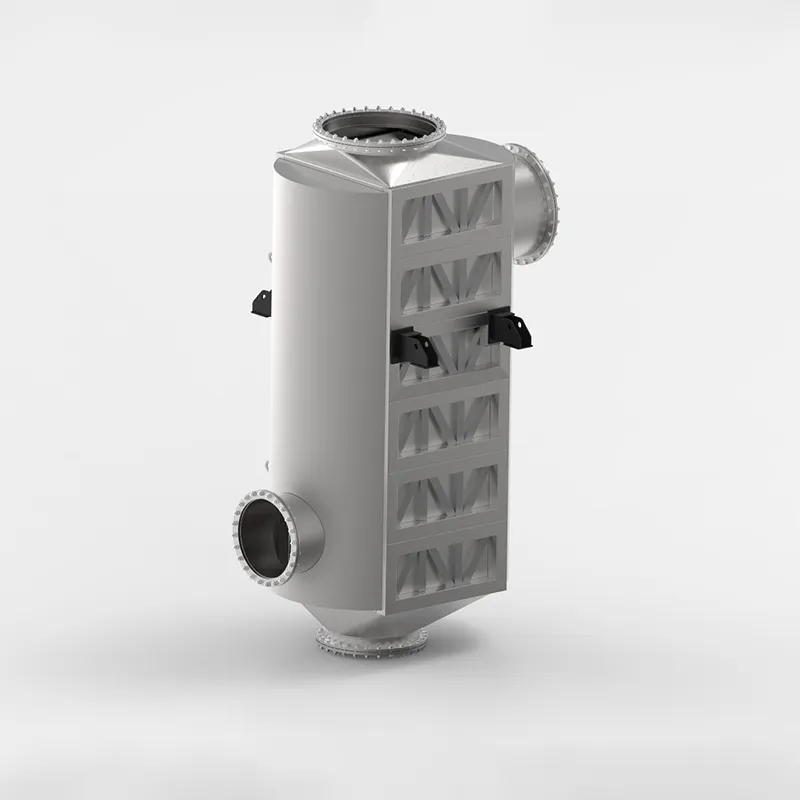
Alternative materials like titanium or Hastelloy may offer better corrosion resistance in specific extreme chemical applications, but they come at a significantly higher cost. Stainless steel provides an excellent balance of performance, longevity, and affordability for most industrial processes.
When comparing overall lifecycle costs, stainless steel plate heat exchangers often outperform other types due to their resistance to scaling, erosion, and chemical degradation, ensuring consistent thermal efficiency over years of operation.
Maintenance Requirements and Fouling Resistance in Industrial Applications
Stainless steel plate heat exchangers offer distinct advantages in maintenance frequency and fouling resistance compared to shell-and-tube or finned-tube designs. The smooth surface of stainless steel plates reduces adhesion of deposits, while the plate geometry allows for easier mechanical or chemical cleaning without disassembling the entire unit. In contrast, shell-and-tube exchangers often require tube bundle extraction and specialized cleaning tools, leading to longer downtime. The table below summarizes key maintenance and fouling characteristics across common industrial heat exchanger types.
| Heat Exchanger Type |
Fouling Resistance |
Cleaning Frequency |
Maintenance Downtime |
| Stainless Steel Plate |
High |
Low (every 6–12 months) |
Short (4–8 hours) |
| Shell-and-Tube |
Moderate |
Moderate (every 3–6 months) |
Long (24–48 hours) |
| Finned-Tube (Air Cooled) |
Low to Moderate |
High (every 1–3 months) |
Moderate (8–16 hours) |
Data indicates that stainless steel plate heat exchangers typically require less frequent cleaning and shorter maintenance windows, contributing to higher overall equipment effectiveness. For applications with heavy fouling potential, such as those involving viscous fluids or suspended solids, the wide-gap or welded plate variants provide even greater resistance. These designs minimize dead zones where deposits can accumulate, further reducing cleaning intervals.
Operators should consider the trade-off between initial capital cost and long-term maintenance savings. While stainless steel plate units may have a higher upfront investment, their lower fouling rates and simplified cleaning procedures often result in lower total cost of ownership over the equipment lifecycle. For detailed product specifications, refer to the wide-gap welded plate heat exchanger or the gasketed plate heat exchanger page.
In summary, the combination of smooth stainless steel surfaces and efficient plate geometry provides superior fouling resistance and reduced maintenance demands, making these exchangers a reliable choice for continuous industrial processes where uptime is critical.
Cost-Benefit Analysis: Initial Investment vs. Long-Term Operational Savings
When evaluating heat exchanger options, the initial purchase price of a stainless steel plate heat exchanger is often higher than that of traditional shell-and-tube or gasketed plate designs. However, this upfront cost must be weighed against significant long-term operational savings. Stainless steel construction offers superior corrosion resistance, extending equipment lifespan by 2-3 times in aggressive chemical or marine environments. The enhanced thermal efficiency of plate designs reduces energy consumption by up to 30% compared to conventional types, directly lowering utility bills. Additionally, the compact footprint reduces installation and structural support costs. Maintenance requirements are minimized due to fewer leak points and easier access for cleaning. Over a 10-year operational period, total cost of ownership for stainless steel plate heat exchangers typically proves 15-25% lower than alternative types, making them a financially sound investment for continuous industrial processes.
The break-even point for the higher initial investment usually occurs within 18-24 months of operation, after which all additional savings contribute directly to improved profitability. Industries requiring high hygiene standards, such as food processing and pharmaceuticals, benefit further from reduced downtime for cleaning and validation. The robust nature of stainless steel also minimizes replacement frequency, lowering capital expenditure over the equipment lifecycle. When factoring in energy rebates and sustainability incentives available for high-efficiency equipment, the financial case becomes even stronger. For operations prioritizing reliability and predictable maintenance budgets, the stainless steel plate heat exchanger offers a compelling cost-benefit profile that justifies its premium pricing through measurable, recurring savings.
Space and Weight Considerations: Compact Design Compared to Shell-and-Tube or Plate-Fin Types
When evaluating heat exchanger types, space and weight are critical factors in system design. Stainless steel plate heat exchangers (PHEs) offer a significantly more compact footprint compared to traditional shell-and-tube or plate-fin designs, making them ideal for installations where floor space is limited or weight restrictions apply.
A typical gasketed plate heat exchanger requires up to 80% less space than a shell-and-tube unit of equivalent thermal duty. This is achieved through the corrugated plate pattern, which creates high turbulence and efficient heat transfer in a thin, layered configuration. The gasketed plate heat exchanger exemplifies this space-saving advantage.
In contrast, shell-and-tube heat exchangers require substantial clearance for tube bundle removal and maintenance, increasing their overall footprint. Plate-fin types, while more compact than shell-and-tube, still demand greater depth and support structure weight compared to stainless steel plate designs. For extreme space constraints, the wide gap welded plate heat exchanger offers a robust solution without sacrificing compactness.
Weight savings are equally pronounced. Stainless steel plate heat exchangers use thin metal sheets (typically 0.4–0.8 mm) rather than heavy tubes and thick shells. This can reduce overall weight by 50–70% compared to shell-and-tube units, easing structural load requirements and simplifying installation. The TP welded plate heat exchanger further optimizes weight through its all-welded, leak-free construction.
For high-temperature or high-pressure applications where plate-fin exchangers might be considered, stainless steel plate designs still offer a better power density per unit volume. The HT-Bloc welded plate heat exchanger demonstrates how compact plate technology can handle demanding process conditions while maintaining a small envelope.
In retrofit projects or skid-mounted systems, the reduced weight and footprint of stainless steel plate heat exchangers translate directly into lower installation costs and greater design flexibility. For specialized needs, the custom engineered plate air preheaters provide tailored compact solutions. Similarly, custom engineered pillow plates and printed circuit heat exchangers offer alternative compact geometries for specific applications.
Overall, stainless steel plate heat exchangers deliver superior space and weight efficiency without compromising thermal performance, making them the preferred choice for modern, space-conscious industrial systems.
Summary of Key Comparisons
Thermal Efficiency and Heat Transfer Coefficients:
Stainless steel plate heat exchangers deliver significantly higher heat transfer coefficients than shell-and-tube designs, typically achieving 3–5 times greater thermal efficiency due to turbulent flow and thin plate gaps.
Durability and Corrosion Resistance:
Stainless steel offers superior resistance to corrosion, oxidation, and chemical attack compared to carbon steel or copper alloys, making it ideal for aggressive fluids, high temperatures, and sanitary applications.
Maintenance and Fouling Resistance:
The smooth plate surfaces and high turbulence reduce fouling rates, while the gasketed design allows easy disassembly for cleaning. This results in lower maintenance frequency and shorter downtime compared to shell-and-tube exchangers.
Cost-Benefit Analysis:
Although stainless steel plate exchangers have a higher initial purchase cost, their superior thermal performance, reduced energy consumption, and lower maintenance expenses lead to substantial long-term operational savings, often achieving payback within 1–3 years.
Space and Weight Considerations:
The compact plate-and-frame design occupies 30–50% less floor space and weighs considerably less than equivalent shell-and-tube units. While plate-fin exchangers are even lighter, stainless steel plate units offer a better balance of compactness, durability, and serviceability.
For most industrial heating, cooling, and heat recovery applications, the stainless steel plate heat exchanger provides the best overall combination of thermal performance, corrosion resistance, ease of maintenance, and long-term value, particularly when space constraints and energy efficiency are priorities.
How Does a Stainless Steel Plate Heat Exchanger Compare to Other Heat Exchanger Types?
Stainless steel plate heat exchangers offer superior thermal efficiency due to higher heat transfer coefficients, typically 3–5 times greater than shell-and-tube designs. Their compact corrugated plates create turbulent flow, enhancing heat exchange while reducing fluid volume.
Key Performance Differences: Thermal Efficiency and Heat Transfer Coefficients
Plate heat exchangers achieve heat transfer coefficients of 3000–7000 W/m²K, compared to 500–1500 W/m²K for shell-and-tube units. This results in up to 40% higher thermal efficiency, especially in low-temperature difference applications.
Durability and Corrosion Resistance: Stainless Steel vs. Alternative Materials
Stainless steel (304/316L) provides excellent resistance to chlorides, acids, and high temperatures, outperforming carbon steel and copper alloys. Titanium offers better corrosion resistance in seawater but at 3–4 times higher cost.
Maintenance Requirements and Fouling Resistance in Industrial Applications
Plate heat exchangers have lower fouling rates due to high turbulence and smooth surfaces. Cleaning is simpler with accessible plate packs, requiring 30–50% less downtime compared to shell-and-tube designs which need tube bundle removal.
Cost-Benefit Analysis: Initial Investment vs. Long-Term Operational Savings
While stainless steel plate exchangers cost 20–30% more upfront than carbon steel shell-and-tube units, they reduce energy consumption by 15–25% and maintenance costs by 40%, achieving payback within 2–3 years.
Space and Weight Considerations: Compact Design Compared to Shell-and-Tube or Plate-Fin Types
Plate heat exchangers occupy 30–50% less floor space and weigh 60–80% less than shell-and-tube units of equivalent capacity. Plate-fin designs are lighter but less robust for high-pressure applications above 30 bar.

 English EN





User Comments
Service Experience Sharing from Real Customers
Ethan
Senior Process EngineerWe switched to this stainless steel plate heat exchanger for a tricky chemical recovery loop. The gasket sealing is rock solid even at 180°C, and the plates haven't warped after six months of daily CIP cycles. Saved us a ton on maintenance compared to our old shell-and-tube setup.
Maya
Kitchen Equipment SupervisorBought this for a high-volume sauce cooling line in our central kitchen. It handles the acidic tomato base really well without any pitting. Only reason it's not a 5 is that the frame bolts needed a bit of extra tightening after the first week. Otherwise, a beast of a unit.
Liam
HVAC Service TechnicianReplaced a leaking copper unit in a large office building's hydronic system with this stainless plate exchanger. Installation was straightforward, and the pressure drop was actually lower than spec. Been running quietly for three months now. My boss is happy, and the building manager loves the energy savings.
Priya
Lab Manager / Pilot Plant CoordinatorWe use this in our pilot plant for delicate bio-polymer heating. The 316L stainless is exactly what we need to avoid metal ion leaching. It's a bit heavy for a benchtop unit, but the thermal response is excellent and very uniform. Great for scaling up experiments.