Why Choose a Duplex Stainless Steel Heat Exchanger for Industrial Applications
In demanding industrial environments where corrosion resistance and mechanical strength are non-negotiable, a duplex stainless steel heat exchanger offers a reliable balance of performance and longevity. This article explores the working principles, key parameters, and practical applications of duplex heat exchangers, with a focus on how SHPHE's welded plate solutions deliver cost-effective alternatives to traditional shell-and-tube designs. Whether you're managing chemical processing, offshore oil and gas, or high-pressure thermal systems, understanding the advantages of duplex materials can help you make an informed purchasing decision.
What Makes Duplex Stainless Steel Different?
Duplex stainless steels combine austenitic and ferritic microstructures, giving them roughly twice the yield strength of standard 304 or 316 grades. This higher strength allows for thinner wall sections, which improves heat transfer efficiency and reduces overall weight. Common grades include 2205 (UNS S32205) and 2507 (UNS S32750), with 2205 being the most widely specified for heat exchanger applications due to its excellent resistance to chloride stress corrosion cracking (SCC) and pitting.
For process engineers working with seawater cooling, sour gas, or aggressive chemical streams, a duplex stainless steel heat exchanger can significantly extend service life compared to conventional austenitic alloys. The material also offers good weldability and fabricability, making it suitable for both gasketed and fully welded plate designs.
How Does a Duplex Heat Exchanger Work in Practice?
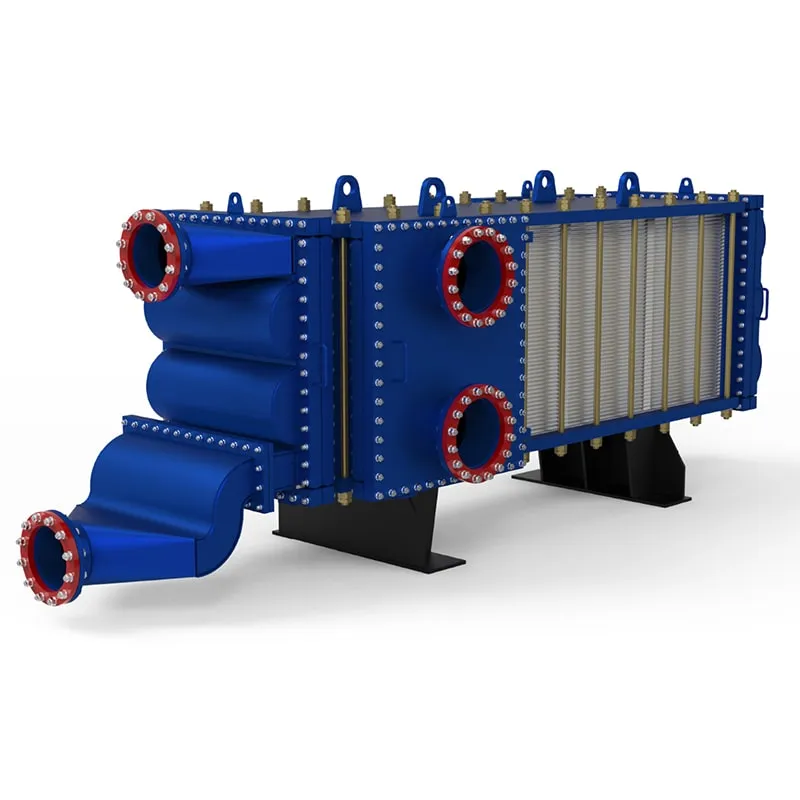
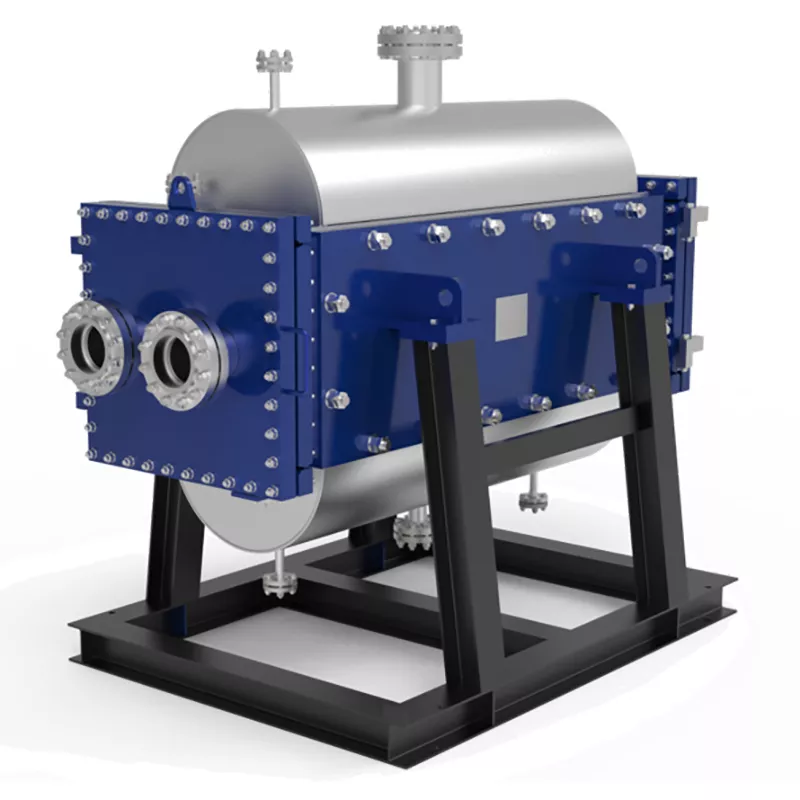
In a typical industrial setup, the duplex stainless steel heat exchanger operates by transferring thermal energy between two fluid streams through a series of corrugated plates. The high-strength plates are pressed from duplex sheet metal and assembled into a compact core. Fluids flow in counter-current or co-current patterns, with gaskets or laser welds directing the flow and preventing cross-contamination.
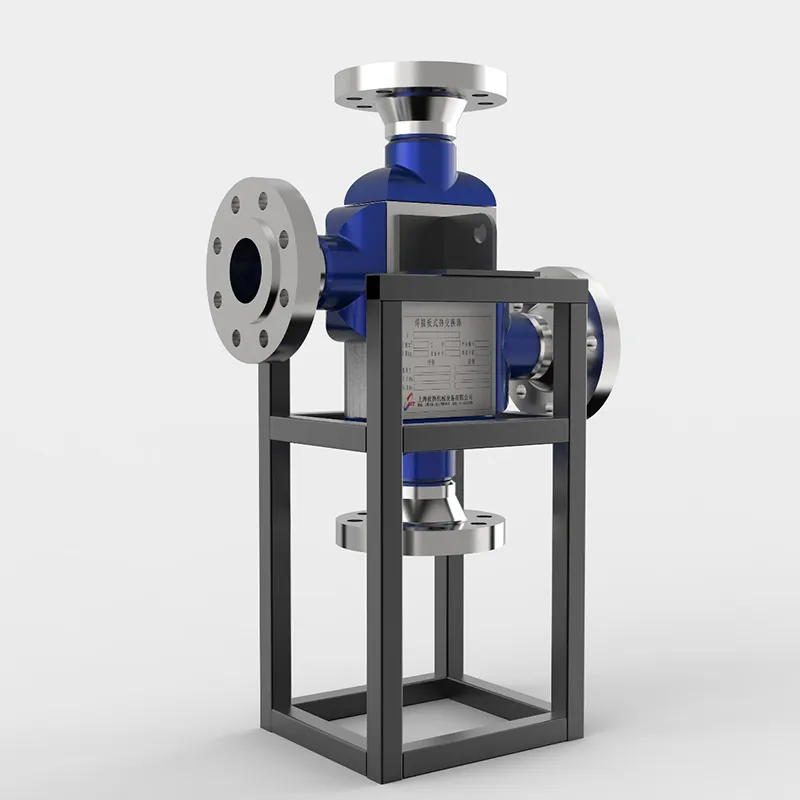
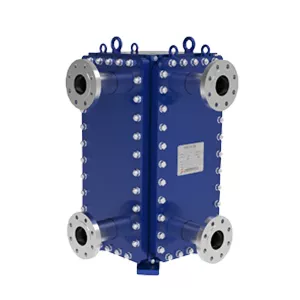
For example, in a chemical plant handling hot sulfuric acid and cooling water, the duplex plates withstand both the corrosive attack and the thermal cycling. The plate pack is clamped between a fixed frame and a movable pressure plate, allowing easy access for inspection or cleaning. SHPHE's TP Welded Plate Heat Exchangers use laser-welded seams to eliminate gasket failure points, making them ideal for high-pressure or hazardous fluid applications.
Key Features and Typical Parameter Ranges
When evaluating a duplex stainless steel heat exchanger, consider these commonly accepted performance ranges:
| Parameter |
Typical Range |
| Design pressure |
Up to 40 bar (580 psi) for welded designs |
| Design temperature |
-20°C to 250°C (-4°F to 482°F) |
| Plate material thickness |
0.5 mm to 1.2 mm (0.02 to 0.047 in) |
| Heat transfer coefficient |
3,000 to 7,000 W/m²·K (depending on fluids and fouling) |
| Max plate pack area |
Up to 500 m² per unit |
These values are industry-generic and may vary based on specific design codes and application conditions. SHPHE offers free thermal design and selection to match your exact process requirements.
Where Are Duplex Heat Exchangers Most Commonly Used?
Duplex stainless steel heat exchangers are specified in several demanding sectors:
- Oil and gas production – for topside cooling, gas treatment, and produced water systems where chlorides and H₂S are present.
- Chemical processing – handling acids, alkalis, and organic solvents at elevated temperatures.
- Seawater cooling – in desalination plants, offshore platforms, and coastal refineries.
- Pulp and paper – for black liquor and white liquor heat recovery.
- Pharmaceutical and food processing – where cleanability and corrosion resistance are critical.
For each of these applications, the duplex grade provides a cost-effective alternative to higher-nickel alloys like Inconel or Hastelloy, while still outperforming standard 316L in aggressive environments.
Why SHPHE for Your Duplex Heat Exchanger Needs?
SHPHE is a Shanghai-based plate heat exchanger manufacturer founded in 2005, with ISO9001 and ASME U certifications. We export to more than 20 countries and offer a comprehensive range of products, including HT-Bloc Welded Plate Heat Exchangers, Wide Gap Welded Plate Heat Exchangers, Gasketed Plate Heat Exchangers, PCHE, Plate Air Preheaters, and Pillow Plates. Our duplex stainless steel heat exchanger designs are compatible with major brands such as Alfa Laval and GEA, providing a reliable alternative without compromising performance.
We provide free thermal design and selection services, ensuring that each unit is optimized for your specific flow rates, temperatures, and media. Our engineering team works closely with clients to deliver custom solutions that meet ASME, PED, or other local code requirements.
Frequently Asked Questions About Duplex Stainless Steel Heat Exchangers
Q: Can a duplex stainless steel heat exchanger be used with seawater directly?
A: Yes, grade 2205 and 2507 duplex stainless steels offer excellent resistance to chloride pitting and crevice corrosion in seawater. However, proper design velocity and regular cleaning are still recommended to prevent biofouling.
Q: How does the cost of a duplex heat exchanger compare to 316L?
A: Duplex materials typically cost 30–50% more than 316L on a per-kg basis. But because duplex has higher strength, you can use thinner plates, which reduces overall material weight and can offset the initial cost difference.
Q: Are duplex heat exchangers repairable if a plate leaks?
A: For gasketed designs, individual plates can be replaced. For fully welded units like SHPHE's TP series, the entire plate pack is a single welded core, so repair options are limited. However, welded designs have a much lower leak probability.
Q: What is the maximum operating temperature for duplex 2205?
A: For continuous service, 2205 is generally limited to 250°C (482°F). Above this temperature, the material may undergo sigma phase embrittlement. For higher temperatures, consider super duplex or alternative alloys.
Q: Can I use a duplex heat exchanger as a direct replacement for a shell-and-tube unit?
A: In most cases yes, but you need to check nozzle sizes, pressure drop limits, and connection orientations. Plate heat exchangers have much higher heat transfer coefficients, so the footprint is typically 30–50% smaller.
Q: Does SHPHE provide duplex heat exchangers with ASME U stamp?
A: Yes, SHPHE holds ASME U certification and can supply duplex stainless steel heat exchangers with full ASME documentation, including design reports and NDE records.
Request a Quote for Your Duplex Stainless Steel Heat Exchanger
To ensure we recommend the right duplex stainless steel heat exchanger for your process, please provide the following details in your inquiry: flow rate (hot and cold side), inlet and outlet temperatures, operating pressure, and media composition (including chloride or H₂S content if applicable). Our thermal design team will prepare a free selection and quotation within 48 hours.
Choosing a duplex stainless steel heat exchanger from SHPHE means investing in a durable, high-performance solution backed by over 18 years of manufacturing experience and global certifications. Contact us today to discuss your project requirements.

 English EN





User Comments
Service Experience Sharing from Real Customers
Tommy
Maintenance SupervisorWe swapped out an old shell-and-tube for this duplex stainless unit six months ago. No pitting, no leaks, even with our cooling water that's high in chlorides. The thermal transfer is noticeably better, and cleaning is a breeze. Worth every penny for the uptime we've gained.
Lena
Senior Process EngineerSpec'd this for a new offshore pilot plant. The corrosion resistance in sour service is exactly what we needed. Only gave 4 stars because the initial delivery took a bit longer than quoted, but the quality upon arrival was flawless. Would order again.
Marcus
Plant ManagerBeen running this duplex heat exchanger for over a year in a desalination pre-heat stage. Handles the salinity and temperature swings like a champ. My maintenance team loves that we don't have to fight with scaling as much. Solid build, no complaints.
Sophie
Mechanical EngineerI was skeptical about switching from standard stainless, but this duplex unit has been a workhorse in our pharmaceutical batch process. Handles aggressive CIP cycles without any sign of stress corrosion cracking. The weld quality on the headers is top-notch.