Why Consider an Alfa Laval Plate Heat Exchanger Alternative for Your Industrial System
When your process demands reliable heat transfer without the premium price tag of legacy brands, evaluating an Alfa Laval plate heat exchanger alternative becomes a strategic move. Many process engineers and procurement managers are discovering that compatible designs from experienced manufacturers like SHPHE deliver comparable thermal performance, shorter lead times, and significant cost savings. This article explores why switching to a well-engineered alternative makes sense, covering working principles, key features, typical applications, and practical selection criteria.
What Makes a Plate Heat Exchanger Alternative Worth Considering?
A plate heat exchanger transfers heat between two fluid streams through a series of corrugated metal plates. The core pain point for many facilities is the high capital expenditure and long delivery times associated with dominant brands. An alternative from a qualified manufacturer like SHPHE (Shanghai-based, founded in 2005, exporting to over 20 countries) offers equivalent thermal efficiency while reducing project costs by 20–40%. These units are designed to be dimensionally compatible with existing installations, meaning you can often retrofit without modifying piping or foundations.
SHPHE holds ISO9001 and ASME U certifications, ensuring that every unit meets international quality standards. Their engineering team provides free thermal design and selection services, helping you match the exact duty requirements without guesswork. For overseas buyers, this translates to a lower total cost of ownership and faster project execution.
How Does a Welded Plate Heat Exchanger Work in Demanding Processes?
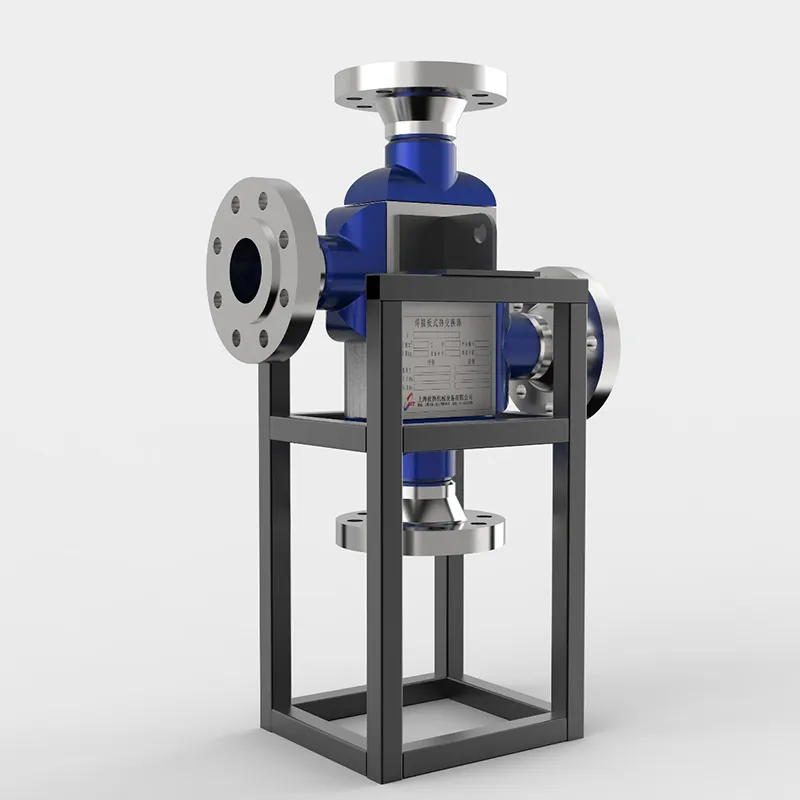
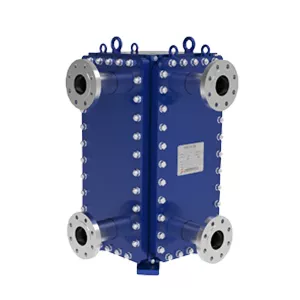
In high-temperature or high-pressure applications, gasketed designs may not suffice. Welded plate heat exchangers eliminate elastomeric seals by laser-welding the plate pairs together. This creates a fully sealed channel that can handle temperatures up to 350°C and pressures up to 40 bar. The HT-Bloc and TP Welded Plate Heat Exchanger lines from SHPHE are direct alternatives to Alfa Laval’s welded series, offering similar compact footprints and superior heat recovery.
The working principle remains simple: hot and cold fluids flow through alternating channels, with the corrugated pattern inducing turbulence for high heat transfer coefficients. Because there are no gaskets to replace, maintenance intervals are extended, and the risk of cross-contamination is virtually eliminated. This makes welded designs ideal for chemical processing, refining, and other aggressive media.
Key Features and Typical Parameter Ranges of SHPHE Alternatives
When evaluating an Alfa Laval plate heat exchanger alternative, focus on these engineering parameters:
- Plate materials: Standard options include SS304, SS316L, titanium, and Hastelloy, depending on fluid corrosivity.
- Gasket materials: NBR, EPDM, Viton, and PTFE are available for temperature ranges from -20°C to 200°C.
- Design pressure: Gasketed units typically handle up to 25 bar; welded designs reach 40 bar.
- Design temperature: Gasketed up to 180°C; welded up to 350°C.
- Flow capacity: Single units can manage flow rates from 1 m³/h to over 1,000 m³/h.
- Heat transfer area: Available from 0.5 m² to 1,500 m² per unit.
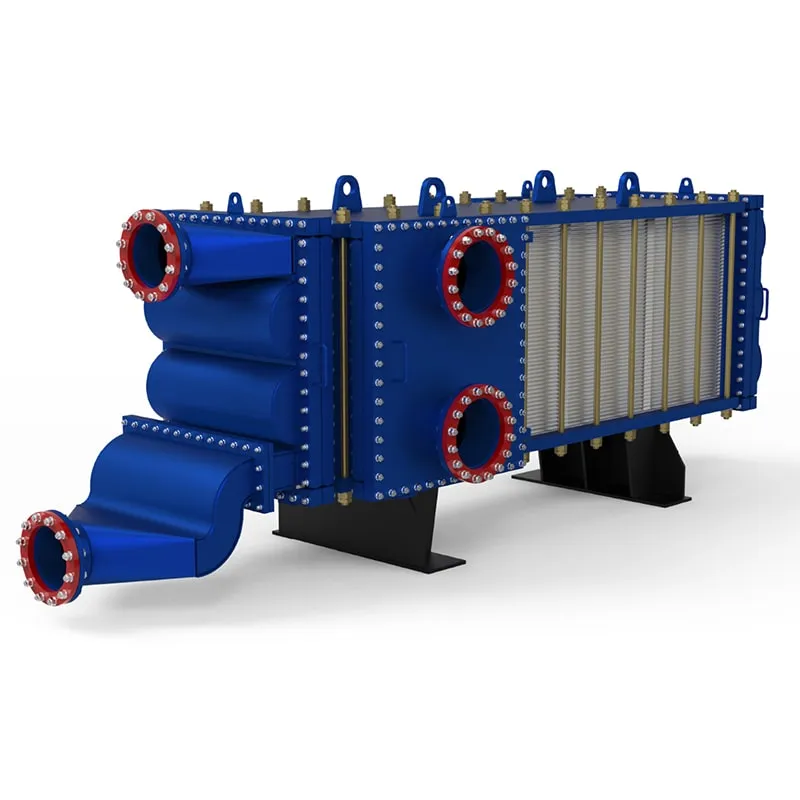
SHPHE’s product range includes Gasketed Plate Heat Exchangers, HT-Bloc Welded Plate Heat Exchangers, and Wide Gap Welded Plate Heat Exchangers for fluids with solids or fibers. These are designed to be fully compatible with existing Alfa Laval frame sizes and plate patterns.
What Applications Benefit Most from a Compatible Heat Exchanger?
Industries that require robust, cost-effective heat transfer solutions are prime candidates for switching to an alternative. Common applications include:
- Chemical processing: Heating or cooling corrosive acids, solvents, and intermediates.
- Oil and gas: Preheating crude oil, cooling hydraulic fluids, or recovering waste heat.
- Food and beverage: Pasteurization, CIP systems, and cooling of viscous products.
- HVAC and district energy: Chilled water, hot water, and geothermal loops.
- Power generation: Lube oil cooling, jacket water cooling, and steam condensers.
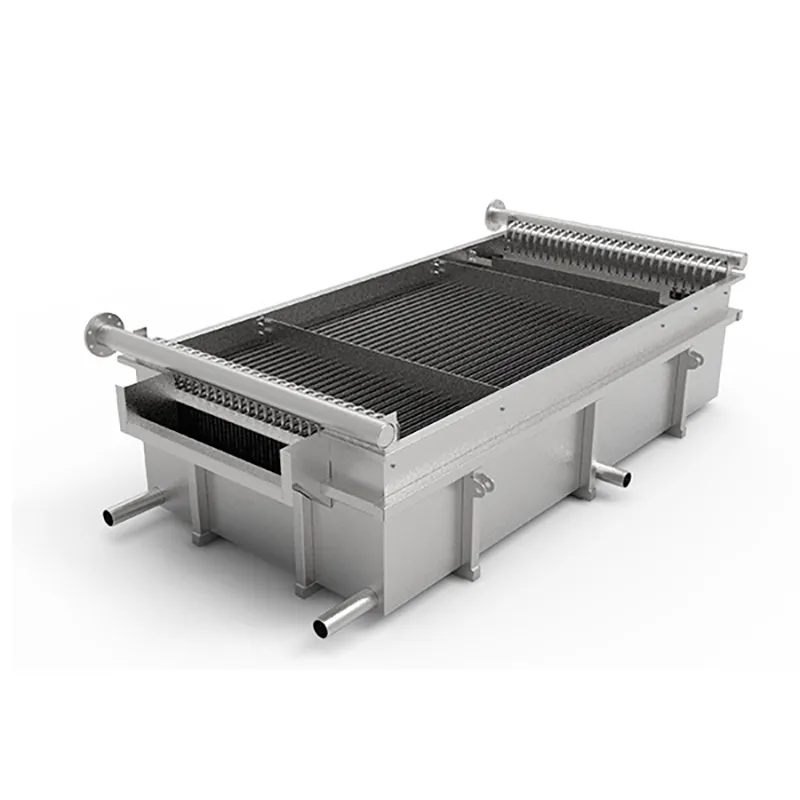
For processes involving high fouling or particulate-laden fluids, SHPHE’s Pillow Plates and Printed Circuit Heat Exchangers (PCHE) offer specialized solutions. The PCHE is particularly effective for high-pressure gas processing, where compactness and leak-tightness are critical.
Why Choose SHPHE as Your Alfa Laval Plate Heat Exchanger Alternative?
SHPHE has been manufacturing plate heat exchangers since 2005, with a facility in Shanghai that serves clients across 20+ countries. Their engineering team offers free thermal design and selection, ensuring you get the right unit without paying for unnecessary features. All products are built under ISO9001 and ASME U certified processes, which means you can expect consistent quality and traceability.
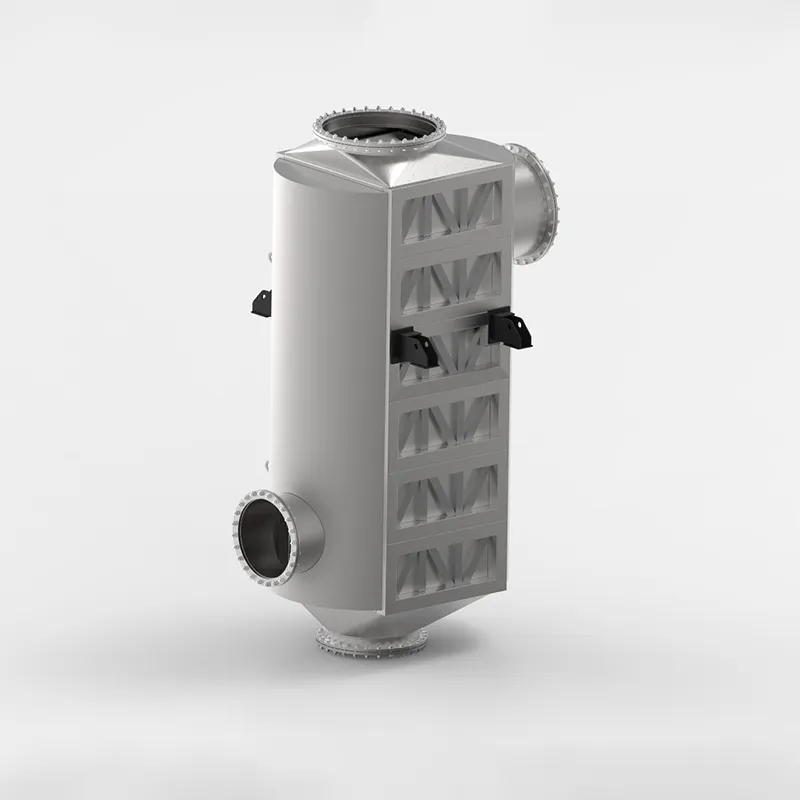
Compared to Alfa Laval, SHPHE provides shorter lead times—typically 4–8 weeks versus 12–20 weeks—and pricing that is 20–40% lower for equivalent performance. Their product lines include TP Welded Plate Heat Exchangers and Plate Air Preheaters, all designed for drop-in compatibility with existing frames. This makes upgrading or expanding your system straightforward.
Frequently Asked Questions About Plate Heat Exchanger Alternatives
Can I directly replace an Alfa Laval unit with an SHPHE alternative?
Yes, most SHPHE models are designed for dimensional compatibility with Alfa Laval frames. You can typically swap plates and gaskets without modifying piping. Always provide your existing model number and duty parameters for a precise match.
How does the thermal performance compare to the original brand?
SHPHE uses advanced corrugation patterns and high-quality materials to achieve heat transfer coefficients within 5% of Alfa Laval’s specifications. Free thermal design ensures your duty requirements are met exactly.
What certifications does SHPHE hold?
SHPHE is ISO9001 certified and holds ASME U stamp for pressure vessel manufacturing. They also comply with PED and other international standards upon request.
Are spare parts and gaskets readily available?
Yes, SHPHE stocks a wide range of gaskets and plates for both their own units and compatible replacements. Lead times for spare parts are typically 2–4 weeks.
What is the typical warranty period?
SHPHE offers a standard 12-month warranty from the date of commissioning, covering manufacturing defects. Extended warranties are available for large projects.
Do you provide free thermal design and selection?
Absolutely. SHPHE’s engineering team offers free thermal design and selection services. Simply provide your flow rate, inlet/outlet temperatures, pressure drop limits, and fluid properties.
Request a Quote for Your Next Heat Exchanger Project
If you are considering an Alfa Laval plate heat exchanger alternative for your industrial system, we encourage you to reach out with your project details. To receive a tailored proposal, please provide the following information:
- Flow rate for both hot and cold sides (m³/h or GPM)
- Inlet and outlet temperatures (°C or °F)
- Operating pressure (bar or psi)
- Media type (fluid name, concentration, viscosity)
- Allowable pressure drop (if specified)
Our team will respond with a free thermal design, dimensional drawing, and competitive pricing within 48 hours. Choosing an Alfa Laval plate heat exchanger alternative from SHPHE means you get proven performance, faster delivery, and significant cost savings—without compromising on quality or safety.

 English EN





User Comments
Service Experience Sharing from Real Customers
Tommy R.
Maintenance SupervisorWe switched from an Alfa Laval unit to this alternative after repeated gasket failures. Honestly, I was skeptical at first, but this thing has been running like a champ for six months straight with zero leaks. The bolt torque specs are a bit different, but once you get the hang of it, the maintenance is way easier. My crew actually prefers working on this one.
Lisa M.
Process EngineerOur old Alfa Laval was a workhorse, but the lead times for replacement plates were killing us. This alternative fits our existing frame with minor modifications and the heat transfer is comparable. Not quite as efficient at the highest delta T, but for 90% of our duty cycles it's spot on. Great value for the price point.
Derek H.
Plant Operations ManagerI've been in dairy for 20 years and have always run Alfa Laval. When my supplier pushed this alternative, I almost said no. Glad I didn't. The CIP cycle adapted perfectly, and we've seen a slight reduction in pressure drop. More importantly, the tech support actually picked up the phone when I had a question about the plate pattern. That alone is worth the switch.
Samantha K.
HVAC TechnicianWe installed this as a drop-in replacement for an Alfa Laval in a large commercial chiller system. It works, but the plate pack is slightly heavier, so you need two people to slide it out for cleaning. Not a dealbreaker, just annoying. Performance-wise, it keeps the building cool. I'd say it's a solid mid-range alternative, but don't expect miracles on the efficiency front.