The Role of a Boiler Economizer Heat Exchanger in Industrial Energy Savings
A boiler economizer heat exchanger is a critical component for recovering waste heat from flue gas, directly reducing fuel consumption and operational costs. For process engineers and purchasing managers seeking to improve thermal efficiency, understanding how this equipment integrates into existing systems is essential. This article explores the working principle, key parameters, and practical applications of economizer heat exchangers, with a focus on reliable solutions from manufacturers like SHPHE.
What Is a Boiler Economizer Heat Exchanger and Why Does It Matter?
A boiler economizer heat exchanger preheats feedwater or combustion air by capturing heat from exhaust gases. In typical industrial boilers, flue gas leaves at 200–300°C. Without recovery, this energy is wasted. By installing an economizer, you can lower exhaust temperatures to 120–150°C, improving overall boiler efficiency by 5–10%. This translates directly into lower fuel bills and reduced carbon emissions. For plants running continuous operations, the payback period often falls within 12–18 months.
How Does a Boiler Economizer Heat Exchanger Work in Practice?
The economizer sits in the flue gas duct, typically between the boiler outlet and the stack. Hot gases flow over heat transfer surfaces, while water or air passes through internal channels. The design ensures counter-current flow for maximum temperature gradient. For example, a gas-fired boiler with 250°C exhaust can preheat feedwater from 60°C to 110°C, reducing the burner load. Key factors affecting performance include gas velocity, fouling resistance, and material selection for corrosion resistance.
Key Features and Typical Parameter Ranges
When evaluating a boiler economizer heat exchanger, consider these common specifications:
- Operating temperature: Flue gas inlet up to 400°C; outlet as low as 100°C (avoiding acid dew point).
- Pressure rating: Typically 10–30 bar for water-side; gas-side near atmospheric.
- Heat transfer coefficient: 30–60 W/m²K for gas-to-liquid; 20–40 W/m²K for gas-to-gas.
- Materials: Carbon steel for dry gas; stainless steel or enameled tubes for corrosive flue gas.
- Fouling factor: 0.0002–0.0005 m²K/W depending on fuel type and cleaning frequency.
These ranges are industry-standard and can be tailored to specific site conditions. For heavy fuel oil or biomass, consider wide gap designs to handle particulates.
What Are the Best Applications for a Boiler Economizer Heat Exchanger?
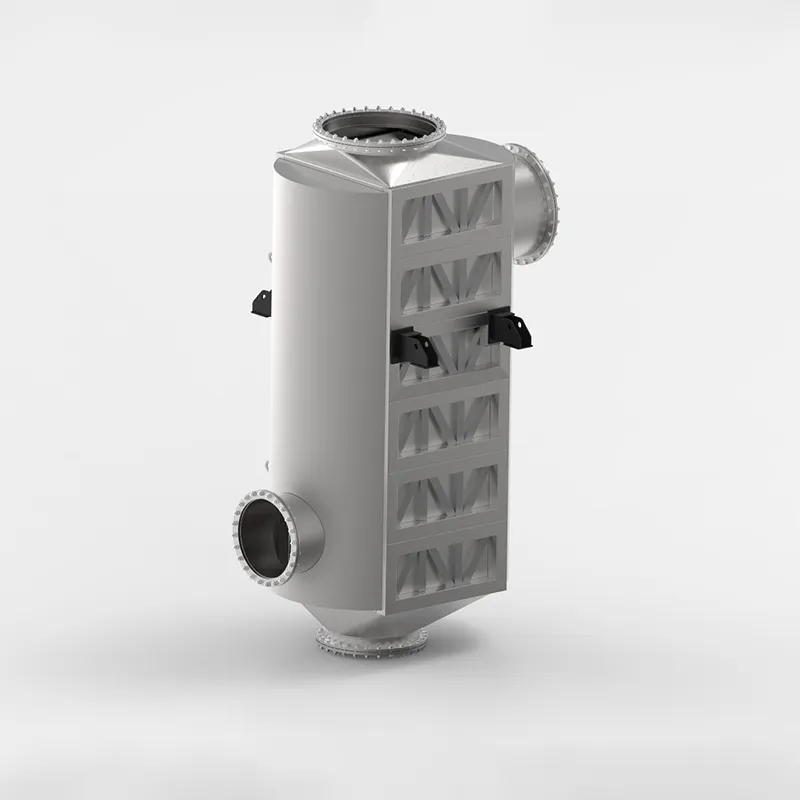
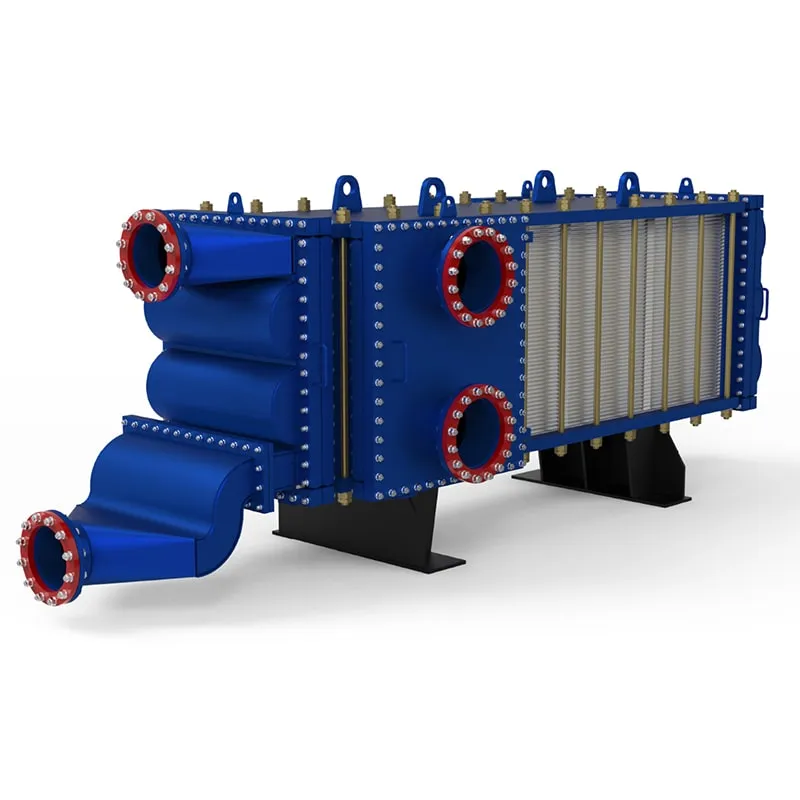
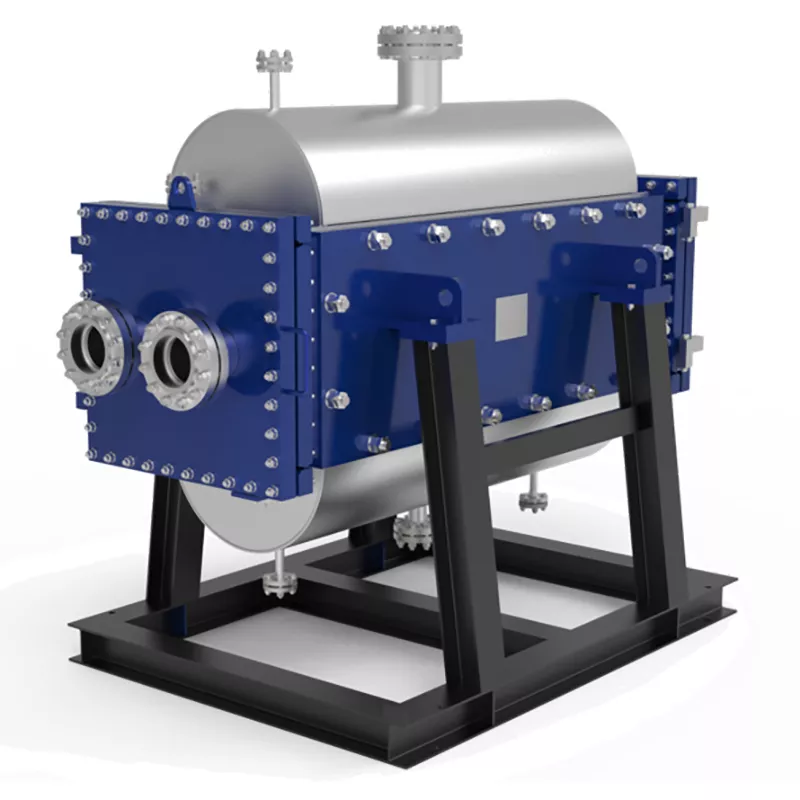
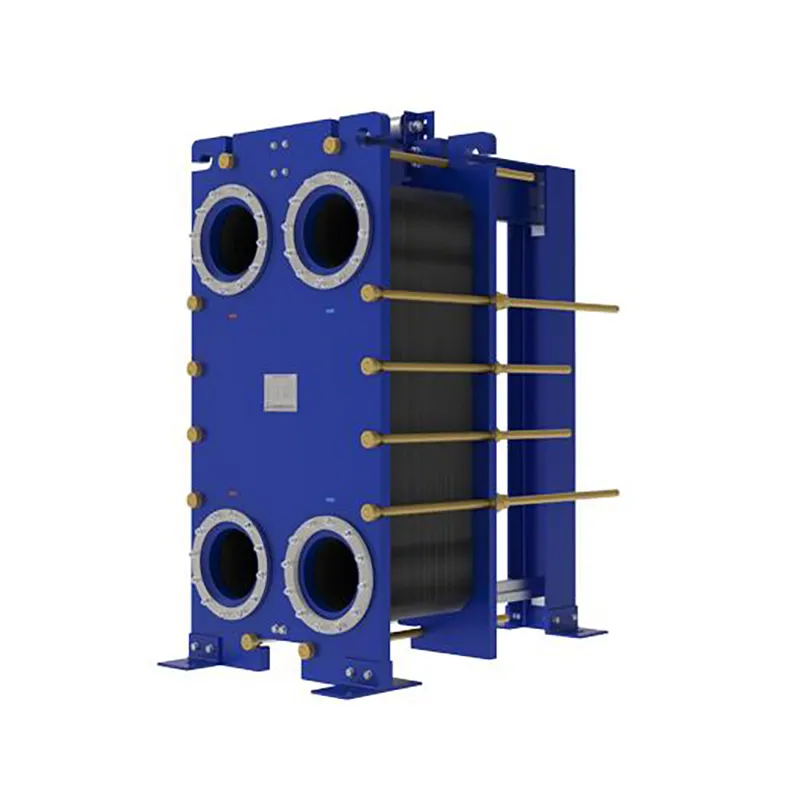
Economizers are widely used in power plants, chemical processing, food production, and district heating. In each case, the goal is to recover low-grade heat. For instance, a TP welded plate heat exchanger can serve as a compact economizer in space-constrained retrofits. For high-dust applications, a wide gap welded plate heat exchanger prevents clogging. If you need to preheat combustion air, a plate air preheater offers excellent performance. Always match the design to fuel type and exhaust composition to avoid corrosion.
Why Choose SHPHE for Your Boiler Economizer Heat Exchanger Needs?
SHPHE, a Shanghai-based manufacturer founded in 2005, has supplied plate heat exchangers to over 20 countries. We hold ISO9001 and ASME U certifications, ensuring quality and compliance. Our product range includes HT-Bloc and TP welded plate heat exchangers, wide gap welded units, gasketed plate heat exchangers, PCHE, plate air preheaters, and pillow plates. Each boiler economizer heat exchanger we deliver comes with free thermal design and selection service. We do not fabricate case studies—our engineers provide honest, data-driven recommendations based on your specific parameters.
Our gasketed plate heat exchangers are compatible with Alfa Laval and GEA designs, offering a reliable alternative for retrofit projects. For high-temperature or high-pressure duties, we recommend our HT-Bloc welded plate heat exchangers. We avoid empty claims—our focus is on delivering efficient, durable equipment that meets your process requirements.
Frequently Asked Questions About Boiler Economizer Heat Exchangers
1. Can a boiler economizer heat exchanger be retrofitted to an existing boiler?
Yes, most industrial boilers can be retrofitted. The economizer is installed in the flue gas duct with minimal modifications. Ensure adequate space for access and cleaning. SHPHE provides free layout advice to simplify integration.
2. What is the typical efficiency gain from installing an economizer?
Efficiency improvement ranges from 5% to 10%, depending on initial exhaust temperature and load profile. For a 10 MW boiler, this can save thousands of dollars annually in fuel costs.
3. How do I prevent corrosion in a boiler economizer heat exchanger?
Maintain flue gas outlet temperature above the acid dew point (typically 120–140°C for natural gas). Use corrosion-resistant materials like stainless steel or apply protective coatings. Regular monitoring of gas composition helps adjust operating conditions.
4. What maintenance is required for an economizer?
Periodic cleaning to remove soot and scale is essential. For gas-fired systems, soot blowing every shift may suffice. Inspect for tube erosion and gasket integrity annually. SHPHE designs units with easy-access panels for quick service.
5. Can an economizer handle variable load conditions?
Yes, modern economizers with bypass dampers or variable geometry can modulate heat recovery. Control systems adjust flow rates to maintain optimal performance across load ranges. Discuss your load profile with our engineers for a tailored solution.
6. Is a boiler economizer heat exchanger compatible with all fuel types?
It works with natural gas, oil, coal, and biomass, but material and design must match the fuel. For high-sulfur fuels, use corrosion-resistant alloys. For solid fuels, consider wide gap designs to prevent fouling. SHPHE offers multiple configurations to suit your fuel.
Request a Quote for Your Boiler Economizer Heat Exchanger
To get a tailored recommendation, please provide your process details: flow rate (kg/h or m³/h), inlet and outlet temperatures, operating pressure, and media composition (flue gas and water/air). Our engineering team will perform a free thermal design and selection. Contact SHPHE today to start saving energy with a reliable boiler economizer heat exchanger.

 English EN





User Comments
Service Experience Sharing from Real Customers
Mike
Facilities ManagerWe swapped out our old unit for this economizer heat exchanger last quarter, and the difference in our boiler efficiency is night and day. Gas bills dropped noticeably, and the install team said the build quality is rock solid. No regrets.
Sarah
Plant EngineerSolid piece of kit for the price. I’ve been in power generation for 15 years, and this heat exchanger does exactly what it says—recovers waste heat like a champ. Only complaint is the flange bolts felt a bit soft, but we torqued them carefully and had no leaks.
Tom
Maintenance SupervisorHonestly, I was skeptical about aftermarket economizers, but this one fits our Cleaver-Brooks boiler like a glove. My crew had it installed in a day, and we’re already seeing 8-10% fuel savings. The welds look clean and the fins are well-spaced. Would buy again.
Emma
Energy ConsultantDecent performance overall—the heat transfer is on par with bigger brands. However, the documentation was sparse, and I had to call support twice to get the right pressure drop specs. Works fine now, but don't expect a plug-and-play experience if your setup is custom.