Why 254 SMO Heat Exchanger Plates Excel in Harsh Industrial Environments
For process engineers and purchasing managers dealing with corrosive fluids, high chlorides, or extreme temperatures, 254 SMO heat exchanger plates offer a reliable solution. This article explains why this super austenitic stainless steel outperforms standard materials in harsh industrial settings, covering working principles, key features, typical applications, and practical selection advice. Backed by SHPHE’s 18 years of manufacturing expertise, you’ll get factual data and actionable insights without marketing fluff.
What Makes 254 SMO Different from Standard Stainless Steel?
254 SMO (UNS S31254) is a super austenitic stainless steel with high molybdenum (6%) and nitrogen content. This composition gives it exceptional resistance to pitting and crevice corrosion, especially in chloride-rich environments. Unlike 316L or 904L, 254 SMO maintains its integrity in seawater, brine, and acidic streams where other alloys fail within months. Its PREN (Pitting Resistance Equivalent Number) typically exceeds 43, compared to around 25 for 316L. For plate heat exchangers, this means longer service life and fewer unplanned shutdowns in chemical processing, offshore platforms, and pulp bleaching plants.
How Do 254 SMO Plates Perform in High-Chloride Applications?
In cooling water circuits with chloride levels above 1,000 ppm, standard stainless steels suffer from rapid pitting. 254 SMO plates resist localized corrosion even at chloride concentrations up to 5,000 ppm and temperatures up to 60°C (140°F). This makes them ideal for coastal power plants, desalination units, and chemical plants using river or seawater as coolant. SHPHE’s gasketed plate heat exchangers with 254 SMO plates have been deployed in projects across Southeast Asia and the Middle East, handling aggressive media without performance degradation.
Key Features and Typical Parameter Ranges
- Corrosion resistance: PREN ≥ 43, withstands chloride stress corrosion cracking.
- Temperature range: -20°C to 200°C (-4°F to 392°F) for gasketed designs; up to 350°C (662°F) for welded variants.
- Pressure rating: Up to 30 bar (435 psi) depending on plate thickness and gasket material.
- Plate thickness: 0.5 mm to 1.2 mm commonly used for 254 SMO.
- Flow capacity: Single-pass flow rates from 5 m³/h to 1,200 m³/h per unit.
- Compatibility: Works with EPDM, Viton, or PTFE gaskets for chemical resistance.
These parameters are industry-generic ranges. SHPHE offers free thermal design and selection service to match your exact process conditions.
What Are the Common Applications for 254 SMO Heat Exchanger Plates?
254 SMO plates are widely used in:
- Chemical processing: Handling sulfuric acid, phosphoric acid, and chloride-containing intermediates.
- Oil and gas: Offshore platforms for produced water cooling and crude heating.
- Pulp and paper: Bleaching stages with chlorine dioxide and hypochlorite.
- Desalination: Brine heater and heat recovery sections in reverse osmosis plants.
- Pharmaceuticals: Sterile processes requiring high purity and corrosion resistance.
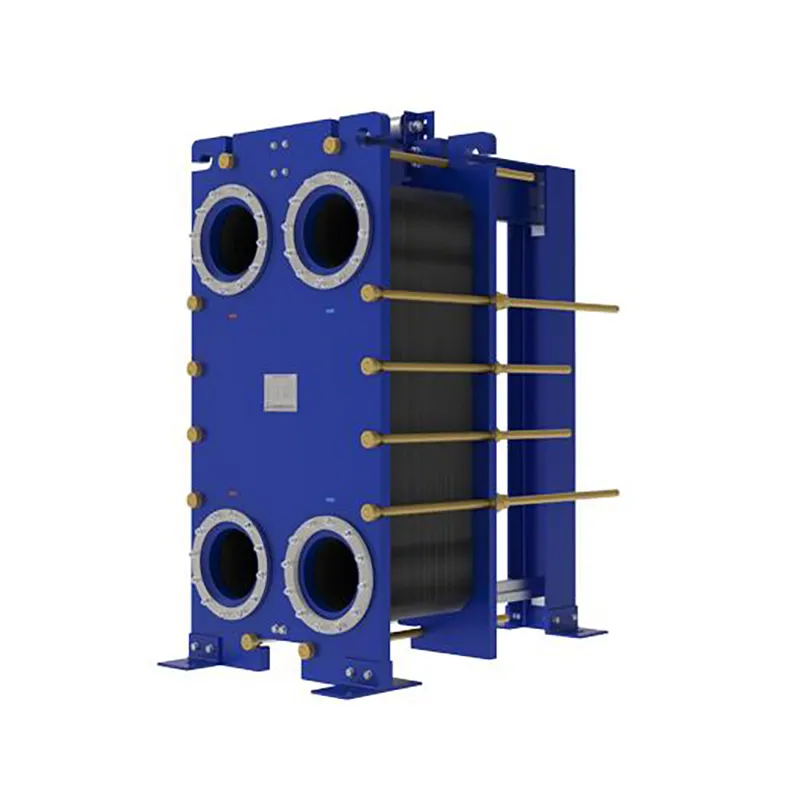
For each application, SHPHE recommends specific plate patterns and gasket materials. Our gasketed plate heat exchangers are compatible with Alfa Laval and GEA frames, offering a cost-effective alternative without compromising performance.
Why Choose SHPHE for 254 SMO Heat Exchanger Plates?
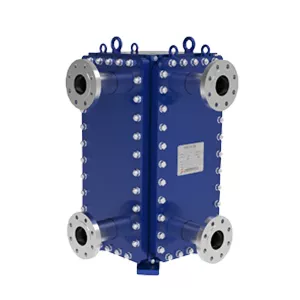
SHPHE, founded in 2005 and based in Shanghai, is an ISO9001 and ASME U certified manufacturer exporting to over 20 countries. Our product lines include HT-Bloc/TP welded plate heat exchangers, wide gap welded plate heat exchangers, gasketed plate heat exchangers, PCHE, plate air preheaters, and pillow plates. We offer free thermal design and selection service, ensuring the 254 SMO plates you receive are optimized for your flow rate, temperature, pressure, and media composition. Unlike generic suppliers, we tailor each unit to your process.
For high-fouling or viscous fluids, our wide gap welded plate heat exchangers with 254 SMO plates provide excellent cleaning access and thermal efficiency. For extreme temperatures, the HT-Bloc welded plate heat exchangers handle up to 350°C without gasket limitations.
Frequently Asked Questions
Q: Can 254 SMO plates be used with seawater directly?
A: Yes. 254 SMO is specifically designed for seawater and brackish water applications. It resists pitting and crevice corrosion even at high chloride levels. However, proper flow velocity and temperature control are still necessary to avoid fouling.
Q: How does 254 SMO compare to titanium plates?
A: Titanium offers excellent corrosion resistance in seawater but is more expensive and less ductile. 254 SMO provides comparable performance at a lower cost and is easier to form into complex plate patterns. For non-chloride acids, 254 SMO often outperforms titanium.
Q: What gasket materials work best with 254 SMO plates?
A: EPDM is suitable for water and mild chemicals up to 130°C. Viton handles hydrocarbons and aggressive acids up to 200°C. PTFE is recommended for highly corrosive streams. SHPHE can advise based on your media.
Q: Are 254 SMO plates compatible with existing Alfa Laval frames?
A: Yes. SHPHE manufactures 254 SMO plates that are dimensionally interchangeable with Alfa Laval M15, M30, and similar series. We also offer frame upgrades if needed. Always confirm port sizes and bolt patterns before ordering.
Q: What is the typical lead time for custom 254 SMO plates?
A: Standard plates ship within 4-6 weeks. Custom designs with specific patterns or thicknesses may take 8-10 weeks. SHPHE provides free thermal design and selection service to speed up the process.
Q: How do I know if 254 SMO is the right material for my process?
A: Evaluate your chloride concentration, pH, temperature, and presence of oxidizing agents. If your media contains over 500 ppm chlorides or has a pH below 3, 254 SMO is a strong candidate. SHPHE offers free material selection support based on your data.
Request a Quote for Your 254 SMO Heat Exchanger Plates
To ensure the 254 SMO heat exchanger plates you receive are perfectly matched to your process, please provide the following details when contacting us: flow rate (hot and cold side), inlet and outlet temperatures, operating pressure, media composition (including chloride and acid concentrations), and any space or frame constraints. SHPHE’s engineering team will perform a free thermal design and selection, delivering a tailored solution within 48 hours. We have supplied 254 SMO plates to over 20 countries, supporting industries from chemical processing to offshore energy. Let us help you extend equipment life and reduce maintenance costs.
For more on our product range, explore our printed circuit heat exchangers and pillow plates for specialized applications.

 English EN





User Comments
Service Experience Sharing from Real Customers
Mike Torres
Maintenance SupervisorWe swapped out our old gasketed plates for these 254 smo units in a dairy pasteurizer line. The corrosion resistance is night and day—no pitting after three months of CIP cycles. Fit was spot-on with our existing frame, and the heat transfer is noticeably more consistent. Solid upgrade.
Elena Voss
Process EngineerSpec’d these for a high-chloride cooling loop that was eating our old 316L plates alive. The 254 smo alloy handles the brine like a champ. Only reason I’m not giving five stars is the lead time was a bit longer than quoted, but the quality of the plate surface finish is excellent. Would buy again.
Jack Morrison
Plant ManagerRunning these in a seafood processing plant where saltwater is everywhere. These plates have held up way better than anything else we tried. No leaks, no scaling issues so far. The price per plate is fair for the longevity you get. My maintenance team is happy—less downtime means more product out the door.
Priya Nair
Senior Mechanical TechnicianInstalled a set of these 254 smo plates in a pharmaceutical hot water system. They’re definitely tougher than standard stainless—survived a few pressure spikes without warping. The gasket grooves are well machined, made reassembly easy. Only minor gripe: they’re a bit heavier to handle, but that’s the material. Works great.