How a Domestic Hot Water Plate Heat Exchanger Improves Home Water Heating Efficiency
A domestic hot water plate heat exchanger is a compact, high-efficiency device that transfers heat from a primary source—like a boiler or solar thermal system—to potable water without mixing the two streams. For engineers and facility managers looking to cut energy waste and improve hot water delivery, this technology offers a reliable alternative to traditional storage tanks. In this guide, we break down how it works, what performance ranges to expect, and how to select the right unit for your project.
What Is a Domestic Hot Water Plate Heat Exchanger?
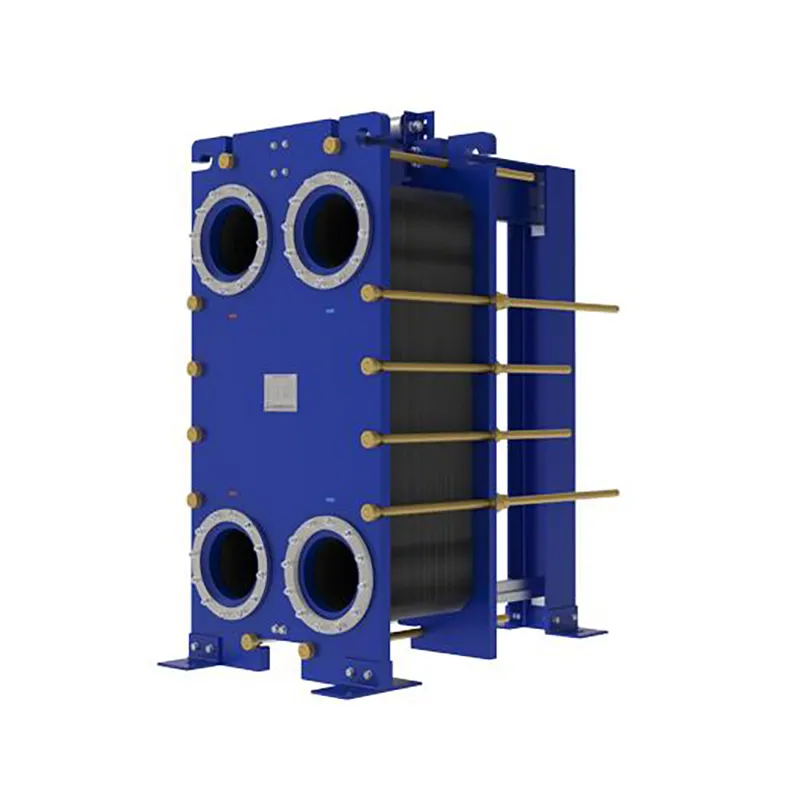
A domestic hot water plate heat exchanger is a brazed or gasketed plate device that uses a series of corrugated metal plates to transfer heat between two fluids. In residential and light commercial applications, it separates the primary heating loop (often from a boiler or heat pump) from the domestic water supply. This design eliminates the need for a large storage tank, reduces standby heat loss, and allows for on-demand hot water delivery.
The core advantage is thermal efficiency. Because the plates create turbulent flow even at low velocities, the heat transfer coefficient is significantly higher than in shell-and-tube exchangers. Typical overall heat transfer coefficients for water-to-water applications range from 3,000 to 7,000 W/m²·K, depending on plate geometry and flow conditions.
How Does a Plate Heat Exchanger Work in a Hot Water System?
In a typical setup, the primary hot water from a boiler circulates through one set of plate channels, while cold domestic water flows counter-currently through the adjacent channels. Heat passes through the thin stainless steel plates, raising the domestic water temperature to the desired setpoint—usually between 120°F and 140°F (49°C to 60°C).
A domestic hot water plate heat exchanger can respond almost instantly to changes in demand. When a tap opens, a flow sensor triggers the primary pump, and the exchanger delivers hot water within seconds. This eliminates the waiting time and energy waste associated with traditional tank systems.
Key Features and Typical Parameter Ranges
When evaluating a domestic hot water plate heat exchanger, consider these standard specifications:
- Plate material: AISI 304 or 316L stainless steel for corrosion resistance in potable water.
- Gasket material: EPDM or NBR, rated for continuous service up to 230°F (110°C).
- Design pressure: Typically 150 psi (10 bar) to 300 psi (20 bar) for domestic units.
- Flow capacity: From 2 GPM to 50 GPM (0.45 to 11.3 m³/h) per single unit.
- Temperature approach: As low as 2°F to 5°F (1°C to 3°C), enabling high thermal efficiency.
- Connection sizes: 1/2" to 2" NPT or BSP threaded, or flanged options.
These ranges are industry-generic; your specific project may require custom sizing. SHPHE offers free thermal design and selection to match your exact flow, temperature, and pressure requirements.
What Are the Most Common Applications for This Technology?
Domestic hot water plate heat exchangers are used in a variety of settings:
- Hydronic heating systems: Pairing with a boiler to provide both space heating and domestic hot water without a storage tank.
- Solar thermal systems: Transferring heat from solar collectors to a domestic water loop while keeping the collector fluid separate.
- Heat pump water heaters: Acting as a desuperheater or dedicated preheater for improved COP.
- Commercial kitchens and laundries: Delivering high-flow hot water on demand with minimal footprint.
For projects requiring higher temperatures or aggressive fluids, SHPHE offers HT-Bloc welded plate heat exchangers and wide gap welded plate heat exchangers as alternatives to traditional gasketed units.
Why Choose SHPHE for Your Domestic Hot Water Plate Heat Exchanger?
SHPHE is a Shanghai-based manufacturer founded in 2005, exporting to more than 20 countries. We hold ISO9001 and ASME U certifications, ensuring every unit meets rigorous quality standards. Our product lines include gasketed plate heat exchangers, TP welded plate heat exchangers, PCHE, plate air preheaters, and pillow plates.
We provide free thermal design and selection service. Our engineers work with you to specify the right plate count, material, and connection size for your domestic hot water plate heat exchanger. Whether you need a compact brazed unit for a single-family home or a large gasketed unit for a multi-unit building, we can deliver a solution that is compatible with or an alternative to brands like Alfa Laval, Compabloc, or GEA.
Frequently Asked Questions
How long does a domestic hot water plate heat exchanger last?
With proper water treatment and regular maintenance, a stainless steel plate heat exchanger can last 15 to 20 years. Hard water or high chlorine levels may reduce lifespan; installing a water softener or using 316L plates helps extend service life.
Can I use a plate heat exchanger with a tankless water heater?
Yes. A domestic hot water plate heat exchanger can be integrated with a tankless water heater to preheat incoming cold water, reducing the load on the heater and improving overall system efficiency. Ensure the heat exchanger is sized for the combined flow rate.
What is the difference between brazed and gasketed plate heat exchangers for domestic hot water?
Brazed units are compact, leak-resistant, and best for closed-loop systems with clean water. Gasketed units allow plate removal for cleaning and are preferred for open-loop domestic water where periodic inspection is needed. Both are effective; the choice depends on maintenance access and water quality.
How do I size a domestic hot water plate heat exchanger?
Sizing requires knowing the required flow rate, inlet and outlet temperatures on both sides, and allowable pressure drop. As a rule of thumb, a typical residential unit handling 5 GPM with a 40°F temperature rise needs about 10 to 15 plates. For accurate sizing, contact SHPHE for a free thermal design.
Can a plate heat exchanger be used for radiant floor heating and domestic hot water simultaneously?
Yes, but you need a dedicated domestic hot water plate heat exchanger for the potable water loop. The radiant floor loop operates at lower temperatures (typically 100°F to 120°F), while the domestic hot water loop requires higher temperatures. Separate exchangers prevent cross-contamination and optimize efficiency for each application.
Is a plate heat exchanger more efficient than a storage tank?
Yes. A domestic hot water plate heat exchanger eliminates standby heat loss, which can account for 10% to 20% of energy use in tank systems. It also provides on-demand hot water, reducing the energy needed to maintain a large volume at temperature. Efficiency gains typically range from 15% to 30% depending on usage patterns.
Request a Quote for Your Domestic Hot Water Plate Heat Exchanger
To get a precise recommendation for your project, please provide the following details when contacting us:
- Required flow rate (GPM or m³/h)
- Inlet and outlet temperatures on both sides (°F or °C)
- Maximum allowable pressure drop (psi or bar)
- Media type (e.g., potable water, glycol mixture)
Our team at SHPHE will perform a free thermal design and provide a competitive quote. A properly selected domestic hot water plate heat exchanger will reduce energy costs, improve system reliability, and deliver consistent hot water for years to come.

 English EN





User Comments
Service Experience Sharing from Real Customers
Tommy
Maintenance SupervisorWe swapped our old tank setup for this plate heat exchanger about six months ago. The hot water recovery is noticeably faster, and I haven't had a single callback for limescale issues yet. It's a workhorse for the price.
Lena
Brewery Operations ManagerNeeded something compact for our new small-batch line. This unit handles the hot water demand for cleaning cycles without any hiccups. Only took off a star because the gasket kit took a while to source locally, but the performance is solid.
Derek
Plumbing ContractorInstalled three of these in custom homes last quarter. They're easy to mount in tight mechanical rooms and the pressure drop is low enough that we don't need to oversized the recirc pump. Clients love the endless hot water feel.
Priya
Facilities EngineerWe replaced a failing shell-and-tube unit in our school's boiler room. The plate design is much easier to clean during summer shutdown. My only minor gripe is the bolts could be a bit sturdier, but it's been running perfectly for eight months now.