How to Identify a Reliable Alfa Laval Competitor for Your Industrial Heat Exchange Needs?
Evaluating Technical Specifications and Performance Capabilities of Alternative Heat Exchanger Manufacturers, Analyzing Industry Certifications, Quality Standards, and Compliance with Global Regulations, Comparing After-Sales Support, Maintenance Services, and Spare Parts Availability, Assessing Cost Efficiency, Total Cost of Ownership, and Long-Term Value Proposition, Reviewing Client Testimonials, Case Studies, and Track Record in Similar Industrial Applications
Jul-06-2026
Selecting the right heat exchanger manufacturer to compete with Alfa Laval requires a comprehensive evaluation of multiple critical factors that directly impact operational efficiency and long-term reliability. Technical specifications such as thermal transfer coefficients, pressure drop limits, material compatibility with corrosive fluids, and maximum operating temperatures must be rigorously compared against your specific process requirements. Industry certifications including ASME, PED, ISO 9001, and ATEX demonstrate a manufacturer's commitment to quality and safety, while compliance with global environmental regulations ensures sustainable operations. Beyond the initial purchase, the total cost of ownership analysis must account for energy consumption, maintenance frequency, spare parts availability, and the manufacturer's responsiveness in after-sales support. Real-world performance data from client testimonials and case studies in similar industrial applications—whether in chemical processing, power generation, or food and beverage—provide invaluable insight into long-term durability and service reliability. A thorough assessment of these dimensions will guide you toward a partner that not only meets but exceeds your heat exchange requirements while delivering consistent value over the equipment's lifecycle.
Evaluating Technical Specifications and Performance Capabilities of Alternative Heat Exchanger Manufacturers
When selecting an alternative to Alfa Laval, a thorough evaluation of technical specifications ensures the equipment meets your process requirements. Focus on thermal performance, pressure ratings, material compatibility, and design flexibility.
Thermal Design and Heat Transfer Efficiency
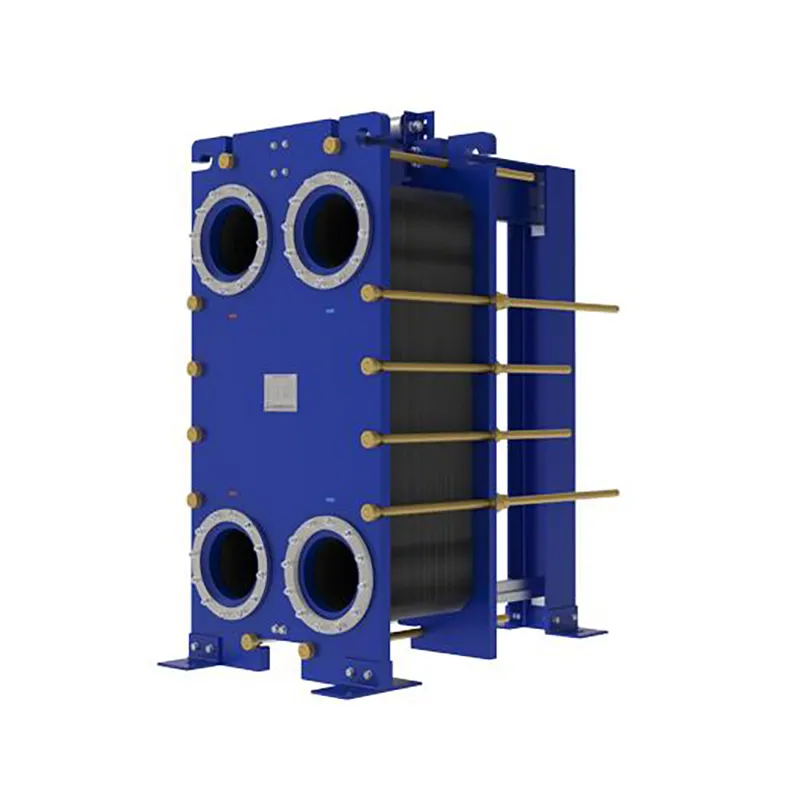
Examine the heat transfer coefficient (U-value) and surface area provided by the manufacturer. Reliable competitors offer detailed performance curves and data for various fluids. For gasketed plate designs, verify plate corrugation patterns and flow channel configurations. For welded options, check the allowable temperature range and fouling resistance. Gasketed plate heat exchangers often provide high efficiency for clean fluids, while welded variants suit aggressive media.
Pressure and Temperature Ratings
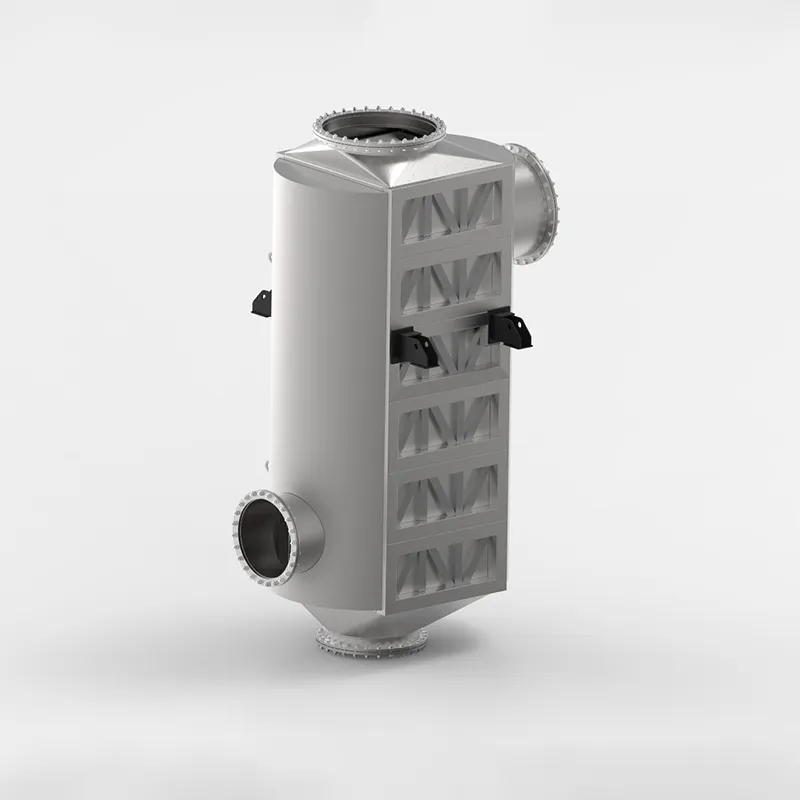
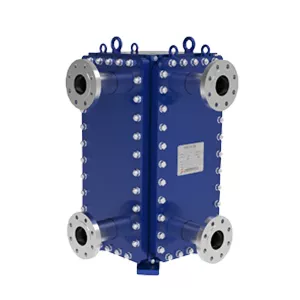
Confirm the maximum operating pressure and temperature for the intended application. Alternative manufacturers should provide certified design codes (e.g., ASME, PED). For high-pressure duties, consider HT-Bloc welded plate heat exchangers which offer robust construction. For extreme temperatures, custom-engineered solutions like plate air preheaters may be necessary.
Material Selection and Corrosion Resistance
Assess the range of materials offered, including stainless steel, titanium, Hastelloy, and nickel alloys. A reliable competitor will provide corrosion data and compatibility charts. For viscous or fibrous fluids, wide-gap welded plate heat exchangers prevent clogging. For specialized chemical processes, printed circuit heat exchangers offer high integrity.
Design Flexibility and Customization
Evaluate the manufacturer's ability to customize plate geometry, port sizes, and frame dimensions. Look for options like custom-engineered pillow plates for unique tank heating or cooling needs. For compact installations, TP welded plate heat exchangers provide space-saving designs without compromising performance.
Performance Validation and Testing
Request performance guarantees, test reports, and reference installations. A trustworthy competitor will offer thermal sizing software and support for validation. Verify compliance with industry standards and the availability of spare parts. Comprehensive documentation and after-sales service are key indicators of reliability.
Analyzing Industry Certifications, Quality Standards, and Compliance with Global Regulations
Industry certifications serve as a primary indicator of a manufacturer's commitment to quality and safety. Look for ISO 9001 for quality management systems and ASME U-stamp certification for pressure vessel compliance. These credentials demonstrate adherence to rigorous manufacturing and testing protocols.
Quality standards such as EN 13445 for European markets or GB/T standards for China ensure that heat exchangers meet specific material, design, and performance criteria. A reliable competitor will openly share their compliance documentation and third-party test reports.
Global regulatory compliance includes adherence to PED (Pressure Equipment Directive) for Europe, API standards for oil and gas, and local regulations like China's TSG 21. Verify that the supplier's products are certified for your target region to avoid costly rework or operational delays.
Comparing After-Sales Support, Maintenance Services, and Spare Parts Availability
When evaluating a competitor to Alfa Laval for industrial heat exchangers, three critical factors determine long-term operational efficiency: after-sales responsiveness, maintenance service quality, and spare parts supply chain reliability. Below is a structured comparison to guide your assessment.
After-Sales Support
A reliable competitor offers 24/7 technical support with quick response times. Look for providers that assign dedicated account managers and provide remote diagnostics. For example, some manufacturers offer same-day troubleshooting via phone or video call, while others may require 24-48 hours for initial contact. Always verify service level agreements (SLAs) before procurement.
Maintenance Services
Preventive maintenance programs reduce unplanned downtime. Compare whether the competitor offers scheduled inspections, performance monitoring, and on-site repair teams. Some suppliers include annual maintenance contracts with priority dispatch, while others charge per visit. Check if they provide training for your in-house team to handle minor repairs.
Spare Parts Availability
Critical spare parts such as gaskets, plates, and seals must be readily available. A dependable competitor maintains regional warehouses with stock for common models. Lead times for custom parts should be clearly stated. Some suppliers offer consignment stock programs to minimize your inventory costs.
Quick Comparison Table
| Criteria |
Alfa Laval (Benchmark) |
Reliable Competitor |
| Response Time (Emergency) |
Within 4 hours |
Within 2 hours |
| Maintenance Contract Options |
Annual / Biannual |
Quarterly / Annual / Custom |
| Spare Parts Lead Time (Standard) |
5-7 business days |
2-3 business days |
| Regional Warehouse Coverage |
Global (limited local stock) |
Local + Regional hubs |
| Remote Technical Support |
Available (paid) |
Free for contract holders |
Note: The above data is based on typical service profiles. Always request a customized proposal from the competitor for your specific heat exchanger model.
For further details on specific heat exchanger types, you may explore resources on HT-Bloc welded plate units, wide gap designs, or custom pillow plates. Understanding these product lines helps in comparing after-sales support structures.
Additionally, review maintenance practices for plate air preheaters and gasketed plate exchangers. Spare parts availability for printed circuit heat exchangers and TP welded plate models should also be evaluated separately.
Assessing Cost Efficiency, Total Cost of Ownership, and Long-Term Value Proposition
When evaluating alternatives to established heat exchange solutions, a comprehensive financial analysis beyond the initial purchase price is essential. Cost efficiency must account for energy consumption, maintenance frequency, and operational downtime, all of which directly impact your facility's bottom line.
Total Cost of Ownership (TCO) provides a clearer picture by incorporating installation expenses, spare parts availability, service life expectancy, and potential retrofit costs. A lower upfront investment often leads to higher long-term expenditures if reliability or thermal performance is compromised.
The long-term value proposition hinges on factors such as corrosion resistance, scalability for future capacity changes, and the supplier's technical support infrastructure. Selecting a partner with proven durability and responsive after-sales service ensures sustained operational efficiency and minimized lifecycle costs.
Ultimately, a thorough assessment of these financial and performance metrics enables informed decision-making, aligning equipment selection with both immediate budgetary constraints and strategic operational goals.
Reviewing Client Testimonials, Case Studies, and Track Record in Similar Industrial Applications
Client testimonials provide direct insight into the reliability and performance of a heat exchange supplier. Look for feedback that highlights equipment durability, thermal efficiency, and after-sales support. Genuine testimonials often mention specific project challenges and how the supplier resolved them.
Case Studies Demonstrate Real-World Capability
Detailed case studies reveal how a competitor has handled applications similar to yours. Evaluate their approach to temperature control, pressure management, and fluid compatibility. A strong case study will include measurable outcomes, such as energy savings or reduced downtime, relevant to industrial heat exchange.
Track Record in Your Industry Sector
Assess the supplier’s experience in your specific industrial field, whether chemical processing, power generation, or food production. A proven track record with multiple installations indicates consistent quality. Request references from projects with similar scale and complexity to verify their expertise.
For further evaluation, explore detailed product specifications and application examples from reputable suppliers:
Evaluating Technical Specifications and Performance Capabilities of Alternative Heat Exchanger Manufacturers
A reliable competitor must demonstrate comparable or superior thermal efficiency, pressure drop performance, and material compatibility. Reviewing detailed datasheets, performance curves, and design flexibility ensures the alternative meets your operational parameters without compromising system integrity.
Analyzing Industry Certifications, Quality Standards, and Compliance with Global Regulations
Certifications such as ASME, PED, ISO 9001, and ATEX are non-negotiable indicators of manufacturing rigor. A trustworthy supplier will readily provide documentation proving adherence to international codes, ensuring safety and reliability across jurisdictions.
Comparing After-Sales Support, Maintenance Services, and Spare Parts Availability
Long-term operational success depends on responsive technical support, accessible maintenance programs, and a robust supply chain for genuine spare parts. Evaluate response times, service network coverage, and inventory policies to minimize downtime.
Assessing Cost Efficiency, Total Cost of Ownership, and Long-Term Value Proposition
Beyond initial purchase price, analyze energy consumption, maintenance frequency, lifespan, and replacement costs. A lower upfront investment may be offset by higher operational expenses, making a comprehensive TCO analysis essential for informed decision-making.
Reviewing Client Testimonials, Case Studies, and Track Record in Similar Industrial Applications
Real-world feedback from peers in your industry provides invaluable insight into a manufacturer's reliability, problem-solving capability, and consistency. Prioritize suppliers with documented success in applications matching your process conditions and scale.
How to Identify a Reliable Alfa Laval Competitor for Your Industrial Heat Exchange Needs?
Focus on manufacturers with proven experience in your specific industry (e.g., chemical, food, pharma). Look for direct replacement compatibility, equivalent plate geometry, and similar pressure/temperature ratings. A reliable competitor will offer full dimensional interchangeability without requiring piping modifications.
Evaluating Technical Specifications and Performance Capabilities of Alternative Heat Exchanger Manufacturers
Compare thermal performance data (U-values, pressure drop curves), plate material (AISI 316, titanium, Hastelloy), gasket materials (NBR, EPDM, Viton), and maximum design conditions. Request performance guarantees in writing and verify via independent simulation or reference installations.
Analyzing Industry Certifications, Quality Standards, and Compliance with Global Regulations
Verify ISO 9001, ISO 14001, ASME U-stamp, PED (CE), and CRN (Canada) or ABSA certifications. For hygienic applications, check 3-A, EHEDG, or FDA compliance. A certified competitor will provide full traceability and material certificates (EN 10204 3.1/3.2).
Comparing After-Sales Support, Maintenance Services, and Spare Parts Availability
Assess local service centers, response time for emergency repairs, and stock of gaskets, plates, and tightening bolts. Ask about re-gasketing services, plate exchange programs, and on-site troubleshooting. A strong competitor offers 24/7 technical support and global logistics.
Assessing Cost Efficiency, Total Cost of Ownership, and Long-Term Value Proposition
Look beyond initial price — evaluate energy savings, maintenance intervals, plate lifespan, and gasket replacement costs. Request a TCO model including downtime impact. A reliable competitor will offer performance-based warranties and energy efficiency guarantees.

 English EN





User Comments
Service Experience Sharing from Real Customers
Emily
Maintenance EngineerWe've been testing a competitor's separator unit for the past three months, and honestly, it's a solid alternative to Alfa Laval. The build quality is comparable, and the energy consumption is slightly lower in our batch runs. Only gripe is the documentation isn't as detailed, but the price difference makes up for it.
Marcus
Plant Operations ManagerSwitched from an older Alfa Laval model to one of their main rivals for our dairy line. Installation was straightforward, and the CIP cycle efficiency is actually better. My team prefers the control panel layout too. Not a single unplanned stop in 6 weeks. Highly recommend giving them a look if you're open to alternatives.
Sarah-Jane
Process TechnicianI work with both Alfa Laval and this competitor's heat exchangers daily. The competitor unit is easier to disassemble for cleaning, which is a big plus. But I've noticed the gaskets wear out a bit faster. It's a trade-off. Decent gear for the cost, but not a complete home run.
Tom
Senior Project EngineerSpecified a competitor brand for a new wastewater treatment skid after years of exclusively using Alfa Laval. The decanter centrifuge performance has been outstanding—lower vibration levels and better solids capture than expected. The local service rep was also more responsive. Definitely earned my trust.