Optimizing Thermal Performance with a Produced Water Heat Exchanger
In oil and gas operations, produced water—the brine brought up alongside hydrocarbons—poses a constant thermal management challenge. A produced water heat exchanger is the critical component that recovers heat from this hot stream, reduces cooling loads, and protects downstream equipment. This article explains how these exchangers work, what parameters matter most, and how to select a reliable solution for your field. We cover key design features, typical performance ranges, and practical answers to common buyer questions.
What Is a Produced Water Heat Exchanger and Why Does It Matter?
Produced water leaves the separator at temperatures often between 60°C and 90°C (140°F–194°F), carrying significant thermal energy. Without a dedicated heat exchanger, this hot brine either goes to disposal—wasting energy—or enters the cooling system untreated, leading to fouling and corrosion. A produced water heat exchanger recovers that heat for preheating crude, glycol regeneration, or other process duties. It also cools the water to acceptable discharge or reinjection temperatures, typically below 40°C (104°F).
For overseas process engineers and purchasing managers, the choice of exchanger directly impacts operating costs, maintenance intervals, and equipment lifespan. The wrong design means frequent cleaning, pressure drop penalties, and unplanned downtime.
How Does a Produced Water Heat Exchanger Handle Fouling and Solids?
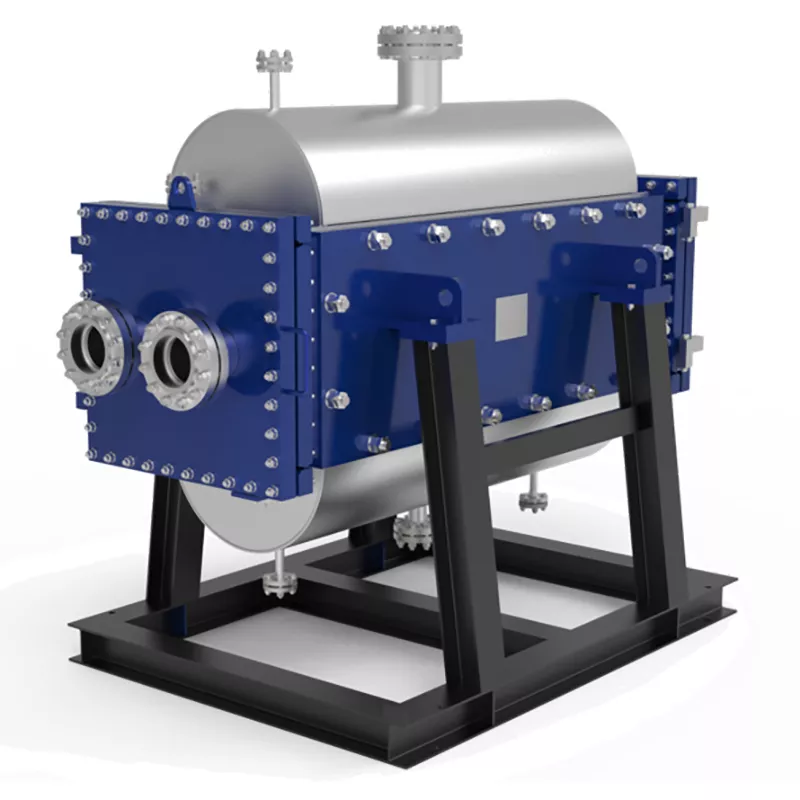
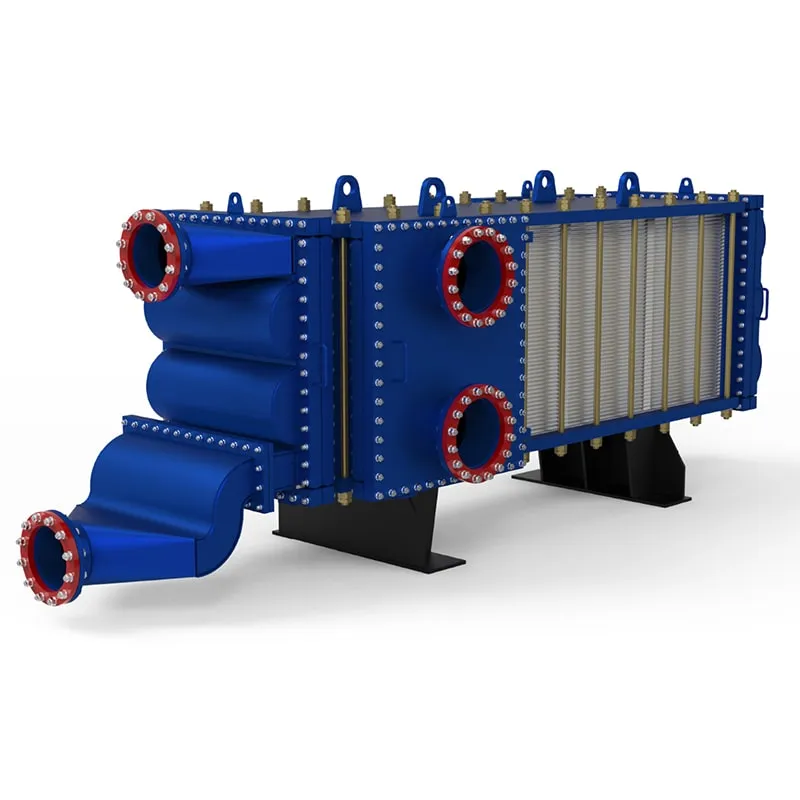
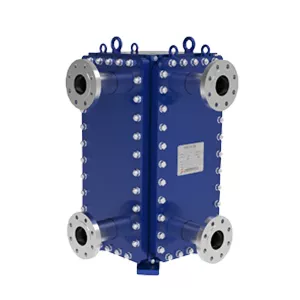
Produced water contains sand, scale, corrosion products, and sometimes oil droplets. These solids quickly foul standard gasketed plate heat exchangers. That is why many operators turn to wide gap welded plate heat exchangers or HT-Bloc welded designs. These units feature plate gaps of 5 mm to 12 mm, allowing particles up to 8 mm to pass through without blocking the flow channels.
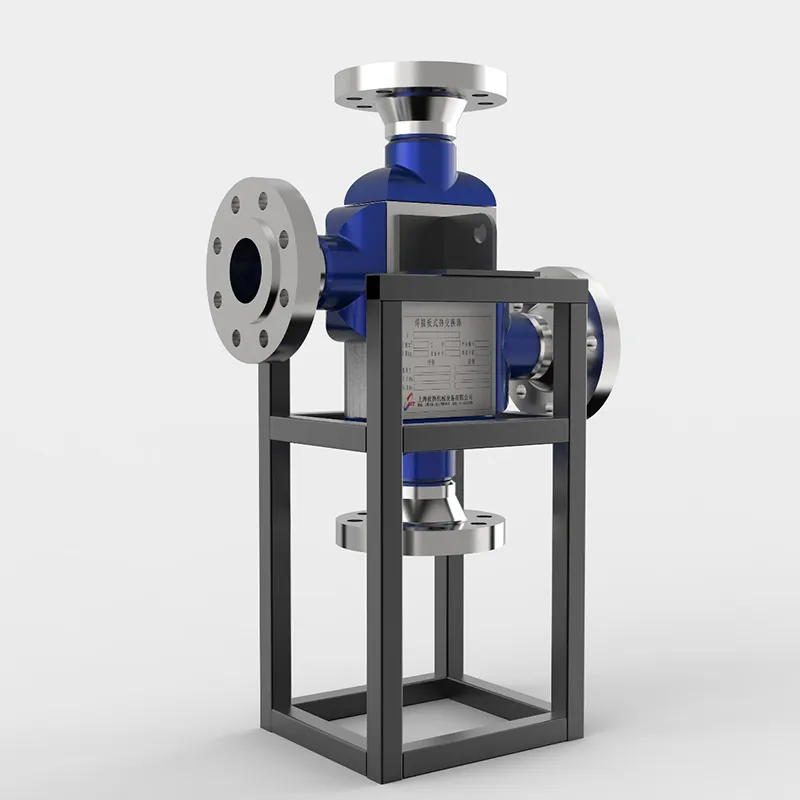
The fully welded construction eliminates gaskets, which are vulnerable to chemical attack and temperature cycling. For produced water applications, welded plate designs also withstand higher pressures—up to 40 bar (580 psi) in standard configurations—and temperatures up to 350°C (662°F). This makes them compatible with both upstream and midstream processes.
If your produced water has high oil content (above 200 ppm), a wide gap welded plate heat exchanger is often the recommended solution. The open channels allow oily water to flow without creating stagnant zones where oil can adhere and foul the surface.
Key Features and Typical Parameter Ranges
When evaluating a produced water heat exchanger, focus on these specifications:
- Flow rate: 10–500 m³/h (44–2,200 gpm) per single unit, with multiple units in parallel for larger volumes.
- Design pressure: 10–40 bar (145–580 psi) standard; higher ratings available for deep-well reinjection.
- Design temperature: Up to 350°C (662°F) for welded plate types; gasketed units limited to 180°C (356°F).
- Material options: 316L stainless steel for standard brine; duplex or super duplex for high chloride content (>50,000 ppm). Titanium is used for seawater injection blends.
- Fouling factor: Typically 0.0002–0.0005 m²·K/W for produced water, depending on solids loading.
- Heat transfer coefficient: 1,500–4,000 W/m²·K for clean conditions; derated by 20–30% in fouling service.
These ranges are industry-generic and apply to most produced water duties. Your specific fluid analysis—pH, chloride content, sand particle size distribution, and oil concentration—will narrow the selection.
Applications and Recommended Solutions
Produced water heat exchangers are used across several process stages:
- Heat recovery from produced water to crude oil: Preheating the crude before the treater reduces fuel gas consumption. A HT-Bloc welded plate heat exchanger is ideal here because it handles high temperature differences and pressure surges.
- Cooling produced water for disposal or reinjection: The exchanger lowers the water temperature to meet environmental limits (often 30–40°C). A gasketed plate design may be used if the water is pre-filtered; otherwise, a wide gap welded unit is safer.
- Glycol regeneration preheating: Produced water at 70–80°C can preheat rich glycol before the reboiler, saving energy. This duty typically requires a compact welded plate exchanger.
- Waste heat recovery for facility heating: In cold climates, recovered heat from produced water is used for space heating or hydrate prevention. A custom-engineered pillow plate can be integrated into tank heating systems.
For each application, the key is matching the exchanger type to the fluid properties. If your produced water contains more than 1,000 ppm of suspended solids, a wide gap welded design is strongly recommended. For clean, filtered water, a gasketed plate exchanger offers the lowest capital cost and easiest maintenance.
Why SHPHE for Your Produced Water Heat Exchanger?
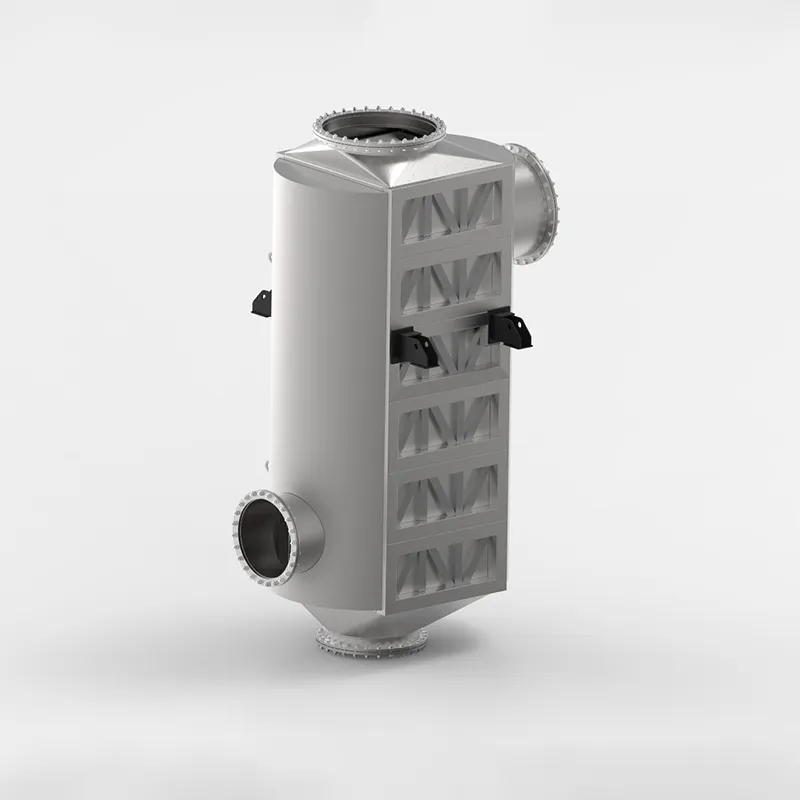
SHPHE is a Shanghai-based plate heat exchanger manufacturer founded in 2005, exporting to more than 20 countries. The company holds ISO9001 and ASME U certifications, ensuring design and fabrication quality for critical oil and gas service. Their product line includes HT-Bloc welded plate heat exchangers, TP welded plate units, wide gap welded plate exchangers, gasketed plate heat exchangers, printed circuit heat exchangers (PCHE), plate air preheaters, and pillow plates.
For produced water applications, SHPHE offers free thermal design and selection service. Their engineers analyze your flow rate, temperature, pressure, and media composition to recommend the optimal configuration. The company also provides units compatible with existing Alfa Laval or Compabloc installations, making retrofit straightforward.
Choosing SHPHE means getting a produced water heat exchanger built to your exact duty, with welded construction that eliminates gasket failures and minimizes downtime. Their TP welded plate heat exchanger is particularly suited for high-pressure produced water cooling, offering full penetration welds and ASME U stamp certification.
Frequently Asked Questions About Produced Water Heat Exchangers
Can a gasketed plate heat exchanger handle produced water?
Yes, but only if the water is pre-filtered to remove particles larger than 0.5 mm and oil content is below 50 ppm. Gasketed units are cost-effective for clean produced water but require regular gasket replacement (every 2–4 years) and are limited to 180°C and 25 bar. For typical produced water with solids, a welded design is more reliable.
What is the typical fouling factor for produced water?
The commonly accepted range is 0.0002 to 0.0005 m²·K/W for produced water with moderate solids (100–500 ppm). For water with high scaling potential (calcium carbonate or barium sulfate), the fouling factor may be as high as 0.001 m²·K/W. A conservative design uses 0.00035 m²·K/W as a starting point, then adjusts based on actual water analysis.
How do I size a produced water heat exchanger for my field?
You need four inputs: produced water flow rate (m³/h), inlet and outlet temperatures (°C), and the cooling or heating medium conditions. With these, the required heat duty (kW) is calculated. Then, based on the allowable pressure drop (typically 0.5–1.5 bar per side) and fouling factor, the heat transfer area is determined. SHPHE provides free thermal design—send them your process data and they will return a selection with dimensions and weight.
What materials are best for high-chloride produced water?
For chloride content above 50,000 ppm, 316L stainless steel is not sufficient. Duplex stainless steel (e.g., S31803 or S32205) offers good resistance up to 80,000 ppm. For seawater-level chlorides (120,000–150,000 ppm), super duplex (S32750) or titanium is recommended. The choice also depends on temperature—higher temperatures accelerate pitting corrosion, so consult a materials engineer for your specific conditions.
Can I use a produced water heat exchanger as an alternative to a cooling tower?
Not directly. A heat exchanger transfers heat from produced water to another fluid (e.g., seawater or air). It does not reject heat to the atmosphere like a cooling tower. However, you can use a produced water heat exchanger in combination with a closed-loop cooling system to reduce the load on the cooling tower, saving water and chemical treatment costs.
How often does a welded plate heat exchanger need cleaning for produced water?
Cleaning frequency depends on solids loading. For produced water with 200–500 ppm suspended solids, chemical cleaning every 6–12 months is typical. If the water is pre-filtered to below 50 ppm, intervals can extend to 18–24 months. Welded plate designs can be chemically cleaned in place (CIP) without disassembly, reducing downtime compared to shell-and-tube exchangers.
Request a Quote for Your Produced Water Heat Exchanger
To get a precise thermal design and quotation for your produced water heat exchanger, please provide the following process parameters:
- Produced water flow rate (m³/h or gpm)
- Inlet and outlet temperatures (°C or °F)
- Operating pressure (bar or psi)
- Fluid composition: chloride content, pH, suspended solids concentration, oil content (ppm)
- Cooling or heating medium type and available flow rate/temperature
- Allowable pressure drop on each side (bar or psi)
SHPHE engineers will review your data and recommend the optimal produced water heat exchanger configuration—whether that is a wide gap welded, HT-Bloc, or gasketed plate design. With free thermal design and ASME U certification, you get a reliable, code-compliant solution for your oil and gas operation.

 English EN





User Comments
Service Experience Sharing from Real Customers
Marcus Chen
Senior Process EngineerWe installed this unit on a mature well in the Permian basin and it handled the high solids content without fouling issues for over 8 months. The thermal performance is spot on, and the clean-out ports are a lifesaver. Would recommend to any operator dealing with tricky water chemistry.
Elena Rossi
Facilities Maintenance LeadHad a bit of a learning curve getting the flow balance right on startup, but once dialed in, this heat exchanger has been rock solid. Our produced water temps dropped exactly where we needed them for the reinjection spec. Only wish the gasket kit was a bit cheaper, but the build quality justifies the cost.
Jack Morrison
Offshore Production SupervisorOn a cramped platform, space is money, and this skid-mounted exchanger fits perfectly without sacrificing capacity. We've had zero leaks despite the harsh saltwater environment. It's been running 24/7 for three months now with no performance dip. Exactly what we needed for our water treatment loop.
Priya Sharma
Environmental Compliance SpecialistWe use this for cooling produced water before our polishing filters, and the consistent outlet temperature has drastically improved our filter media lifespan. The corrosion-resistant coating shows no signs of wear after a year of service. Only minor gripe is the manual drain valve location is a bit awkward for our setup.