How a High Temperature Plate Heat Exchanger Delivers Reliable Performance in Extreme Conditions
When process fluids reach 400°C or pressure spikes beyond 30 bar, standard heat exchangers often fail. A high temperature plate heat exchanger, engineered with welded plate packs and specialized alloys, maintains thermal efficiency and structural integrity under these punishing conditions. This article explains how the HT-Bloc and TP welded designs from SHPHE handle extreme heat, what parameters to specify, and why they are a reliable alternative to shell-and-tube units for chemical, petrochemical, and power recovery applications.
What Defines a High Temperature Plate Heat Exchanger?
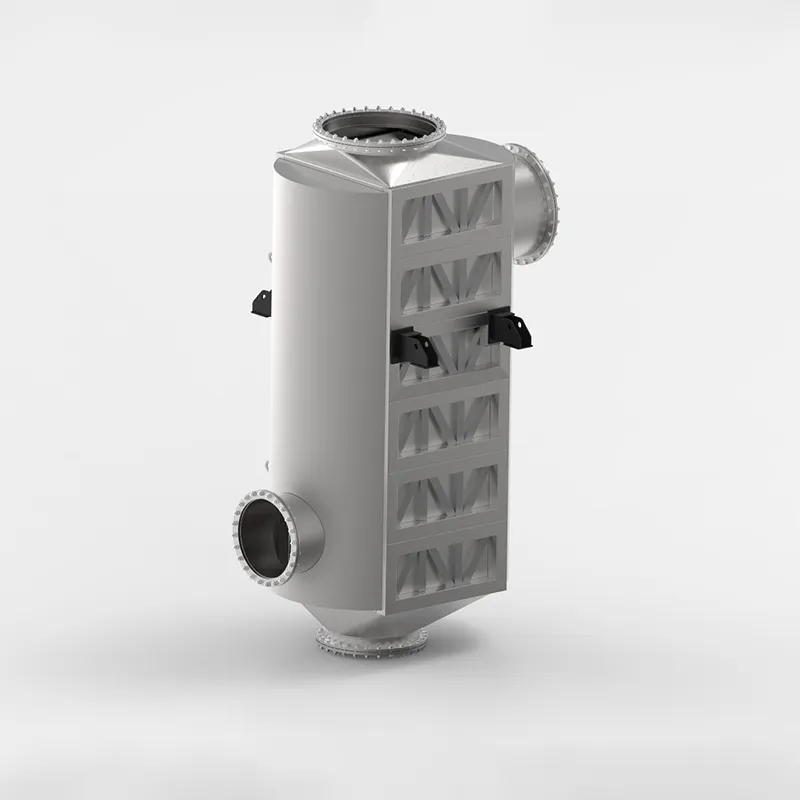
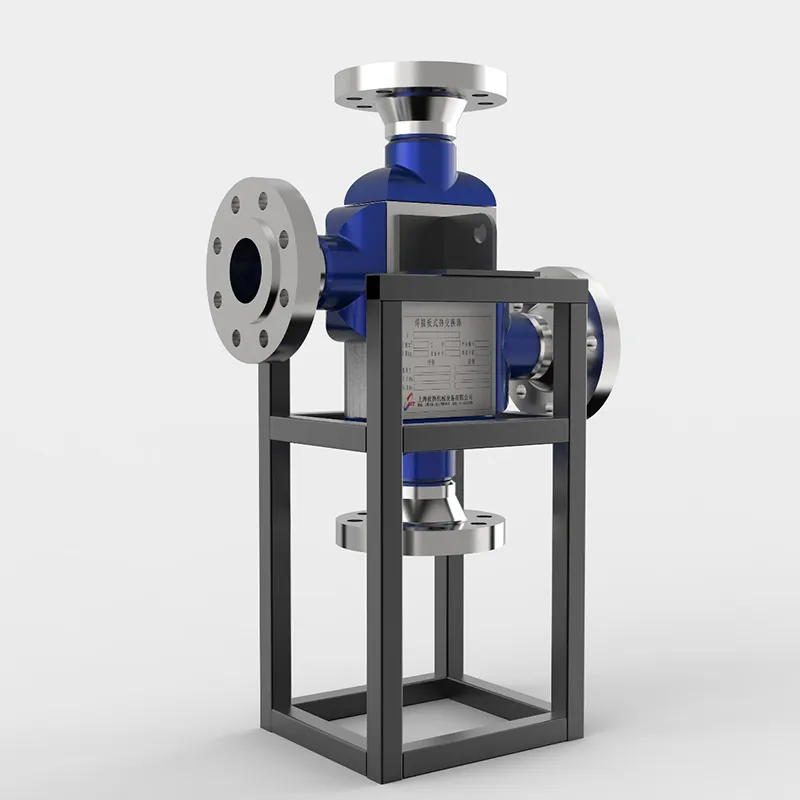
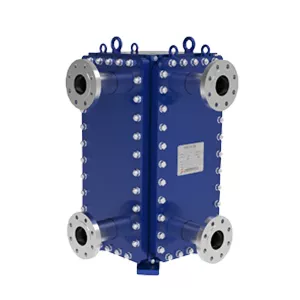
A high temperature plate heat exchanger is not simply a gasketed unit with thicker plates. It uses fully welded plate pairs—often laser-welded or electron-beam welded—to eliminate elastomeric gaskets that degrade above 200°C. The plate pack is enclosed in a carbon steel or stainless steel frame, and the channels are designed to handle thermal expansion without leakage. Typical operating ranges for these units are 200°C to 550°C on the hot side, with design pressures up to 40 bar. For extreme cases, such as hydrogen reforming or high-temperature waste heat recovery, materials shift from 316L to Incoloy 825 or Hastelloy C-276.
How Does a Welded Plate Design Handle Thermal Stress?
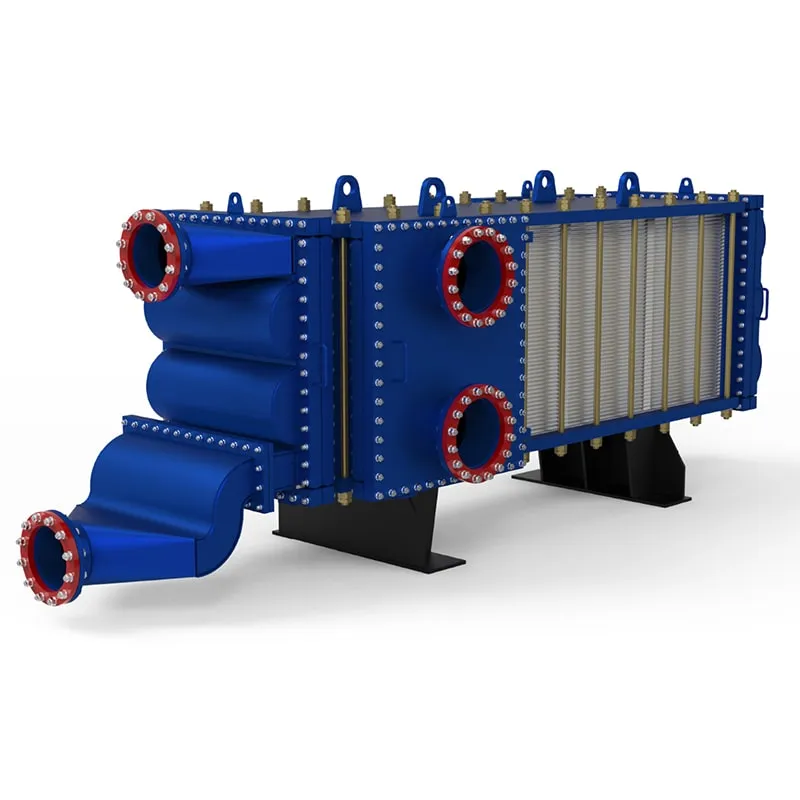
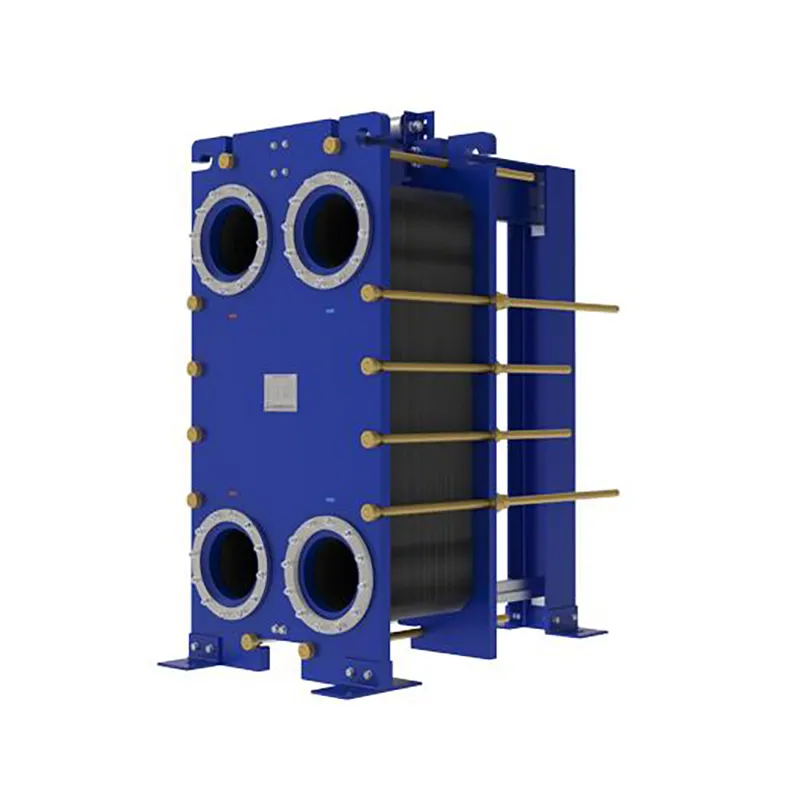
Thermal fatigue is the primary failure mode in extreme conditions. The HT-Bloc welded plate heat exchanger addresses this by using a cassette-style plate pack where each pair of plates is welded along the periphery, forming a sealed element. These cassettes are stacked and compressed with tie bolts, allowing differential thermal expansion between the hot and cold channels. The plate corrugation pattern—typically herringbone or chevron—creates turbulent flow even at low Reynolds numbers, improving heat transfer coefficients by 30–50% compared to smooth tubes. This turbulence also reduces fouling, which is critical when processing viscous hydrocarbons or fluids with suspended solids.
Typical Parameter Ranges for High Temperature Plate Heat Exchangers
When selecting a high temperature plate heat exchanger, engineers should evaluate these commonly accepted ranges:
- Maximum operating temperature: 550°C (with Incoloy 825 or Hastelloy plates)
- Design pressure: up to 40 bar (higher for specialized TP welded units)
- Plate material: 316L, 904L, Incoloy 825, Hastelloy C-276, titanium
- Gasket-free design: fully welded plate pairs, no elastomers
- Heat transfer area per unit: 0.5 m² to 500 m²
- Flow rate range: 1 m³/h to 2000 m³/h
- Viscosity limit: up to 10,000 cP (with wide gap variants)
These parameters make the TP welded plate heat exchanger a strong candidate for applications where shell-and-tube units would require excessive footprint or maintenance.
Which Industries Benefit Most from High Temperature Plate Heat Exchangers?
Three sectors consistently demand high temperature plate heat exchanger technology:
- Chemical processing: Reboilers, condensers, and interchangers for distillation columns operating at 300–450°C.
- Petrochemical refining: Feed effluent exchangers in hydrocrackers and reformers, where temperature differentials exceed 200°C.
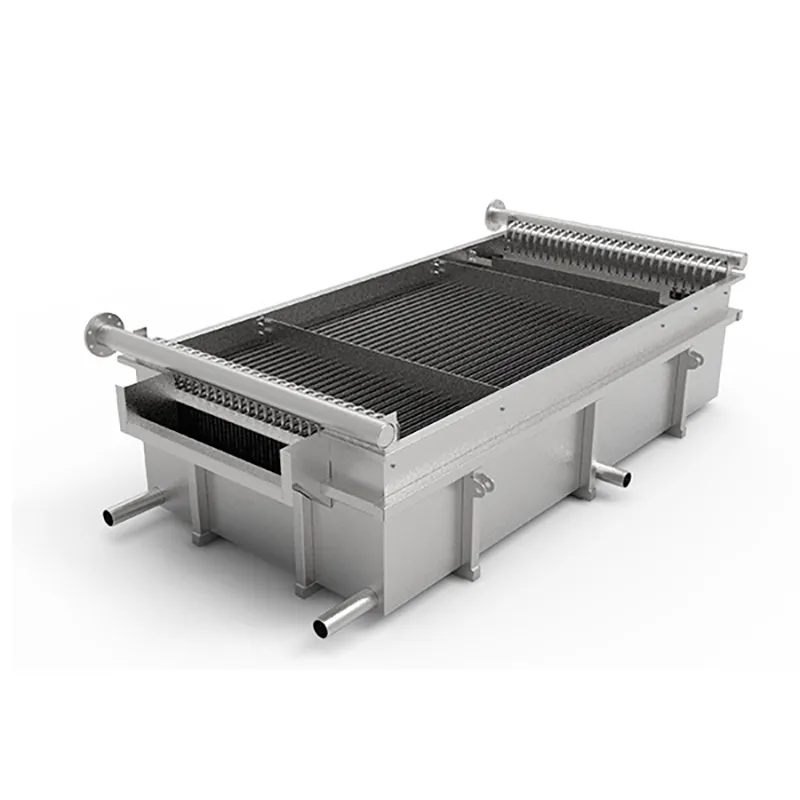
- Waste heat recovery: Flue gas cooling from 500°C to 150°C, often using a plate air preheater to preheat combustion air.
In each case, the welded plate design provides a compact footprint—typically 40–60% smaller than an equivalent shell-and-tube bundle—and reduces the risk of inter-fluid leakage.
Why Choose SHPHE for High Temperature Plate Heat Exchangers?
SHPHE, founded in Shanghai in 2005, has supplied high temperature plate heat exchangers to over 20 countries. The company holds ISO9001 and ASME U certifications, and its engineering team provides free thermal design and selection services. Unlike many manufacturers that only offer standard sizes, SHPHE customizes plate geometry, nozzle orientation, and material grade to match specific process conditions. For example, the wide gap welded plate heat exchanger handles fibrous or viscous media without clogging, while the HT-Bloc series competes directly with Alfa Laval Compabloc and GEA welded block designs. All units are pressure-tested before shipment, and the company offers a 12-month warranty against manufacturing defects.
Frequently Asked Questions About High Temperature Plate Heat Exchangers
Q: Can a high temperature plate heat exchanger handle thermal cycling?
A: Yes, welded plate designs are built for thermal cycling. The cassette-style plate pack allows each pair to expand independently, reducing stress at weld joints. SHPHE's HT-Bloc units have been tested for over 10,000 thermal cycles between 20°C and 400°C without leakage.
Q: What is the maximum pressure for a welded plate heat exchanger?
A: Standard designs go up to 40 bar. For higher pressures, the TP welded plate heat exchanger uses thicker plate pairs and reinforced frames, reaching 60 bar in some configurations. Always consult the datasheet for your specific media and temperature.
Q: How does a high temperature plate heat exchanger compare to a shell-and-tube unit?
A: Plate heat exchangers offer 3–5 times higher heat transfer coefficients, 40–60% less footprint, and easier cleaning if the design is fully welded. Shell-and-tube units are still preferred for very high pressures above 100 bar or for services with extreme fouling where mechanical cleaning is required.
Q: Can I use a gasketed plate heat exchanger at high temperatures?
A: Standard gasketed units are limited to about 180°C with EPDM gaskets and 200°C with Viton. Above that, gaskets degrade rapidly. A high temperature plate heat exchanger uses welded plate pairs, eliminating gaskets entirely and allowing operation up to 550°C.
Q: What materials are available for corrosive high-temperature fluids?
A: SHPHE offers 316L, 904L, Incoloy 825, Hastelloy C-276, and titanium. For sulfuric acid service above 200°C, Hastelloy C-276 is recommended. For chloride-rich streams, titanium or 904L provide better pitting resistance.
Q: How do I get a thermal design for my specific process?
A: SHPHE provides free thermal design and selection. You simply submit your process parameters—flow rate, inlet/outlet temperatures, pressure, and media composition—and the engineering team returns a recommended model with performance curves.
Request a Quote for Your High Temperature Plate Heat Exchanger
To ensure the high temperature plate heat exchanger matches your process conditions, provide the following details when requesting a quote: flow rate (hot and cold streams), inlet and outlet temperatures, operating pressure, allowable pressure drop, media composition (including corrosive components and viscosity), and any space or connection constraints. SHPHE's team will then perform a free thermal design and recommend the optimal plate material, gasket-free welded configuration, and frame size. Contact them through the website with your process data to receive a technical proposal within two business days.
Remember that a properly specified high temperature plate heat exchanger not only handles extreme conditions but also reduces energy consumption and maintenance downtime. Whether you need a replacement for an existing shell-and-tube unit or a new installation for a high-temperature process, the welded plate technology from SHPHE delivers reliable, long-term performance.

 English EN





User Comments
Service Experience Sharing from Real Customers
Tom
Maintenance SupervisorWe swapped our old gasketed units for this high-temp plate heat exchanger six months ago. The thermal recovery jumped noticeably, and we haven't had a single leak even at 180°C. Installation was straightforward, and the cleaning intervals are way longer than I expected. Solid piece of kit for the money.
Elena
Process EngineerI've been specifying plate heat exchangers for a decade, and this one handles the high-temp side better than most. The pressure drop is a bit higher than the datasheet suggests, but the heat transfer coefficient is excellent. We're using it for a hot oil loop at 220°C, and it's been stable for three months now. Just wish the gasket replacement kit was cheaper.
Raj
Plant ManagerThis thing is a beast. We run it 24/7 on a waste heat recovery line from a furnace, and it hasn't flinched. The titanium plates hold up against our slightly acidic process water, and the frame design makes it easy to add plates if we scale up. My maintenance guys actually like working on it. That's rare.
Sophie
R&D EngineerDecent performance overall, but the initial testing phase was a headache. The manual didn't match the actual bolt torque specs, and we had to call support twice to get the flow configuration right. Once dialed in, it works fine for our pilot plant at 150°C. Not bad, but for the price I expected better documentation.