Design and Operational Advantages of the Cryogenic Plate Heat Exchanger in Industrial Gas Processing
Cryogenic plate heat exchangers are critical for efficient gas separation and liquefaction in industrial gas processing. This article explores their design principles, operational benefits, and how they compare to traditional shell-and-tube units. We cover working mechanisms, key performance parameters, and application-specific solutions, including an FAQ section for buyers. Whether you are a process engineer or a procurement manager, understanding these advantages helps in selecting the right heat transfer equipment for your plant.
What Makes a Cryogenic Plate Heat Exchanger Different?
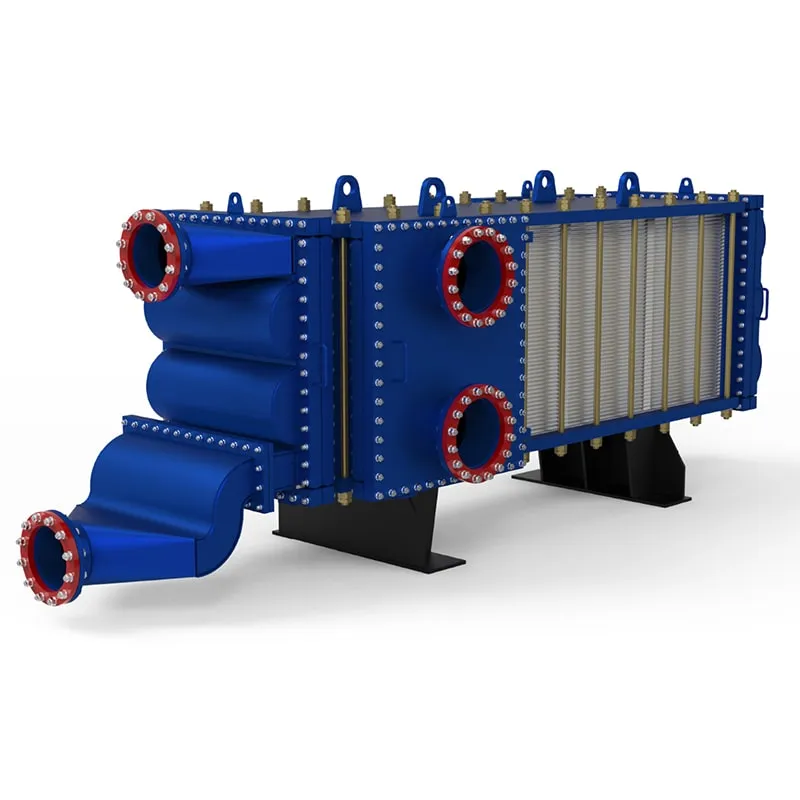
In low-temperature gas processing, the cryogenic plate heat exchanger stands out for its compact design and high thermal efficiency. Unlike bulky shell-and-tube units, these exchangers use corrugated plates to create turbulent flow, achieving heat transfer coefficients up to five times higher. This means smaller footprints and reduced material costs, especially in LNG, air separation, and hydrogen liquefaction plants. The brazed or welded construction eliminates gaskets, minimizing leak points at cryogenic conditions down to -200°C.
Working Principle and Process Scenarios
The core design involves alternating hot and cold fluid channels formed by embossed plates. In a typical air separation unit, compressed air is cooled against waste nitrogen in a multi-stream cryogenic plate heat exchanger. The plates are stacked and vacuum-brazed in a furnace, creating a monolithic core that withstands high pressure differentials. For LNG applications, these exchangers handle temperature swings from ambient to -160°C while maintaining thermal stress balance through optimized plate patterns.
Key Features and Typical Parameter Ranges
- Temperature range: -200°C to +200°C, with specialized materials for cryogenic service.
- Pressure rating: Up to 100 bar for brazed units; welded designs handle 60–80 bar typical.
- Flow capacity: Single units manage from 0.5 m³/h to 500 m³/h per stream.
- Heat transfer area: Compact designs achieve 200–500 m²/m³, compared to 50–100 m²/m³ for shell-and-tube.
- Materials: Stainless steel 304/316L, Inconel, or Hastelloy for corrosion resistance at low temperatures.
Applications and Recommended Solutions
Cryogenic plate heat exchangers are widely used in:
- Air separation units (ASU) for oxygen, nitrogen, and argon production.
- LNG liquefaction and regasification terminals.
- Hydrogen purification and liquefaction processes.
- Natural gas processing for dew point control and NGL recovery.
- Chemical and petrochemical cryogenic distillation columns.
For these applications, our HT-Bloc welded plate heat exchangers offer a robust alternative to traditional brazed units, especially when frequent cleaning is needed. The wide gap welded plate heat exchangers handle viscous or fouling fluids common in gas processing. For high-pressure duties, the printed circuit heat exchanger (PCHE) provides compactness with pressure ratings exceeding 200 bar.
Why Choose SHPHE for Your Cryogenic Plate Heat Exchanger?
SHPHE, founded in 2005 in Shanghai, is an ISO9001 and ASME U certified manufacturer exporting to over 20 countries. Our product lines include HT-Bloc welded, wide gap welded, gasketed, PCHE, plate air preheaters, and pillow plates. We provide free thermal design and selection services, ensuring the cryogenic plate heat exchanger matches your exact process conditions. Our engineers work with you to optimize plate geometry, materials, and flow arrangements for maximum efficiency and longevity.
Frequently Asked Questions
Q: What is the maximum operating pressure for a cryogenic plate heat exchanger?
A: Brazed plate heat exchangers typically handle up to 100 bar, while welded designs like our HT-Bloc series reach 60–80 bar. For higher pressures, PCHE units can exceed 200 bar. Always verify with the manufacturer based on your specific media and temperature.
Q: How does a cryogenic plate heat exchanger compare to a shell-and-tube unit in terms of maintenance?
A: Plate heat exchangers have fewer gasketed joints and are easier to clean. Welded units eliminate gaskets entirely, reducing leak risks. For fouling services, wide gap designs allow larger passages, while shell-and-tube units often require more frequent tube bundle replacements.
Q: Can a cryogenic plate heat exchanger handle multi-stream service?
A: Yes, many designs support three or more fluid streams in a single core. This is common in LNG and air separation plants where multiple gas streams exchange heat simultaneously, saving space and reducing piping complexity.
Q: What materials are best for cryogenic service below -100°C?
A: Austenitic stainless steels like 304L and 316L are standard. For extreme conditions, Inconel 625 or Hastelloy C-276 provide better toughness. Aluminum alloys are also used in some brazed units for weight savings.
Q: How do I select the right cryogenic plate heat exchanger for my gas processing plant?
A: Start with process parameters: flow rates, inlet/outlet temperatures, pressure drops, and fluid properties. Then choose between brazed, welded, or PCHE based on pressure, temperature, and fouling risk. SHPHE offers free thermal design to match your needs.
Q: Is a cryogenic plate heat exchanger compatible with Alfa Laval or Compabloc systems?
A: Our units are designed as alternatives to brands like Alfa Laval and Compabloc. They use similar plate geometries and port sizes, making retrofit or replacement straightforward. We can customize connections to match existing installations.
Request a Quote for Your Cryogenic Plate Heat Exchanger
To get an accurate proposal for your cryogenic plate heat exchanger, please provide the following details: flow rate, temperature range, operating pressure, media composition, and any special requirements like fouling or corrosion resistance. Our team will perform a free thermal design and selection, ensuring optimal performance for your industrial gas processing application. Contact us today to discuss your project.

 English EN





User Comments
Service Experience Sharing from Real Customers
Mike
Lead Process EngineerWe swapped out an older spiral unit for this cryogenic plate heat exchanger on our LNG pre-cooling train. The delta-T improvement was immediate and the pressure drop is way lower than I expected. Installation was straightforward too, which saved us a couple of days of downtime. Solid piece of kit for low-temp work.
Sarah
Research Lab TechnicianNeeded something compact for a helium liquefaction R&D setup. This exchanger handles the thermal stress cycles really well so far, no micro-cracking at the joints. Only gripe is the port fittings are a bit tight for our custom tubing, but that's a minor adaptor issue. Performance-wise, it's spot on.
Tom
Maintenance SupervisorBeen running this on a nitrogen purge system for six months now. Zero leaks, even after a few unplanned freeze-thaw cycles when the upstream plant hiccuped. The brazing quality is top-notch. My guys like how easy it is to access for inspection without pulling the whole skid apart. Would definitely order again.
Emma
Senior Mechanical DesignerThe thermal efficiency is excellent for its size, which is why we spec'd it for a pilot bio-LNG unit. But the documentation could be clearer—I had to call support to confirm the allowable vibration limits for marine environments. Once that was sorted, it worked fine, but the extra engineering time was a pain.