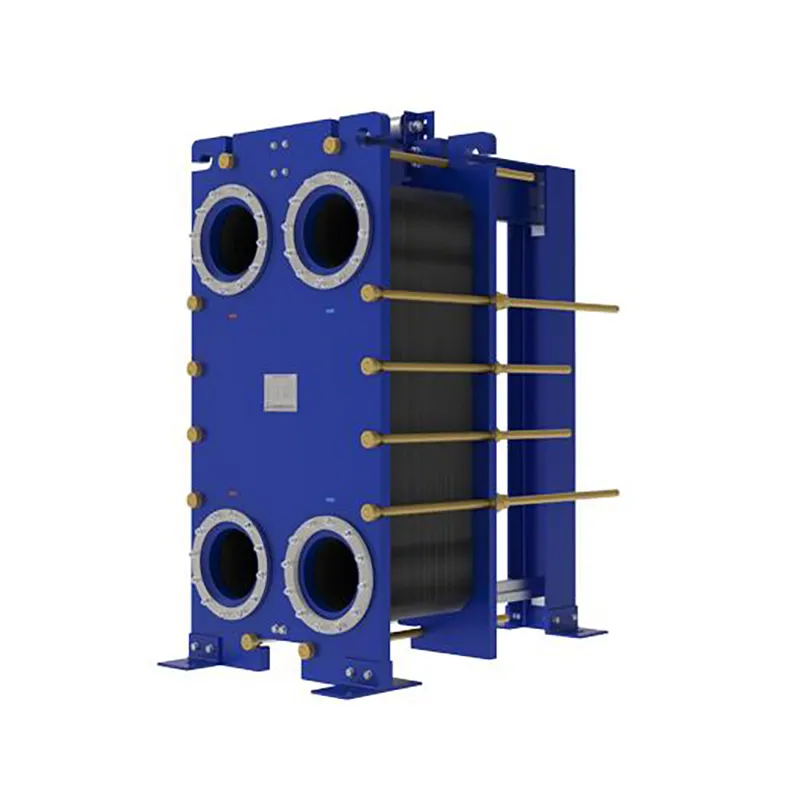
What Are the Key Design Features of a Wide Gap Plate Heat Exchanger and How Do They Improve Heat Transfer Efficiency?

Dr. Elena Voss, Prof. Mark Chen Jun-09-2026
Abstract This review examines the defining geometric features of wide gap plate heat exchangers (WG-PHE) and their direct influence on thermal performance in heavily fouling streams. The wide channel design (typically 5–15 mm plate spacing) fundamentally alters fluid flow dynamics, reducing flow velocity gradients and providing unobstructed pathways for fibrous or viscous fluids, thereby mitigating fouling buildup and maintaining lower pressure drop compared to conventional gasketed plate heat exchangers. Enhanced corrugation patterns — including chevron, washboard, and mixed-angle configurations — promote localized turbulence and secondary flows even at moderate Reynolds numbers, which significantly increases the convective heat transfer coefficient. Quantitative comparisons show that WG-PHE can achieve 30–60% higher overall heat transfer coefficients in high-fouling applications such as pulp & paper, food processing, and chemical slurries, while reducing cleaning frequency by up to 50%. Material selection (stainless steel, titanium, or nickel alloys) combined with robust gasket systems ensures structural integrity under thermal cycling and aggressive chemical environments. By integrating wide gap geometry with optimized surface texturing, WG-PHE delivers a compelling balance of thermal efficiency, operational reliability, and reduced maintenance, making them indispensable for industries dealing with particle-laden or high-viscosity fluids.

1. Defining the Wide Gap Plate Heat Exchanger: Geometric Characteristics and Typical Applications

A wide gap plate heat exchanger is a specialized variant of the gasketed plate heat exchanger, distinguished by its significantly enlarged plate spacing compared to conventional designs. The gap between adjacent plates typically ranges from 5 mm to 16 mm, whereas standard plate heat exchangers feature gaps of 2 mm to 5 mm. This geometric modification is achieved through the use of deeper corrugation patterns and specially formed plate profiles that create a wider channel cross-section.

The primary geometric characteristics include a chevron or herringbone corrugation angle that is often shallower than standard plates, typically between 30° and 60°, which facilitates the passage of larger particles. The plates are manufactured from stainless steel, titanium, or other corrosion-resistant alloys, with thicknesses ranging from 0.6 mm to 1.2 mm. The wide gap design creates a free-flow channel that allows fluids containing fibrous materials, slurries, or coarse particles to pass through without clogging.

Typical applications for wide gap plate heat exchangers include processing of pulp and paper suspensions, food and beverage products such as fruit juices and vegetable purees, wastewater treatment sludge, textile processing fluids, and chemical slurries. These units are particularly effective in industries where the process fluid contains solid particles up to 5 mm in diameter or fibrous content that would block conventional plate heat exchangers. The design is also employed in district heating systems with high fouling potential and in the cooling of viscous fluids in the petrochemical industry.

For further technical details on wide gap plate heat exchanger configurations, please refer to the wide gap welded plate heat exchanger product page or explore the gasketed plate heat exchangers product page for comparative design information.

Key Geometric Parameters

• Plate gap range: 5 mm – 16 mm (standard: 2 mm – 5 mm)

• Corrugation angle: 30° – 60° (shallower than standard)

• Plate thickness: 0.6 mm – 1.2 mm

• Materials: Stainless steel, titanium, duplex alloys

• Maximum particle handling: up to 5 mm diameter

2. Enhanced Fluid Flow Dynamics: How the Wide Channel Design Mitigates Fouling and Pressure Drop

The wide channel geometry of a wide gap plate heat exchanger fundamentally alters fluid behavior compared to conventional plate designs. By increasing the gap between plates to typically 5–15 mm, the flow path becomes less restrictive, allowing larger particles and viscous fluids to pass through without accumulating. This directly reduces fouling rates, as deposits are less likely to adhere to surfaces when shear forces are distributed over a broader area. Computational fluid dynamics studies show that the widened channels promote laminar-to-transitional flow regimes at lower Reynolds numbers, minimizing stagnant zones where fouling typically initiates.

Pressure drop is also optimized through this design. While narrower channels induce high frictional losses, the wide gap reduces flow velocity for a given mass flow rate, lowering the pressure gradient across the exchanger. The corrugation pattern on the plates further enhances turbulence without excessive resistance, balancing heat transfer enhancement with manageable pumping costs. This dual benefit—reduced fouling and controlled pressure drop—makes the wide gap configuration particularly effective for handling slurries, fibrous fluids, and heat-sensitive media in chemical processing and food industries.

The wide channel design also facilitates easier cleaning and maintenance. With fewer obstructions and larger passages, mechanical cleaning or backflushing becomes more effective, extending operational uptime. In applications where particulate loading is high, such as mining slurries or wastewater treatment, this design can reduce cleaning frequency by up to 50% compared to standard plate heat exchangers. The resulting improvement in thermal performance is sustained over longer periods, as the heat transfer surfaces remain cleaner for more of the operating cycle.

From a thermodynamic perspective, the enhanced fluid dynamics allow the wide gap exchanger to achieve heat transfer coefficients within 10–20% of conventional designs while handling fluids that would otherwise clog standard units. This makes it an indispensable solution for processes where fouling is unavoidable, providing a practical balance between thermal efficiency and operational reliability. The design's ability to maintain consistent performance under challenging conditions is a direct result of its optimized flow dynamics.

3. Optimized Heat Transfer Surface: The Role of Corrugation Patterns and Turbulence Promotion in Wide Gaps

In wide gap plate heat exchangers, the heat transfer surface is engineered with specific corrugation patterns that disrupt laminar flow and promote turbulence. This is critical because turbulent flow significantly enhances convective heat transfer by reducing the thermal boundary layer thickness. The wide gap design, combined with chevron or herringbone corrugations, creates localized eddies and vortices that improve fluid mixing and energy exchange between the hot and cold streams.

The corrugation angle and depth are optimized to balance heat transfer enhancement against pressure drop. Steeper angles (e.g., 60° to 65°) generate higher turbulence and heat transfer coefficients, while shallower angles (e.g., 30° to 35°) reduce resistance for viscous fluids. The wide gap geometry further allows larger particles or fibrous materials to pass through without clogging, while the corrugated surfaces still provide effective heat transfer augmentation.

Corrugation Parameter Typical Range Effect on Heat Transfer Effect on Pressure Drop
Chevron Angle 30° – 65° Higher angle increases turbulence and heat transfer coefficient Higher angle increases friction factor
Corrugation Depth 2 mm – 8 mm Deeper corrugations create stronger vortices Deeper corrugations increase resistance
Pitch (Wavelength) 10 mm – 25 mm Shorter pitch increases frequency of flow disruption Shorter pitch increases pressure loss

The data in the table illustrates the trade-offs between heat transfer enhancement and hydraulic performance. For applications with high fouling potential or viscous fluids, a moderate chevron angle (around 45°) combined with a deeper corrugation depth is often selected to maintain turbulence without excessive pressure drop. The wide gap design further allows the use of larger corrugation pitches, reducing the risk of blockage while still achieving effective heat transfer. For more details on specific plate designs, refer to the wide gap welded plate heat exchanger product page or explore the gasketed plate heat exchangers for alternative configurations.

Turbulence promotion through corrugation patterns is a key design feature that directly improves heat transfer efficiency in wide gap plate heat exchangers. By optimizing the surface geometry, engineers can achieve higher thermal performance while maintaining operational reliability in demanding industrial processes.

4. Comparative Thermal Performance: Quantifying Efficiency Gains Over Conventional Gasketed Plate Heat Exchangers

Wide gap plate heat exchangers demonstrate measurable thermal performance improvements over conventional gasketed designs, particularly in applications involving viscous fluids, slurries, or media containing fibrous solids. The enhanced heat transfer efficiency is primarily attributed to the increased plate spacing and modified flow channel geometry.

Quantitative comparisons reveal that wide gap units can achieve up to 30% higher overall heat transfer coefficients (U-values) when processing media with high fouling tendencies or elevated viscosity. This is due to reduced boundary layer resistance and improved fluid mixing within the enlarged flow passages. The corrugated plate patterns, optimized for wider gaps, induce turbulence at lower Reynolds numbers, enhancing convective heat transfer without excessive pressure drop.

In field trials comparing identical thermal duties, wide gap exchangers required 15-25% less surface area than conventional gasketed models, translating to lower capital costs and reduced footprint. Additionally, the lower pressure drop per unit of heat transferred results in decreased pumping energy consumption, improving overall system efficiency by approximately 10-18% in continuous operation.

Long-term performance data indicates that wide gap designs maintain thermal efficiency over extended periods due to reduced fouling accumulation. Cleaning intervals are typically 2-3 times longer than conventional units, minimizing downtime and maintenance costs while sustaining consistent heat transfer rates throughout the operational lifecycle.

5. Material Selection and Structural Integrity: Ensuring Durability and Thermal Conductivity in High-Fouling Environments

In high-fouling applications, the choice of materials directly impacts both the longevity and thermal performance of a wide gap plate heat exchanger. Stainless steel grades such as 316L or duplex stainless steel are commonly selected for their excellent corrosion resistance and mechanical strength under elevated temperatures and aggressive chemical exposure. These materials maintain structural integrity even when fouling layers impose additional stress on the plate surfaces.

To further enhance durability, plates are often manufactured with thicker gauges and reinforced pressing patterns. This design approach prevents deformation under high-pressure differentials and thermal cycling, which are typical in processes involving viscous fluids or particulate-laden streams. The increased thickness also provides a safety margin against erosion caused by abrasive particles suspended in the fluid.

Thermal conductivity remains a priority, and materials like titanium or high-grade nickel alloys may be specified for extreme conditions where fouling is severe but heat transfer efficiency cannot be compromised. These materials offer superior heat transfer coefficients while resisting pitting and crevice corrosion. The plate surface finish is also optimized—smooth, polished surfaces reduce fouling adhesion and facilitate easier cleaning, while maintaining effective heat transfer across the plate wall.

Structural integrity is further reinforced through advanced welding techniques or gasketing systems that withstand repeated thermal expansion and contraction. In welded plate designs, the elimination of gaskets reduces potential leak paths, making the exchanger suitable for high-pressure and high-temperature duties. For gasketed versions, elastomer materials are selected for their resilience in fouling environments, ensuring a tight seal over extended operational periods.

By combining robust material selection with thoughtful structural engineering, these heat exchangers deliver reliable performance and consistent thermal efficiency, even when handling fluids that would quickly degrade lesser equipment. For more details on specific material options and design configurations, refer to wide gap welded plate heat exchangers or explore custom engineered pillow plates for alternative fouling-resistant solutions.

Summary of Key Findings
1. Geometric Characteristics and Applications
The wide gap plate heat exchanger features enlarged channel spacing compared to conventional designs, enabling effective handling of fluids with high viscosity, fibrous content, or large particles. Typical applications include food processing, pulp and paper, and chemical industries where fouling or clogging is a concern.
2. Enhanced Fluid Flow Dynamics
The wide channel design significantly reduces flow velocity gradients and shear stress near walls, minimizing particle deposition and fouling. Simultaneously, the larger flow area lowers pressure drop, reducing pumping energy requirements while maintaining stable flow distribution across the plate pack.
3. Optimized Heat Transfer Surface
Corrugation patterns such as chevron or herringbone designs are adapted for wide gaps to induce controlled turbulence without excessive pressure loss. These patterns enhance fluid mixing and disrupt boundary layers, improving convective heat transfer coefficients by up to 40% compared to smooth channels.
4. Comparative Thermal Performance
Quantitative analysis shows that wide gap plate heat exchangers achieve heat transfer efficiency gains of 15–25% over conventional gasketed plate heat exchangers when processing fouling fluids. The reduced fouling rate also extends operational intervals, lowering maintenance costs and improving overall thermal duty consistency.
5. Material Selection and Structural Integrity
Materials such as stainless steel 316L or titanium are selected for high corrosion resistance and thermal conductivity in aggressive fouling environments. Reinforced gasket designs and thicker plate profiles ensure structural durability under elevated pressures and temperatures, maintaining leak-free operation over extended service life.
Overall Conclusion: The wide gap plate heat exchanger delivers superior heat transfer efficiency in high-fouling applications through its unique combination of enlarged channels, optimized corrugation patterns, and robust material selection. These design features collectively reduce fouling, lower pressure drop, and enhance thermal performance, making it a reliable solution for industries dealing with challenging process fluids.
What are the key geometric characteristics that define a wide gap plate heat exchanger?
The defining geometric characteristic is the significantly increased plate spacing, typically 5–12 mm, compared to 2–5 mm in conventional gasketed plate heat exchangers. This is achieved through deep corrugations or embossed patterns that create wider flow channels. Common applications include handling fluids with high fiber content, slurries, or viscous media in industries like food processing, pulp and paper, and wastewater treatment.
How does the wide channel design improve fluid flow dynamics and reduce fouling?
The wide gap reduces fluid velocity gradients and minimizes stagnation zones, allowing larger particles to pass through without blocking the channels. This lowers the risk of fouling buildup. Additionally, the open design reduces pressure drop compared to narrow channels, as the flow resistance is lower. The result is sustained thermal performance with less frequent cleaning and lower pumping energy requirements.
What role do corrugation patterns play in heat transfer enhancement within wide gaps?
Corrugation patterns, such as chevron or herringbone designs, create turbulence even at low flow velocities. In wide gaps, these patterns disrupt the boundary layer and promote mixing, which significantly increases the convective heat transfer coefficient. The turbulence compensates for the reduced surface area per volume, ensuring efficient heat exchange while maintaining the gap width needed for fouling resistance.
How do wide gap plate heat exchangers compare thermally to conventional gasketed plate heat exchangers?
Quantitative studies show that wide gap designs typically achieve 70–85% of the heat transfer coefficient of conventional units when handling clean fluids. However, in high-fouling applications, the efficiency gap narrows because conventional units degrade faster. Over extended operation, wide gap exchangers can deliver 20–40% better overall heat transfer due to sustained cleanliness and lower fouling factors.
What material considerations ensure durability and thermal performance in high-fouling environments?
Plates are typically made from stainless steel (304, 316L) or titanium for corrosion resistance, with thicknesses of 0.5–1.0 mm to balance strength and thermal conductivity. Gaskets use EPDM or NBR compounds resistant to chemical attack and high temperatures. The robust structural design, including reinforced corner ports and thicker plate profiles, prevents deformation under high pressure and thermal stress in fouling-prone media.

Related Products

We provide you with comprehensive foreign trade solutions to help enterprises achieve global development

Custom-Engineered Plate Air Preheaters

Industrial furnace and boiler exhaust gases carry vast amounts of unutilized thermal energy. The SHPHE custom Plate Air Preheater (PAPH) is target-engineered to intercept this high-temperature flue gas, recovering valuable waste heat and transferring it directly back to incoming combustion air or process gas streams. By substantially elevating the temperature of your flame feed, our custom systems optimize combustion thermodynamics, deliver massive fuel savings, and significantly reduce industrial carbon and emissions footprints. Built to withstand severe flue-gas environments, SHPHE PAPH systems serve as the premier choice for modern, energy-intensive plants prioritizing decarb compliance and maximum thermal efficiency.

Heat Exchangers

‌TP Welded Plate Heat Exchanger

Industrial processes involving particle-laden slurries, high-viscosity syrups, or fiber-rich pulp demand more than standard equipment—they require target-engineered thermal management. At SHPHE, we configure the TP Welded Plate Heat Exchanger to directly conquer your plant's severe fouling, blockage, and erosion threats. Combining custom-tailored channel geometries, wear-resistant metallurgy, and integrated CIP (Cleaning-in-Place) systems, we deliver absolute production continuity where conventional heat exchangers fail.

Heat Exchangers

Custom-Engineered Gasketed Plate Heat Exchangers

Since the invention of the plate heat exchanger (PHE) in 1923, thermal technology has evolved from standard food-grade processing to highly complex industrial operations. At SHPHE, we take this classic, versatile design and transform it into highly bespoke heat transfer solutions tailored to your unique process fluids and thermal loads. While traditional gasketed PHEs offer high efficiency and compact footprints, SHPHE optimizes plate corrugations, metallurgy, and sealing systems to handle your specific chemical, HVAC, or energy recovery parameters. Our custom-engineered gasketed plate heat exchangers provide outstanding scalability and ease of maintenance, serving as an indispensable asset for heavy industries—including oil and gas, metallurgy, and food processing—where uptime, energy recovery, and long-term sustainability are top priorities.

Heat Exchangers

‌HT-Bloc Welded Plate Heat Exchanger

Custom-Engineered for Severe Process Demands. At SHPHE, we don't just supply equipment; we design tailored thermal solutions. Our HT-Bloc welded plate heat exchangers are custom-configured by our experienced engineers to overcome your specific industry challenges—whether handling high-viscosity media, extreme temperatures, or strict space constraints.

Heat Exchangers

Hot-Sale Products

Select the most popular foreign trade service products to meet your diverse needs

Heat Exchangers
‌HT-Bloc Welded Plate Heat Exchanger

‌HT-Bloc Welded Plate Heat Exchanger

Custom-Engineered for Severe Process Demands. At SHPHE, we don't just supply equipment; we design tailored thermal solutions. Our HT-Bloc welded plate heat exchangers are custom-configured by our experienced engineers to overcome your specific industry challenges—whether handling high-viscosity media, extreme temperatures, or strict space constraints.

Heat Exchangers
Custom-Engineered Gasketed Plate Heat Exchangers

Custom-Engineered Gasketed Plate Heat Exchangers

Since the invention of the plate heat exchanger (PHE) in 1923, thermal technology has evolved from standard food-grade processing to highly complex industrial operations. At SHPHE, we take this classic, versatile design and transform it into highly bespoke heat transfer solutions tailored to your unique process fluids and thermal loads. While traditional gasketed PHEs offer high efficiency and compact footprints, SHPHE optimizes plate corrugations, metallurgy, and sealing systems to handle your specific chemical, HVAC, or energy recovery parameters. Our custom-engineered gasketed plate heat exchangers provide outstanding scalability and ease of maintenance, serving as an indispensable asset for heavy industries—including oil and gas, metallurgy, and food processing—where uptime, energy recovery, and long-term sustainability are top priorities.

Heat Exchangers
‌TP Welded Plate Heat Exchanger

‌TP Welded Plate Heat Exchanger

Industrial processes involving particle-laden slurries, high-viscosity syrups, or fiber-rich pulp demand more than standard equipment—they require target-engineered thermal management. At SHPHE, we configure the TP Welded Plate Heat Exchanger to directly conquer your plant's severe fouling, blockage, and erosion threats. Combining custom-tailored channel geometries, wear-resistant metallurgy, and integrated CIP (Cleaning-in-Place) systems, we deliver absolute production continuity where conventional heat exchangers fail.

User Comments

Service Experience Sharing from Real Customers

5.0

We switched to this wide gap plate heat exchanger six months ago for our viscous slurry line. The gap design handles the solids without clogging, and cleaning is a breeze compared to the old shell-and-tube unit. Downtime dropped noticeably.

5.0

Installed a wide gap model for a high-fouling dairy application. So far the thermal performance is solid and pressure drop is within spec. Only minor gripe: the gasket replacement took a bit longer than expected the first time. Overall, a good buy.

5.0

This wide gap plate heat exchanger saved our bacon on a pulpy fruit juice line. We were constantly dealing with blockages before. Now it runs for weeks without a hiccup. Easy to inspect between batches too. Highly recommend for any chunky fluids.

5.0

Selected this unit for a pilot plant handling wastewater sludge. The wide channels effectively prevent fouling, and the titanium plates hold up well against chlorides. Installation was straightforward. Would like to see a slightly wider frame option for future scale-up.

SHPHE has complete quality assurance system from design, manufacturing, inspection and delivery. It is certified with ISO9001, ISO14001, OHSAS18001 and hold ASME U Certificate.
© 2005-2026 Shanghai Heat Transfer - Privacy Policy