Why Choose a Food Grade Plate Heat Exchanger for Industrial Processing
In food and beverage processing, maintaining product integrity while achieving efficient thermal transfer is non-negotiable. A food grade plate heat exchanger meets stringent hygiene standards, resists corrosion from acidic or alkaline media, and delivers consistent performance under demanding CIP cycles. This article explains how these units work, their key design parameters, and why SHPHE's gasketed and welded plate heat exchangers are trusted by process engineers worldwide.
What Is a Food Grade Plate Heat Exchanger?
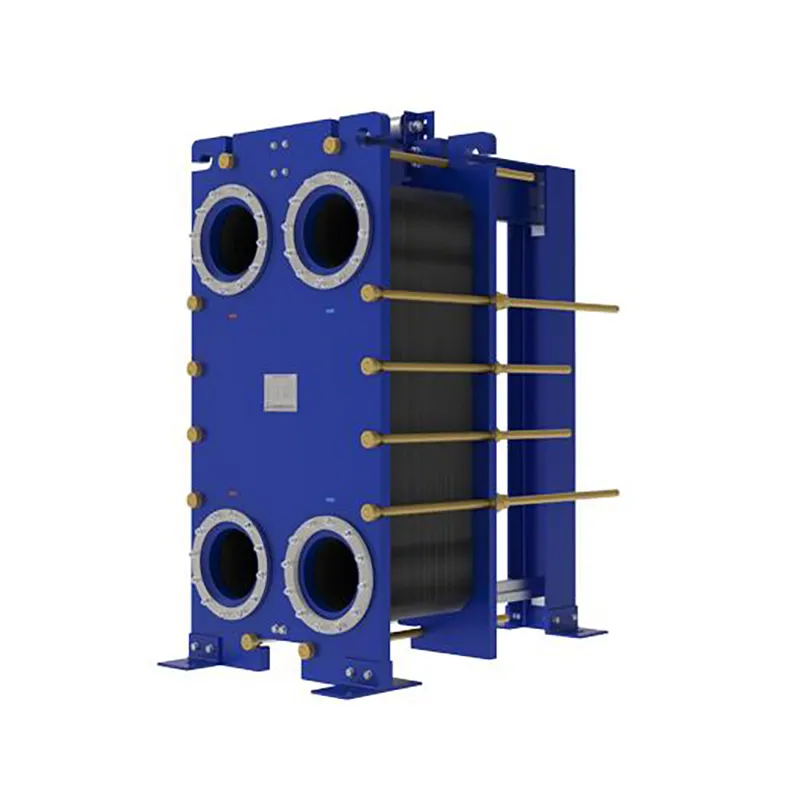
A food grade plate heat exchanger is a compact thermal device designed specifically for hygienic applications. It uses a series of corrugated stainless steel plates to transfer heat between two fluids without cross-contamination. Unlike standard industrial units, food grade models feature polished surfaces, crevice-free gasket grooves, and materials compliant with FDA or EC 1935/2004 regulations. These units are widely used for pasteurizing milk, cooling juice, heating sauces, and tempering edible oils.
How Does a Food Grade Plate Heat Exchanger Work in a Processing Line?
The working principle is straightforward: product flows on one side of the plate, and service media (hot water, steam, or chilled glycol) flows on the opposite side. The corrugated pattern creates turbulence at low velocities, which improves heat transfer coefficients and reduces fouling. In a typical dairy pasteurization setup, the food grade plate heat exchanger can recover up to 94% of thermal energy through regenerative sections. This design minimizes product hold-up volume and allows rapid temperature changes essential for sensitive formulations.
Key Features and Typical Parameter Ranges
When evaluating a food grade plate heat exchanger, process engineers should consider these core characteristics:
- Plate material: AISI 316L stainless steel as standard; titanium or Hastelloy for high-chloride or acidic media.
- Gasket material: EPDM (FDA grade), HNBR, or silicone; all replaceable without special tools.
- Design pressure: Typically 10 to 25 bar (150–360 psi) for gasketed units; welded variants up to 40 bar.
- Design temperature: -20°C to 180°C (-4°F to 356°F) depending on gasket selection.
- Flow capacity: From 0.5 m³/h for pilot plants to over 500 m³/h for large processing lines.
- Heat transfer coefficient: 3,000–7,000 W/m²·K in clean conditions, depending on fluid properties and plate geometry.
SHPHE offers free thermal design and selection service to match these parameters to your specific process conditions.
What Are the Most Common Applications for Food Grade Plate Heat Exchangers?
Food grade plate heat exchangers are deployed across multiple sectors within the food and beverage industry. Typical applications include:
- Milk and dairy: pasteurization, UHT treatment, and cooling of cream and yogurt.
- Beverages: heating or cooling of juice, beer, wine, and soft drinks.
- Sauces and dressings: gentle heating of viscous products like ketchup and mayonnaise.
- Edible oils: temperature control during refining and deodorization.
- Confectionery: precise cooling of chocolate and sugar syrups.
For processes with high solids or fibrous content, SHPHE recommends its wide gap welded plate heat exchanger to prevent clogging. For applications requiring extreme temperature or pressure, the HT-Bloc welded plate heat exchanger is a robust alternative to traditional shell-and-tube designs.
Why SHPHE for Your Food Grade Plate Heat Exchanger Needs?
SHPHE, founded in 2005 in Shanghai, has been supplying food grade plate heat exchangers to over 20 countries. Our manufacturing facility holds ISO9001 and ASME U certifications, ensuring every unit meets international quality standards. We produce a full range of products including gasketed plate heat exchangers, TP welded plate heat exchangers, plate air preheaters, PCHE, and pillow plates. Our engineering team provides free thermal design and selection, helping you choose the right plate geometry, gasket material, and frame size for your process. Whether you need a unit compatible with Alfa Laval or Compabloc frames, or a custom-engineered solution, SHPHE delivers on time and within budget.
Frequently Asked Questions About Food Grade Plate Heat Exchangers
1. Can a food grade plate heat exchanger handle CIP cleaning?
Yes. Food grade plate heat exchangers are designed for clean-in-place (CIP) cycles using caustic and acid solutions. The smooth plate surfaces and crevice-free gasket grooves allow effective cleaning without disassembly. SHPHE recommends a maximum CIP temperature of 95°C and a flow velocity above 1.5 m/s to ensure proper cleaning.
2. What is the typical lifespan of gaskets in a food grade plate heat exchanger?
With proper maintenance, EPDM gaskets in a food grade plate heat exchanger last 3 to 5 years. Factors like exposure to aggressive chemicals, steam temperatures above 130°C, and frequent thermal cycling can shorten this lifespan. Regular inspection and timely replacement prevent leaks and maintain thermal performance.
3. How do I select the right plate material for acidic food products?
For acidic products like fruit juice or vinegar, AISI 316L stainless steel is the standard choice due to its molybdenum content, which improves pitting resistance. For products with chloride levels above 200 ppm, titanium plates are recommended. SHPHE's free thermal design service includes material selection based on your media composition.
4. Can a food grade plate heat exchanger be used for viscous products like honey or syrup?
Yes, but plate geometry matters. Standard plates with narrow gaps may clog with viscous or fibrous media. For such applications, a wide gap welded plate heat exchanger is more suitable. SHPHE offers plates with gap widths up to 12 mm to handle products with up to 30% solids content.
5. Is a food grade plate heat exchanger more expensive than a standard industrial unit?
The initial cost is typically 15–25% higher due to premium materials and surface finishes. However, the total cost of ownership is often lower because of higher thermal efficiency, reduced cleaning downtime, and longer service life. For many food processors, the payback period is under 12 months from energy savings alone.
6. Can SHPHE supply a food grade plate heat exchanger that is compatible with my existing Alfa Laval frame?
Absolutely. SHPHE manufactures replacement plate packs and gaskets that are fully compatible with Alfa Laval, Compabloc, and GEA frames. Our plates are stamped from the same high-grade stainless steel and undergo pressure testing to ensure a perfect fit and performance match.
Request a Quote for Your Food Grade Plate Heat Exchanger
To get a precise recommendation for your food grade plate heat exchanger, please provide the following details in your inquiry:
- Flow rate (m³/h or GPM) for both product and service media.
- Inlet and outlet temperatures for both streams.
- Operating pressure and allowable pressure drop.
- Product composition (e.g., viscosity, solids content, pH).
- Cleaning frequency and CIP chemical compatibility.
SHPHE's engineering team will respond with a free thermal design, selection, and budget quotation within 24 hours. Choosing the right food grade plate heat exchanger ensures product safety, energy efficiency, and long-term reliability for your processing line.

 English EN





User Comments
Service Experience Sharing from Real Customers
Megan R.
Production SupervisorWe switched to this food-grade plate heat exchanger about six months ago for our dairy pasteurization line, and the difference is night and day. It’s way easier to take apart for cleaning than our old unit, and I haven’t seen any of those weird gasket leaks that used to drive me crazy. The stainless finish holds up well to our daily CIP cycles. Honestly, for the price, it’s a workhorse.
Carlos M.
Maintenance TechnicianI’m the guy who has to keep this thing running, so I was a bit skeptical when the boss bought it. But I gotta say, the plates are well machined and the gaskets actually stay put. We’re using it for a hot sauce cooling loop, and it handles the acidity and bits of pepper without clogging. Only reason I’m not giving it five stars is that the frame bolts could be a tad beefier; they’re fine now, but I worry about long-term corrosion if you’re not careful with torque.
Priya S.
Quality Assurance ManagerWe needed a heat exchanger for a new juice blending line that could handle both high-temperature short-time pasteurization and quick cooling without any cross-contamination risk. This unit passed our validation tests with flying colors. The surface finish is smooth, no dead zones where bacteria could hide. My team appreciates that the inspection port gives us visual access without breaking the seal. It’s a solid piece of equipment for anyone serious about food safety.
Tom H.
Process EngineerI specified this model for a pilot plant we’re building to test new soup recipes. The thermal efficiency is great—we’re getting really tight temperature control within ±0.5°C, which is crucial for delicate broths. The only minor headache was that the manual doesn’t give great guidance on plate count adjustments for different flow rates, but our supplier helped us dial it in. Once it’s running, it’s flawless. Would buy again for full-scale production.